


 Top Rated Course

We may not have the course you’re looking for. If you enquire or give us a call on +44 1344 203999 and speak to our training experts, we may still be able to help with your training requirements.
How to Become a Psychiatrist: Step-by-Step Guide
Michael Jones 20 December 2025To become a psychiatrist, completion of a psychiatric residency and treating mental health conditions are prerequisites for becoming a psychiatrist. This blog on How to Become a Psychiatrist explores every stage of the journey from undergraduate education to licensing exams, and key skills needed for a successful psychiatry career.

Training Outcomes Within Your Budget!
We ensure quality, budget-alignment, and timely delivery by our expert instructors.
Table of Contents
Psychiatry is a mental health profession that characterises the medical world with its empathy and thus offers a very satisfying and rewarding career for its practitioners. It provides robust professional development alongside a mixture of medical science and emotional care. In the following pages, we will discuss 'How to Become a Psychiatrist' and the skills, duties, and routes that are part of it.
Table of Contents
1) What Is a Psychiatrist?
2) What do Psychiatrists do?
3) How to Become a Psychiatrist?
4) Key Responsibilities of a Psychiatrist
5) Skills for Psychiatrists
6) Differences Between Psychiatrists and Psychologists
7) Benefits of a Career in Psychiatry
8) Conclusion
What Is a Psychiatrist?
Supporting individuals with mental health challenges involves a team of professionals, including psychologists, counselors, social workers, and especially Psychiatrists. Psychiatrists, as medical doctors, diagnose and treat mental illnesses, offering insights into the biological aspects of these conditions.
While psychologists and counselors provide talk therapy, Psychiatrists can prescribe medications, combining medical expertise with compassionate care. If you're passionate about the intersection of medicine and mental health, a career as a psychiatrist can be a fulfilling way to make a difference in people's lives
What do Psychiatrists do?
Psychiatrists are medical doctors who specialise in diagnosing, preventing, and treating a range of disorders, including addictive, adjustment, anxiety, behavioral, emotional, mental, mood, psychotic, and sexual or gender identity disorders. As trained medical professionals, Psychiatrists understand the biological, psychological, and social aspects of mental illness.
They evaluate and treat patients using methods such as behavior modification, individual or group therapy, and psychoanalysis. While they typically adopt a holistic approach to treatment, psychiatrists are also qualified to prescribe medication when necessary.

How to Become a Psychiatrist?
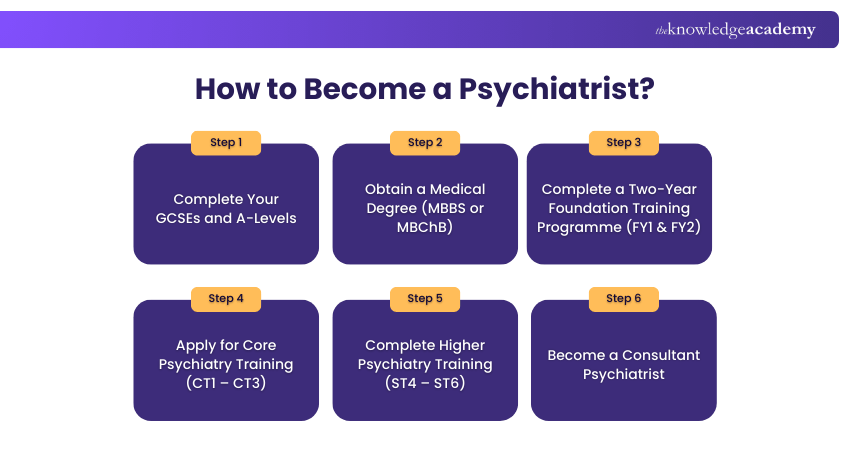
In the UK, to become a Psychiatrist one has to go through a well-defined training process that enhances the doctor’s knowledge as well as his/her experience in the area of mental health. The following steps illustrate the entire passage from school to consultant level.
Step 1: Complete Your GCSEs and A-Levels
It is a must for you to have very good GCSEs and A-Levels, which must also include Chemistry and Biology, in order to fulfill the entrance requirements of medical school. Good grades at the level of A-Level or equivalent can help you get into very competitive medicine courses.
Step 2: Obtain a Medical Degree (MBBS or MBChB)
Finish a medical degree for five to six years, which is endorsed by the GMC. This gives the clinical understanding, patient exposure, and medical base necessary for moving into the residency training.
Empower your mind! Join our Psychological Skills Training for Human Wellness Training and learn strategies to enhance your emotional resilience and well-being.
Step 3: Complete a Two-Year Foundation Training Programme (FY1 & FY2)
Foundation Training, you have the opportunity to change and work in various medical fields, thereby acquiring hands-on experience and the necessary self-assurance in practice. In the second year of the foundation program, you will apply for a residency in psychiatry and, at the same time, get acquainted with the mental health sector.
Step 4: Apply for Core Psychiatry Training (CT1 – CT3)
The duration of Core Training is three years in total which covers different aspects of psychiatric practice such as inpatient, community and specialist. Besides, you undergo preparation for the MRCPsych exams and taking them in this period.
Step 5: Complete Higher Psychiatry Training (ST4 – ST6)
You will work in your selected psychiatric area such as Forensic, Child and Adolescent, or General Adult Psychiatry during Higher Training. You will assume a bigger role and improve your skills in clinical practice, definitely, leadership and research in an advanced way.
Step 6: Become a Consultant Psychiatrist
Once training has been finished and a Certification of Completion of Training has been received, one can apply for consultant positions in the NHS. The responsibilities of a consultant include directing clinical groups, making intricate treatment decisions, and offering expert psychiatric treatment.
Key Responsibilities of a Psychiatrist
A psychiatrist doesn't only work by diagnosing and prescribing medication. Some of the major roles include:
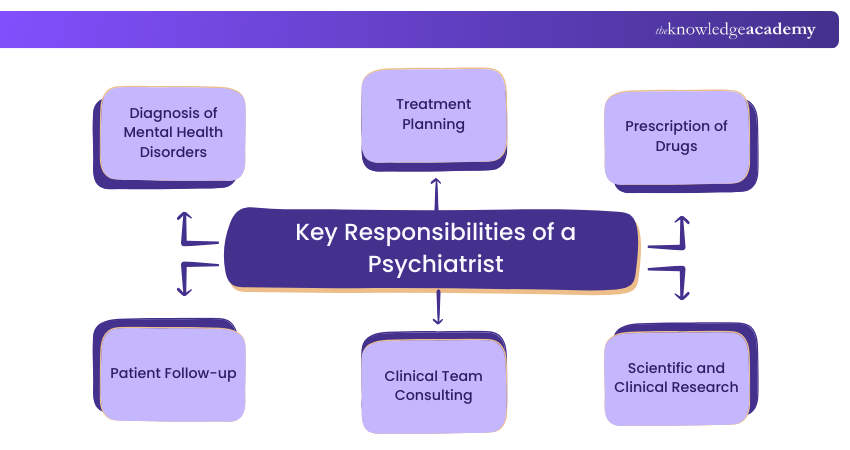
1) Diagnosis of Mental Health Disorders: They diagnose people to determine if they have anxiety, depression, or PTSD.
2) Treatment Planning: They will develop a personal treatment plan that may entail medication, psychotherapy, or lifestyle advice.
3) Prescription of Drugs: Psychiatrists prescribe drugs and monitor the way drugs interact with side effects or other drugs an individual might be taking in the body.
4) Patient Follow-up: They follow up on patients and change treatment plans in time for maximum effectiveness.
5) Clinical Team Consulting: Most psychiatrists consult psychologists, nurses, social workers, and other professionals offering full care to the patient.
6) Scientific and Clinical Research: Most psychiatrists do research work. By this, they advance new methods of treating mental problems and gaining insight into the mental problem.
Curious to know about how the mind works? Join our Psychology Course and explore insights that can transform your life and others!
Skills for Psychiatrists
Being a good psychiatrist has nothing to do with just holding a medical degree; you are going to require many other skills to interact with patients and to care for them the best.
1) Active Listening: A psychiatrist has to perceive not only the spoken words but also the tone, the feeling and the gestures in order to understand the real state of the mind of the patient. Such profound listening not only serves to build trust, but it also uncovers hidden problems and gives rise to correct diagnoses as well.
2) Strong Analytic Thinking: Psychiatric classifications are mostly based on subtle behavioural cues and patient history rather than on direct laboratory testing. The possession of good analytic skills would enable a psychiatrist to properly rank complex data and thus come up with a thoughtful and effective treatment plan.
3) Clear Communication: It is of utmost importance that psychiatrists provide information to the patients and caregivers in a soothing, clear, and compassionate way. The practice of effective communication leads to the establishment of a secure environment and guarantees that the treatment plans are comprehended and correctly followed.
4) Empathy and Compassion: Patients frequently visit a psychiatrist when they are at their most vulnerable; it is the sympathy that lets them feel like they are being clothed with the psychiatrist’s understanding and support. The connection between the therapist and the patient that compassion creates can lead to more engagement and better healing outcomes.
5) Resilience and Emotional Strength: The psychiatrist's work may include difficult cases, emotional turmoil, and slow progress. Resilience is the quality that allows psychiatrists to endure the hardships without burning out. Emotional strength is what makes the long-term commitment and support of patients even during hard times.
6) Ethical Integrity and Confidentiality: The main pillars of trust and professionalism are maintaining patient confidentiality, respecting rights, and practising with moral clarity. Ethical conduct also ensures that the handling of sensitive decisions with even legal ramifications is done in a responsible and respectful manner.
Differences Between Psychiatrists and Psychologists
Although psychiatrists and psychologists deal with one's mental health, their task, the type of study undertaken, and the treatment they provide vary:
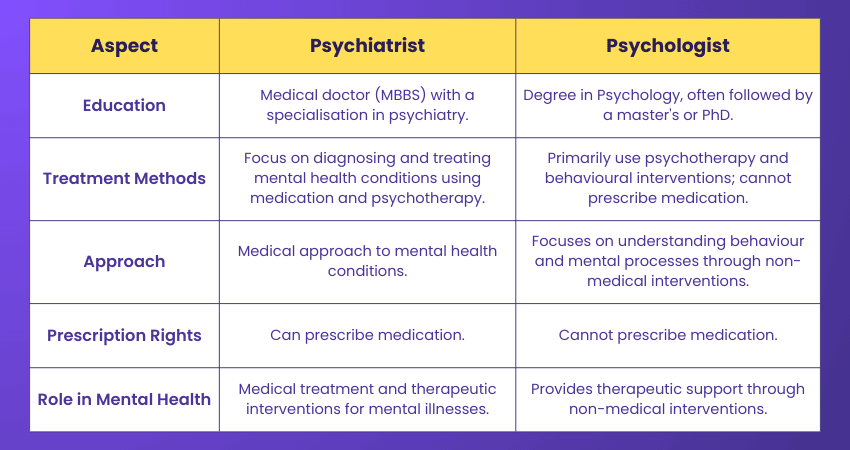
a) Education: Psychiatrists are medical doctors who receive their degrees through MBBS, specialising in psychiatry. Psychologists usually have a degree in Psychology; sometimes psychologists can specialise further with an M. Phil or PhD in that field.
b) Treatment Methods: Psychiatrists do their best in identifying and treating mental health disorders with the help of drugs and psychotherapy. Psychologists focus more on psychotherapy and behavioral changes and do not have prescription powers, which distinguishes them from the broader field of Psychology and Psychiatry.
c) Approach: A psychiatrist uses his or her knowledge medically as a doctor to treat the mind, whereas a psychologist applies no medical approach to understand how one can think and manage himself or herself.
Average Salary of Psychiatrists
Salaries for psychiatrists are immensely variable based on location, experience, and specialisation. Obviously, there is a wide range for earning scope, which points toward diversity in practice in this field.
Salary scales for psychiatrists in India vary based on location, experience, and specialisation. According to Glassdoor, the average annual salary for psychiatrists is around ₹90,000 per month. However, this can increase significantly with expertise and private practice.
The more people become aware of mental health, the greater demand for well-trained psychiatrists emerges, creating more job security and scope to earn more. Altogether, financial benefits from psychiatry careers can be very high, making this a more plausible career for someone interested in mental health.
Benefits of a Career in Psychiatry
Benefits make clear why someone should consider a career in psychiatry, and this section can serve as an attraction for passionate mental health care professionals. There are thousands of reasons why a career in psychiatry is rewarding and worth pursuing, especially since it remains a critically fulfilling profession:
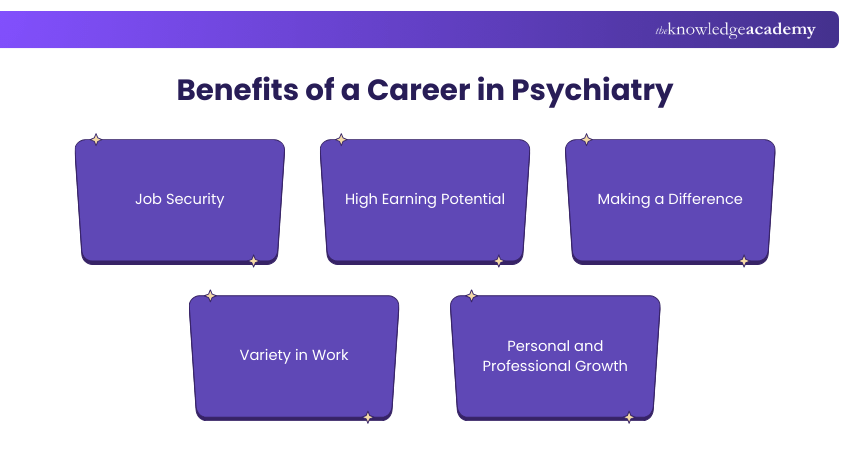
1) Job Security: Psychiatrists have very high demand internationally, so the job security of the psychiatrist is good.
2) High Earning Potential: Obviously, the income potential of psychiatrists is enormous. Further, as mentioned above, in private practice or specialised sectors, psychiatrists receive very competitive salaries.
3) Making a Difference: As mentioned above, psychiatrists significantly and directly contribute to the lives of their patients by enabling individuals to control and cope with mental illness.
4) Variety in Work: Psychiatrists work with different groups of patients and a variety of mental health conditions, which is guarantee that no two working days are going to be the same.
5) Personal and Professional Growth: Psychiatry allows for lifelong learning and professional growth. The nature of work keeps it intellectually challenging.
Empower your mind! Join our Psychological Skills Training for Human Wellness Training and learn strategies to enhance your emotional resilience and well-being.
Conclusion
Psychiatry is a profession that gives a new meaning to a career since it combines medical know-how with caring and compassion. If you have the correct training and commitment, you will be able to support people during difficult times with their mental health and, therefore, make a lasting impact. Knowing How to Become a Psychiatrist really helps you to take the first step towards this rewarding road.
Unlock the secrets of human behaviour! Join in our Social Psychology Training and transform your understanding today!
Frequently Asked Questions
Is Psychiatry Hard to Study?

Yes, psychiatry can be challenging to study due to its extensive medical training, involving MBBS, postgraduate education, and clinical practice. However, for those passionate about mental health, the intellectual and emotional rewards make the effort worthwhile.
Is MBBS Necessary to Become a Psychiatrist?
Yes, completing an MBBS degree is essential to becoming a psychiatrist. After earning an MBBS, you must pursue further specialisation in psychiatry through a postgraduate degree, such as an MD, to practice as a licensed psychiatrist.
What are the Other Resources and Offers Provided by The Knowledge Academy?
The Knowledge Academy takes global learning to new heights, offering over 3,000+ online courses across 490+ locations in 190+ countries. This expansive reach ensures accessibility and convenience for learners worldwide.
Alongside our diverse Online Course Catalogue, encompassing 19 major categories, we go the extra mile by providing a plethora of free educational Online Resources like Blogs, eBooks, Interview Questions and Videos. Tailoring learning experiences further, professionals can unlock greater value through a wide range of special discounts, seasonal deals, and Exclusive Offers.
What is The Knowledge Pass, and How Does it Work?
The Knowledge Academy’s Knowledge Pass, a prepaid voucher, adds another layer of flexibility, allowing course bookings over a 12-month period. Join us on a journey where education knows no bounds.
What are the Related Courses and Blogs Provided by The Knowledge Academy?
The Knowledge Academy offers various Mental Health Courses, including the Mental Health And Wellbeing Training, Mindfulness Training, and Anxiety Course. These courses cater to different skill levels, providing comprehensive insights into Rehab.
Our Health & Safety Blogs cover a range of topics related to How to Become a Psychiatrist, offering valuable resources, best practices, and industry insights. Whether you are a beginner or looking to advance your Health & Safety skills, The Knowledge Academy's diverse courses and informative blogs have got you covered.

Michael Jones


Health and Safety Consultant and Compliance Trainer
Michael Jones is a seasoned health and safety expert with more than 15 years of experience in workplace safety, risk management, and compliance training. He has worked across construction, manufacturing, and corporate sectors, helping organisations meet legal requirements and create safer working environments. Michael’s training and writing are known for being practical, clear, and aligned with UK regulations.

Upcoming Health & Safety Resources Batches & Dates
Date
 Psychology Course
Psychology Course
Fri 10th Apr 2026
Psychology Course
Fri 29th May 2026
Psychology Course
Fri 7th Aug 2026
Psychology Course
Fri 2nd Oct 2026

 If you wish to make any changes to your course, please


