


 Top Rated Course

We may not have the course you’re looking for. If you enquire or give us a call on +0800 780004 and speak to our training experts, we may still be able to help with your training requirements.
What is a Budget? Importance, Types and How to Create One
The Knowledge Academy 07 February 2026A budget is a financial plan that shows how money is earned, spent, saved, and managed over a set period to control costs and achieve financial goals. It helps control spending and avoid unnecessary debt effectively over time. It also supports better planning and informed financial decisions overall with confidence and long-term financial security.

Training Outcomes Within Your Budget!
We ensure quality, budget-alignment, and timely delivery by our expert instructors.
Table of Contents
Bills, expenses and saving goals may be overwhelming at the same time, and it can be hard to keep track of money. To lower stress levels and make your money work, you should understand what a budget is first. Let us now discuss how a budget may allow you to use finances efficiently.
Table of Contents
1) What is a Budget?
2) Importance of Having a Budget
3) Essential Components of a Budget
4) Types of Budgets
5) How to Build a Budget?
6) What is the 50-20-30 Budget Rule?
7) Common Budgeting Mistakes to Avoid
8) Conclusion
What is a Budget?
A budget is a plan which estimates future income and expenses for a specific period. The system enables people and organisations to monitor their expenses while they work towards their financial objectives through cost management. Regular review enables improved financial decision making together with effective goal tracking.
Importance of Having a Budget
Here are some points that will help you understand the significance of Budgeting:
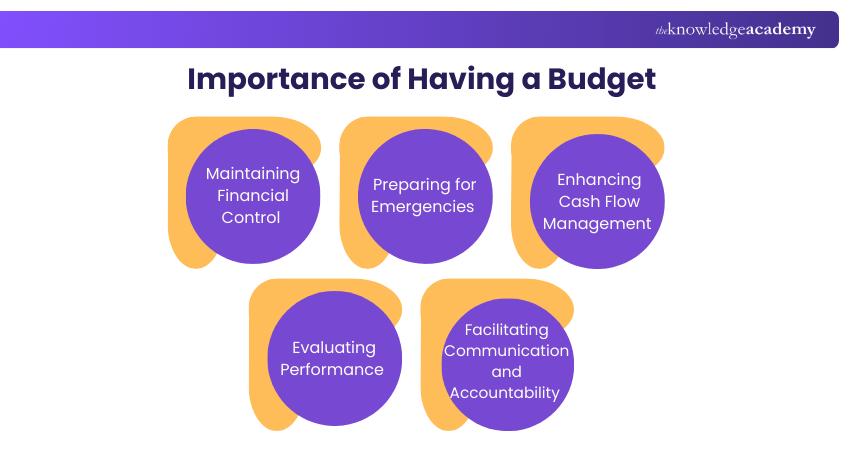
1) Maintaining Financial Control
Budgeting helps you control your income and expenditures since you can see your balance in detail. By limiting the amount of money spent and monitoring the expenses made, a Budget prevents you from going over the Budgeted amount and directing money to priority areas to avoid incurring debts, hence achieving financial control.
2) Preparing for Emergencies
Emergency funds are also important in any well-laid-down Budget to cover diseases, accidents, and job losses. Creating and maintaining an emergency fund, part of an appropriate monthly Budget, allows individuals and organisations to be financially prepared for unforeseen expenses and remain financially stable.
3) Enhancing Cash Flow Management
Budgeting helps manage cash flows by projecting and controlling the timing of resources and obligations. It also assists in determining the surplus or deficiency of cash flow and planning the finances well in advance. This makes it easy to prepare and manage expenditure and income patterns to support an operation's functioning.
4) Evaluating Performance
Budgeting is a tool for comparing financial performance. It involves estimating actual income and expenses against projected standards that aid individuals and organisations in recognising their strengths and weaknesses. Budgeting enables people to make the right financial decisions, increase effectiveness, and meet financial objectives.
5) Facilitating Communication and Accountability
A Budget provides accountability and encourages communication between households and other organisations. It fosters accountability because everyone is aware of the financial goals and the roles they have been assigned to undertake. Budgeting is also valuable for organisations since it makes all departments responsible for their overall financial health, hence the need to use resources efficiently.
Essential Components of a Budget
A well-planned budget requires essential elements that enable you to track your earnings while you minimise your expenses, make smart savings, manage your debts, and build your emergency fund.
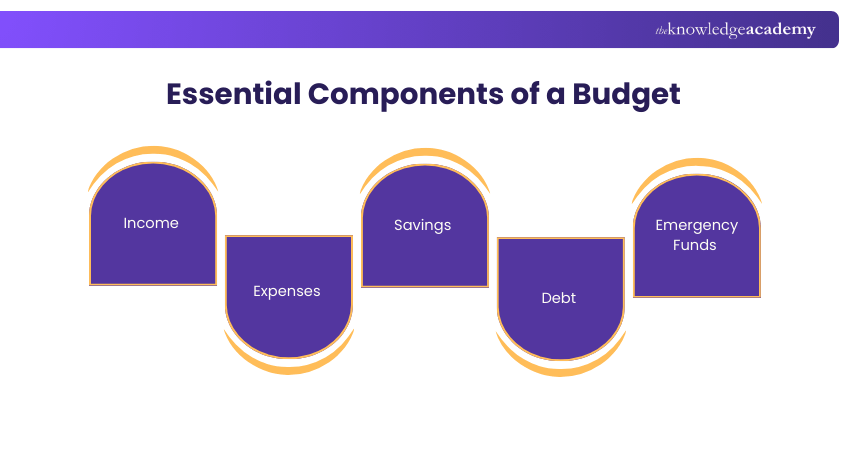
1) Income
Income refers to the sum of money that you obtain as a result of all your sources of earnings, such as a salary, profit in a business, side jobs or freelance work. The first thing in planning how you will spend, save and allocate is knowing your income so that you can spend, save and allocate money accordingly.
2) Expenses
Expenses are what you pay on a regular basis, like rent, utilities, groceries, transport and bills. These are useful in tracking where your money is spent to enable you give priority to what is important in spending and reduce unnecessary expenses.
3) Savings
Savings are that part of your income which you save in order to use in the future or in meeting future targets. When money is allocated in savings, a financial cushion is created towards the intended purpose, such as a home purchase or schooling.
4) Debt
Debt is made up of any money that you owe, like loans or credit card balances. Debt budgeting involves making payments in case you cut on interest expenses and redirect the income to use in other financial statements.
5) Emergency Funds
An emergency fund is a specific stock of money that is stored in case of some unforeseen occurrences, either in case of a medical emergency or loss of a job. It assists in guarding your financial scheme in the long term since you would not borrow or raid savings to cover such everyday requirements.
Types of Budgets
There are different types of Budgets which you can look into if you are starting to Budget for the first time. These are as follows:
1) Business Budget Types
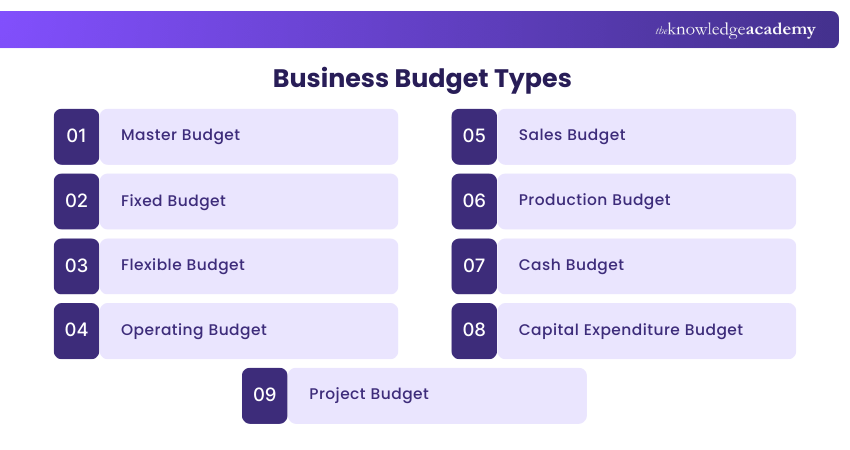
Let’s look at the business budget types below.
1) Master Budget
The Master Budget functions as a detailed financial planning system which combines every budget element of an organisation. The organisational financial plan encompasses complete organisational projections for sales production expenses and other economic activities. The planning tool functions as a central instruction which assists both strategic decision processes and performance evaluation operations.
2) Fixed Budget
The Fixed Budget stays intact without considering any changes that occur in business activity levels. Budgets established at the start of the period stay unchanged without modifications for altering sales or production levels during the period. Budgets of this type prove beneficial for organisations whose operations display stable conditions.
3) Flexible Budget
A Flexible Budget adjusts according to changes in business activity levels. It provides a more accurate financial plan, varying with actual sales or production volumes. This type of Budget is helpful for organisations with fluctuating operations, allowing for better responsiveness to changes in the business environment.
4) Operating Budget
An Operating Budget estimates the revenues and expenses related to a business's daily operations. It includes projections for sales, cost of goods sold, and operating expenses. This Budget helps organisations plan their operational activities and manage their financial performance.
5) Sales Budget
Organisations use the Sales Budget to predict their sales revenue during a particular time period. The budget depends on both market research and past sales statistics as well as established sales targets. The essential role of this budget enables planning of manufacturing operations alongside inventory control protocols alongside marketing plans and establishes sales targets in alignment with operational strategies.
6) Production Budget
The Production Budget calculates the total number of units produced to meet sales goals and inventory requirements. It helps in planning production activities, ensuring sufficient resources to meet demand. This Budget is essential for managing manufacturing operations and maintaining optimal inventory levels.
7) Cash Budget
Cash Budget predicts all cash movements throughout a defined period while incorporating Cost of Sales amounts that influence cash flow directly. Organisations can use this tool to monitor their cash situation while having enough funds to fulfil financial obligations. Organisations can achieve better financial planning through cash need projections that include Cost of Sales calculations to forecast both deficits and surpluses.
8) Capital Expenditure Budget
The Capital Expenditure Budget outlines planned investments in long-term assets such as machinery, equipment, and buildings. It details the costs and timing of these investments, ensuring that the organisation allocates resources effectively for capital projects that support growth and operational efficiency.
9) Project Budget
A Project Budget details the estimated costs associated with a specific project. It includes projections for all expenses related to the project, such as labour, materials, and overheads. This Budget helps plan and control project costs and make sure the project is completed within the allocated Budget.
Financial Planning Budget Types
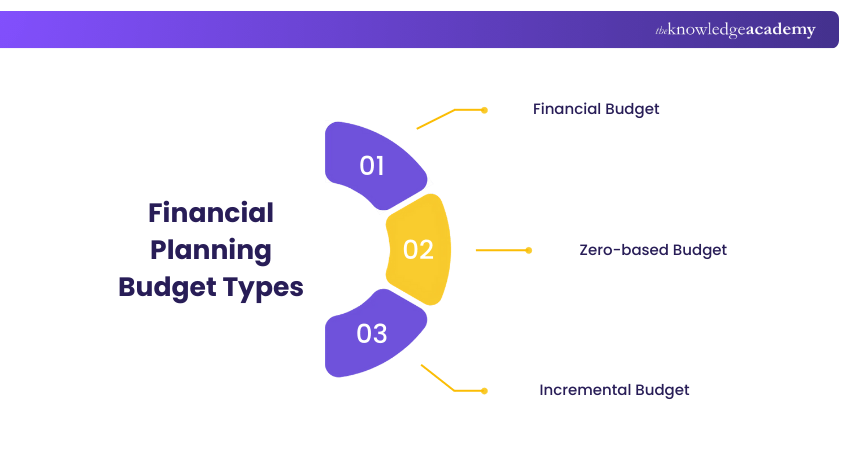
Financial Planning Budget Types are listed below.
1) Financial Budget
A Financial Budget consists of expected financial operations which establish organisational objectives and outline revenue and spending requirements and funding needs. The projections for income statement and balance sheet and cash flow statement that appear in this budget direct financial resource management toward achieving strategic organisational objectives.
Become the best version of you – Sign up for our Personal Development Courses now!
2) Zero-based Budget
A Zero Based Budgeting approach requires each expense to be justified for each new period, starting from zero. Unlike traditional Budgeting methods that adjust previous Budgets, zero-based Budgeting requires thoroughly evaluating all costs, ensuring that resources are allocated based on current requirements and priorities.
3) Incremental Budget
An Incremental Budget is based on the previous period's Budget, with adjustments made for expected changes. This type of Budget assumes that existing operations will continue and only new expenses or changes are considered. It is simple to implement but may overlook opportunities for cost savings or efficiency improvements.
Understand how you can prepare for an interview with our Interview Skills Training – Register now!
How to Build a Budget?
A budget is a unique spending plan which enables you to know where you spend your money and makes sure that your income is helping you achieve what you want to do.
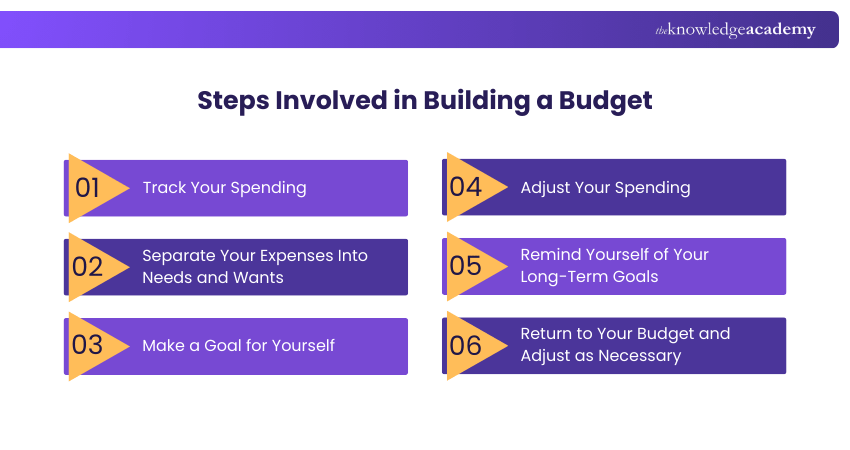
1) Track Your Spending
Look at recent receipts, bank statements and credit card bills so that you can see exactly what you are spending. Divide the average monthly cost to know your routine costs. This transparency is the basis of an effective budget.
2) Separate Your Expenses Into Needs and Wants
Divide expenditure into basic needs like rent and groceries, and non-basic needs like the need to dine out. The difference here will show in areas where you can save money when necessary. It is also used in the prioritisation of expenses required.
3) Make a Goal for Yourself
Establish specific financial goals with a systematic method, such as setting income aside for necessities, savings and non-necessary expenses. Clear objectives provide your budget with objectives. They also assist in evaluating the time-bound improvement.
4) Adjust Your Spending
Compare the planned spending and the actual spending to identify gaps. Cut on expenditures that are not fixed and where there is excessive expenditure. Even minor adjustments would yield significant savings.
5) Remind Yourself of Your Long-Term Goals
Remember major financial goals, e.g. purchasing a house or creating an emergency fund. Disciplined spending is sustained by regular reminders. This attitude assists you in getting focused and motivated.
6) Return to Your Budget and Adjust as Necessary
View your budget on a regular basis to indicate changes in either income or expenses. The types and construction of updates are subject to change in response to your priorities. Constant changes make your budget realistic and efficient.
Turn handshakes into game-changers – Register for our Building Business Relationships Training now!
What is the 50-20-30 Budget Rule?
The 50-20-30 budget rule is a straightforward, yet powerful financial strategy designed to help individuals manage their income effectively. It divides after-tax income into three main categories: needs, savings, and wants. This method offers a structured approach to balancing essential expenses, financial security, and lifestyle choices.
1) 50%: Needs (Essential Expenses)
Half of your income, or 50%, should be allocated to needs; essential expenses necessary for daily living. These include housing costs (rent or mortgage payments), utility bills (electricity, water, internet), groceries, and transportation. Other necessities in this category are insurance policies (health, car, home, life) and minimum debt repayments (loans or credit card obligations).
2) 20%: Savings & Debt Repayment
The next 20% of your income should go towards savings and debt repayment, focusing on building long-term financial security. This includes contributions to an emergency fund, which acts as a financial cushion for unexpected situations like medical emergencies or job loss. Additionally, this category covers retirement savings, investments, and making extra payments on outstanding debts.
3) 30%: Wants (Lifestyle Choices)
The remaining 30% of your income is for wants, which includes discretionary spending on non-essential items and activities. This category covers entertainment, dining out, travel, shopping, and hobbies; things that add enjoyment to life but are not necessary for survival. While it's important to enjoy life and spend on personal interests, mindful spending is crucial to ensure that lifestyle choices do not negatively impact financial stability.
Common Budgeting Mistakes to Avoid
By pointing out common budgeting mistakes, we can contain spending, develop a savings habit, and remain financially stable.
a) Not Tracking Expenses: Without tracking, small daily costs add up and quietly derail your budget.
b) Setting Unrealistic Goals: Unachievable targets reduce motivation and often cause budgeting plans to fail.
c) Skipping Emergency Savings: Lack of an emergency fund can force you into debt during unexpected expenses.
d) Failing to Review the Budget Regularly: An outdated budget stops reflecting real income and spending patterns.
e) Ignoring Effective Savings Tools: Not using suitable savings accounts limits growth and weakens long-term planning.
Conclusion
Budget planning is not merely following figures. It is a matter of informed decisions, preventing typical errors and being on track with your financial plan. By knowing What is a Budget, you will be able to establish wiser habits, save without any fear, and establish long-term financial security.
Learn how to adapt to changes in working routine or environment with our Stress Management Course!
Frequently Asked Questions
How Often Should a Budget be Reviewed?

Revise your budget on a monthly basis to keep track of it and update it when your income, expenses, or goals are altered.
What Tools can be Used for Budgeting?
You can use budgeting and forecasting software like Abacum, Prophix, QuickBooks Online, Xero, or even Excel and Google Sheets to plan, track, and analyse finances effectively. These tools help automate data, improve accuracy, and support collaboration across teams or personal finances.
What are the Other Resources and Offers Provided by The Knowledge Academy?
The Knowledge Academy takes global learning to new heights, offering over 3,000+ online courses across 490+ locations in 190+ countries. This expansive reach ensures accessibility and convenience for learners worldwide.
Alongside our diverse Online Course Catalogue, encompassing 19 major categories, we go the extra mile by providing a plethora of free educational Online Resources like Blogs, eBooks, Interview Questions and Videos. Tailoring learning experiences further, professionals can unlock greater value through a wide range of special discounts, seasonal deals, and Exclusive Offers.
What is The Knowledge Pass, and How Does it Work?
The Knowledge Academy’s Knowledge Pass, a prepaid voucher, adds another layer of flexibility, allowing course bookings over a 12-month period. Join us on a journey where education knows no bounds.
What are the Related Courses and Blogs Provided by The Knowledge Academy?
The Knowledge Academy offers various Personal Development Courses, including the Time Management Training, Attention Management Training, and Dealing With Difficult People Course. These courses cater to different skill levels, providing comprehensive insights into Capital Budgeting.
Our Business Skills Blogs cover a range of topics related to What is a Budget, offering valuable resources, best practices, and industry insights. Whether you are a beginner or looking to advance your Business skills, The Knowledge Academy's diverse courses and informative blogs have got you covered.

The Knowledge Academy


Global Training Provider
The Knowledge Academy is a world-leading provider of professional training courses, offering globally recognised qualifications across a wide range of subjects. With expert trainers, up-to-date course material, and flexible learning options, we aim to empower professionals and organisations to achieve their goals through continuous learning.

Upcoming Business Skills Resources Batches & Dates
Date
 Introduction to Managing Budgets
Introduction to Managing Budgets
Fri 7th Aug 2026
Introduction to Managing Budgets
Fri 30th Oct 2026

 If you wish to make any changes to your course, please


