




We may not have the course you’re looking for. If you enquire or give us a call on 01344203999 and speak to our training experts, we may still be able to help with your training requirements.
Traditional Budgeting: Definition, Process, and Benefits
ByNaveena VenkatesanLast updated on: 23 September 2026
Traditional budgeting is a time-tested approach to financial planning. It utilises historical data to forecast future costs and income. Explore this blog to grasp traditional budgeting, implementation methods, and the advantages and disadvantages of this persistent technique.

In a Nutshell
1. Traditional budgeting uses historical financial data to estimate future revenue and expenses.2. It involves reviewing previous figures and adjusting them for anticipated changes.3. Organisations use the budget to allocate resources and monitor financial performance.4. Regular variance analysis helps compare actual results with budgeted figures.5. This approach is simple and familiar but may carry forward outdated assumptions.
Ever curious about how companies keep their financial ship sailing smoothly year after year? The secrets are often in the sails of traditional budgeting. Like a captain's log, it charts a clear course for spending and saving through a structured financial plan.
Dive into our blog, and we’ll take you on a journey through the nuts and bolts of traditional budgeting. You’ll learn how to map out your money, steer through the setup, and balance the pros against the cons. Whether you’re a budgeting rookie or a fiscal navigator, mastering traditional budgeting can be your compass to financial triumph!
What is Traditional Budgeting?
Traditional budgeting is a financial planning approach in which organisations estimate future revenues, expenses and resource requirements, typically for a fixed annual period. It may involve reviewing previous figures and adjusting them for anticipated changes. Its structured nature helps organisations create a clear financial roadmap, making it a widely adopted approach.
By relying on past performance and adjusting for expected changes, traditional budgeting provides a systematic way to allocate resources and manage finances. This approach can support alignment with an organisation's strategic goals and objectives, facilitating effective financial management and planning.

How to Use Traditional Budgets?
Let's explore how to set up and use a traditional budget to monitor financial performance effectively.
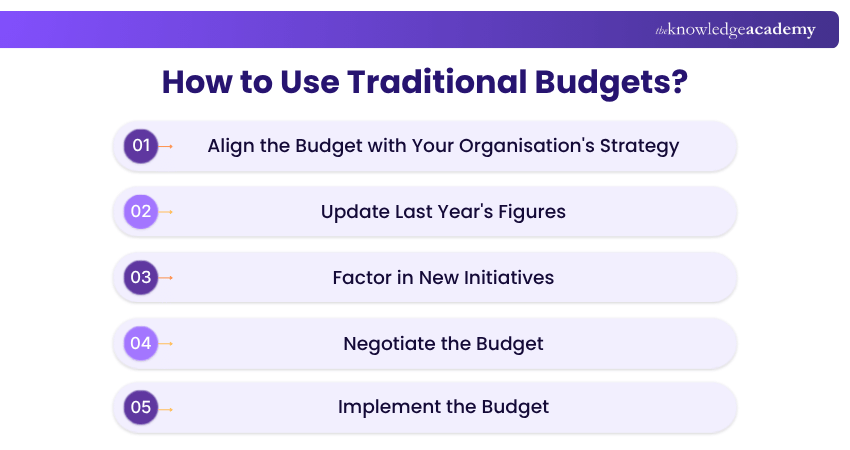
1) Align the Budget with Your Organisation's Strategy
The budgeting process typically begins at a high level as part of the organisation's strategic planning. At the conclusion of strategic planning, executives finalise sales and profit projections, economic forecasts, and other assumptions impacting revenue and expenses.
Once these factors are agreed upon, they form the basis for preparing the budget for the upcoming period, usually the next fiscal year. If the strategy remains largely unchanged from the previous year, with only minor modifications, a traditional budget may be suitable. However, if the strategy has significantly shifted, the organisation may consider an alternative approach, such as zero-based budgeting.
2) Update Last Year's Figures
Begin by reviewing last year's budget and actual financial results, and then adjust each line item based on anticipated changes for the coming year.
With the organisation's strategy in mind, consider the following:
a) What is the projected revenue for this year?
b) Will additional spending on marketing or commissions be necessary to achieve these sales figures?
c) Are there plans to expand into new territories, and what are the associated costs?
d) Do you need to account for cost-of-living wage adjustments or union agreements?
e) Are utility or raw material costs expected to rise or fall?
f) Are there other factors that will vary or new items to include or eliminate?
Trainer's Insight
Do not rely solely on last year’s figures. Review current priorities, market conditions and actual spending before finalising the budget to avoid carrying forward outdated assumptions.
Boost your financial management skills with our Financial Management Course - Sign up today!
3) Factor in New Initiatives
Incorporate new activities, projects, investments and resource requirements into the budget based on the goals and needs for the upcoming period.
a) Will new equipment or other capital expenditure be required?
b) Are there plans to hire additional staff?
c) Is there a new product or service being introduced?
d) Are any major projects planned that require additional resources?
e) Conversely, are there projects or activities that will be cut or eliminated?
4) Negotiate the Budget
Once the proposed budgets have been submitted, they are typically reviewed by management and the finance team. Departments may be asked to justify particular expenses, revise assumptions or prioritise activities when available resources are limited.
Be prepared to explain the assumptions behind your budget and demonstrate how the requested resources support the organisation's objectives. The final budget should balance departmental requirements with the organisation's overall financial priorities and available resources.
5) Implement the Budget
After the final budget approval, use it to track actual results against budgeted figures.
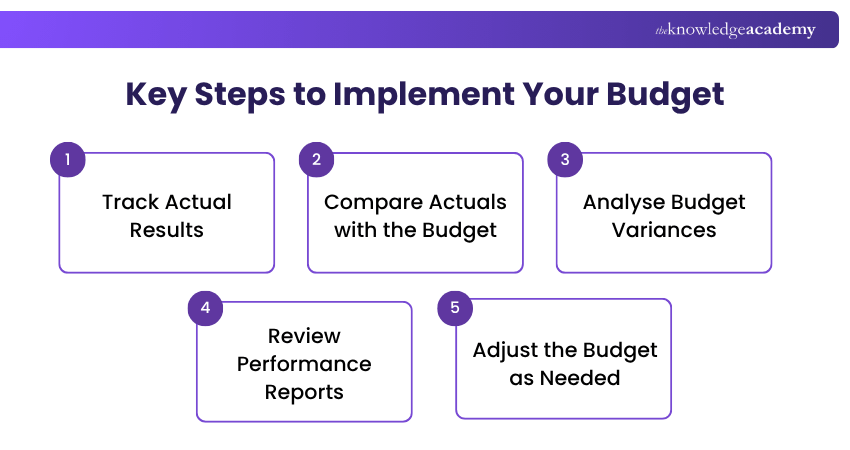
Throughout the year, regularly analyse your budget and calculate variances. Many organisations require periodic budget variance reports to monitor financial performance. These reports help identify significant differences between actual and budgeted performance, investigate their causes and determine whether corrective action or updated forecasts are needed.
If circumstances change significantly, organisations may update their forecasts or, where their budgeting procedures allow, formally revise the budget. The original approved budget may still be retained as a baseline for evaluating performance and understanding the causes of major variances.
Develop smarter budgeting skills through our Marketing Budget Course. Register now!
Advantages and Disadvantages of Traditional Budgeting
Understanding the strengths and weaknesses of traditional budgeting can help organisations determine if it is the right approach for their financial planning needs. Let’s explore the advantages and disadvantages of traditional budgeting:
Advantages
Traditional budgets offer several advantages in managing an organisation’s financial activities. Let’s delve into them:
a) Provides a Robust Framework: Traditional budgets rely on historical data from the previous year, creating a solid foundation. This reference point simplifies budget management and execution.
b) Encourage Departmental Participation: By involving departments in reviewing last year’s spending and shaping the next year’s budget, the process can encourage wider participation in financial planning. However, the level of involvement depends on how the organisation manages its budgeting process.
c) Provides a Familiar and Consistent Process: Traditional budgeting uses an established structure that employees and managers may already understand. This familiarity can make the budgeting process easier to follow and apply consistently.
Disadvantages
Traditional budgeting has its share of drawbacks. Let’s explore them:
a) Higher Risk of Outdated Assumptions: Relying heavily on previous budgets or inaccurate historical figures can cause errors or unrealistic assumptions to be carried into the new budget.
b) Time-consuming Process: Traditional budgeting may involve reviewing substantial amounts of financial information. Comparing the previous year's spending with expected expenses, accounting for inflation, and other factors can consume significant time.
c) May Encourage Undesirable Behaviours: Traditional budgets may encourage managers to overestimate costs or use their remaining allocation to avoid receiving a reduced budget in the next period.
d) Risk of Strategic Misalignment: Each year brings new strategic objectives. Yet, traditional budgets often replicate past spending patterns, hindering alignment with evolving organisational goals.
e) May be Less Responsive to Change: A fixed annual budget can become less relevant when market conditions, input costs, demand or organisational priorities change significantly during the budget period. Organisations can address this limitation by combining budgets with regular forecasting and variance analysis.
Strengthen your mindset and maximise your potential with Personal Development Courses - Sign up today!

Naveena Venkatesan is a Content Editor with 2+ years of experience in content writing, editing and linguistic quality assurance. Her research, fact-checking and editorial experience enable her to develop accurate, accessible resources across Business Skills, Human Resources, and Accounting and Finance.
View Detail

 If you wish to make any changes to your course, please


