


 Top Rated Course


We may not have the course you’re looking for. If you enquire or give us a call on +44 1344 203 999 and speak to our training experts, we may still be able to help with your training requirements.
What Is Organisational Culture? Key Elements and Benefits
The Knowledge Academy 06 January 2026Organisational culture is the shared values, beliefs, and behaviours that guide how employees work, communicate, and make decisions, shaping a company’s identity. A strong culture fosters alignment, drives performance, and supports long-term success by creating a unified and engaging workplace environment. Read now to learn more!

Training Outcomes Within Your Budget!
We ensure quality, budget-alignment, and timely delivery by our expert instructors.
Table of Contents
When productivity drops, or conflicts arise, many leaders blame a skill lack or a flawed strategy. However, the root, often, cause dishonesty in the organisation’s culture. Misalignment in values, behaviours, and communication can quietly enable motivation, trust, and performance erosion over time. A weak culture affects everything, from employee retention to customer satisfaction.
The positive part is that organisational culture can change and improve over time. With clear values and focused actions, it can be strengthened effectively. In this blog, we explain What Is Organisational Culture?, why it matters for business success, the main culture types, and practical ways to build a high-performing workplace.
Table of Contents
1) What is Organisational Culture?
2) Example of Organisational Culture
3) Why Is Company Culture So Important?
4) Key Elements of Organisational Culture
5) Types of Organisational Culture
6) Steps to Build a High-performing Organisational Culture
7) Qualities of a Great Organisational Culture
8) Future of Organisational Culture
9) What is the difference Between Organisational Culture and Organisational Climate?
10) Why is Cultural Fit Important When Hiring Employees?
11) Benefits of a Good Oganisational Culture
12) Conclusion
What is Organisational Culture?
Organisational Culture refers to shared values, beliefs, behaviours, and norms that shape the working and interaction of employees within a company. It influences everything from decision-making and Effective Communication to how success is defined and celebrated. A strong culture creates a clear sense of identity and purpose for everyone involved.
Example of Organisational Culture
For example, a company with a Clan Culture focuses on teamwork, open communication, and a family-like environment. Top tech companies like Google often reflect this by encouraging collaboration, creativity, and flexibility, helping employees feel supported and more connected to the company’s mission.

Why Is Company Culture So Important?
Company culture shapes how your organisation lives its purpose and delivers on its brand promise. A strong culture sets you apart in the market, helping attract and retain loyal customers who become brand advocates.
It also draws in top talent and turns employees into passionate ambassadors. Teams that align with the company’s culture consistently outperform others on key performance metrics, driving better results and long-term success.
Key Elements of Organisational Culture
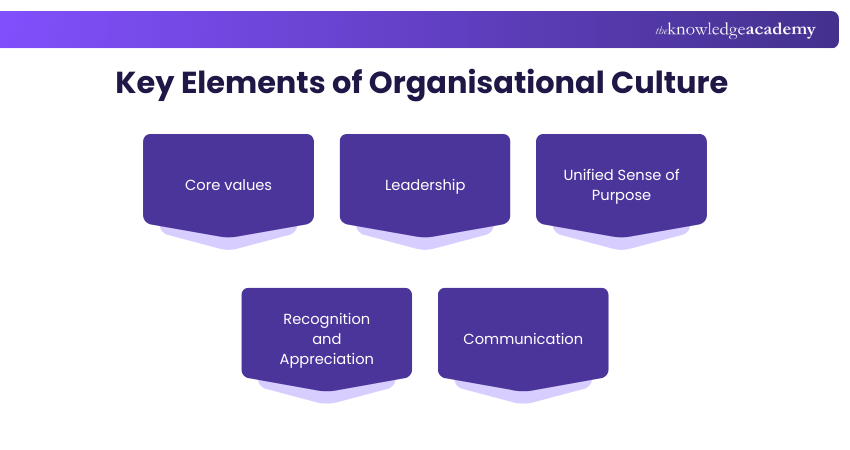
Organisational Culture is more than office perks. It is the values, behaviours, and principles that shape daily work life. The strongest cultures are people-focused, purpose-driven, and reinforced through consistent leadership and communication.
Core values
Core values are the foundation of your organisation’s identity, guiding employee behaviour and decision-making. They should not just exist in handbooks but be practised daily. When leaders demonstrate these values and embed them into team activities, employees naturally adopt them. Values should be clear, observable, and actionable, helping even new hires align with the culture quickly. Over time, these shared values shape a strong, unified work environment.
Leadership
Strong leadership drives a positive culture by modelling ethical behaviour, inspiring others, and remaining approachable. A good leader embodies the organisation’s values, supports their teams, and prioritises employee well-being. When leaders focus on creating a happy and respectful workplace, employees feel heard and valued. Great leadership is not just about authority. It is about setting the tone for collaboration, trust, and ethical decision-making.
Unified Sense of Purpose
A shared purpose gives employees meaning and direction in their roles. When teams understand the reason behind their work, motivation and performance improve. Purpose connects individuals across departments and encourages collaboration. It helps employees feel they are contributing to something larger than themselves. Organisations that clearly define and communicate their purpose see greater engagement and stronger long-term loyalty from their teams.
Recognition and Appreciation
Frequent recognition builds a culture of gratitude and boosts employee morale. When people are acknowledged for their work, whether through appreciation posts, perks, or promotions, they feel valued and motivated. Positive reinforcement significantly increases engagement and retention. Recognition does not need to be grand. Even small, consistent acknowledgements can transform how employees perceive their workplace and their importance within it.
Communication
Effective communication is essential for a healthy work environment. Every employee has a unique style, so it is important to encourage respectful and open dialogue. Poor communication can create confusion and tension. Encouraging honest, two-way conversations builds trust and prevents conflict. Leaders must listen as much as they speak, creating a culture where every team member feels heard and respected.
Become a strategic learning leader – Sign up for our Certified Training and Development Manager today!
Types of Organisational Culture
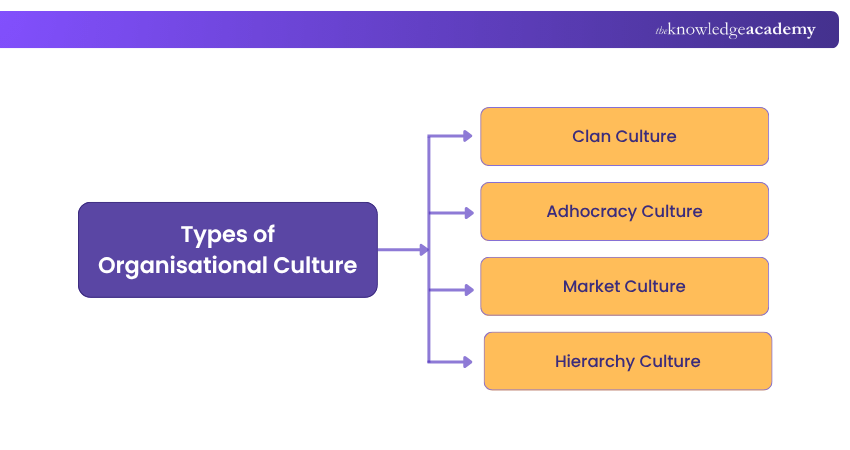
Organisational Cultures vary depending on the company’s operations and values. Understanding the different types can help leaders shape a business-goal-supportive and dynamic culture. Here are four common types you can assess and apply to your own organisation:
1) Clan Culture
This culture feels like a close-knit family where teamwork, support, and open communication come together. Employees are actively encouraged for collaboration, and leaders often act as mentors, creating an employee-valued environment.
2) Adhocracy Culture
Their focus is primarily on innovation, adaptability, and an adhocracy culture that thrives in fast-paced, creative settings. It encourages risk-taking and experimentation, making it ideal for prioritisation and new ideas, encouraging organisations.
3) Market Culture
Market culture is more results-driven than innovation, with a strong focus on competition, achievement, and measurable success. Employees are motivated by targets, and Leadership pushes for performance and efficiency.
4) Hierarchy Culture
Structured and process-oriented, hierarchy culture values consistency, control, and clear roles. This model suits organisations that rely on formal procedures and long-term stability, such as government or finance sectors.
Design smarter training strategies – Grab your seats for our expert-curated Training Needs Analysis Course today!
Steps to Build a High-performing Organisational Culture
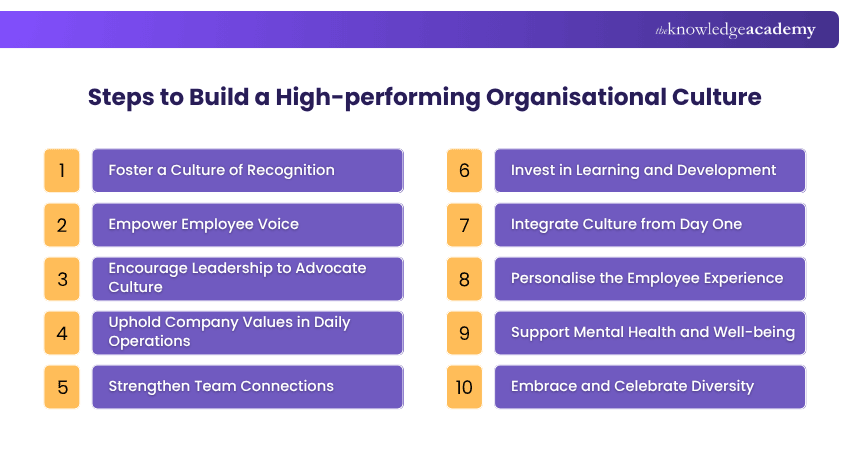
Creating a strong Organisational Culture doesn’t happen by chance; it requires intention, consistency, and genuine effort. By following the below-mentioned steps, businesses can shape a people-thriving, collaborative, meaningful-result-driven workplace:
1) Foster a Culture of Recognition
Recognise employee efforts for a morale boost and positive behavioural reinforcement. Make sure to have each achievement celebrated, whether big or small, to make individuals feel valued and appreciated. Recognition also strengthens a sense of belonging and motivates continued high performance.
2) Empower Employee Voice
Encourage the open feedback framework where employees can make decisions that affect them. This approach builds trust and creates an inclusive environmental culture. Giving employees a platform to contribute ideas fosters innovation and shared ownership.
3) Encourage Leadership to Advocate Culture
Leaders should model the culture they want to see. When management actively helps promote values and behaviour, it sets the organisational standards. Cultural alignment starts at the top and cascades through the entire organisation.
4) Uphold Company Values in Daily Operations
Company values shouldn’t just exist on paper; they should enable everyday decision-making and turn them into actions. Try to integrate them into meetings, goal-setting, and performance reviews. Living the values builds credibility and consistency across the team.
5) Strengthen Team Connections
Strong relationships build a sense of community and support. Organise regular team-building activities to foster collaboration and trust. Teams that connect well are more pressure-resilient and effective.
6) Invest in Learning and Development
Try to inculcate continuous learning and growth-driven opportunities, a culture with prioritised development over long-term success and individual progress. Learning opportunities help in the engagement, adaptability and future-readiness of employees.
7) Integrate Culture from Day One
Begin cultural integration during onboarding. New hires should quickly understand the organisation’s values, expectations, and working style. Embedding culture early helps employees adapt faster and feel confident in their roles.
8) Personalise the Employee Experience
Tailor support, development, and recognition of each employee’s goals and preferences. Personalisation shows that people are more than just job titles. A customised experience makes employees feel seen, valued, and supported.
9) Support Mental Health and Well-being
Prioritise work-life balance, flexible hours, and access to Good Mental Health resources. A supportive environment helps in health and engagement of employees. Addressing mental health needs shows genuine care and builds long-term loyalty.
10) Embrace and Celebrate Diversity
Foster Diversity in the Workplace by creating an inclusive environment where differences are respected and celebrated. Diversity brings new perspectives that strengthen innovation and teamwork. An inclusive culture enhances decision-making and reflects the values of modern organisations.
Qualities of a Great Organisational Culture
A great organisational culture aligns with a company’s purpose and values, supports its people, and promotes long-term sustainability. The following qualities are key to creating a positive, productive, and resilient workplace environment.
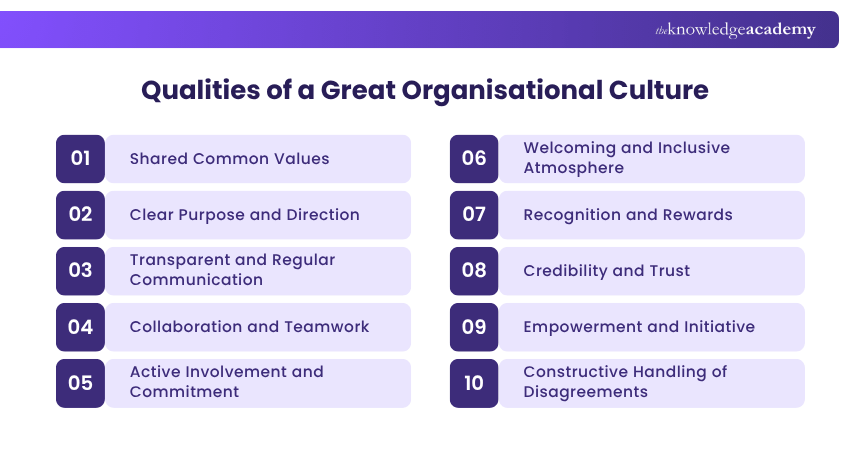
Shared Common Values
Shared common values form the foundation of a strong culture by guiding behaviour, decision-making, and interactions. When employees align with the organisation’s values, it creates a unified direction and a deeper sense of belonging. These values help teams work more cohesively and stay committed to the mission, reinforcing the company’s identity at every level.
Clear Purpose and Direction
Having a clear organisational purpose gives employees a reason to care about their work. It aligns day-to-day efforts with long-term goals and helps everyone understand the bigger picture. A clear direction allows leaders to make better decisions, employees to stay focused, and teams to measure progress meaningfully, boosting both motivation and performance across departments.
Transparent and Regular Communication
Effective cultures rely on open, honest, and ongoing communication. When information flows freely across teams, trust grows, collaboration improves, and misunderstandings decrease. Regular communication ensures that employees feel informed and involved in company matters, which supports alignment with goals and quick resolution of issues. Transparency also builds confidence in leadership and decision-making processes.
Collaboration and Teamwork
A culture of collaboration promotes unity, shared responsibility, and collective problem-solving. When employees work as a team rather than in silos, they pool knowledge and skills to achieve better outcomes. Teamwork also builds relationships, encourages creativity, and strengthens morale. By creating an environment where everyone contributes, companies improve their agility and overall effectiveness.
Active Involvement and Commitment
When employees are actively engaged, they bring energy, initiative, and ownership to their roles. Commitment to organisational success results in increased productivity, better innovation, and stronger performance. Encouraging involvement at all levels ensures that people feel their voice matters. It also inspires a culture where employees are motivated to go beyond basic responsibilities.
Welcoming and Inclusive Atmosphere
A healthy organisational culture values diversity and creates an inclusive space where everyone feels respected and seen. Inclusion leads to higher engagement, wider perspectives, and more innovation. Employees are more likely to contribute fully when they feel welcome and accepted, regardless of background. This kind of atmosphere fosters fairness, psychological safety, and mutual respect.
Recognition and Rewards
Acknowledging achievements builds morale and motivates employees to continue doing their best work. Recognition can be formal or informal, from bonuses and promotions to a simple thank-you. It reinforces positive behaviour, boosts retention, and strengthens loyalty. A culture that celebrates effort and contribution regularly is more likely to foster long-term commitment and job satisfaction.
Credibility and Trust
Trust is the foundation of a high-functioning workplace. When leaders act with integrity, communicate openly, and remain consistent, employees feel confident and secure. Trust encourages collaboration, risk-taking, and resilience during challenges. A credible organisation earns employee loyalty and strengthens internal relationships, which contributes to a stable and dependable work environment.
Empowerment and Initiative
Empowering employees gives them the freedom to take decisions and act responsibly. It builds confidence, drives innovation, and speeds up problem-solving. When people feel trusted to lead their own tasks or suggest improvements, they develop a stronger connection to the company. Encouraging initiative fosters leadership qualities and builds a more agile, proactive workforce.
Constructive Handling of Disagreements
Disagreements are natural in any team. A great culture handles them respectfully and seeks win-win outcomes. Encouraging open dialogue helps prevent conflict from escalating and promotes understanding across different views. When conflicts are resolved constructively, teams build stronger relationships and maintain a positive, healthy work environment that supports growth and collaboration.
Master the core of workforce development with our Learning And Development Training Course – Register today!
Future of Organisational Culture
Organisational culture continues to evolve as new challenges emerge and workplace norms shift. It becomes the underlying theme guiding employee behaviour, shaping how people think, feel, and act within an organisation.
As culture develops over time, practices that solve problems and support strategy gradually become embedded and self-reinforcing. Leaders can intentionally shape this evolution through ongoing cultural assessments and strategic change initiatives, transforming culture into a powerful force for growth and cohesion.
What is the Difference Between Organisational Culture and Organisational Climate?
Organisational culture refers to the shared values, beliefs, and norms that shape how people behave within a company. Organisational climate, on the other hand, reflects employees' perceptions of their work environment. While culture is deep-rooted and long-term, climate is more immediate and can shift with leadership or policies.
Why is Cultural Fit Important When Hiring Employees?
Hiring for cultural fit ensures that new employees align with the organisation’s values, behaviours, and work style. It leads to better team cohesion, higher engagement, and reduced turnover. When people feel connected to the company’s culture, they are more productive, motivated, and likely to stay long-term.
Benefits of a Good Oganisational Culture
A strong organisational culture creates a foundation for happier, more engaged employees and long-term business success. It enhances workplace morale, improves collaboration, and aligns everyone with shared goals and values.
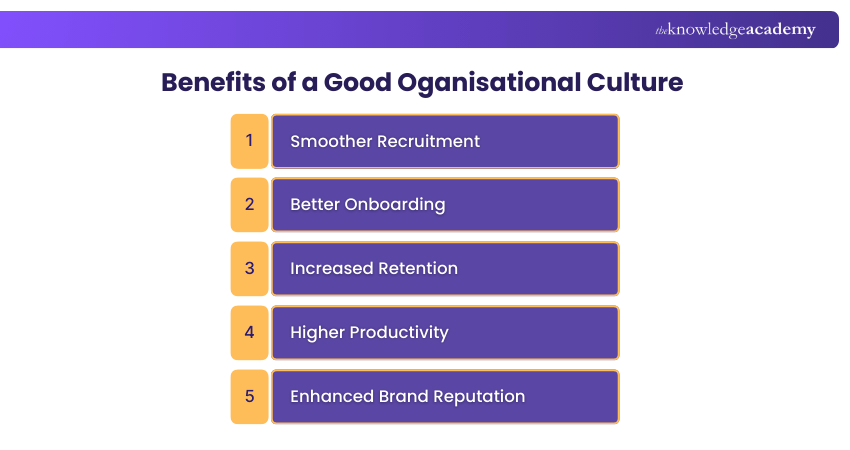
Key Benefits Include:
a) Smoother Recruitment: Hiring becomes easier as culture-fit attracts like-minded talent and boosts motivation.
b) Better Onboarding: New employees adapt faster when organisational values and expectations are clearly defined.
c) Increased Retention: A positive work environment fosters loyalty and reduces employee turnover.
d) Higher Productivity: Employees who feel valued and supported tend to perform better and take fewer sick days.
e) Enhanced Brand Reputation: A strong internal culture reflects externally, strengthening the company’s public image and credibility.
Transform Your Passion into a certified profession with our Certified Training Professional Course. Sign up now!
Conclusion
A thriving Organisational Culture doesn’t happen overnight; it begins with small, consistent efforts. From leadership to communication and employee development, every decision shapes the cultural environment. Businesses that invest in a positive and inclusive culture see lasting benefits in engagement, innovation, and retention. It’s not just about what you do; it’s about how your people feel while doing it.
Are you an HR professional seeking to ride and steer the wave of digital transformation? Our Digital Transformation in HR Training will help you achieve that - Register now!
Frequently Asked Questions
What Trends are Influencing the Future of Organisational Culture?

Trends shaping the future of organisational culture include hybrid work models, focus on employee well-being, inclusive leadership, and digital transformation. These trends prioritise flexibility, belonging, continuous learning, and purpose-driven work environments to enhance engagement and long-term organisational success.
What Is Bad Culture in a Workplace?
Bad culture includes poor communication, lack of trust, unclear values, and a toxic or high-pressure environment. It often leads to disengagement, high turnover, and low morale, making it difficult for the performance of both individuals and the organisation.
What are the Other Resources and Offers Provided by The Knowledge Academy?
The Knowledge Academy takes global learning to new heights, offering over 3,000 online courses across 490+ locations in 190+ countries. This expansive reach ensures accessibility and convenience for learners worldwide.
Alongside our diverse Online Course Catalogue, encompassing 19 major categories, we go the extra mile by providing a plethora of free educational Online Resources like Blogs, eBooks, Interview Questions and Videos. Tailoring learning experiences further, professionals can unlock greater value through a wide range of special discounts, seasonal deals, and Exclusive Offers.
What is The Knowledge Pass, and How Does it Work?
The Knowledge Academy’s Knowledge Pass, a prepaid voucher, adds another layer of flexibility, allowing course bookings over a 12-month period. Join us on a journey where education knows no bounds.
What are the Related Courses and Blogs Provided by The Knowledge Academy?
The Knowledge Academy offers various Learning and Development Courses, including Organisational Culture Change Course, Certified Training And Development Manager Course, and Learning And Development Training. These courses cater to different skill levels, providing comprehensive insights into What is Professional Development.
Our HR Resources Blogs cover a range of topics related to Organisational Culture, offering valuable resources, best practices, and industry insights. Whether you are a beginner or looking to advance your people management skills, The Knowledge Academy's diverse courses and informative blogs have got you covered.

The Knowledge Academy


Global Training Provider
The Knowledge Academy is a world-leading provider of professional training courses, offering globally recognised qualifications across a wide range of subjects. With expert trainers, up-to-date course material, and flexible learning options, we aim to empower professionals and organisations to achieve their goals through continuous learning.


 If you wish to make any changes to your course, please


