


 Top Rated Course

We may not have the course you’re looking for. If you enquire or give us a call on +40 316317743 and speak to our training experts, we may still be able to help with your training requirements.
What is SERP(Search Engine Results Pages), and How Does it Work?
Scarlett Adams 17 December 2025SERP stands for Search Engine Results Page and refers to the list of results that a search engine displays after a user submits a query. These results typically feature organic listings, paid ads, snippets, and multimedia elements, all aimed at delivering quick and relevant information. Higher SERP rankings enhance online visibility.

Training Outcomes Within Your Budget!
We ensure quality, budget-alignment, and timely delivery by our expert instructors.
Table of Contents
Are you looking to enhance your website's ranking on the first page of Google search? Do you feel stuck, unsure of how to achieve that even when you have all your content ready? Don't worry - you've landed on the right page!
In this blog, we'll explore What is SERP and how it works, guiding you towards getting your website on that coveted first page. So, let's not wait any longer - dive in and turn your goals into action!
Table of Contents
1) What is a SERP?
2) Core Features of SERPs
3) How Do Google SERP Work?
4) Search Engine Optimisation and SERPs
5) How to Appear in SERP (Search Engine Results Page)?
6) Comparing Organic and Paid Search Results
7) Conclusion
What is a SERP?
SERP stands for Search Engine Results Page. It is the page you are directed to when you search for something on a search engine like Google, Yahoo, or Bing. The results displayed on this page are determined by factors such as keyword relevance, content quality, and search engine algorithms. These factors help ensure that your website is Search Engine Optimised (SEO) to appear on the first page of search results.
A SERP can include a variety of elements such as text links, ads, images, videos, and other features. In a nutshell, ranking at the top of the SERP is crucial for improving your website's visibility and driving traffic.

Core Features of SERPs
Search Engine Results Pages are generated based on factors like relevant keywords, page content, and complex ranking algorithms. These elements help search engines to display the most accurate and valuable results. Below are the core features commonly found on SERPs:
1) Top Stories
Top stories refer to the contents that have appear at the top of the SERP when you search for something. The most common top stories include news articles or stories related to the search. These are primarily news-related and include a headline, thumbnail image, and content source. The main purpose of Top Stories is to deliver the latest updates to users.
2) X (Twitter) Results
SERPs sometimes include posts from X (Twitter) that are relevant to the search query. X (Twitter) Results are especially common for live events, trending discussions, and breaking news, offering real-time updates directly within the search results.
3) People Also Ask
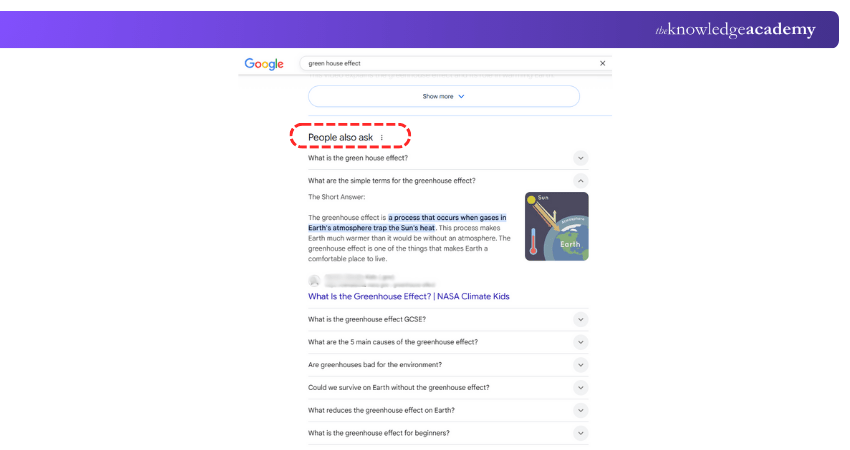
People Also Ask (PAA) is a list of questions that are related to the primary search of the user. It will be seen after a few snippets on the SERP. When you click one of the questions, it will show the website that has the content. If you click on the website, it will take you to the content page. There are high chances for your website to appear in such PAA sections of a SERP.
4) Shopping
The shopping feature of SERP is used to show the products that are available when they’re searched. It will provide both organic and paid shopping results along with the reviews and its website. This SERP will include product details such as its name, image, price, and link to its website.
5) Featured Snippets
Featured Snippets are highlighted sections that provide direct answers to search queries. They are displayed at the top of the SERP and include a link to the source page. This feature is designed to provide users with quick answers without needing to click through.
6) Knowledge Graph
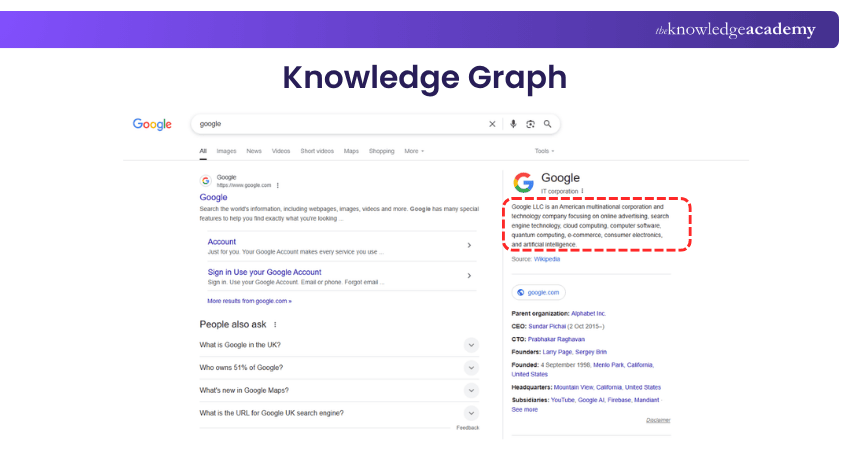
A knowledge graph is also referred to as a knowledge panel, which appears on the right side of your SERP within a box. It is filled with details that are collected from multiple websites, such as Wikipedia, etc. The function of a knowledge graph is to provide the information for your search, including dates, facts, and images.
7) Rich Snippets
Rich snippets, also known as rich results, are another feature of SERP. It includes more details compared to featured snippets, and it includes details like star ratings, images, prices, and so on. Even more, the rich snippets are way more compelling and visually appealing to the users.
Are you looking to attain the ability to develop impactful content that drives audience engagement? Join our Content Marketing Course now!
8) Local Pack
Local pack in a SERP refers to the list of local businesses provided to you when you search for one. This search will give you the details of the location of the businesses with the Maps, along with the ratings, business phone numbers, and images. Think if you are searching for locations of Amazon on Google, it will result in giving the top nearby locations for you, including the above-mentioned details.
9) Video Results
Video results are one of the prominent features of SERP. It shows the relevant videos associated with your search. All you have to do is click the video's link to play it or visit the webpage that has the video.
10) Image Results
Image results are even called image packs, and they are the oldest form of SERP. While searching for something, the results page will provide you with some images related to your search, and they are referred to as image results.
How Do Google SERP Work?
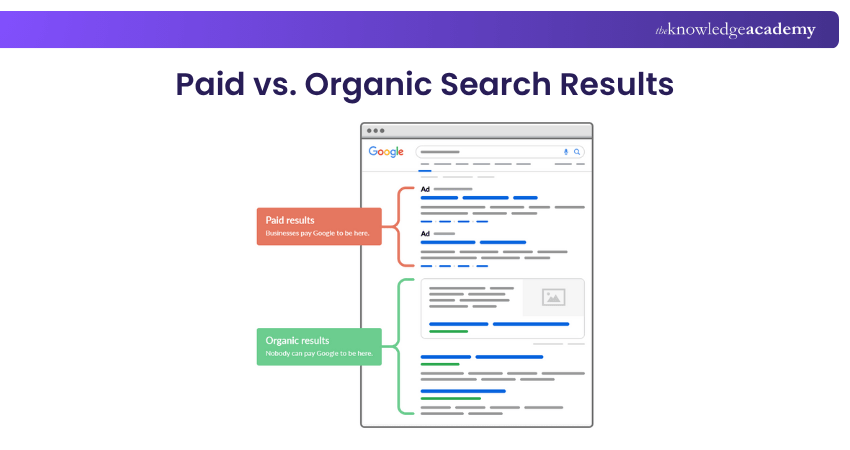
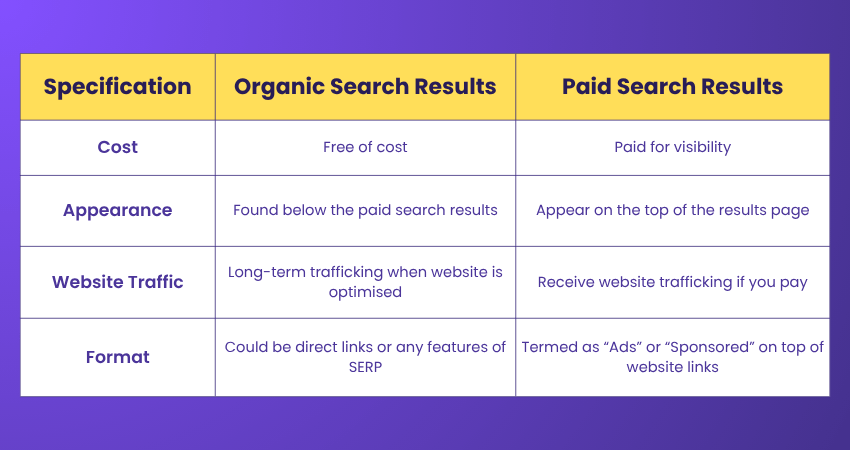
Once the users search for something on Google, it will show results as in the case of SERP, with the most relevant and related content based on different ranking factors. The results page contains organic as well as paid content. In most cases, it will be organic search results where the websites are shown based on the relevance, quality, and usability of their content.
1) Organic Results on the SERP
Organic results on SERP are basically unpaid content that appears at the top of the searches. They rank top on the result page due to the optmisation and algorithm of the contents in such a way as to appear on the top with all the relevant details. These are optimised by a specialist team or with a special technique called SEO.
2) Paid Results on the SERP
On the contrary to organic results, paid results stand at the top because they are paid to be on the top. Generally, these paid results on the SERP appear at the top as ‘Ad’ or ‘Sponsored’, above any other SERPs. This type of SERP is also known as sponsored links or even as Google Ads.
3) Ranking Signals and Search Algorithms
Ranking signals are a kind of ranking factor used to find the relevance and quality of content. Depending upon these details, organic SERPs are provided. On the other hand, search algorithms are used to order which website with the most relevant content needs to be displayed at the top. The search algorithms are constantly evolving since there are continuous inputs of content, and the most relevant one gets the place.
Boost your marketing skills with our Social Media Marketing Course by joining the crew now!
Search Engine Optimisation and SERPs
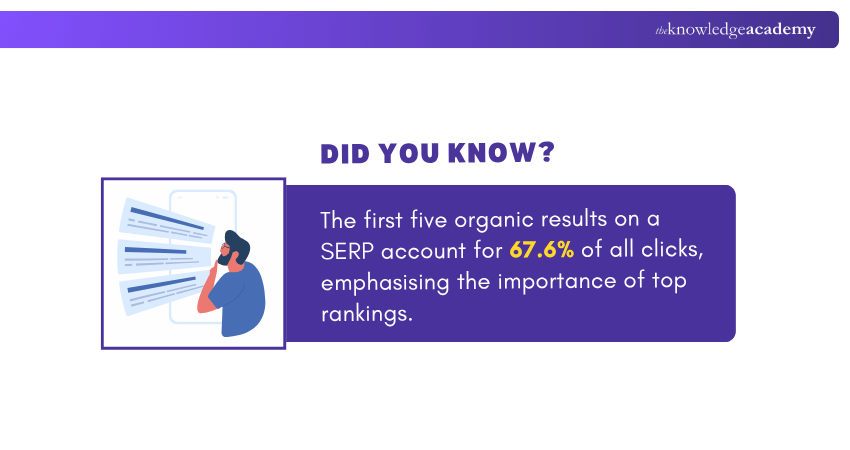
Search Engine Optimisation refers to the process of optimising and improving the website’s content and quality to get noticed by SERPs. The ultimate goal of SEO is to rank among the organic search results and to increase the visibility of your website.
SERPs are the result pages of a search; whereas SEO is a technique used to tune your website to appear in those result pages. The technique of SEO includes On-Page SEO and Off-Page SEO.
On-Page SEO
On-Page SEO refers to the practices and techniques empowered in order to have your website rank at the top of search results. It could be done by optimising your content, including relevant and high trafficking keywords, detailed yet brief meta descriptions, attractive headlines, proper images, clear website structure, descriptive URLs, and HTML codes.
Off-Page SEO
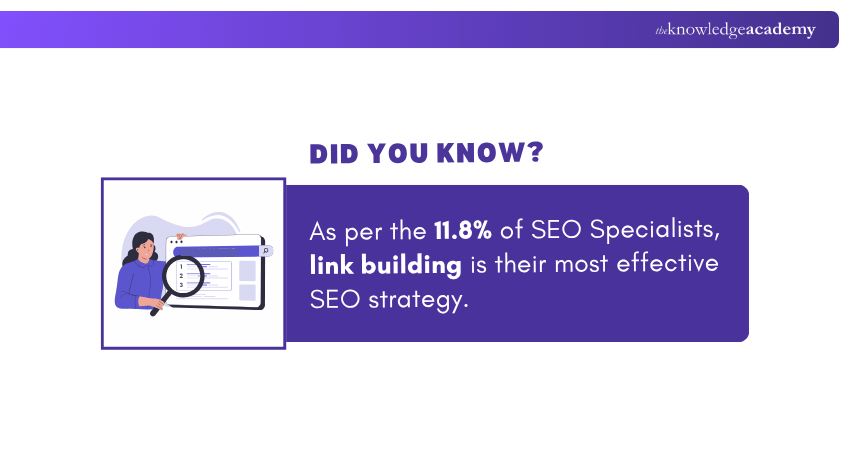
Off-Page SEO determines the work done off a website to appear in the search results. It involves activities such as link building, internal and external linking, content marketing, making a social media presence for your website, influencer marketing, and even brand mentions on various other websites. Having a strong off-page SEO will, in turn, improve your SERPs Visibility.
Would you like to learn how to create SEO-friendly content that resonates with your target audience? Register for our SEO Course now!
How to Appear in SERP (Search Engine Results Page)?
With the aim of appearing in SERP, there are certain moderations that you can do with your content and website. Let’s have a look at what you can do with SEO and Search Ads techniques to appear in SERPs:
Search Engine Optimisation (SEO)
As discussed above about the role of SEO with on-page and off-page SEOs, there is another kind to boost your visibility with the searches, and that is referred to as Technical SEO. It is the process that ensures that your website is designed as both mobile-friendly and desktop-friendly. For this, you can create a structure for your website that is appealing to users.
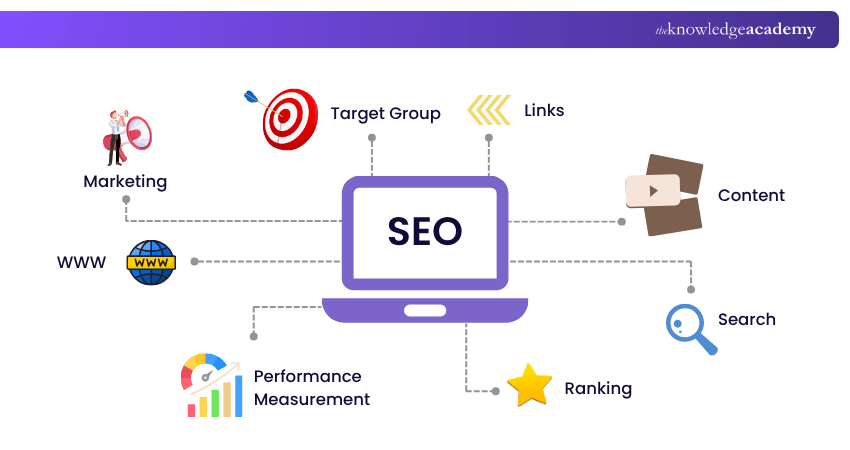
Implementing all these factors of SEOs will definitely help you scale high in the searches and begin your SEO journey today itself!
Search Ads
Search Ads are nothing but the paid search results that are shown as advertisements on the result pages. The main motto of these ads is to attract the targeted users by appearing at the top of their SERP. You can follow certain steps to get search ads started for your website.
For that, you can set up a Google Ads account and create an advertisement for your website, with proper keywords in it.
Imprint your ads in our minds by joining our Ad Verification and Tech Training today!
Comparing Organic and Paid Search Results
In comparison to organic and paid search results, it is evident that both have advantages and uniqueness of their own. However, the primary focus of both is to get the user’s attention by increasing their visibility.
Conclusion
Guess who will not love to have their content on top of search results. Obviously, everyone wishes and works for that either in any one or another possible way. Hope this blog on What is SERP, and How Does it Work, provided you with the necessary However, due to What is Volatility in SERP Rankings, the visibility of these results can fluctuate, as websites are shown based on the relevance, quality, and usability of their content.
Explore advanced research methodologies and data collection techniques with our Marketing Research Training – Sign up now!
Frequently Asked Questions
What is SERP vs SEO?

SERP is the page that is displayed when you search for something in any search engine. SEO refers to the process of optimising the content so that the website ranks higher on the SERP.
What is the Benefit of SERP?
There are numerous benefits of SERP. It includes providing quick and direct answers for the users. As for the content and website owners, it helps them to get visibility for their website and improves website traffic.
What are the Other Resources and Offers Provided by The Knowledge Academy?
The Knowledge Academy takes global learning to new heights, offering over 3,000+ online courses across 490+ locations in 190+ countries. This expansive reach ensures accessibility and convenience for learners worldwide.
Alongside our diverse Online Course Catalogue, encompassing 19 major categories, we go the extra mile by providing a plethora of free educational Online Resources like Blogs, eBooks, Interview Questions and Videos. Tailoring learning experiences further, professionals can unlock greater value through a wide range of special discounts, seasonal deals, and Exclusive Offers.
What is The Knowledge Pass, and How Does it Work?
The Knowledge Academy’s Knowledge Pass, a prepaid voucher, adds another layer of flexibility, allowing course bookings over a 12-month period. Join us on a journey where education knows no bounds.
What are the Related Courses and Blogs Provided by The Knowledge Academy?
The Knowledge Academy offers various Digital Marketing Courses, including Search Engine Marketing (SEM) Training, Content Marketing Course, and Ad Verification and Tech Training. These courses cater to different skill levels, providing comprehensive insights into Product Branding.
Our Digital Marketing Blogs cover a range of topics related to Search Engine Result Pages, offering valuable resources, best practices, and industry insights. Whether you are a beginner or looking to advance your Digital Marketing skills, The Knowledge Academy's diverse courses and informative blogs have got you covered.
Upcoming Digital Marketing Resources Batches & Dates
Date
 Search Engine Marketing (SEM) Training
Search Engine Marketing (SEM) Training
Fri 21st Aug 2026
Search Engine Marketing (SEM) Training
Fri 11th Dec 2026

 If you wish to make any changes to your course, please


