


 Top Rated Course

We may not have the course you’re looking for. If you enquire or give us a call on +44 20 4538 6376 and speak to our training experts, we may still be able to help with your training requirements.
What is an Internal Audit? A Comprehensive Overview
Scarlett Adams 15 December 2025Internal Audit is an independent, objective process that evaluates and improves an organisation’s Risk Management, control, and governance practices. It helps find problems early, and checks if rules are followed. It also gives simple ideas to improve how the company works, grows, stays safe, and reaches goals.

Training Outcomes Within Your Budget!
We ensure quality, budget-alignment, and timely delivery by our expert instructors.
Table of Contents
Running a business without checking how things are going is like driving a car with your eyes closed. You might be moving, but you won’t see the problems coming. That’s why smart companies do regular checks. An Internal Audit works like a safety check; it looks at how the business is doing, finds problems early, and helps fix them before they get worse.
In this blog, we’ll explain what an Internal Audit is, how it works, and why it’s important. We’ll cover its types, process, and benefits, along with examples of audit findings and the key differences between Internal and External Audits, all in simple, easy-to-follow steps.
Table of Contents
1) What is an Internal Audit?
2) How an Internal Audit Works?
3) What is the Purpose of an Internal Audit?
4) Types of Internal Audits
5) What is the Process of Internal Audit?
6) Common Factors That May Hinder Internal Audits
7) What are the Benefits of Internal Audit?
8) The 5 C’s of an Internal Audit Report
9) Examples of Audit Findings
10) Internal vs External Audits: What’s the Difference?
11) Conclusion
What is an Internal Audit?
An Internal Audit is a structured review of how a business operates. It examines how well employees follow rules, how processes are carried out, and whether the company is meeting its goals. Auditors also identify risks or problems that could affect performance or compliance. Once the review is complete, they offer clear, practical suggestions to help the business improve and grow.
Key Points:
1) Assesses company operations, rules, and records
2) Identifies risks and areas for improvement
3) Ensures processes follow policies and regulations
4) Provides objective feedback to support better decision-making
5) Often conducted by trained professionals with no personal bias

How an Internal Audit Works?
An Internal Audit checks how a business is running and finds ways to improve. Auditors follow simple steps to look at work, rules, and risks, then suggest better ways to do things.
Here’s how it works:
1) Plan: Decide what to check and when
2) Collect Info: Talk to staff and check documents
3) Review Work: See if rules are being followed
4) Find Problems: Spot mistakes or risks
5) Report: Write down the good and bad points
6) Suggest Fixes: Share ideas to improve
7) Follow-up: Check if changes were made
What is the Purpose of an Internal Audit?
Here is the key purpose of it:
1) Evaluate Internal Controls: Checks whether internal systems and processes are working as intended.
2) Identify Operational Risks: Assesses areas where the business may face risks that could disrupt operations.
3) Promote Accountability: Encourages teams to follow procedures and take responsibility for their actions.
4) Support Ethical Practices: Ensures that decisions and conduct align with ethical and legal standards.
5) Improve Organisational Performance: Provides insights that help refine strategies, reduce waste, and boost efficiency.
6) Strengthen Decision-making: Gives management reliable information to make informed choices.
7) Ensure Transparency: Offers a clear, unbiased view of operations to both leadership and stakeholders.
Types of Internal Audits
Here are the several types of Internal Audits:

1) Compliance Audit
This audit checks if the company is following its own rules, plans, and policies. It helps make sure everyone is doing things the right way and helps avoid mistakes or breaking laws.
2) Environmental Audit
This audit checks how the company’s work affects nature. It looks at things like air, water, and waste to help businesses protect the environment and follow green rules.
3) Security and Technology Audit
This audit checks the company’s computers and systems. It makes sure they are safe from hackers, work properly, and follow good practices for keeping data secure.
4) Performance Audit
This audit checks if the company is meeting its goals. It looks at how well the company is doing and if it is working the way the managers planned.
5) Financial Audit
This audit looks at how the company handles money. It checks things like staff pay and benefit plans to make sure they are correct, fair, and follow legal rules.
6) Operational Audit
This audit looks at the company’s daily work and steps. It helps find ways to do tasks better, faster, and more safely, so the business runs well.
Gain expertise in raw and packaging material audits with our ISO 22716 Lead Auditor Training – Join now!
What is the Process of Internal Audit?
The Internal Audit process includes four steps: Planning, Fieldwork, Reporting, and Follow-up. Each step helps the business check and improve its work. Let’s discuss it in detail:

1) Planning
Planning is the first step. The Internal Audit team thinks about what they will check, and they read the rules and look at old audit reports. They decide how much time and money they will need. They make a list of things to check. They also find the right people to help. Then they have a meeting to start the audit.
2) Fieldwork
Fieldwork is when the audit team does the real checking. They talk to workers and ask questions. They look at papers and records and check if people are following the rules. They write down what they see. If something is wrong, they think of ways to fix it.
3) Reporting
In this step, the audit team writes a report. The report says what is good and what is not good, and it gives simple ideas to fix the problems. First, they show the report to the managers. Then they send the final report to the right people in the company.
4) Follow-up
Follow-up is the last step. The audit team checks if the problems were fixed. They talk to the people making the changes, and also tell top managers what is going on. This step is important, if no one checks, the problems may not get fixed.
Learn how to establish a Knowledge Management System in an organisation. Join our ISO 30401 Foundation Training now!
Common Factors That May Hinder Internal Audits
Sometimes, Internal Audits can be harder to do because of certain problems. These problems can slow down the work or make it more difficult for audit teams to find the right answers. These are the common factors that may hinder Internal Audits:
1) Talent Shortages
It is hard to find the right people to do audits. Many companies cannot hire or keep good audit workers. Even with money to hire, it is still not easy. To fix this, companies should let people work from home and choose flexible hours. They should also help workers learn and have a good work-life balance.
2) Remote Work
Many people now work from home. This makes audits harder. Before, auditors could visit one office to check things. Now they may need to travel more or talk to people online. If the team knows how to use video calls and online tools, they can still get the job done and even save time and money.
3) Relationship Barriers
Working from home means people talk less. There is no small talk or friendly chats like in an office. This makes it harder for audit teams to know people and ask questions. So, teams must work harder to stay connected and build trust.
4) Evolving Skill Needs
Auditors need more skills now. They must still think clearly, but they also need to know about online safety, risks, and data. They must keep learning new things to do their job well. Without these skills, they might miss big problems.
5) Technology Solution Gaps
Audit teams need the right tools. Without good tools, their work is slow and hard. Special audit software can help teams work faster and stay organised. It also helps them talk and share better. But since tech changes fast, teams must keep learning and updating their tools.
What are the Benefits of Internal Audit?
Internal Audit may not generate direct revenue, but it adds significant value by strengthening internal processes, identifying risks, and ensuring the organisation operates efficiently and ethically. Here are some of the advantages of it:
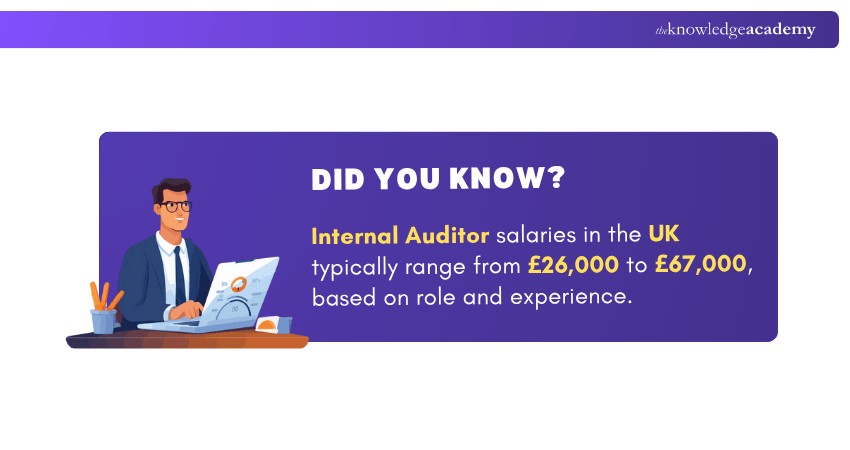
Here are the simple benefits of Internal Audit:
1) Identifies problems early before they escalate into major issues
2) Helps correct mistakes quickly and efficiently
3) Improves the overall performance of business operations
4) Ensures policies, laws, and internal procedures are being followed
5) Monitors ethical practices and environmental responsibilities
6) Provides independent, honest, and unbiased advice
7) Supports safe and sustainable business growth
8) Reduces costs by preventing larger financial or legal problems
9) Protects the company’s reputation and builds stakeholder trust
Master process control across multiple standards with our Integrated Management System Training - Join now!
The 5 C’s of an Internal Audit Report
These are the 5 C’s of an Internal Audit report:
1) Criteria
This part tells why the audit was done. It says what the problem was and why someone wanted to check it. It also says who asked for the audit. Was it the audit team or someone else? It may also say if more checks like this will happen again.
2) Condition
This part tells what the problem is. It explains if a rule was broken or if a goal was not met. It also says if something looked strange or unsafe and needed to be checked. It shows how the problem connects to the company’s work or rules.
3) Cause
This part tells why the problem happened. It explains what went wrong and who found the problem. It also says if a step was missed or if something could have been done in a better way. This helps the company learn from the mistake.
4) Consequence
This part tells what happened because of the problem. It says if the company lost money or broke any rules. It also tells if the leaders need to know about the problem and if the company was harmed in any way.
5) Corrective Action
This part tells how to fix the problem. It explains what steps the company should take now. It also says what managers need to do and how the company will check later to make sure the problem does not happen again. It may also say what new rules were added.
Examples of Audit Findings
Here are a few simple examples of audit findings:
1) Insufficient Segregation of Duties
When one person is responsible for multiple steps in a process, such as collecting payments, depositing money, and updating records. It increases the risk of errors or fraud. Tasks should be divided among different individuals to maintain proper checks and balances.
2) Missing Formal Approvals
Some jobs need a manager’s approval. For example, spending money or signing papers. If there is no proof of approval, no one knows who allowed it. This can lead to problems. Approvals should always be written and saved.
3) Inadequate Policies and Procedures
Companies need clear written rules for how to do the work. If the rules are missing or old, workers may not know what to do. This can cause mistakes. Rules should be written, checked, and updated often.
4) Lack of Supporting Documentation
Every action, like buying something, should have proof. There should be papers like bills, orders, and approvals. If there is no proof, people may not trust the process. Documents help show the work was done properly.
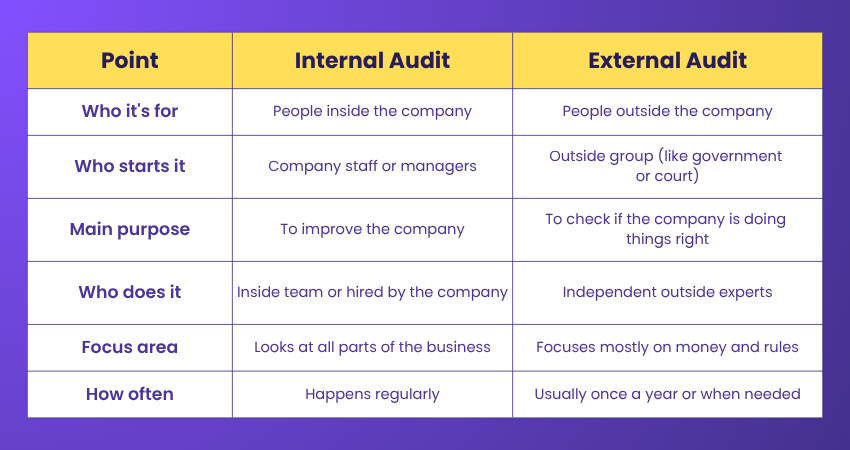
Internal vs External Audits: What’s the Difference?
Here are the differences between Internal Audits vs External Audits:
Conclusion
Internal Audit plays a vital role in helping a company stay secure, compliant, and efficient. It identifies problems early, offers practical solutions, and supports long-term success. Whether performed internally or by external professionals, Internal Audits deliver measurable value. Every company, regardless of its size, should treat Internal Auditing as a strategic and ongoing practice that supports sustainable growth and accountability.
Step into the future of quality standards with our ISO Certification - Join now!
Frequently Asked Questions
What is the Main Objective of Internal Audit?

The main aim of Internal Auditing is to check if the company is doing things the right way. It helps find problems early, checks if rules are being followed and helps the company work better.
How do you Prepare an Internal Audit Checklist?
To make an Internal Audit checklist, first decide what you want to check. Then write down the steps, rules, and papers you need to look at. Keep the list short and easy so you don’t miss anything during the auditing.
What are the Other Resources and Offers Provided by The Knowledge Academy?
The Knowledge Academy takes global learning to new heights, offering over 3,000 online courses across 490+ locations in 190+ countries. This expansive reach ensures accessibility and convenience for learners worldwide.
Alongside our diverse Online Course Catalogue, encompassing 19 major categories, we go the extra mile by providing a plethora of free educational Online Resources like Blogs, eBooks, Interview Questions and Videos. Tailoring learning experiences further, professionals can unlock greater value through a wide range of special discounts, seasonal deals, and Exclusive Offers.
What is The Knowledge Pass, and How Does it Work?
The Knowledge Academy’s Knowledge Pass, a prepaid voucher, adds another layer of flexibility, allowing course bookings over a 12-month period. Join us on a journey where education knows no bounds.
What are the Related Courses and Blogs Provided by The Knowledge Academy?
The Knowledge Academy offers various ISO Certification, including the Certified Internal Auditor Training, ISO 22716 Lead Auditor Training, and the Integrated Management System Training. These courses cater to different skill levels, providing comprehensive insights into Compliance Risk.
Our ISO & Compliance Blogs cover a range of topics related to Internal Audit, offering valuable resources, best practices, and industry insights. Whether you are a beginner or looking to advance your auditing skills, The Knowledge Academy's diverse courses and informative blogs have got you covered.
Upcoming ISO & Compliance Resources Batches & Dates
Date
 Certified Internal Auditor Training
Certified Internal Auditor Training
Fri 17th Apr 2026
Certified Internal Auditor Training
Fri 17th Jul 2026
Certified Internal Auditor Training
Fri 16th Oct 2026

 If you wish to make any changes to your course, please


