


 Top Rated Course

We may not have the course you’re looking for. If you enquire or give us a call on +44 20 4538 6376 and speak to our training experts, we may still be able to help with your training requirements.
What is Consumer Behaviour: Everything You Should Know
James Smith 15 July 2026Consumer Behaviour studies how people choose, buy, use, and evaluate products, influenced by psychological, social, and emotional factors shaping decisions. It shapes how consumers make decisions based on price, quality, culture, emotions, social media, and brand trust, helping businesses predict buying patterns and customer needs.

Training Outcomes Within Your Budget!
We ensure quality, budget-alignment, and timely delivery by our expert instructors.
Table of Contents
Ever wondered why you feel drawn to certain brands or products over others? The secret lies in understanding What is Consumer Behaviour. Imagine walking into a store and instantly knowing which product you'll pick off the shelf! This decision-making process is deeply rooted in the study of Consumer Behaviour.
From the cultural influences that shape our choices to the personal preferences that define our tastes, understanding What is Consumer Behaviour unlocks the mysteries behind our purchasing decisions. In this blog, you will learn about Consumer Behaviour, its types, significance, and more. Keep reading to learn more!
Table of Contents
1) What is Consumer Behaviour?
2) Key Components of Consumer Behaviour
3) Types of Consumer Behaviour
4) Other Factors That Influence Consumer Behaviour
5) How to Study Consumer Behaviour?
6) Significance of Consumer Behaviour
7) What Influences Consumer Behaviour?
8) Guidelines for Researching About Consumer Behaviour
9) Consumer Decision Making Process
10) Influence of Digital Marketing on Consumer Behaviour
11) What is an Example of Consumer Behaviour?
12) Can a Person be Both a Customer and a Consumer?
13) Conclusion
What is Consumer Behaviour?
Consumer Behaviour examines how individuals, groups, or organisations make decisions when choosing, buying, using, and disposing of goods and services. It covers the entire journey, from recognising a need to the final use of a product. Understanding What is Consumer Behaviour helps businesses create effective marketing strategies, products, and services to meet customer expectations.
Consumer Behaviour is influenced by cultural, social, personal, and psychological factors. From culture and social class to age and lifestyle, it shapes buying decisions. For example, when purchasing a smartphone, a consumer may be influenced by personal needs, online reviews, and social options before making the final choice.

Key Components of Consumer Behaviour
Understanding What is Consumer Behaviour requires examining various components that influence how consumers make purchasing decisions. These components help marketers tailor their strategies to effectively meet consumer needs and preferences. Here are the key components of Consumer Behaviour:

1) Motivation
Motivation is the reason people buy things. It comes from the inside and pushes them to meet their needs or wants, such as hunger, safety, happiness, or the need to feel accepted or important in a group.
2) Perception
Perception is how people see and understand things they notice, like ads or products. It happens in three steps:
a) They see it (exposure)
b) Focus on it (attention)
c) Try to understand it (interpretation)
3) Learning
Learning is when people change how they act based on past experiences. They might try something because it worked well before. Learning can occur through:
a) Conditioning (associating brands with positive experiences)
b) Observation (watching others)
c) Cognitive processes (problem-solving and reasoning)
4) Beliefs and Attitudes
Beliefs are what people think is true about a product. Attitudes are how they feel about it. If they like a brand, they’re more likely to keep buying it. If they don’t, they’ll avoid it. These beliefs and attitudes strongly shape the long-term buying behaviour of consumers.
5) Lifestyle
Lifestyle is how someone lives, including their interests, hobbies, and opinions. Marketers use lifestyle groups to find people with similar habits and offer them the right products. Products that ideally fit a person’s lifestyle feel more relevant and appealing to a consumer.
6) Personality and Self-concept
Personality is what makes someone behave in a unique way. Self-concept is how people see themselves. People tend to choose products that match who they are or want to be. This is why branding often focuses on identity and self-expression to influence consumer decisions.
7) Cultural Influences
Culture is the shared beliefs and traditions in a group of people. Smaller groups, called subcultures, may have their own ways. A person’s social class, based on factors like income and job, also affects what they buy.
Is your business’ conversion rate slowing down? Sign up for our comprehensive Conversion Rate Optimisation Training and get back in the game!
Types of Consumer Behaviour
Consumer Behaviour can be categorised into several types based on various factors. Here are four key Types of Consumer Behaviour:

1) Habitual Purchasing Behaviour
Habitual Purchasing Behaviour is seen in everyday buying decisions that involve little effort and minimal evaluation. Some key areas to focus on are:
a) Habitual purchasing behaviour happens when people buy items regularly without much thought.
b) These choices are usually based on convenience, brand loyalty and price.
c) Marketers target this behaviour with repetitive and eye-catching ads.
d) Discounts and promotions are heavily used to attract new customers and encourage repeat purchases
Through small, consistent actions, businesses can strongly influence the everyday buying decisions of consumers.
2) Variety-seeking PurchasingBehaviour
a) This behaviour involves those consumers who like trying new products and brands.
b) These shoppers are driven by a desire for change and new experiences.
c) Marketers attract them by highlighting what's new or different about their products or services.
Unique features and innovation are paramount in marketing to this audience.
3) Complex Purchasing Behaviour
Complex Purchasing behaviour occurs when consumer buying decisions require thorough and careful thinking and evaluation. Some key areas to focus on are:
a) Complex buying behaviour occurs with big or important purchases.
b) These consumers research deeply, compare numerous options and consider many factors before buying.
c) Trust and detailed information help them make decisions.
Businesses must focus on clear content, expert advice and a smooth buying process.
4) Dissonance-reducing Purchasing Behaviour
Dissonance-reducing Purchasing Behaviour appears when consumers feel unsure or uncertain about a buying decision after making a purchase. Some key areas to focus on are:
a) This buying behaviour happens when buyers feel unsure or anxious after purchasing.
b) This usually occurs when there are several good options that make the choice difficult.
c) Consumers look for reassurance or more information to feel confident in their decisions.
Businesses respond with follow-up support, clear communication, and after-sales care to reduce doubts.
Learn how to turbocharge your marketing mastery with top-notch research! Sign up for our Marketing Research Training now!
Other Factors That Influence Consumer Behaviour
A consumer's buying decision is shaped not only by the need itself but also by external factors. The factors below strongly influence how consumers compare options, spend money, and finalise decisions.
1) Online vs In-store
The platform where a purchase is made has a significant impact on Consumer Behaviour. Online platforms, such as Amazon, use browsing history and algorithms to recommend related products, encouraging add-on purchases and increasing basket value. This personalises the shopping experience and makes online purchasing fast and convenient.
In-store shopping relies more on physical displays, promotions, and sales staff to influence decisions. While personal recommendations may be limited, customers can try products before buying, which builds trust. This rise of online shopping has shifted customer expectations towards speed, convenience, and wider choice options.
2) Cash, Credit, or Internet Account
The way consumers pay shapes their buying behaviour. Card payments and digital methods are quick and easy, often reducing the feeling of spending money. Also, consumers are more likely to spend more when using credit cards or digital payment platforms because the payment process feels less immediate.
Digital payment options and interest-based accounts, such as PayPal increases purchase likelihood by simplifying checkout. In contrast, cash payments feel more tangible, making consumers more aware of their spending and more likely to limit purchases. These psychological differences play a key role in spending habits.
How to Study Consumer Behaviour?
Studying Consumer Behaviour involves using multiple methods to understand how consumers think, feel, and make buying decisions. Let’s look at the common methods businesses utilise to gain insights.
a) Market Research: Conduct surveys, interviews, focus groups, and observations to collect data on demographics, lifestyles, buying patterns, needs, and motivations.
b) Data Analysis: Analyse information from sales records, website traffic, social media activity, and customer feedback to uncover trends, behaviour patterns, and predict consumer actions.
c) Customer Segmentation: Group customers based on shared characteristics, such as age, location, interests, and purchasing behaviour, to tailor messages, products, and campaigns.
d) Monitoring Consumer Trends: Track social media trends, industry reports, competitor strategies, and technologies to stay updated with market demands and customer needs.
e) Feedback and Interaction: Gather feedback through reviews, surveys, support channels, and direct engagement for deeper insight into preferences, satisfaction levels, and decision factors.
f) Experimentation and Testing: Use methods, such as A/B testing, pilot campaigns, and focus groups, to test marketing strategies. This helps to refine approaches based on consumer responses.
Significance of Consumer Behaviour
From maintaining consumer loyalty to sustaining market relevance, there’s a range of significance of Consumer Behaviour . Let's explore them in detail:

1) Distinguishing Consumer Preferences
a) Understanding consumer preferences helps businesses learn what their customers like or dislike.
b) For example, companies can adjust their offerings if customers prefer eco-friendly products.
To attract eco-conscious buyers, the companies can also highlight every environmental benefit in their marketing
2) Maintaining Consumer Loyalty
a) Consumer loyalty is about building strong, long-lasting relationships with customers.
b) It’s like becoming a trusted, go-to brand that they can return to regularly.
c) Businesses must understand customer needs through feedback and buying behaviour.
d) They must focus on consistency in quality and experience to build trust and keep customers loyal
3) Anticipating Market Trends
a) Understanding Trends in Consumer Behaviour helps predict future customer needs.
b) Businesses can adjust their products or services early on to match changing preferences.
c) This keeps them competitive and ahead of others and they meet customer expectations faster
4) Addressing Competitive Dynamics
a) Addressing competitive dynamics is about understanding how customers choose between different brands.
b) It’s like studying what influences the diverse buying decisions in a crowded market.
c) Businesses can gain a significant competitive edge by positioning their products effectively against competitors.
d) They highlight unique features like quality, price or innovation to show why their product is the best choice.
Learn the art of 360 marketing in our Integrated Marketing Training. Sign up now!
5) Pioneering Novel Product Development
a) Pioneering new Product Development is the way to be a leader in innovation.
b) It begins with the study of consumer behaviour to spot market gaps or any unmet needs.
c) Businesses observe various trends and preferences to find areas for improvement.
d) This insight helps them create unique, in-demand products that connect with what consumers truly want
6) Sustaining Market Relevance
a) Sustaining market relevance means staying important and up-to-date in an ever-changing market.
b) It’s about keeping in tune with the latest trends in a fast-moving industry.
c) Businesses must closely watch out for shifts in consumer preferences.
d) They can stay relevant by adapting to trends and meeting updated customer expectations
7) Enhancing Customer Service
a) Understanding customer behaviour is key to delivering great service.
b) Businesses learn about their products and services by listening to feedback and studying preferences.
c) This helps them personalise their services instead of using a clumsy one-size-fits-all approach.
d) Companies can make customers feel heard, valued, and satisfied by refining products and adjusting communication styles
Make your next marketing move unforgettable with our Introduction to Marketing Training – Sign up today and propel your career forward!
What Influences Consumer Behaviour?
Factors Influencing Consumer Behaviour encompass a range of internal and external elements that affect individuals' decisions and actions when selecting, purchasing, using, or disposing of products or services. Let’s explore them in detail:
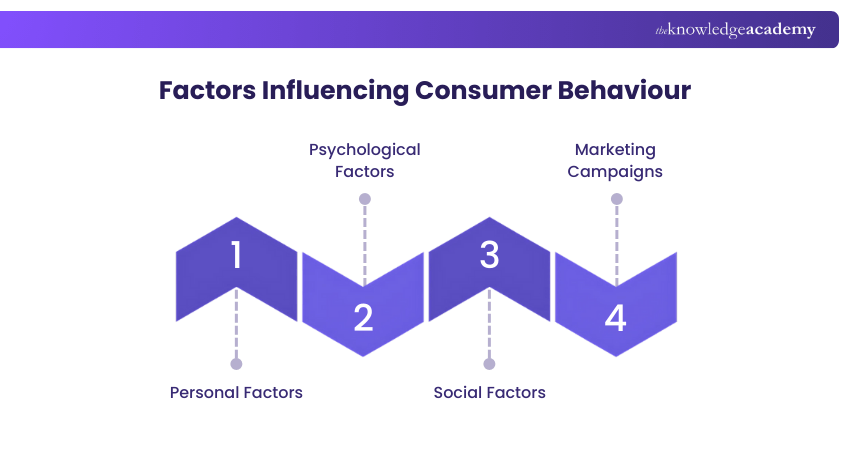
Personal Factors
Personal factors play an important role in shaping consumer behaviour, as they are unique to each individual and significantly impact their purchasing decisions. These factors include:
a) Age and Life Stage: People of different ages and life situations want different things. Teenagers might love fashion and gadgets, while older adults may care more about health and comfort. A single person shops differently than someone married or with kids.
b) Occupation: What someone does for work affects what they buy. A working professional may spend on formal clothes or work tools, while a student may buy books and casual wear.
c) Economic Situation: How much money a person earns affects what they can buy. People with more income can afford more expensive products, while those with less might stick to budget options. Their financial stability also affects their shopping habits.
d) Lifestyle: Lifestyle is how someone lives. This includes hobbies, values, and interests. For example, someone who loves fitness might buy healthy food and gym gear, while someone who loves nature may choose eco-friendly items.
e) Personality and Self-image: A person’s character can shape what they buy. Also, how they see themselves (self-image) matters. People often choose things that match who they are or want to be.

Psychological Factors
Psychological factors significantly impact consumer behaviour, affecting how individuals think, feel, and act when making purchasing decisions. These factors include:
a) Motivation: Motivation refers to any internal drive that prompt consumers to take action. It is the force that triggers consumers to fulfil their needs, which can be:
a) Physiological (basic needs like hunger and thirst)
b) Emotional (desire for happiness or security)
c) Social (need for belonging or status)
b) Perception: Perception defines how consumers interpret and make sense of the information they encounter. It influences how they view products and brands. The perception process involves three stages:
a) Exposure (noticing the stimulus)
b) Attention (focusing on the stimulus)
c) Interpretation (making sense of the stimulus)
c) Learning: Learning involves changes in consumer behaviour resulting from experiences. It affects future purchasing decisions.
d) Beliefs and Attitudes: Beliefs are what people think about a product or brand. Attitudes are how they feel about it overall. People with reasonable beliefs and feelings about a brand are likelier to keep buying it. But if they feel negative, they may avoid it.
Want to grab more eyeballs for your business? It's time to dig deep into the world of Mobile Marketing! Sign up for our up-to-date Mobile Marketing Course now!
Social Factors
Social factors play a prominent role in shaping consumer behaviour, as individuals are influenced by the people around them and the social contexts in which they operate. These factors include:
a) Family: Family plays a big role in what people buy. Parents, partners, and kids all influence shopping choices. Family habits and values often guide what brands or products someone prefers.
b) Reference Groups: These are groups people belong to or want to be like such as friends, classmates, or clubs. They influence buying by setting trends or using peer pressure to shape opinions and choices.
c) Social Roles and Status: What someone does in life, such as being a parent, student, or Manager, affects what they buy. People often choose things that match their role or show off their social status.
d) Social Networks: Online platforms like Instagram or Facebook impact buying decisions. Reviews, posts and recommendations from friends, influencers, or communities can strongly affect what people buy.
Marketing Campaigns
Here's how marketing campaigns influence consumer behaviour:
a) Create Emotional Connections: Campaigns that evoke feelings such as happiness, trust or urgency, can influence consumers to prefer one brand over another and take action faster.
b) Shape Perceptions and Brand Image: Clever messaging and visuals help you create a strong identity. This affects how people see a product's value, quality or lifestyle fit.
c) Drive Awareness and Recall: The right mix of repetitive ads, catchy slogans, or jingles makes products more memorable. This increases the chances that consumers will choose them when making purchases.
d) Encourage Immediate Action: Limited-time offers or discounts in any marketing campaign push consumers to act quickly. This is a great way to boost impulse buying or quicker decision-making.
Elevate your Email marketing expertise with the comprehensive Email Marketing Course – Join now!
Guidelines for Researching About Consumer Behaviour
Listed below are some of the guidelines for conducting research on Consumer Behaviour.

1) Leveraging Existing Reports
a) Use existing reports as a starting point to study consumer behaviour.
b) Look at market research, industry reports and consumer surveys.
c) These sources show useful trends, preferences, and buying patterns.
It’s like using knowledge already gathered to build your research and spot new areas to explore.
2) Implement Market Segmentation Strategies
a) Market Segmentation splits a big market into smaller groups with similar traits or behaviours.
b) It helps Researchers understand consumer behaviour more clearly within each group.
c) Segmentation can be based on factors like age, interests, location or lifestyle.
d) This helps businesses tailor products and marketing to meet each group’s needs.
3) Incorporate Focus Groups Into Your Research Approach
a) Focus groups are small groups of potential customers used to study consumer behaviour.
b) These groups have detailed, face-to-face conversations about thoughts and feelings.
c) Researchers learn more about attitudes and motivations behind these customers' buying choices.
d) Focus groups give emotional and psychological insights and work well with numbers from surveys or data.
Consumer Decision-making Process
The consumer decision-making process involves the following:
1) Consumers becoming aware of and identifying their needs
2) Collecting information on how to solve them best
3) Evaluating alternative options
4) Making a purchasing decision
5) Evaluating their purchase
Understanding the consumer decision-making process is essential to any business, but eCommerce businesses have a unique opportunity to optimise it. Since online shoppers create significantly more data than those in brick-and-mortar stores, online retailers can employ that data to implement conversion strategies for every stage of the process.
Influence of Digital Marketing on Consumer Behaviour
Digital marketing affects how people shop by showing them products at the perfect time and place. After all, most people are living digital lives worldwide. Marketing through digital media allows brands to promote their products, and buyers are more likely to make quick choices. Brands use deals, discounts, and offers to attract customers and encourage them to buy.
What is an Example of Consumer Behaviour?
A common example of Consumer Behaviour is planning a city break for two people. Someone who started dating may research destinations, budgets, and activities carefully, showing extensive decision-making. In contrast, long-term couples may decide quickly based on shared experiences. Similarly, booking a casual dinner is straightforward, while choosing a restaurant for an anniversary requires thoughtful decision-making.
Can a Person Be Both a Customer and a Consumer?
Yes, a person can absolutely be both a customer and a consumer. For example, a person buying groceries at a supermarket is a customer. If that person eats the groceries, they are also the consumer.
Conclusion
Understanding What is Consumer Behaviour helps businesses see beyond purchases and understand how customers think, choose, and the act. From daily habits to complex purchase decisions, Consumer Behaviour shapes marketing, product design, and customer relationships. Applying this insight will enable businesses to create relevant experiences, build trust, and stay competitive.
Upgrade your marketing skills and turn insights into impactful marketing campaigns with Marketing Courses – Join now!
Frequently Asked Questions
What are the Four Major Characteristics Affecting Consumer Behaviour?

Key characteristics include:
a) Psychological factors (motivation, perception, learning, beliefs, attitudes).
b) Personal factors (age, occupation, lifestyle, personality).
c) Social factors (family, reference groups, social roles, networks).
d) Cultural factors (culture, subculture, social class).
e) Situational factors (context, environment, temporal effects).
Why is Understanding Consumer Behaviour Important for Businesses?
Understanding consumer behaviour is crucial for businesses because it helps them identify target audiences, understand their needs and preferences and predict their buying patterns. This knowledge is channelled into Product Development, marketing strategies and customer service approaches.

James Smith


Digital Marketing Manager and Trainer
James Smith is a digital marketing professional with over a decade of experience in SEO, content strategy, paid media and analytics. He has supported both SMEs and global brands in transforming their digital presence. James’s writing and training are rooted in results-driven tactics and the latest marketing trends.
View Detail

 If you wish to make any changes to your course, please


