


 Top Rated Course

We may not have the course you’re looking for. If you enquire or give us a call on +48 221041849 and speak to our training experts, we may still be able to help with your training requirements.
What is Situational Leadership: Meaning, Styles & Examples
Benjamin Walker 09 April 2026Situational Leadership is a flexible leadership approach where managers adapt their style to match employee competence, commitment, and task demands effectively. It enables leaders to respond to changing workplace needs, improving team performance, engagement, and overall organisational effectiveness.

Training Outcomes Within Your Budget!
We ensure quality, budget-alignment, and timely delivery by our expert instructors.
Table of Contents
Have you ever noticed how some leaders handle different situations and individuals with ease, while others find it challenging? The difference lies in their ability to adapt their approach based on the situation. Situational Leadership is a flexible style that responds to the evolving needs of both the team and the environment. In this blog, you will explore What is Situational Leadership , how it works, and why it is essential for leaders to develop this capability.
Table of Contents
1) What is Situational Leadership?
2) What are the Four Situational Leadership Styles?
3) Characteristics of Situational Leaders
4) Advantages of Situational Leadership
5) Disadvantages of Situational Leadership
6) When to Use Situational Leadership?
7) 4 Examples of How to Use Situational Leadership
8) How does Situational Leadership improve team performance?
9) Is Situational Leadership effective in modern workplaces?
10) Conclusion
What is Situational Leadership?
Why are some individuals able to lead effectively while others take a supporting role? This question has led to many theories, as leadership remains an essential skill across all industries. As a result, various leadership styles are studied to understand which approaches are most effective in different professional settings.
Situational Leadership is one of these approaches. If you are exploring What is Situational Leadership, it focuses on a leader’s ability to adapt their style based on the situation. Effective leaders remain flexible, assess changing circumstances, and adjust their approach to lead in the most suitable and effective way.

What are the Four Situational Leadership Styles?
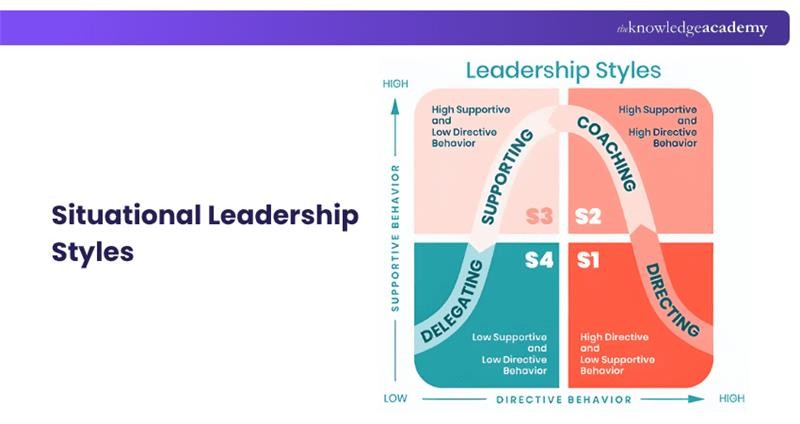
According to Hersey and Blanchard, Situational Leadership includes four leadership styles, each defined by different levels of directive and supportive behaviour. Directive behaviour focuses on providing structure, instructions, and clear guidance, while supportive behaviour centres on encouragement, feedback, and building relationships. These styles help leaders adjust their approach based on the situation and individual needs.
Telling (S1)
This style involves high direction and low support. It is used when individuals lack the skills, confidence, or willingness to complete a task. The leader provides clear instructions on what to do, how to do it, and when it should be completed, with close supervision and limited involvement from others.
This Situational Leadership Model approach is effective when tasks require accuracy and speed, or when individuals are new and need structured guidance.
Selling (S2)
This style combines high direction with high support. It is suitable when individuals are motivated but may not yet have the required skills or experience. The leader provides clear guidance while also explaining the purpose behind tasks and encouraging participation.
Leaders using this situational leadership model approach invite input, provide feedback, and support development, while still making final decisions. It is ideal for building capability and confidence.
Participating (S3)
This style is low in direction but high in support. It is used when individuals are capable but may lack confidence or motivation. The leader reduces direct control and focuses more on collaboration and encouragement.
Decision-making is shared, with the leader facilitating discussions and offering guidance through coaching and active listening. This situational leadership model approach is effective in fostering engagement and teamwork.
Delegating (S4)
This style is low in both direction and support. It is applied when individuals are competent, confident, and able to work independently. The leader delegates responsibility, allowing individuals to take ownership of tasks with minimal supervision.
Support is provided only when needed, making this Situational Leadership Model approach suitable for experienced individuals who perform well with autonomy and accountability.
Learn about the different models of decision making with our Decision Making Course – Join today!
Characteristics of Situational Leaders,
Here are the key qualities for this role:
Flexibility
Effective leaders demonstrate flexibility by adapting their leadership style to suit different situations. They are open to adjusting their approach when circumstances change and recognise that each individual and task may require a different strategy to achieve the best outcomes.
Empathy
Empathy allows leaders to understand and support others effectively. They listen actively to identify individual needs, provide both emotional and professional support, and acknowledge each person’s strengths as well as areas for development.
Strong Communication Skills
Strong communication ensures clarity and alignment within teams. Leaders clearly outline tasks and expectations, encourage open and honest feedback, and adapt their communication style to suit different individuals and situations.
Decision-making Skills
Leaders with strong decision-making skills carefully assess situations before taking action. They balance immediate priorities with long-term objectives and involve others in the decision-making process when appropriate to achieve better outcomes.
Focus on Development
A focus on development helps leaders support continuous growth within their teams. They provide guidance, encourage individuals to take on new challenges, and offer constructive feedback to build skills, confidence, and long-term capability.
Advantages of Situational Leadership
Here are some of the benefits of it:
1) Increased Flexibility:
A major benefit of Situational Leadership is its adaptability. Leaders modify their approach based on the demands of the situation, offering closer guidance to those with less experience while giving greater autonomy to more capable individuals. Situational Leadership Model builds trust and strengthens working relationships.
2) Improved Communication
This Situational Leadership Model approach promotes clear and consistent communication. Leaders engage with their teams, listen actively, and provide meaningful feedback. By adjusting their communication style to suit individuals, they create an open environment where ideas are shared and understood.
3) More Efficient Resource Allocation
Situational Leadership supports effective use of resources by aligning responsibilities with individual capability. Leaders assign tasks based on skill level and provide appropriate support, ensuring work is completed efficiently and strengths are utilised effectively.
4) Enhanced Motivation
By tailoring leadership style to individual needs, this approach helps improve motivation. When people receive the right balance of guidance and independence, they feel valued and trusted. Situational Leadership leads to higher morale, increased job satisfaction, and stronger performance.
5) Better Decision-Making
Situational Leadership enables more informed decision-making. Leaders assess factors such as ability, confidence, and task requirements before acting. This thoughtful approach helps them choose suitable strategies that lead to effective and balanced outcomes.
Disadvantages of Situational Leadership
Here are the limitations of it:
1) Complexity
Situational Leadership can be challenging due to its complexity. Accurately understanding what each individual requires and adjusting leadership style accordingly is not always straightforward. Leaders can overcome this by developing their skills through training and consistent practice, building greater confidence over time.
2) Time-Consuming
Applying this approach requires time and effort, as leaders must continuously assess individuals and adapt their methods. To manage this effectively, leaders can focus on essential factors such as ability and motivation, while delegating routine tasks where possible.
3) Potential for Misinterpretation
Changes in leadership style may sometimes create confusion within the team. If the reasons behind these adjustments are not clear, it can lead to uncertainty or reduced trust. Open and clear communication helps ensure that team members understand the intent behind leadership decisions.
4) Inconsistency
The effectiveness of Situational Leadership can vary depending on organisational culture. Some workplaces respond better to structured direction, while others prefer collaborative approaches. Although it often improves job satisfaction, its impact on performance may differ based on cultural expectations and team dynamics.
When to Use Situational Leadership?
Here are the best situations where Situational Leadership can be highly effective:
Maximising Team Productivity
1) Understand what each team member is good at and where they need help
2) Give clear instructions for tasks based on their skill levels
3) Offer the right amount of support to boost their confidence
4) Help each person improve and reach their full potential
Handling Diverse Teams
1) Adjust your leadership style for team members with different skills or experience
2) Provide extra support to those who need it and more independence to experienced members
3) Motivate team members according to their confidence and energy levels
4) Respect individual strengths and weaknesses while managing the team as a whole
Adapting to Change
1) Stay flexible when tasks or situations change unexpectedly
2) Quickly assess new conditions and decide the best way to lead
3) Guide the team to shift focus or priorities as needed
4) Keep the team calm and focused during uncertain times
Customising Leadership
1) Give each person the specific help they need to succeed
2) Be clear about expectations, tailoring them to individual skills
3) Offer encouragement or advice based on what works best for each team member
4) Build trust by showing you understand and support their personal needs
Enhance your leadership skills and become a more effective Leader with our specialised Leadership Skills Course. Register Now!
4 Examples of How to Use Situational Leadership
Here are practical examples of how Situational Leadership can be applied effectively:
1) Training a New Employee
When someone is new to the job, they may need clear instructions and close guidance. Use a more hands-on approach to teach them the steps and build their confidence. As they learn, gradually reduce the support and let them work more independently.
2) Helping a Struggling Team Member
If a member is struggling to complete a task, step in to offer support and advice. Break the task into smaller steps and guide them through it. Encourage them to ask questions and provide regular feedback to help them improve.
3) Managing an Experienced Team Member
For someone who is skilled and confident, give them more freedom to handle tasks on their own. Check in occasionally to ensure they have everything they need. Focus on providing motivation and recognising their achievements.
4) Responding to a Crisis
In a high-pressure situation, take control and give clear, direct instructions to the team. Keep everyone focused on solving the problem quickly. Once the crisis is over, review the situation with the team to learn and improve for the future.
Transform your leadership approach and drive success in Agile environments with our Agile Leadership Training. Join today!
Conclusion
Situational Leadership represents a versatile and responsive leadership approach, allowing leaders to adjust their methods to suit the needs of their team or individual members. This approach is grounded in the understanding that there isn't a singular best method of leadership; rather, the most effective style depends on the specific situation and the individuals involved.
Start your journey towards effective leadership with our Successful People Management and Team Leadership Course. Sign up now!
Frequently Asked Questions
How does Situational Leadership improve team performance?

It improves performance by matching leadership style to individual capability and task needs, ensuring the right level of guidance and support. This helps increase productivity, engagement, and overall team effectiveness.
Is Situational Leadership effective in modern workplaces?
Yes, it is highly effective as it adapts to changing work environments, diverse teams, and evolving business demands. Its flexibility supports better communication, stronger collaboration, and improved organisational performance.
What are the Other Resources and Offers Provided by The Knowledge Academy?
The Knowledge Academy takes global learning to new heights, offering over 3,000+ online courses across 490+ locations in 190+ countries. This expansive reach ensures accessibility and convenience for learners worldwide.
Alongside our diverse Online Course Catalogue, encompassing 17 major categories, we go the extra mile by providing a plethora of free educational Online Resources like Blogs, eBooks, Interview Questions and Videos. Tailoring learning experiences further, professionals can unlock greater value through a wide range of special discounts, seasonal deals, and Exclusive Offers.
What is The Knowledge Pass, and How Does it Work?
The Knowledge Academy’s Knowledge Pass, a prepaid voucher, adds another layer of flexibility, allowing course bookings over a 12-month period. Join us on a journey where education knows no bounds.
What are Related Courses and Blogs Provided by The Knowledge Academy?
The Knowledge Academy offers various Leadership Courses, including Leadership Skills Training, Practical Thinking Course and Agile Leadership Training. These courses cater to different skill levels, providing comprehensive insights into Organisational Leadership.
Our Business Skills Blogs cover a range of topics related to Leadership skills and upskilling, offering valuable resources, best practices, and industry insights. Whether you are a beginner or looking to advance your Leadership skills, The Knowledge Academy's diverse courses and informative blogs have you covered.

Benjamin Walker


Leadership Development Coach and Management Consultant
Benjamin Walker is a leadership coach and business consultant with over 18 years of experience in guiding organisations through strategic growth and transformation. He specialises in developing leadership capabilities at all levels, from emerging managers to executive teams. Benjamin’s work focuses on practical leadership, team dynamics, and performance management.
View Detail
Upcoming Business Skills Resources Batches & Dates
Date
 Leadership Skills Training
Leadership Skills Training
Fri 31st Jul 2026
Leadership Skills Training
Fri 2nd Oct 2026
Leadership Skills Training
Fri 27th Nov 2026

 If you wish to make any changes to your course, please


