


 Top Rated Course

We may not have the course you’re looking for. If you enquire or give us a call on +48 221041849 and speak to our training experts, we may still be able to help with your training requirements.
15 Great Ways to Build and Improve a Healthy Work Environment
The Knowledge Academy 23 December 2025A Healthy Work Environment is crucial for employee well-being and productivity, involving open communication, trust, respect, and opportunities for growth. By focusing on creating a supportive, safe, and inclusive atmosphere, organisations can improve employee satisfaction, boost performance, and retain top talent.

Training Outcomes Within Your Budget!
We ensure quality, budget-alignment, and timely delivery by our expert instructors.
Table of Contents

What if your workplace felt less like a grind and more like a space where energy, respect, and collaboration actually flowed? Creating a Healthy Work Environment isn’t just a feel-good idea; it’s the foundation of happier teams, stronger performance, and lower stress levels. It’s where people don’t just work, they thrive.
In this blog, we’ll explore 15 simple yet powerful ways to build and improve a Healthy Work Environment that benefits everyone; from interns to executives. Whether you’re a manager, HR lead, or a team member who cares, these ideas will help turn your office into a place people want to be.
Table of Contents
1) What is a Healthy Work Environment?
2) Characteristics of a Positive Work Environment
3) Why Should You Develop a Healthy Work Environment?
4) How Do You Create a Healthy Work Environment?
5) 15 Ways to Build and Improve a Healthy Work Environment
6) Conclusion
What is a Healthy Work Environment?
A Healthy Work Environment is one where employees feel comfortable, respected and supported. It helps employees stay healthy, motivated, and engaged while fostering a Healthy Work Environment.
a) Encourages open communication and collaboration
b) Builds a sense of belonging among team members
c) This leads to higher morale and lower turnover
d) It helps to the overall success of the organisation
e) When employees feel heard and valued, they are more motivated
f) They collaborate effectively and maintain a positive attitude
g) This boosts productivity and contributes to organisational success

Characteristics of a Positive Work Environment
A positive work environment goes beyond the typical "good vibes" you might expect from a workplace. It has specific characteristics that make a supportive and productive atmosphere:
1) Open Communication
Employees should feel comfortable to sharing their ideas, asking questions and giving feedback without fear of judgment. Open dialogue fosters trust and ensures that everyone is aligned.
a) Respect and Trust: A Healthy Work Environment is built on mutual respect. Employees must feel comfortable with their leaders and managers and trust in the decisions and leadership of their organisation.
b) Motivation and Appreciation: Praising employees for their hard work increases confidence and motive. Positive reinforcement motivates employees to keep performing well.
c) Work-life Balance: It is important to make a balance between work and personal life. Employees who feel they can manage this balance are sometime more productive and less stressed.
d) Supportive Leadership: Managers who are approachable and supportive of their employee’s personal and professional development help to foster a more productive and positive work environment.
Protect your team from workplace violence join our Handle Violence And Aggression At Workplace Course – Today!
Why Should You Develop a Healthy Work Environment?
A Healthy Workplace offers numerous benefits, not just for the employees, but also for the organisation. Here are some key reasons to prioritise a Healthy Work Environment:
a) Increased Productivity: Employees who feel comfortable, supported, and happy at work tend to perform better. A positive atmosphere encourages efficiency and motivation.
b) Better Retention Rates: When employees feel valued and appreciated, they are more likely to stay a long time. High turnover can be costly, so it is better to invest in creating an environment that employees want to stay in.
c) Improved Employee Health and Well-being: Promoting mental and physical wellness reduces stress-related illnesses and enhances overall well-being.
d) Positive Workplace Culture: A Healthy Work Environment supports a culture of collaboration, trust and positivity. This culture can lead to better team dynamics and stronger overall performance.
e) Attracting Top Talent: A company that is known for having a positive and Healthy Work Environment will attract the best candidates. Talented people are more likely to join organisations that prioritise their well-being.
How Do You Create a Healthy Work Environment?
Creating a Healthy Work Environment needs constant effort, transparent communication and a commitment to enhancing both the physical and mental wellness of the workplace. These are some important steps to help you to build a Healthy Work Environment:
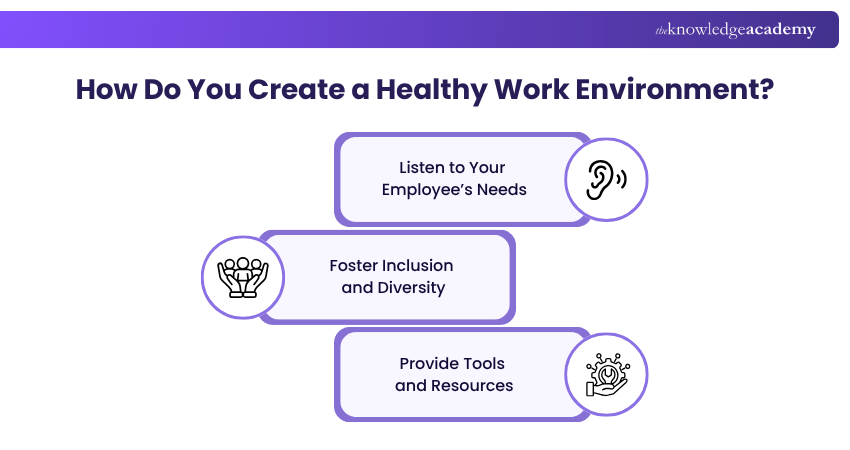
a) Listen to Your Employee’s Needs: Consistent feedback sessions and surveys can help you understand what your employees need to feel comfortable and supported. Be open to their suggestions and concerns, and act on them where possible.
b) Foster Inclusion and Diversity: Encourage a workplace culture that values diversity. Inclusion is important for making an environment where everyone feels comfortable and respected, regardless of background or identity.
c) Provide Tools and Resources: Ensure employees have access to the necessary devices, resources and training to perform their roles effectively. A well-equipped employee is more likely to feel confident and capable in their role.
Learn mindfulness for better productivity with our Mindfulness Training – Join today!
15 Ways to Build and Improve a Healthy Work Environment
Creating a Healthy Workplace includes taking actionable steps that demonstrate your commitment to your team’s well-being. Here are the 15 ways to build and improve a Healthy Work Environment:
1) Give Your Employees a Real Voice
a) Encourage employees to share their thoughts and opinions
b) Involve employees in decision-making processes
c) Show that their input is valued by acting on their suggestions
d) Make sure to listen and respond to concerns
2) Focus on the Workplace Itself - Even if You're Remote!
a) Make sure the office is bright, clean and comfortable
b) Ensure the workplace is safe and well-arranged
c) For remote workers, provide the devices to set up a useful home office
d) Offer advice and suggestions on how to stay productive and healthy
3) Turn Your Values into More Than Just Words
a) Show your values through actions, not just posters
b) Lead by example and reflect company values in all decisions
c) Be honest, transparent, and consistent with your approach
d) Encourage employees to live by the same values every day
4) Create an Environment of Psychological Safety and Trust
a) Ensure employees feel they can express their ideas without fear
b) Foster a supportive culture where mistakes are learning opportunities
c) Build trust by being transparent and dependable
d) Encourage frank, honest communication to solve problems
5) Empower Your Team with What They Need to Succeed
a) Supply the right devices and technology for employees to manage their jobs well
b) Offer regular training and development programs
c) Be available to offer guidance and support when needed
d) Help employees grow by providing opportunities to enhance their skills
6) Make Opportunities for Growth
a) Offer clear career development paths for employees
b) Offer mentorship and training to help employees reach their potential
c) Organise workshops and training programs to build new skills
d) Recognise and reward growth to encourage continuous learning
7) Hire People That Fit the Culture
a) Focus on hiring candidates who match with company values
b) Make sure that new hires will fit well with the existing team dynamics
c) Look for skills and attitudes that complement the company culture
d) Invest in cultural training to help new employees settle in smoothly
Transform workplace behaviour with expert training with our Psychology Of Behaviour At Work Training – Join now!
8) Work on Communication
a) Foster clear, open, and honest communication at all levels
b) Keep regular team meetings to keep everyone updated
c) Provide a platform for employees to voice concerns and feedback
d) Respond quickly to any issues that arise to maintain trust
9) Reward Productive Employees
a) Recognise achievements, both big and small, to keep morale high
b) Offer financial rewards, bonuses, or gift incentives for hard work
c) Publicly acknowledge employees' contributions in team meetings
d) Build a reward system that encourages employees to perform their best
10) Promote Collaboration
a) Encourage teamwork and shared responsibilities across departments
b) Organise team-building events or collaborative projects
c) Set up workspaces or platforms that foster easy communication
d) Create an environment where knowledge and ideas flow freely among employees
11) Create a Positive Work-life Balance
a) Give flexible working hours to accommodate personal schedules
b) Provide options for remote work to reduce commute stress
c) Motivate employees to take time off when wanted to recharge
d) Ensure workloads are manageable to prevent burnout
12) Create Clear Goals
a) Establish clear, measurable goals that align with company objectives
b) Split the goals into smaller, achievable tasks
c) Regularly check progress and adjust as needed
d) Make sure everyone knows their role in achieving team goals
13) Adapt a Flexible Mindset
a) Allow employees to manage their work hours or locations when needed
b) Give flexible solutions for balancing work and personal life
c) Be transparent about changing how tasks are completed to accommodate personal needs
d) Encourage employees to find methods that suits without compromising performance
14) Plan Events Together
a) Organise team lunches or social conferences to enhance relationships
b) Organise charity programmes or volunteer activities for team collaboration
c) Hold fun, informal programmes for relaxation and enjoy each other’s company
d) Use programmes to create trust and cooperation between team members
15) Regularly Organise Team Building Activities
a) Organise activities that need team collaboration and problem-solving
b) Organise fun activities or games to increase team dynamics
c) Ensure that team-building activities include everyone and focus on inclusiveness
d) Use activities as a chance for employees to get to know each other better
Conclusion
A Healthy Work Environment improves productivity, develops trust and encourages growth. By prioritising well-being and transparent communication, organisations create a supportive atmosphere where employees develop. This leads to better performance, higher morale and long-term success for both individuals and the company.
Create a healthier workplace with our Workplace Stress and Mental Health Identification for Manager Course - Sign up today!
Frequently Asked Questions
What are the Five Examples of a Healthy Environment?

Here following are the five examples of a Healthy Environment:
a) Open communication at all levels
b) Mutual respect among employees and leadership
c) Opportunities for professional growth and development
d) A safe and comfortable workspace
e) A balanced work-life structure for employees
How to Create a Safe Working Environment?
The following are the steps to create a Safe Working Environment:
a) Provide proper safety equipment for all employees
b) Offer regular training on health and safety practices
c) Motivate employees to report potential risks
d) Assure clear emergency procedures are in place and proper communication
What are the Other Resources and Offers Provided by The Knowledge Academy?
The Knowledge Academy takes global learning to new heights, offering over 3,000 online courses across 490+ locations in 190+ countries. This expansive reach ensures accessibility and convenience for learners worldwide.
Alongside our diverse Online Course Catalogue, encompassing 19 major categories, we go the extra mile by providing a plethora of free educational Online Resources like Blogs, eBooks, Interview Questions and Videos. Tailoring learning experiences further, professionals can unlock greater value through a wide range of special discounts, seasonal deals, and Exclusive Offers.
What is The Knowledge Pass, and How Does it Work?
The Knowledge Academy’s Knowledge Pass, a prepaid voucher, adds another layer of flexibility, allowing course bookings over a 12-month period. Join us on a journey where education knows no bounds.
What are the Related Courses and Blogs Provided by The Knowledge Academy?
The Knowledge Academy offers various Mental Health Courses, including the Workplace Stress and Mental Health Identification for Manager and Mental Health and Wellbeing Training, and the Psychology of Behaviour at Work Training. These courses cater to different skill levels, providing comprehensive insights into How to Be Happy.
Our Health & Safety Blogs cover a range of topics related to Healthy Work Environment, offering valuable resources, best practices, and industry insights. Whether you are a beginner or looking to advance your Health & Safety knowledge, The Knowledge Academy's diverse courses and informative blogs have got you covered.

The Knowledge Academy


Global Training Provider
The Knowledge Academy is a world-leading provider of professional training courses, offering globally recognised qualifications across a wide range of subjects. With expert trainers, up-to-date course material, and flexible learning options, we aim to empower professionals and organisations to achieve their goals through continuous learning.

Upcoming Health & Safety Resources Batches & Dates
Date
 Work Place Stress and Mental Health Identification for Manager
Work Place Stress and Mental Health Identification for Manager
Fri 4th Sep 2026
Work Place Stress and Mental Health Identification for Manager
Fri 20th Nov 2026

 If you wish to make any changes to your course, please


