


 Top Rated Course

We may not have the course you’re looking for. If you enquire or give us a call on +48 221041849 and speak to our training experts, we may still be able to help with your training requirements.
Data Science in Marketing: A Comprehensive Guide
Lily Turner 19 March 2026Data Science in Marketing optimises strategies through precise customer segmentation. It enhances decision-making by predicting trends and customer behaviour. Explore the impact of Data Science in Marketing, uncovering how data-driven strategies revolutionise the industry and drive business success. Read now!

Training Outcomes Within Your Budget!
We ensure quality, budget-alignment, and timely delivery by our expert instructors.
Table of Contents

Imagine being able to understand your customers' needs even before they do. That's the power of "Data Science in Marketing." In today's data-driven world, every interaction is a chance to gain valuable insights.
With "Data Science in Marketing," you can dive into customer behaviour, spot patterns, and predict trends. It's all about using data to create personalised campaigns, enhance customer experiences, and make smarter decisions. Let's explore how Data Science is transforming marketing, helping businesses connect with their audience in more meaningful and impactful ways.
Table of Contents
1) What is Data Science in Marketing?
2) How to Apply Data Science in Digital Marketing?
3) 13 Ways to Use Data Science in Marketing
4) Real-life Examples of Data Science in Marketing
5) Advantages of Data Science in Marketing
6) Steps to Becoming a Data Scientist in Marketing
7) What is the Role of Data Scientist in Marketing?
8) What is the Future of Data Science in Marketing?
9) Conclusion
What is Data Science in Marketing?
Data Science in Marketing leverages Data Analysis, Machine Learning, and statistical methods to gain insights and make data-driven decisions. By analysing large datasets, marketers can identify trends, understand customer behaviour, and optimise strategies for better engagement and conversion rates.
For instance, a company might collaborate with a Data Science Consultant to segment their audience based on purchasing habits and preferences. This segmentation allows for targeted marketing campaigns, personalised offers, and improved customer experiences. Another example is Predictive Analytics, where historical data is analysed to forecast future trends and customer needs. Retailers can predict which products will be in demand and adjust their inventory accordingly.
Additionally, sentiment analysis of Social Media and customer reviews helps companies understand public perception of their brand and products. By implementing these Data Science Techniques, as outlined in the PySpark Cheat Sheet, marketers can enhance their strategies, optimise marketing spend, and ultimately drive higher revenue and customer satisfaction.

How to Apply Data Science in Digital Marketing?
Data Science can be applied in Digital Marketing through the following techniques:
1) Personalisation of marketing messages
2) Channel and content optimisation
3) A/B testing
4) Marketing funnel optimisation
5) Predictive Analytics
13 Ways to Use Data Science in Marketing
Now that you are acquainted with the foundational idea of Data Science in Marketing, it’s time to learn about the various ways to achieve it. Here’s a detailed exploration of the best techniques to apply Data Science to your marketing strategies.
1) Customer Segmentation
Recognising the diverse needs of your customers is crucial for an effective marketing plan. While no two customers are identical, their pain points, desires, and aspirations can be categorised to inform marketing strategies and drive conversions.
Customers can be segmented around various attributes such as location, purchase history, and website navigation patterns. Data Scientists employ Machine Learning Algorithms to evaluate the potential value of each customer segment and identify the products that will most likely appeal to them.
This segmentation can then guide your content strategy, optimise marketing channels, and enhance lead targeting. By understanding and addressing these segmented groups, your marketing efforts can be tailored to meet specific needs, ultimately increasing engagement and conversion rates.
2) Clustering
Clustering harnesses statistical and Machine Learning techniques to identify patterns and group products or customers based on their shared behaviours, characteristics, and preferences. These are the important points to remember about clustering:
a) Compared to customer segmentation, clustering is more exploratory and is performed without predefined criteria.
b) Clustering is a prominent example of unsupervised Machine Learning in which the algorithm gets trained on an unlabelled data set with unknown outcome variable.
Clustering can dictate segmentation by identifying customer groups with similar characteristics. This enables marketers to create more accurate and effective customer segments.
3) Customer Attrition and Loyalty Rating
Data Science plays a pivotal role throughout the entire marketing funnel, enhancing each stage with precise, data-driven insights.These points will help you understand the idea better:
a) At the funnel's inception, Data Science aids in accurate customer targeting by identifying and segmenting potential customers based on attributes including demographics, behaviour, and preferences. This targeted approach ensures that marketing efforts reach the right audience.
b) In the middle of the funnel, Data Science leverages predictive analysis to understand and engage with customer behaviours effectively. By analysing past interactions and predicting future behaviours, marketers can tailor their strategies to nurture leads and guide them through the funnel.
c) Towards the bottom of the funnel, Data Science supports customer retention and predicts the likelihood of future purchases. Machine Learning and Data Science algorithms forecast customer churn rates, enabling businesses to develop personalised retention strategies. By addressing potential churn proactively, companies can strengthen customer relationships and foster loyalty, ultimately driving Profit Maximisation and Wealth Maximisation through sustained customer engagement and increased lifetime value.
d) This holistic approach maximises marketing effectiveness, ensuring that each stage of the funnel is optimised for better engagement, conversion, and retention, ultimately driving business growth.
4) Sentiment Analysis
The initial impression customers form when visiting a business's website or Social Media platforms significantly influences their perception of the brand. External reviews and comments are crucial in shaping these impressions, as potential customers often rely on others' experiences to inform their views. These are some points to consider regarding Sentiment Analysis:
a) Employing sentiment analysis to gauge customer sentiments is essential for managing an organisation's reputation. This approach helps businesses understand their audience's feelings about their products, services, and overall brand image.
b) While Sentiment Analysis can be performed manually, it is time-consuming and prone to human error.
c) Using Machine Learning models for Sentiment Analysis enhances the efficiency and accuracy of this task. These advanced algorithms can swiftly process vast amounts of data, detecting trends and patterns that might have been missed during the manual process.
d) By leveraging Machine Learning, businesses can quickly respond to negative feedback, enhance positive interactions, and make informed decisions to improve customer experience and Reputation Management strategies.
Learn the latest Data Analysis methods and tools and ensure a competitive edge for your business in our Big Data and Analytics Training - Sign up now!
5) Lead Targeting and Scoring
When marketers can accurately classify individuals according to their interests, a substantial portion of leads can indeed convert into customers. These converted leads serve as exemplars for predicting customer conversions. Consider the following:
a) Lead targeting and scoring involve the prediction of values for prospective customers, enabling companies to fine-tune their interactions.

b) When Marketing teams engage with these potential customers, Data Science Tools identify vital variables like purchasing patterns, which, when combined, provide insights into response or success probabilities.
c) Skilled data professionals employ Artificial Intelligence and Predictive Analytics for advanced lead targeting and scoring, including variable selection and algorithmic modelling.
d) Data Scientists integrate their findings with data mining, creating tools and applications that empower Marketing teams to make informed decisions.
6) Pricing Strategy
For effective Marketing, an intelligent pricing strategy is essential. Data Science equips marketers to delve into various factors that influence customer pricing and purchase intent, including:
a) Individual customer preferences
b) Purchase histories
c) Market trends
d) Economic conditions
This empowers businesses to establish pricing that is fair for their products and to fine-tune their Marketing initiatives.
Data professionals offer Data Science solutions that automatically monitor price fluctuations on business websites, enabling swift responses as required. A data-driven pricing strategy enables businesses to strike a balance between customer satisfaction and revenue maximisation.
7) Channel Optimisation
Data Science empowers marketers to understand which types of content resonate best with their audience. By analysing data on content performance, marketers can gain insights into what works and what doesn’t. Let’s explore the benefits of this method:
a) This analytical approach allows for the refinement of content strategies, ensuring every piece of content is tailored to meet the audience's preferences and interests.
b) For example, by examining metrics such as time spent on pages, Social Media shares and click-through rates, marketers can identify high-performing content. They can then replicate these successful elements in future content to enhance engagement.
c) Additionally, Data Science tools can help uncover trends and patterns in audience behaviour, enabling marketers to anticipate and respond to their audience's evolving needs.
d) Through continuous optimisation, marketers can create more relevant content that drives higher levels of user engagement.
8) Personalisation.
By analysing customer data and segmenting the audience based on psychographic, demographic, geographic, and behavioural factors, marketers can create highly personalised experiences. Consider the following exciting features of this technique:
a) This data-driven approach allows for the development of AI-driven user journeys that cater to individual customer needs and preferences.
b) Personalised product recommendations are a prime example of this approach. By understanding a customer’s past behaviour and preferences, marketers can suggest products that are more likely to interest them, thereby increasing the likelihood of a purchase.
c) Similarly, tailored email content can address specific customer pain points, making communications more relevant and engaging.
d) Customised advertisements that resonate with individual customers can also significantly enhance the effectiveness of Marketing Campaigns. This level of personalisation not only improves the customer experience but also fosters brand loyalty, because customers feel valued by the brand.
9) Predictive Analytics
Predictive Analytics combines Machine Learning Algorithms, models, and often artificial intelligence to forecast potential business and customer outcomes. These advanced techniques enable businesses to anticipate future trends and make data-driven decisions.
These are the crucial points about Predictive Analytics in marketing to remember:
a) With the swift proliferation of Internet of Things (IoT) devices, the amount of available data for these predictions has surged, increasing the accuracy of insights generated by advanced systems. This wealth of data enables businesses to make more precise and informed predictions.
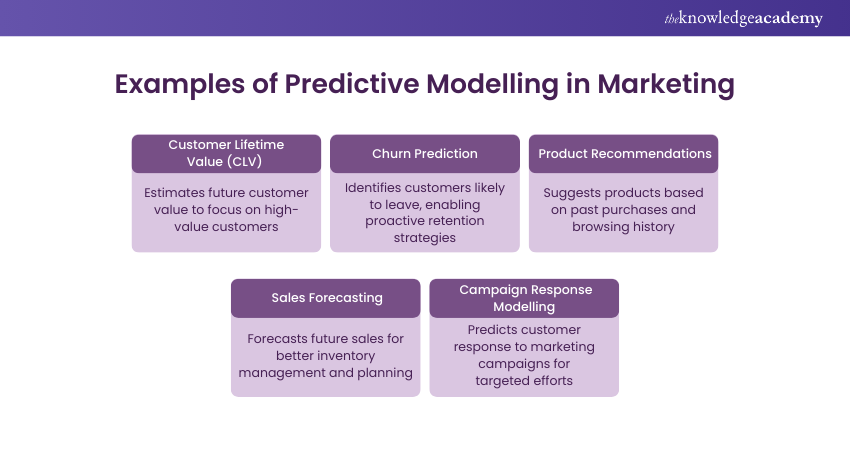
b) Predictive Analytics provides several key benefits for businesses, including the ability to target customers with a higher potential lifetime value and lower churn rate. It also aids in successfully distributing content to the right audiences, ensuring that marketing efforts are more effective.
c) Furthermore, Predictive Analytics allows businesses to evaluate the potential effectiveness of digital advertising campaigns before their release, optimising marketing spend.
d) Additionally, Predictive Analytics supports effective cross-selling and up-selling strategies by predicting the products that are most likely to appeal to individual customers, ultimately driving increased sales and customer satisfaction.
Become familiarised with Predictive Analysis and Business Intelligence with our Predictive Analysis Training and stay ahead of the learning curve!
10) Market Basket Analysis
Market basket analysis is a data technique used to uncover relationships between products frequently bought together, known as "itemsets." These are the points to remember about this technique:
a) Metrics like support, confidence, and lift measure these relationships: support indicates how often an itemset appears in the dataset, confidence assesses the probability of purchasing one item given another is bought, and lift evaluates how the presence of one item affects the likelihood of another being purchased.
b) Insights from market basket analysis can optimise product offerings, pricing strategies, and promotional campaigns. For example, a retailer might create bundle deals based on frequently bought items to encourage combined purchases.
c) This analysis also helps identify cross-selling and upselling opportunities and understand how changes in product offerings or pricing impact customer behaviour.
11) Regression Analysis
Wondering What is Regression Analysis? It is a potent tool to examine the connection between a dependent variable (like sales) and independent variables (Digital Advertising spend or price). These are essential points to remember about Regression Analysis:
a) This technique allows businesses to understand how changes in independent variables influence the dependent variable, facilitating data-driven decision-making regarding pricing, promotions, and advertising spend.
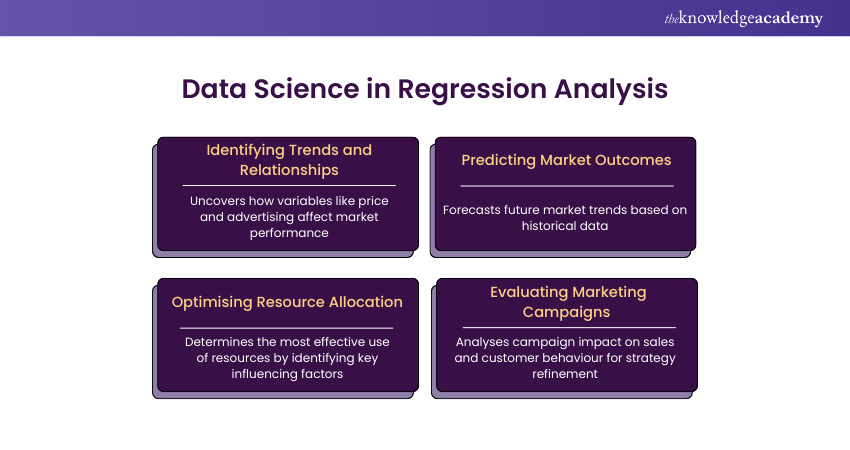
b) By employing Regression Analysis, you can uncover valuable insights into the dynamics of your marketing efforts. For instance, analysing how variations in advertising spend impact sales can help you optimise your advertising budget for maximum effectiveness. Similarly, understanding the effect of price changes on sales volume enables more strategic pricing decisions.
c) Through Regression Analysis, businesses can predict outcomes and adjust strategies to improve performance. This method not only aids in current decision-making but also helps forecast future trends, ensuring that marketing efforts are both efficient and effective. Ultimately, regression analysis empowers businesses to make informed, strategic choices that drive growth and profitability.
12) Marketing Budget Optimisation
Data Science aims to ensure that every penny of a business’s marketing budget is spent wisely to maximise profits. By optimising when and to whom you market specific products and services, your business can avoid spending on ineffective strategies. Leveraging the right tools, such as one of the Best Laptops for Data Science, can enhance data analysis and decision-making for better marketing
In fact, the other methods mentioned in this section can help you achieve this, allowing you to put together a comprehensive and often automated marketing plan. This plan can cover everything from identifying the customer base to determining how factors such as the weather might impact the sale of one specific product.
13) Product Development
By analysing large volumes of customer data, you can gain insights into what improvements or features customers most desire and develop products that meet their needs. Data Science can help you match the right product with the right customer. Using buyer persona data, you can conduct clustering analyses to identify what else customers are likely to purchase and at what price. These insights tell you exactly what your customer wants from your current collection.
Real-life Examples of Data Science in Marketing
1) Netflix
Netflix leverages Data Science extensively in its marketing strategies to enhance user engagement and retention. Consider the following points:
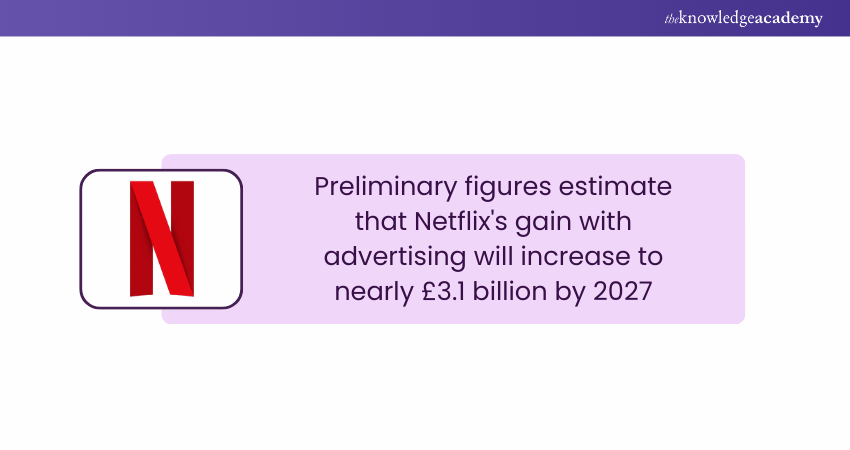
a) By analysing vast amounts of viewer data, Netflix identifies patterns and preferences that inform personalised content recommendations. For instance, if a user frequently watches crime dramas, Netflix will suggest similar genres, increasing viewing time and satisfaction.
b) Data Science also aids Netflix in segmenting its audience based on demographics, viewing habits, and behavioural data. This segmentation enables targeted marketing campaigns that resonate more deeply with specific user groups. For example, promoting a new animated series to families or recommending a documentary to users who frequently watch educational content ensures more effective engagement.
c) Predictive Analytics help Netflix anticipate trends and user preferences, enabling proactive adjustments in content offerings and marketing strategies. For instance, predicting a surge in interest for holiday movies allows Netflix to promote relevant content ahead of time.
d) Moreover, Netflix uses A/B testing to evaluate the effectiveness of different marketing tactics and interface designs, such as testing different thumbnails to see which one attracts more clicks.
e) By harnessing the power of Data Science, Netflix not only enhances its content delivery but also drives user loyalty and subscription renewals, ultimately boosting its revenue and market position.
Learn to communicate data insights and findings through visualisations and presentations with our Data Science With R Training – Sign up now!
2) Spotify
Similar to Netflix, Spotify aims to retain its subscribers by offering innovative and engaging methods for music discovery. However, the significant difference between these two platforms lies in the vast amount of content Spotify provides compared to Netflix. This distinction is crucial, given the differing nature of music and video content. Consider the following points:

a) With millions of songs available, manually searching for new music that suits a user’s taste on Spotify can be significantly more challenging than finding a new film or series on Netflix. To address this, Spotify employs advanced Data Science techniques to streamline the music discovery process.
b) Personalised playlists like Discover Weekly and Release Radar are crafted using sophisticated algorithms that analyse users' listening habits, preferences, and patterns. These playlists delivers new music to users that aligns with their tastes, thus elevating their overall experience.
c) Spotify uses audience segmentation based on demographics, listening behaviour, and geographic location to deliver targeted recommendations and marketing campaigns. Predictive Analytics help anticipate user preferences and trends, allowing Spotify to proactively suggest content and refine its marketing strategies.
3) Google
Google leverages Data Science extensively in its marketing efforts, particularly through its AdWords platform. This platform employs advanced Machine Learning Algorithms to optimise ad delivery and enhance ad targeting for advertisers. Consider the following:
a) By analysing vast amounts of datasets on user behaviour, including search queries, website visits, and ad clicks, Google can create detailed user profiles.
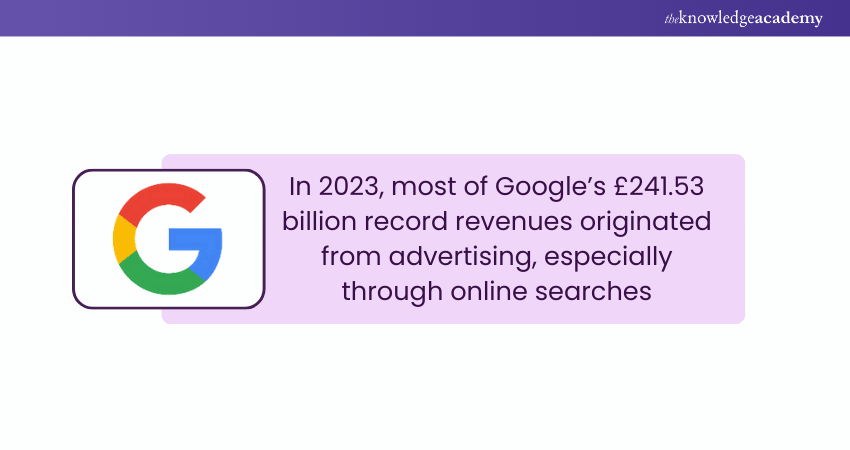
b) These user profiles enable Google to predict which ads will be most relevant and engaging for each individual. For example, if a user frequently searches for travel destinations and books flights online, Google's algorithms can deliver targeted ads for hotels, car rentals, or vacation packages that align with the user’s interests.
c) The use of Predictive Analytics in AdWords helps ensure that ads are shown to users who are most likely to be interested in them, thereby increasing the effectiveness of advertising campaigns. This targeted approach expands the user experience by spotlighting relevant content and maximises the return on investment for advertisers.
d) Through the integration of Data Science, Google continuously refines its ad targeting capabilities, ensuring that advertisers reach their desired audience efficiently while providing users with pertinent and engaging advertisements.
Advantages of Data Science in Marketing
In a world where millions of terabytes of Data are generated daily, businesses can rarely neglect the incorporation of Data Science into their marketing strategy. Data Science in Marketing offers significant advantages for businesses. Here are some key benefits of integrating Data Science in Marketing:

a) Precision in Customer Targeting: Data Science enables businesses to accurately identify their most valuable customers, allowing for resource allocation where it will yield the highest returns.
b) Swift Adaptation to Customer Feedback: By integrating customer feedback into the marketing process, Data Science fosters a dynamic and responsive approach. This allows businesses to quickly adapt and improve strategies, enhancing customer satisfaction and loyalty.
c) Optimised Digital Advertising: Data Science enhances digital advertising by identifying the most effective channels and strategies, leading to improved reach and higher conversion rates.
d) Resource Efficiency: Data-driven insights prevent the wastage of resources on unproven marketing plans. Businesses can make informed decisions, ensuring investments are more likely to succeed.
e) Accurate Predictive Analysis: Predictive analysis, a key aspect of Data Science, utilises PySpark to forecast which products will become popular based on current market trends. Such foresight helps businesses stay ahead of the curve and seize emerging opportunities.
Steps to Becoming a Data Scientist in Marketing
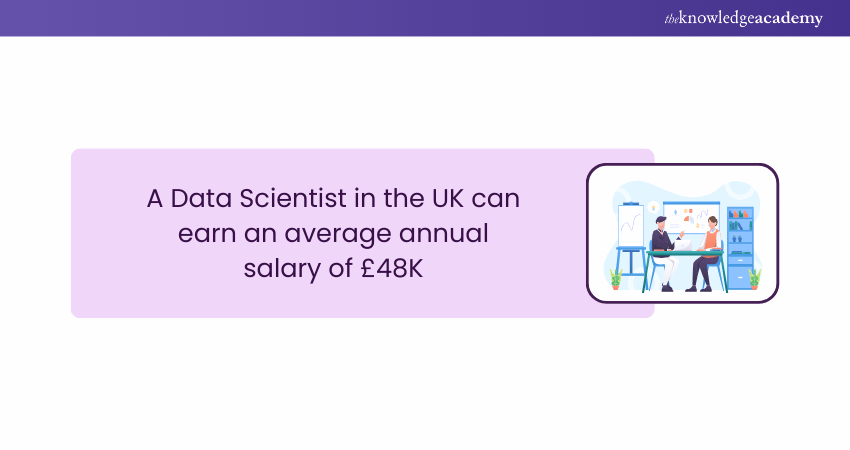
To embark on a career as a Data Scientist in the domain of marketing, a combination of education, practical experience, and specific skills is required. The following are the essential steps to follow for becoming a Data Scientist in Marketing:
a) Acquire a Relevant Degree: Start by pursuing a degree in Marketing, Computer Science, Statistics, or a related field that provides a strong foundation for a career in Marketing Data Science.
b) Gain Practical Experience: Seek internships or entry-level positions offering hands-on exposure to Marketing Data Analysis. These opportunities will help you work with Data Science tools and Data Visualisation techniques, providing invaluable practical experience.
c) Develop Programming and Statistical Skills: Increase your proficiency in prominent Programming Languages such as R Programming or Python Programming, and delve into statistical analysis techniques such as regression, clustering, and decision trees. These skills are fundamental for effective Data Analysis in Marketing.
d) Learn Machine Learning: Familiarise yourself with Machine Learning, a central component of Data Science relevant to Marketing. Explore techniques like neural networks, random forests, and gradient boosting, which are widely used in Marketing Data Analysis.
e) Stay Informed of Industry Trends: Both Data Science and Marketing are dynamic fields. To stay competitive, you must keep up-to-date with the latest tools, techniques, and industry trends by attending conferences, joining in online courses, and regularly reading industry publications to ensure your skills remain current and relevant.
Get your Data Science Training and learn concepts of algorithm development, data interference and programming skills.
What is the Role of Data Scientist in Marketing?
Data Scientists play an important role in marketing by analysing customer data, identifying purchase patterns, creating predictive models, and optimising marketing campaigns. They help companies utilise data to drive marketing strategies and gain actionable insights that drive marketing innovation.
What is the Future of Data Science in Marketing?
The future of Data Science in Marketing will characterise improved customer experiences, personalisation, and a stronger focus on ethical practices. Additionally, understanding the difference between Data Science and Artificial Intelligence helps businesses combine these fields effectively to transform how they predict market trends. To stay ahead of the curve, it's crucial for marketers to keep pace with emerging Data Science Trends. This includes understanding the latest advancements in areas like AI-powered personalization, predictive analytics, and the ethical implications of data usage in marketing. Exploring the PySpark Guide can further enhance data processing capabilities.
Master your data science interview with the best Data Science Interview Questions. Start practicing now to confidently answer any question during your interview.
Conclusion
"Data Science in Marketing" is truly a game-changer. By using data, marketers can predict what customers need, create personalised experiences, and make smarter decisions. As we keep generating more data, the opportunities for deeper insights and stronger connections grow. Whether you're an experienced marketer or just starting out, embracing data science can transform your approach and boost your marketing strategies.
Learn more about the relationship between Blockchain and Data Science with our Data Science And Blockchain Training– Sign up now!
Frequently Asked Questions
How can Data Science Help my Business?

Data Science enhances decision-making by analysing data, optimising marketing strategies through customer segmentation, and predicting trends for proactive planning. It also improves operational efficiency, driving growth and increasing competitive advantage.
What Problems can Data Science Solve?
Data Science can predict customer behaviour, identify market trends, and optimise resource allocation. It also detects fraud, improves product recommendations, and enhances customer segmentation. These capabilities lead to more informed decisions and more effective business strategies.
What are the Other Resources and Offers Provided by The Knowledge Academy?
The Knowledge Academy takes global learning to new heights, offering over 3,000+ online courses across 490+ locations in 190+ countries. This expansive reach ensures accessibility and convenience for learners worldwide.
Alongside our diverse Online Course Catalogue, encompassing 17 major categories, we go the extra mile by providing a plethora of free educational Online Resources like Blogs, eBooks, Interview Questions and Videos. Tailoring learning experiences further, professionals can unlock greater value through a wide range of special discounts, seasonal deals, and Exclusive Offers.
What is The Knowledge Pass, and How Does it Work?
The Knowledge Academy’s Knowledge Pass, a prepaid voucher, adds another layer of flexibility, allowing course bookings over a 12-month period. Join us on a journey where education knows no bounds.
What are the Related Data Science Courses and Blogs Provided by The Knowledge Academy?
The Knowledge Academy offers various Data Science Courses including Text Mining, PySpark Training, Data Mining Training. These courses cater to different skill levels, providing comprehensive insights into What is Data Science.
Our Data, Analytics and AI Blogs cover a range of topics related to Data Science, offering valuable resources, best practices, and industry insights. Whether you are a beginner or looking to advance your knowledge of Data Science in Marketing, The Knowledge Academy's diverse courses and informative blogs have you covered.

Lily Turner


Senior AI/ML Engineer and Data Science Author
Lily Turner is a data science professional with over 10 years of experience in artificial intelligence, machine learning, and big data analytics. Her work bridges academic research and industry innovation, with a focus on solving real-world problems using data-driven approaches. Lily’s content empowers aspiring data scientists to build practical, scalable models using the latest tools and techniques.
View Detail
Upcoming Data, Analytics & AI Resources Batches & Dates
Date
 Python Data Science Course
Python Data Science Course
Mon 17th Aug 2026
Python Data Science Course
Mon 23rd Nov 2026

 If you wish to make any changes to your course, please


