


 Top Rated Course

We may not have the course you’re looking for. If you enquire or give us a call on +64 98874342 and speak to our training experts, we may still be able to help with your training requirements.
What is a Reverse Mortgage: Complete Guide
The Knowledge Academy 21 July 2026A Reverse Mortgage lets older homeowners access home equity as cash without monthly payments, repaid when the property is sold or vacated. It can support retirement income and cover key expenses. Understanding its terms, benefits, and risks helps homeowners make informed long-term financial and retirement planning decisions.

Training Outcomes Within Your Budget!
We ensure quality, budget-alignment, and timely delivery by our expert instructors.
Table of Contents
Let’s say that you have worked hard all your life, paid off your mortgage, and now you're enjoying retirement in your own home. But what if you need extra income to cover rising living costs or enjoy your later years more comfortably? That’s when understanding What is a Reverse Mortgage becomes important. It’s a financial option that lets homeowners over 62 unlock some of their property’s value without having to sell or move out.
Doesn’t it sound helpful? But how does it work, and is it the right choice for everyone? If you're exploring ways to boost your retirement income or helping a family member do the same, learning What is a Reverse Mortgage can give you clarity. In this blog, we’ll familiarise you with the essentials; how it works, who it suits best, and what to consider before deciding. Let’s take a closer look at this unique financial tool.
Table of Contents
1) What is a Reverse Mortgage?
2) How Does a Reverse Mortgage Work?
3) How to Get a Reverse Mortgage?
4) Types of Reverse Mortgages
5) Pros and Cons of Reverse Mortgages
6) Reverse Mortgage Costs
7) How Much Can You Borrow with a Reverse Mortgage?
8) How to Apply for A Reverse Mortgage?
9) How to Avoid Scams?
10) How to Avoid Reverse Mortgage Foreclosure?
11) What Happens if You Live too Long on a Reverse Mortgage?
12) Conclusion
What is a Reverse Mortgage?
A Reverse Mortgage works similarly to a traditional mortgage because homeowners borrow money using their home as collateral, and the property title stays in their name. However, the key difference is that borrowers don’t make monthly mortgage payments. Instead, the loan is repaid once the homeowner no longer lives in the property.
Interest and fees accumulate over time, which increases the loan balance. Homeowners must still pay property taxes and insurance, live in the home as their primary residence and maintain it in good condition.
How Does a Reverse Mortgage Work?
After years of paying towards your home, much of your wealth may sit within the property rather than being available as cash. A Reverse Mortgage helps unlock that value by allowing homeowners to access funds while continuing to live in their home.
A Reverse Mortgage is a loan secured against the property. Homeowners usually receive a lump sum, often up to around 60% of the home’s market value, and there are no monthly repayments. The loan is repaid later when the homeowner no longer lives in the property.
This usually happens when:
a) The homeowner passes away
b) The homeowner moves into long-term care
c) The property is sold
When this happens, the loan balance and any interest are repaid to the lender. A key feature is lifetime tenancy, which means the homeowner can continue living in the property until repayment becomes due.
How to Get a Reverse Mortgage?
A Reverse Mortgage could be a useful option, but it’s important to follow the right steps. Here’s how the process typically works:
a) Choose the Right Type: Decide between options like a lifetime mortgage (the most common) or a home reversion plan, depending on your needs.
b) Select how You’ll Receive the Funds: Choose to take the money as a lump sum, regular payments, or a flexible drawdown facility.
c) Work With a Lender: A lender will assess your home’s value and your personal circumstances before making an offer.
d) Get Independent Advice: It’s essential to attend a counselling session with a qualified financial adviser to understand the terms and long-term impact.
e) Approval and Payout: Once approved, the money is released to you. No monthly repayments are required; interest builds up and is repaid when the home is sold or after you pass away.
f) Use the Funds Freely: The money can be used however you choose; such as covering living expenses, paying off debts, or funding home improvements.
Eligibility Criteria
Before applying for a Reverse Mortgage, it is important to ensure you meet the lender's eligibility requirements. The key criteria include the following:
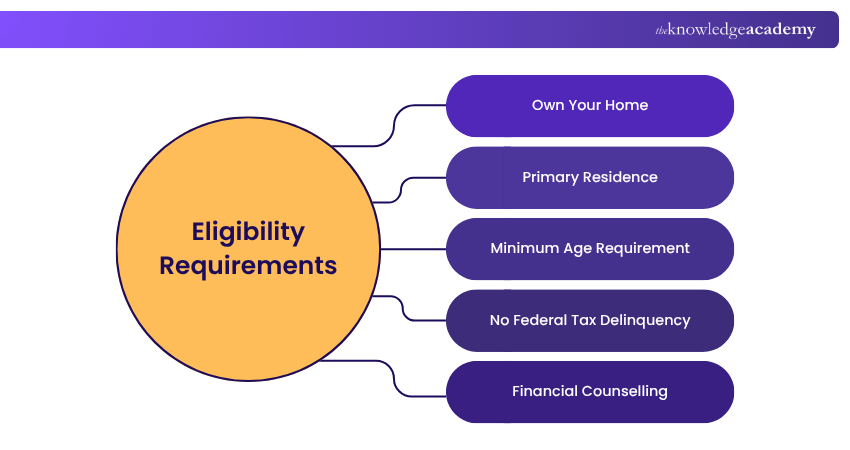
a) Own Your Home: You must own your home outright or have sufficient equity in the property.
b) Primary Residence: The property must be your main residence for most of the year.
c) Minimum Age Requirement: Applicants must meet the minimum age requirement specified by the lender or applicable regulations.
d) No Federal Tax Delinquency: You should not have any outstanding federal tax debts, where applicable.
e) Financial Counselling: You may be required to complete independent financial counselling before proceeding.
Types of Reverse Mortgages
At this point, you have come to know what a Reverse Mortgage is, so it is time to learn about its varieties. The three types of Reverse Mortgage Houses are available for adoption. Check out the following key types of Reverse Mortgages:
1) Jumbo Reverse Mortgage
A Jumbo Reverse Mortgage is designed for homeowners with properties valued above standard limits. While it offers larger funds, it may come with higher interest rates and fees. Not all lenders provide this option, so it’s important to consult a Financial Advisor to see if it suits your needs.
2) Drawdown Reverse Mortgage
A Drawdown Reverse Mortgage lets homeowners access their property's equity in stages, rather than a lump sum. You only pay interest on the amount withdrawn, which can save on interest costs. Funds can be used for various purposes, and the loan is repaid when the home is sold, typically after death or moving into care. It's important to consult a financial advisor to ensure this option fits your needs.
3) Lump Sum Reverse Mortgage
A Lump Sum Reverse Mortgage provides homeowners with a single large payment based on their property’s equity. This can be useful for covering significant expenses like paying off existing debts or funding major home improvements. However, interest starts accruing immediately, which may result in a higher loan balance over time and could reduce the inheritance left for beneficiaries.
Empower your mortgage career journey with our CeMAP Course (Level 1,2 And 3) – Join today!
Pros and Cons of Reverse Mortgages
These are the main pros and cons of Reverse Mortgages:
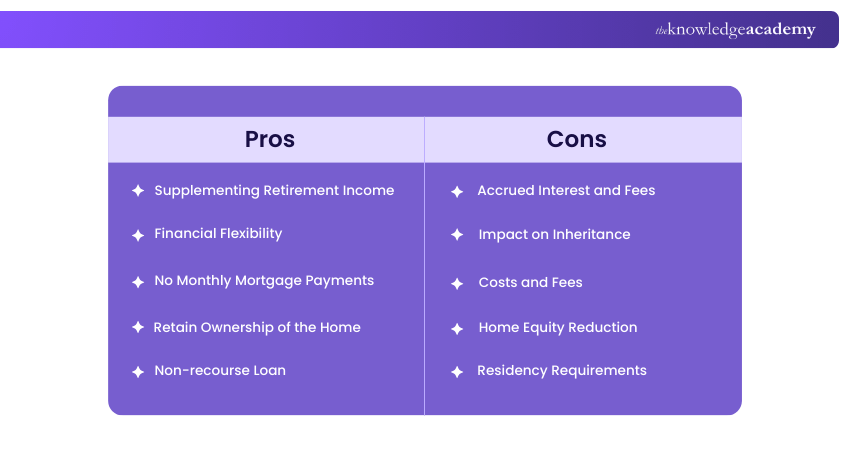
1) Pros of Reverse Mortgages
a) Tax-Free Funds:
The funds received from a Reverse Mortgage are generally not treated as taxable income, as they are considered loan proceeds.
b) Continue Living in Your Home:
Homeowners can stay in their property while accessing its value, provided they meet ongoing requirements such as maintaining the home and covering related costs.
c) No Monthly Repayments:
A Reverse Mortgage usually does not require monthly repayments, as the loan is repaid when the property is sold or the homeowner no longer lives there.
2) Cons of Reverse Mortgages
a) Strict Eligibility Requirements:
Reverse Mortgages are usually available only to older homeowners who use the property as their main residence and have sufficient home equity.
b) Higher Costs and Fees:
These loans can include arrangement fees, closing costs, interest, and other charges, which may reduce the overall equity available.
c) Reduced Inheritance:
As the loan balance grows over time, there may be less property value left for heirs when the home is sold.
Support, coordinate and lead with style – sign up for our PA and Secretarial Course now!
Reverse Mortgage Costs
It's important to know about the costs involved before you make any decisions related to Reverse Mortgage. Here's what you need to consider:
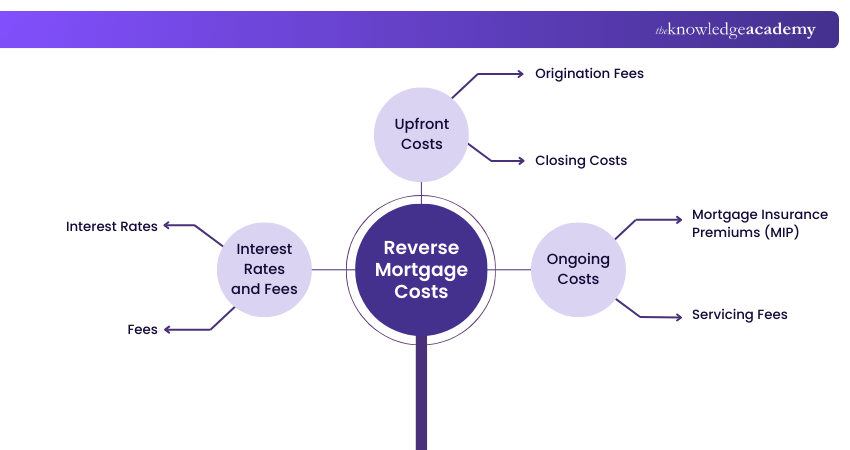
1) Upfront Costs
a) Origination Fees: Now, these adaptation fees will help cover the processing of your Reverse Mortgage loan. They are often a percentage of the principal debt amount; however, the loan provider may decide the percentage based on the individual lender.
b) Closing Costs: The closing fees associated with Reverse Mortgages are just like they are with regular mortgages. Crowdfunding platforms will often ask you about extra charges, like appraisal fees, title insurance, recording fees, and miscellaneous costs, with the aim of averting any misunderstandings. In practice, the costs of an option Adjustable Rate Mortgage (ARM) loan can change because of both the amount of loan you get and your property's location.
2) Ongoing Costs
a) Mortgage Insurance Premiums (MIP): If your Reverse Mortgage qualifies to be insured by the Federal Housing Administration (FHA) such as the Home Equity Conversion Mortgage (HECM), then an upfront Mortgage Insurance Premium (MIP) is at the beginning and an annual MIP for the remainder of the life of the loan. This form of insurance is there to protect the creditor in case there is no resell value for a home that has amassed a loan balance of more than its value after loan repayment.
b) Servicing Fees: The lenders may charge you for loan servicing including the payment of their fees. This entails taking care of loan management, loan disbursement, and general organisation of the facility as well as other administrative issues. These fees' disparity occurs from lender to lender.
Be the powerhouse behind every great executive – join our Perfect Executive Personal Assistant Course.
3) Interest Rates and Fees
a) Interest Rates: The interest rates of a Reverse Mortgage come as accrued interest on the outstanding loan balance over some time. It can be of fixed or adjustable type, making the main contribution to what you will pay at the closing of your Reverse Mortgage.
b) Fees: In addition to the upfront and ongoing costs, there can be other fees included. These might be the credit report fees or counselling fees. Ensure to go through the loan documents very carefully and have a chat with your lender to understand if there are any additional fees.
How Much Can You Borrow with a Reverse Mortgage?
The amount you can borrow varies based on several key factors:
a) Your Age: Older borrowers are typically eligible for a higher loan amount.
b) Your Life Expectancy: A shorter life expectancy usually allows for a larger percentage of equity to be released.
c) Your Home’s Value: There’s no fixed equity percentage. Depending on your situation, you may be able to access anywhere from 8% to 70% of your home’s value. As part of the process, the lender will arrange an independent valuation to determine the property’s current market worth.
Here are a few key points to remember:
a) The younger the youngest borrower, the less you can borrow; this applies even if that person isn’t listed on the loan.
b) Higher property value usually means more borrowing power.
c) A good financial assessment can boost your loan amount by reducing deductions for taxes and insurance.
Sharpen your admin edge – register for our Administrative Assistant Training now!
How to Apply for A Reverse Mortgage?
To apply for a Reverse Mortgage, homeowners can follow these steps:
a) Assess Your Financial Needs: Understand why you need the funds and whether a Reverse Mortgage suits your retirement or financial plans.
b) Speak to a Financial Advisor: Get professional advice to understand the benefits, risks, costs, and long-term impact of the loan.
c) Check Eligibility: Review key requirements such as age, property ownership, home value, and whether the home is your main residence
d) Choose a Suitable Lender: Compare lenders, interest rates, fees, repayment terms, and available loan options.
e) Get a Property Valuation: The lender will assess your property’s value to decide how much equity you can access.
f) Review and Sign the Agreement: Carefully check the loan offer, repayment terms, interest, and fees before completing the application.
How to Avoid Scams?
Learning how to avoid scams in Reverse Mortgages is very important to protect your financial security and your property. Here, we provide several strategies on how to avoid fraudulent practices

1) Check the Lender’s Background
Always research the lender, mortgage officer, or company. Make sure they’re approved by the Federal Housing Administration (FHA) or your state’s financial regulator. Use official tools like the FHA lender search to confirm they’re legitimate.
2) Get Independent Advice
Before signing anything, speak to a U.S. Department of Housing and Urban Development (HUD)-approved counsellor or an independent financial adviser. They’ll help you understand the terms and make sure they’re fair and in your best interest.
3) Know What You're Signing
Be sure you understand the details of the Reverse Mortgage. If the lender avoids explaining or pressures you to sign quickly, consider it a red flag and seek clarification.
4) Watch Out for Unsolicited Offers
Stay alert to offers that come by post, phone calls, or uninvited visits. Scammers often approach this way. Always verify through trusted contacts or official communication channels.
5) Read Everything Carefully
Never sign documents unless you’ve fully read and understood them. If anything is confusing, seek help from a solicitor or legal professional to clarify the terms.
6) Report Suspicious Activity
If anything feels suspicious, report it straight away. Contact the Federal Trade Commission (FTC), your state’s Attorney General’s office, or the National Reverse Mortgage Lenders Association (NRMLA) for guidance and to file a complaint.
How to Avoid Reverse Mortgage Foreclosure?
As far as you do not want to see your house foreclosed when it comes to a Reverse Mortgage and not finding yourself deprived of living, you must do everything to prevent it. Here are some practical steps you can take:
1) Stay Updated on Property Charges: For example, Homeowners Association (HOA) fees, hazard insurance, homeowners' insurance, flood insurance, homeowners' association dues, and property taxes all require immediate payment. The failure of these payments can cause a Reverse Mortgage loan delinquency.
2) Maintain Your Home: The Reverse Mortgages would ask you to continue caring for your home, for example, by fixing its roof. Failure to fulfil the maintenance duty, which has also been expressed in the Mortgage Deed, is a violation of the mortgage contract terms.
3) Understand the Loan Terms: Familiarise yourself with the terms and conditions of your Reverse Mortgage because they matter the most. This way, you would not make a fault of defaulting since you know what they expect you to do.
4) Occupancy Requirements: The requirement for the borrower of a Reverse Mortgage to permanently live in the house is one of the basic terms. Of course, long-term absence is seen as the standard, so it is recommended to stay focused on the rules of absences.
5) Communicate With Your Lender: If you know that your condition is likely to hinder your capacity to adhere to the terms of the Reverse Mortgage loan agreement (like a long stay at the hospital) and you would like to keep your home longer, then contact your lender in advance. They can be a way either to have solutions suggested to them or to be directed on the issue of the current matter.
6) Consult With Counselling Agencies: Reverse Mortage counselling agencies which have been HUD approved may help you with decisions pertaining to your Reverse Mortgage, including managing the payment. They are there for you and they can offer tips and tricks that can be used for being arranged.
7) Legal Advice: If you are facing the likeliness of a potential foreclosure, no worries, a lawyer, who is specialised in real estate or elder law can provide you what is most appropriate and tailor made.
What is the 95% Rule on a Reverse Mortgage?
The 95% rule refers to the maximum percentage of a home's value that can be accessed through a Reverse Mortgage. Lenders typically allow you to borrow up to 95% of your home’s appraised value, depending on factors like age, equity, and interest rates.
What Happens if You Live too Long on a Reverse Mortgage?
If you live longer than expected in a Reverse Mortgage, the loan balance will continue to grow due to accumulating interest. However, if you live in the home and meet the loan requirements, you cannot be forced to repay the loan. The loan is typically settled when you sell the home or pass away.
Conclusion
A Reverse Mortgage can be a powerful way to unlock the value of your home without giving up the place you love. By understanding What is a Reverse Mortgage, how it works, who it’s designed for and what responsibilities come with it, you can make a confident decision. The information outlined in this blog can serve as your starting point toward greater financial freedom and flexibility.
Take the first step towards a rewarding career in Mortgage advice with our CeMAP training – start your journey today!
Frequently Asked Questions
What are the Tax Implications of Using a Reverse Mortgage in Retirement Planning?

The funds received from a Reverse Mortgage are generally considered loan proceeds rather than income, so they are usually not subject to income tax. However, homeowners should seek professional tax advice to understand how a Reverse Mortgage may affect their overall financial and retirement planning.
What Interest Does a Reverse Mortgage Accrue?
A Reverse Mortgage accrues interest on the amount borrowed, and this interest is typically added to the loan balance over time. Since there are usually no monthly repayments, the total amount owed can increase throughout the life of the loan until it is repaid.
How Do Reverse Mortgage Lenders Help Optimise Financial Portfolios?
Reverse Mortgage lenders provide access to home equity without requiring homeowners to sell their property. This can improve financial flexibility, support retirement income needs, help cover major expenses, and allow other investments or savings to remain invested for longer.

The Knowledge Academy


Global Training Provider
The Knowledge Academy is a world-leading provider of professional training courses, offering globally recognised qualifications across a wide range of subjects. With expert trainers, up-to-date course material, and flexible learning options, we aim to empower professionals and organisations to achieve their goals through continuous learning.


 If you wish to make any changes to your course, please


