


 Top Rated Course

We may not have the course you’re looking for. If you enquire or give us a call on +64 98874342 and speak to our training experts, we may still be able to help with your training requirements.
Agile Project Manager Roles and Responsibilities: Full Guide
David Evans 15 July 2026An Agile Project Manager guides teams, removes impediments, manages timelines, communicates risks, and drives continuous improvement to deliver value and meet. Agile Project Management is a collaborative, iterative process that breaks large projects down into small, manageable cycles called sprints or iterations.

Training Outcomes Within Your Budget!
We ensure quality, budget-alignment, and timely delivery by our expert instructors.
Table of Contents

Workplaces can feel like storms, with tight deadlines, changing goals and constant pressure. But the Agile Project Manager is the calm in the chaos. Instead of following rigid plans, they guide teams through short cycles that embrace change and continuous improvement. The Agile Project Manager Roles and Responsibilities are the driving force behind flexible, fast-paced project delivery.
This blog explores all the crucial Agile Project Manager Roles and Responsibilities, how they differ from traditional Project Management, the skills they need, salary insights and more. So read on and turn Agile principles into real-world success!
Table of Contents
1) Who is an Agile Project Manager?
2) Agile Project Manager Responsibilities
3) What is the Role of a Project Manager in an Agile Environment?
4) What is the Job Description of an Agile Project Manager?
5) Difference Between Agile and Traditional Project Manager
6) Skills and Qualities of an Agile Project Manager
7) What is the Salary of an Agile Project Manager?
8) Is Agile a Good Career?
9) Conclusion
Who is an Agile Project Manager?
An Agile Project Manager is someone who helps a team complete a project using Agile ways of working. They understand both Project Planning and Agile ideas. Their main job is to support the team, make sure everyone talks clearly, works well together, and can quickly adjust when things change. This helps the team deliver good work on time.
They also talk to other people outside the team, like customers or company leaders, to share updates and get feedback. If the team has any problems, the Agile Project Manager helps fix them quickly. They make sure the team stays happy, focused, and works step by step. This way, the work gets done faster and better.

Agile Project Manager Roles and Responsibilities
An Agile Project Manager (APM) plans, leads, organises and motivates Agile teams, ensuring they work effectively and deliver high-quality outcomes. Key responsibilities include:
1) Helping the team achieve peak performance, removing obstacles, guiding less experienced members and overseeing accountability.
2) Defining project scope and schedules while ensuring frequent and timely delivery of value.
3) Leading working sessions and status meetings to keep the team aligned and well-informed.
4) Delivering Agile projects that provide meaningful business value to users.
5) Supporting the product owner by managing stakeholder communication, setting clear expectations and maintaining strong project governance.
6) Encouraging team empowerment through collaboration, meaningful contributions and full engagement.
7) Overseeing multiple high-visibility projects in fast-paced environments across various business areas.
8) Working with leadership to define product epics. These are large, goal-driven pieces of work that often span several sprints and originate from business needs or feature requirements.
What is the Role of a Project Manager in an Agile Environment?
In an Agile team, the Role of a Project Manager helps the team work well together and keeps the project on track. They don’t boss people around but guide the team, solve problems, and support clear communication between everyone. They also help the team work step by step and adjust plans when needed. Here are the key roles played by an Agile Project Manager:
1) Lead Team Meetings: They help the team talk every day, plan the work, check what’s done, and see how to improve.
2) Fix Problems: If the team has a problem, the Project Manager helps fix it quickly.
3) Plan the Work: They help decide what work to do, in what order, and when it should be done.
4) Teach and Guide: They show the team how to use Agile steps the right way and help them get better.
5) Watch the Project: They check how the work is going and tell others about the progress.
6) Encourage Teamwork: They help the team work nicely together and support each other.
7) Manage Risks: They look out for things that may cause problems and find solutions to them early.
8) Keep Everyone Informed: They make sure everyone knows what’s happening in the project.
9) Support Improvement: After each part of the project, they help the team talk about what went well and what to improve next time.
Align multiple Agile projects to deliver lasting organisational benefits. Join our Agile Programme Management (AgilePgM®) Training now!
What is the Job Description of an Agile Project Manager?
Agile Project Manager Roles and Responsibilities can be grouped into three key categories: Team-level roles, enterprise-level roles and hybrid Agile roles:
1) Team-Level Roles
At the team level, Agile Project Managers typically take on two main responsibilities:
1) Acting as a consultant by assigning the right people, processes and resources to maximise team efficiency and effectiveness.
2) Serving as a coach who guides team members on how to work more effectively within the Agile framework.
2) Enterprise-Level Roles
Enterprise-level responsibilities are broader in scope and more complex:
1) Operating as a director who oversees multiple Agile teams and aligns their efforts with activities outside their immediate remit.
2) Leading and managing large, complex, organisation-wide projects that require strategic coordination and oversight.
3) Hybrid Agile Roles
Hybrid Agile roles combine Agile practices with traditional approaches like Waterfall:
1) Developing a Project Management approach that effectively blends Agile and non-Agile techniques to suit the organisation’s needs.
2) Ensuring project objectives are achieved within defined constraints while balancing the demands of both methodologies.
Difference Between Agile and Traditional Project Manager
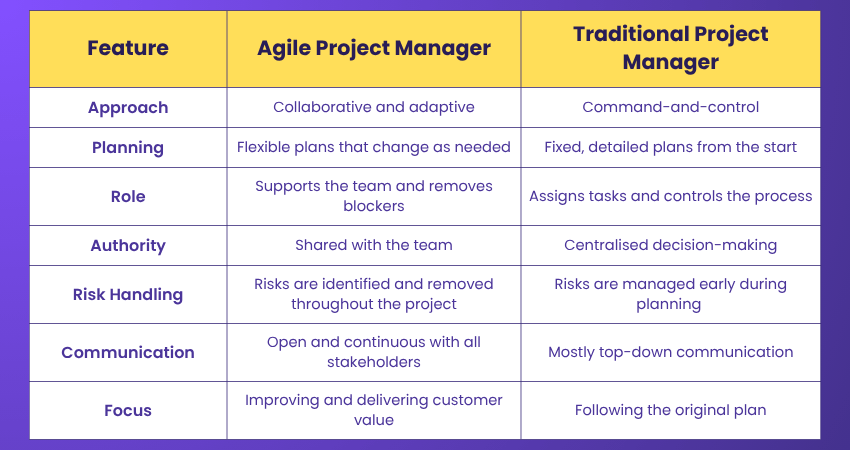
A Traditional Project Manager sticks to a fixed plan and controls tasks from the top. An Agile Project Manager works with the team, adapts to changes, solves problems early, and encourages open communication for better results. These are the main differences between Agile and Traditional Project Manager:
Skills and Qualities of an Agile Project Manager
An Agile Project Manager must possess a set of skills and qualities, some of which are elaborated as follows:
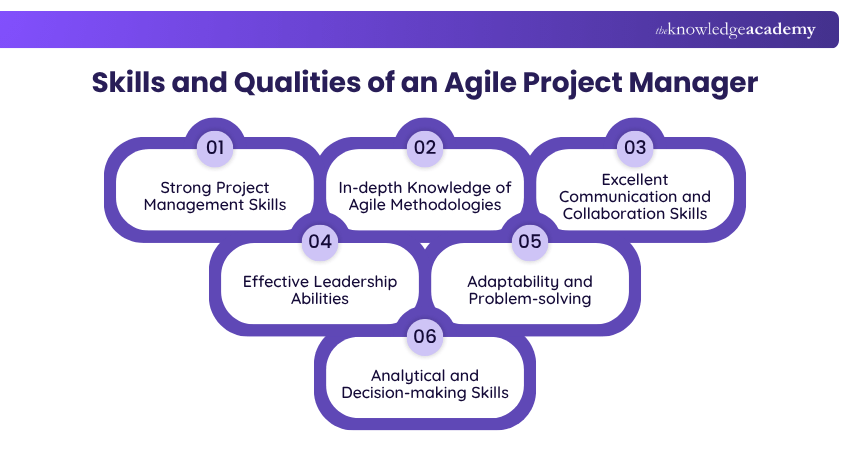
1) Strong Project Management Skills: A good Project Manager showcases proficiency in Agile Project Management Principles and practices. They have expertise in creating project plans, managing resources, tracking progress, and ensuring timely delivery. They possess the ability to manage budgets, mitigate risks, and maintain high-quality standards throughout the project lifecycle.
2) In-depth Knowledge of Agile Methodologies: A Project Manager has a deep understanding of Methodologies Agile methodologies such as Scrum, Kanban, or Lean. They are familiar with Agile principles and values and apply them effectively to drive project success. They guide the team in implementing Agile practices, facilitate ceremonies, and foster a culture of adaptability and continuous improvement.
3) Excellent Communication and Collaboration Skills: Effective communication is vital in Agile Project Management (APM), and a Project Manager excels in this area. They possess excellent verbal and written communication skills, enabling them to convey project requirements, goals, and progress to both the team and stakeholders. They foster a collaborative environment, encourage open dialogue, and ensure that information flows seamlessly among all parties involved.
4) Effective Leadership Abilities: A Project Manager needs to exhibit strong leadership qualities that inspire and motivate the team. They provide clear direction, set expectations, and empower team members to take ownership of their work. They facilitate decision-making, encourage self-organisation, and create an atmosphere of trust and accountability. Their leadership enables the team to work cohesively towards shared project objectives.
5) Adaptability and Problem-solving: Agile projects often involve changing requirements and unforeseen challenges. A Project Manager is adaptable and adept at navigating through uncertainties. They embrace change, encourage creative problem-solving, and facilitate the team's ability to adapt and respond effectively to constantly changing project needs.
6) Analytical and Decision-making Skills: A Project Manager must possess good analytical skills to evaluate project data, metrics, and performance indicators. They use this information to make informed decisions, identify improvement areas, and optimise project outcomes. They rely on data-driven insights to drive continuous improvement and ensure the project's success.
Master stakeholder collaboration, planning, and delivery techniques. Join our Agile Project Management Practitioner (AgilePM® V3) Course now!
What is the Salary of an Agile Project Manager?
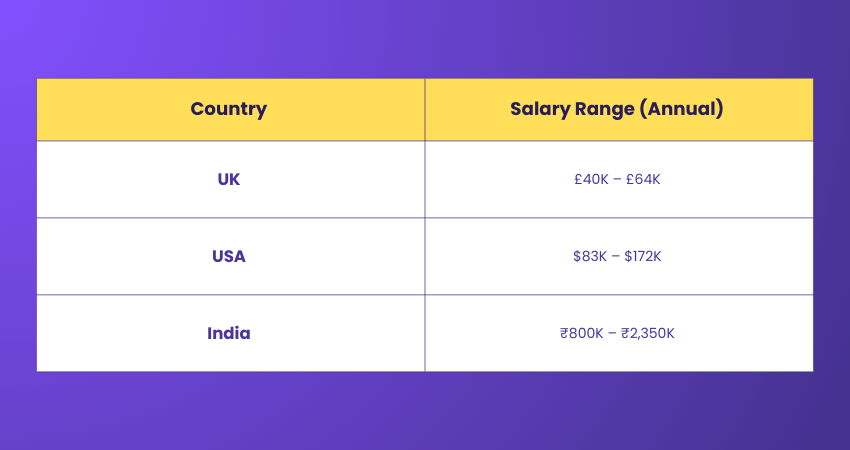
Agile Project Manager salaries depend on location, experience, and industry demand. Their strong Agile skills are highly valued, leading to competitive pay worldwide. Here’s a quick salary comparison for the UK, USA, and India.
Is Agile a Good Career?
Yes, Agile is a very good career. Many companies need people who know how to work in an Agile way. Jobs like Scrum Master and Agile Coach are growing fast. These roles help teams work better, solve problems, and finish work on time. It’s a great path if you like teamwork and learning new things.
Conclusion
Agile Project Managers shape projects that are adaptive, collaborative and value-driven. By guiding teams and encouraging continuous improvement, they help organisations move with confidence. Understanding the Agile Project Manager Roles and Responsibilities can empower any aspiring professional to embrace agility and create meaningful impact across every stage of project delivery.
Gain practical tools to manage time, cost, and risks in Agile projects. Join our Agile Project Management Foundation (AgilePM® V3) Course now!
Frequently Asked Questions
Who is Higher Than a Project Manager?

People with titles like Senior Project Manager or Project Director are higher than a Project Manager. They look after bigger projects or manage many project teams. They make more important decisions and help guide other Managers.
What are the Necessary Qualifications for a Project Manager?
A Project Manager should have good leadership, communication, and problem-solving skills. Knowing Agile methods like Scrum or Kanban is helpful. Most have a degree in business or IT, and certifications like PMI-ACP can improve job chances.

David Evans


Certified Project Trainer and Agile Delivery Expert
David Evans brings over a decade of hands-on experience in project delivery, Agile transformation, and team leadership. With a background in technology and business consulting, David has led cross-functional teams through Agile and Waterfall projects in both public and private sectors. He combines technical knowledge with practical insights to help readers navigate the challenges of modern project environments.


 If you wish to make any changes to your course, please


