


 Top Rated Course

We may not have the course you’re looking for. If you enquire or give us a call on +47 80010068 and speak to our training experts, we may still be able to help with your training requirements.
What is Continuous Performance Management: A Complete Overview
James Smith 26 December 2025Continuous Performance Management focuses on real-time feedback, regular check-ins, and goal alignment to boost employee engagement and growth. Its benefits include increased engagement, better Manager-employee relationships, early detection of issues, faster skills building and easy adaptation to changing business environments.

Training Outcomes Within Your Budget!
We ensure quality, budget-alignment, and timely delivery by our expert instructors.
Table of Contents
Gone are the days of outdated annual reviews. Continuous Performance Management (CPM) is reshaping the workplace by turning performance discussions into a dynamic journey of growth. It thrives on real-time conversations, clear goals, and regular check-ins that keep employees motivated and connected. This blog will walk you through everything about CPM, what it is, how to integrate it, the benefits it brings, and the role of CPM software. Let’s get started!
Table of Contents
1) What is Continuous Performance Management?
2) How to Implement Continuous Performance Management?
3) What are the Benefits of Continuous Performance Management?
4) Optimal Practices for Continuous Performance Management
5) What Function Does Continuous Performance Management Software Serve?
6) Drawbacks of Continuous Performance Management
7) Conclusion
What is Continuous Performance Management?
Continuous Performance Management refers to an ongoing approach where performance is tracked and supported throughout the year. Unlike the traditional method of annual appraisals that focuses on a single review, this system adopts a more consistent and well-rounded process to evaluate and develop employees.
By encouraging regular feedback, Managers and employees build stronger, more genuine, and trusting relationships. This approach includes real-time feedback, regular one-on-one meetings or “check-ins,” and the setting of short-term goals to keep progress aligned and measurable.
How to Implement Continuous Performance Management?
Continuous Performance Management focuses on real-time feedback, short-term goals, and ongoing conversations with employees. This approach encourages employee engagement and helps Managers design more effective improvement plans. Here are six simple steps to make the transition:
1) Converse with Managers to Discover Who is Already Conducting Regular Performance Discussions
Find out who already holds regular performance discussions. Many Managers may already be giving informal feedback. Involve them in shaping the new process by asking about their current practices and meeting styles.
2) Get buy-in From Senior Leadership on Continuous Performance Management
Secure buy-in from senior leaders by explaining the business benefits. Share how the system will handle promotions, pay increases, and bonuses to give them confidence in the new approach.
3) Sell the Advantages of Continuous Performance Management to Managers
Explain why the shift is happening and how it leads to stronger, more motivated teams. Remind them that regular check-ins are easier to manage than lengthy annual reviews.
4) Provide Necessary Training and Guidance for Continuous Performance Management
Equip the Managers with the right skills to conduct effective conversations and give constructive feedback. Use the time once spent on yearly appraisals for training instead.
5) Continually Communicate the Changes That’ll Take Place
Share updates often through newsletters, meetings, webinars, and other channels. Don’t rely on a single announcement; keep everyone informed and engaged throughout the transition.
6) Use Continuous Performance Management Software
Leverage HR tools to schedule check-ins, track goals, and share feedback. Software also helps monitor performance trends, making it easier to identify strengths and address issues quickly.
Learn to empower team members with our Management Training for New Managers Course – Join now!
What are the Benefits of Continuous Performance Management?
Continuous Performance Management offers several significant benefits to organisations. These advantages strengthen manager-employee relationships, boost productivity, and align individual efforts with company objectives. Let's explore the key benefits of Continuous Performance Management:
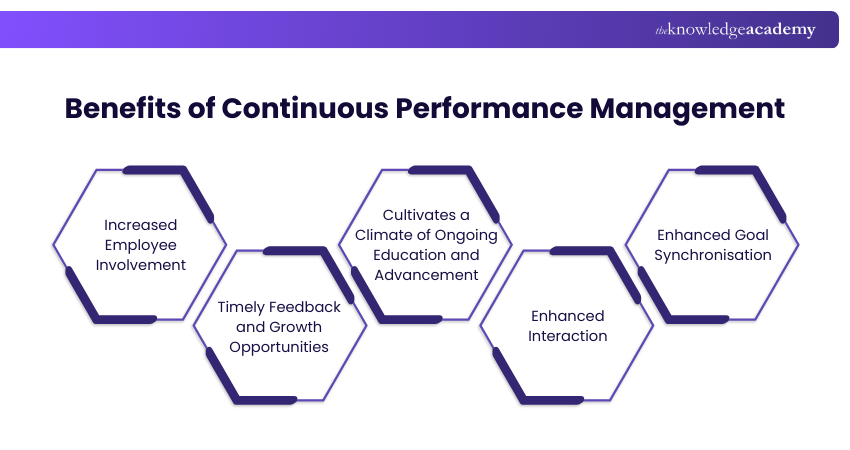
1) Increased Employee Involvement
1) CPM helps employees feel included, building a sense of belonging and loyalty to the company.
2) Staff are involved in setting goals, monitoring progress, and suggesting improvements through feedback and open communication.
3) Employee involvement encourages ownership of development and performance, increasing accountability for outcomes.
4) Valued opinions and contributions lead to higher engagement and stronger connections to organisational goals.
5) CPM provides space for employees to share problems, ideas, and collaborate with Managers and colleagues.
6) This supportive environment boosts morale, enhances teamwork, and fosters camaraderie in the workplace.
2) Timely Feedback and Growth Opportunities
1) Continuous Performance Management focuses on timely feedback and growth opportunities to support ongoing employee development.
2) Feedback is delivered as a continuous dialogue rather than limited to annual or occasional reviews.
3) Real-time feedback enables employees to quickly identify and correct mistakes, thereby improving their performance.
4) Regular appraisals help employees take immediate corrective action in relevant areas.
5) This approach boosts productivity by preventing small issues from growing into major problems.
6) CPM enhances efficiency and ensures higher effectiveness in achieving outputs.
3) Cultivates a Climate of Ongoing Education and Advancement
1) CPM creates a culture of continuous learning and growth within organisations.
2) It supports adaptability and ongoing development, which are essential in today’s fast-changing business environment.
3) CPM encourages regular conversations and feedback between Managers and employees.
4) Regular meetings and reviews provide insights into strengths, challenges, and growth opportunities.
5) Continuous feedback motivates employees to seek resources, training, and development opportunities.
6) This ongoing cycle helps employees enhance their skills and abilities for long-term success.
4) Enhanced Interaction
1) CPM promotes stronger relationships and effective communication between Managers and employees.
2) Unlike traditional methods, CPM relies on regular, meaningful interactions instead of infrequent evaluations.
3) Frequent check-ins and feedback sessions encourage open dialogue on progress, challenges, and goals.
4) These interactions create a supportive environment for constructive conversations.
5) Regular communication builds trust, transparency, and rapport between Managers and employees.
6) CPM fosters a positive and productive working relationship through ongoing collaboration and alignment of goals.
5) Enhanced Goal Synchronisation
1) Goal alignment is a key element of Continuous Performance Management that connects individual goals with organisational objectives.
2) CPM uses clear targets, objectives, and short-term milestones to show employees how their work supports the organisation’s mission.
3) It promotes the creation of transparent and well-defined objectives instead of vague goals.
4) Managers and employees collaborate to set SMART (Specific, Measurable, Achievable, Relevant, Time-bound) goals.
5) SMART goals ensure clarity, relevance, and alignment with strategic initiatives.
6) This approach helps employees understand expectations and how their efforts drive overall organisational success.
Empower the individual, elevate the organisation. Sign up for our Personal & Organisational Development Course now!
Optimal Practices for Continuous Performance Management
To make sure Continuous Performance Management initiatives succeed, organisations should adopt the following best practices:
1) Consistent and Frequent Meetings
Encourage Managers to hold regular check-ins with employees to review progress, provide feedback, and address challenges or obstacles. These consistent touchpoints strengthen relationships and ensure issues are resolved before they escalate.
2) Establish Transparent Objectives
Define transparent, measurable goals that align with organisational priorities and show employees how their contributions support broader objectives. Clear objectives provide direction and motivate employees to stay focused on meaningful outcomes.
3) Foster Psychological Comfort
Create a supportive, inclusive environment where employees feel comfortable sharing feedback, discussing challenges, and seeking help when needed. A culture of trust allows teams to innovate and collaborate without fear of judgment.
4) Offer Managerial and Employee Training
Offer development opportunities to strengthen communication, coaching, and Performance Management skills for both Managers and employees. Training equips everyone with the tools to give and receive feedback effectively, creating a cycle of continuous growth.
Unlock your Leadership potential with our expert Management Courses – Register and grow today!
What Function Does Continuous Performance Management Software Serve?
Continuous Performance Management software simplifies the performance evaluation process through features facilitating goal establishment, feedback gathering, performance monitoring, and data analysis. These platforms enable organisations to automate administrative tasks, facilitate communication between Managers and employees, and gain insights into employee performance and engagement.
Drawbacks of Continuous Performance Management
While Continuous Performance Management offers numerous benefits, its drawbacks are:
1) Time and Resource Intensive: Implementing and maintaining Continuous Performance Management practices requires significant time and resources, especially in larger organisations.
2) Resistance to Change: Some employees and Managers may be resistant to the shift towards more frequent feedback and coaching, preferring traditional performance review processes.
3) Risk of Bias: Without proper training and oversight, there is a risk of Unconscious Bias influencing performance evaluations and feedback.
4) Overemphasis on Short-term Goals: Frequent check-ins may unintentionally prioritise immediate results over long-term development, leading employees to focus more on quick wins than sustainable growth.
Conclusion
Continuous Performance Management transforms performance reviews into a culture of growth. By focusing on real-time feedback and development, it helps organisations stay agile, boost engagement, and achieve lasting success despite the effort required to implement it. Ultimately, CPM empowers both employees and organisations to grow together.
Take the first step towards managerial excellence with our comprehensive Introduction to Management Course – Sign up now!
Frequently Asked Questions
What is a Continuous Performance Management System?

Continuous Performance Management represents a contemporary, employee-centric method for fostering, assessing, and enhancing employee performance. It allows organisations to cultivate a reliable atmosphere where employees are empowered to drive their own growth.
What Does Performance Management Entail?
Performance Management entails ongoing feedback and communication between Managers and employees to align with the organisation's strategic objectives.
What are the Other Resources and Offers Provided by The Knowledge Academy?
The Knowledge Academy takes global learning to new heights, offering over 3,000 online courses across 490+ locations in 190+ countries. This expansive reach ensures accessibility and convenience for learners worldwide.
Alongside our diverse Online Course Catalogue, encompassing 19 major categories, we go the extra mile by providing a plethora of free educational Online Resources like Blogs, eBooks, Interview Questions and Videos. Tailoring learning experiences further, professionals can unlock greater value through a wide range of special discounts, seasonal deals, and Exclusive Offers.
What is the Knowledge Pass, and how does it work?
The Knowledge Academy’s Knowledge Pass, a prepaid voucher, adds another layer of flexibility, allowing course bookings over a 12-month period. Join us on a journey where education knows no bounds.
What are related Management Courses and blogs provided by The Knowledge Academy?
The Knowledge Academy offers various Management Courses, including Introduction to Management Course, Introduction to Managing People Course and Business Process Improvement Training. These courses cater to different skill levels, providing comprehensive insights into Operational Efficiency.
Our Business Skills Blogs covers a range of topics offering valuable resources, best practices, and industry insights. Whether you are a beginner or looking to advance your Business Improvement skills, The Knowledge Academy's diverse courses and informative blogs have you covered.

James Smith


Digital Marketing Manager and Trainer
James Smith is a digital marketing professional with over a decade of experience in SEO, content strategy, paid media and analytics. He has supported both SMEs and global brands in transforming their digital presence. James’s writing and training are rooted in results-driven tactics and the latest marketing trends.
View Detail
Upcoming Business Skills Resources Batches & Dates
Date
 Introduction to Managing People
Introduction to Managing People
Fri 24th Jul 2026
Introduction to Managing People
Fri 16th Oct 2026

 If you wish to make any changes to your course, please


