


 Top Rated Course

We may not have the course you’re looking for. If you enquire or give us a call on +47 80010068 and speak to our training experts, we may still be able to help with your training requirements.
Advantages and Disadvantages of Root Cause Analysis: Explained
John Davies 08 May 2026This blog explores the advantages and disadvantages of Root Cause Analysis, a method for identifying and addressing underlying issues. It highlights how RCA helps improve processes and prevent future problems, enhancing efficiency and quality. However, it also discusses challenges like the time-consuming nature of RCA.

Training Outcomes Within Your Budget!
We ensure quality, budget-alignment, and timely delivery by our expert instructors.
Table of Contents
Related Courses
- ITIL® 4 Specialist: Create Deliver and Support Certification
- ITIL® 4 Foundation Certification Course
- Root Cause Analysis
- ITIL® 4 Practitioner: Incident Management Training
- ITIL® 4 Strategist: Direct, Plan and Improve Training
- Certified IT Service Manager (CITSM) Certification
- ITIL® 5 Foundation Certification
Welcome to the insightful world of problem-solving! Today, we’re diving into the Root Cause Analysis (RCA), a technique that’s all about getting to the bottom of issues. Think of RCA as the detective work of the business world; it’s how we uncover the hidden ‘whys’ behind the ‘whats’. But, like any method, it’s not without its challenges. While RCA can be a game-changer, leading us to long-term solutions and preventing future mishaps, it can also be a complex maze, sometimes leading us astray with its intricate paths. So, let’s explore the Advantages and Disadvantages of Root Cause Analysis and discover how it can be your guide to success. Get ready to unlock the mysteries of RCA!
Table of Contents
1) What is Root Cause Analysis?
2) Advantages of Root Cause Analysis
3) Disadvantages of RCA
4) Conclusion
What is Root Cause Analysis?
Root Cause Analysis (RCA) is a process used to identify the underlying causes of problems or incidents. By understanding the root causes, organisations can implement effective solutions to prevent recurrence. The Root Cause Analysis explains that RCA involves gathering data, analysing it to identify contributing factors, and determining the primary cause. This approach helps improve processes, enhance quality, and ensure long-term solutions to issues.

Advantages of Root Cause Analysis
RCA helps organisations tackle problems at their core. Unlike Causal Analysis vs. Root Cause Analysis, which explores broader factors, RCA focuses on identifying the fundamental cause to prevent future issues. Both methods are crucial for effective problem-solving. So, let’s see how it can positively impact organisations:
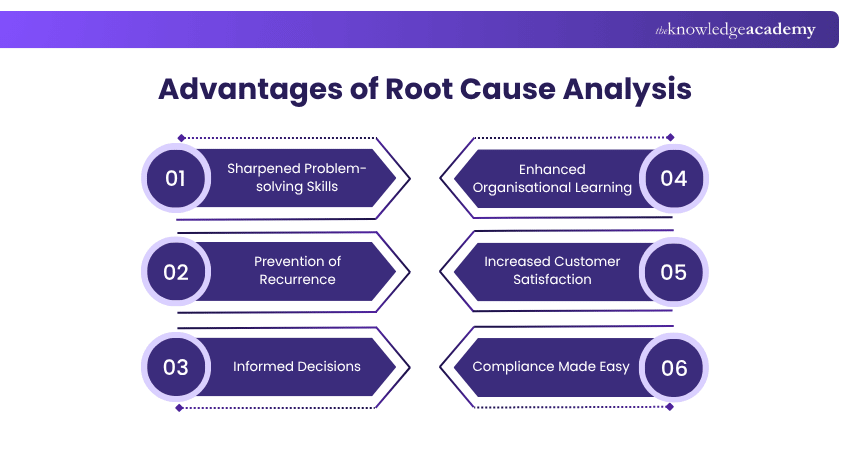
a) Sharpened Problem-solving Skill: RCA is like a magnifying glass that brings the true nature of problems into focus. It equips teams with the clarity needed to craft precise solutions, directly hitting the mark and enhancing the quality of problem resolution.
b) Prevention of Recurrence: Think of RCA as preventive medicine for your organisation. By identifying and rectifying root issues, it acts as a safeguard against future troubles, saving precious time and resources while boosting overall performance.
c) Informed Decisions: RCA helps organisations make better decisions by providing a clear understanding of the underlying issues, reducing guesswork, and increasing the likelihood of success. With RCA, organisations can solve issues more effectively and steer towards achieving their goals.
d) Enhanced Organisational Learning: RCA isn’t just about fixing problems; it’s about learning from them. It nurtures a culture of curiosity and continuous improvement, empowering employees with the knowledge to make smarter decisions and innovate.
e) Increased Customer Satisfaction: When RCA is at the helm, customer satisfaction soars. Delivering solutions that strike at the root ensures a smoother voyage for customers, fostering trust and loyalty along the way.
f) Compliance Made Easy: RCA tool is a valuable tool for ensuring compliance with regulations by identifying and addressing potential pitfalls. By using RCA, organisations can proactively maintain standards, avoiding regulatory issues and ensuring smooth operations.
Learn best practices in IT Service Management with our ITIL® 5 Foundation Certification – Join today!
Disadvantages of RCA
While Root Cause Analysis offers numerous benefits, it is essential to know its potential disadvantages. Understanding the limitations and challenges associated with RCA can help organisations mitigate potential pitfalls and maximise the effectiveness of their problem-solving efforts. So, let’s explore the key disadvantages of RCA:
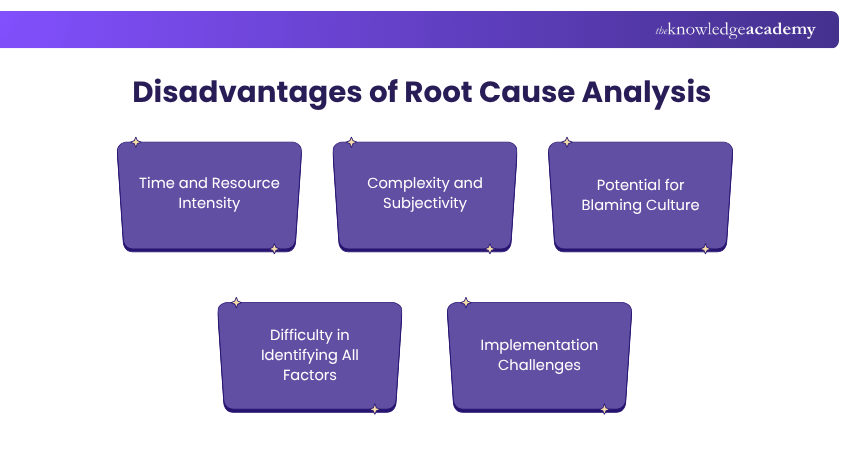
a) Time and Resource Intensity: Conducting a thorough root cause analysis requires significant effort and involves data collection, interviews, documentation, and analysis. This process can be time-consuming for complex problems or large-scale incidents. Therefore, organisations must allocate sufficient resources and plan accordingly to ensure an effective Root Cause Analysis.
b) Complexity and Subjectivity: RCA can be complex and subjective due to the involvement of various Stakeholder and perspectives. Different individuals or teams may interpret the underlying causes differently, leading to potential biases or conflicts. It requires skilled facilitation and a collaborative approach to ensure a comprehensive and objective analysis.
c) Potential for Blaming Culture: Another Disadvantage of Root Cause Analysis is the potential for a blaming culture to emerge within an organisation. When individuals or teams are involved in the analysis, there is a risk of attributing blame instead of focusing on the underlying causes. Creating a blame-free environment that encourages open and effective communication and learning from mistakes is crucial.
d) Difficulty in Identifying All Factors: Identifying all the factors contributing to a problem can be challenging in Root Cause Analysis. Complex issues often have multiple interconnected causes, making it difficult to uncover all the underlying factors. This limitation can affect the accuracy and completeness of the analysis, potentially leading to suboptimal solutions.
e) Implementation Challenges: Implementing RCA effectively within an organisation can pose its own set of challenges. Resistance to change, lack of support from leadership, and insufficient training in Root Cause Analysis Templates and methodologies can hinder the successful adoption of this problem-solving approach. It is crucial to address these implementation challenges to ensure the full benefits of RCA are realised.
Learn the key concepts of Direct, Plan & Improve with our ITIL® 4 Strategist: Direct, Plan and Improve Training – join today!
Conclusion
Root Cause Analysis is a powerful method for addressing problems at their core and driving continuous improvement within organisations. By understanding the Advantages and Disadvantages of Root Cause Analysis, organisations can make informed decisions on when and how to apply this technique effectively. This leads to enhanced problem-solving and positive change.
Learn systematic problem-solving techniques with our Root Cause Analysis Course – join today!
Frequently Asked Questions
What are the Main Steps Involved in Root Cause Analysis?

The main steps in Root Cause Analysis are identifying the problem, collecting data, determining the root cause, implementing solutions, and monitoring results to ensure the issue is resolved.
How can Organisations Ensure the Successful Implementation of Root Cause Analysis Methodologies?
Organisations can ensure the successful implementation of Root Cause Analysis methodologies by providing proper training to their staff and fostering a culture of open communication. Additionally, they should use systematic tools and techniques to find and address the root causes of problems.
What are the Other Resources and Offers Provided by The Knowledge Academy?
The Knowledge Academy takes global learning to new heights, offering over 3,000+ online courses across 490+ locations in 190+ countries. This expansive reach ensures accessibility and convenience for learners worldwide.
Alongside our diverse Online Course Catalogue, encompassing 17 major categories, we go the extra mile by providing a plethora of free educational Online Resources like Blogs, eBooks, Interview Questions and Videos. Tailoring learning experiences further, professionals can unlock greater value through a wide range of special discounts, seasonal deals, and Exclusive Offers.
What is The Knowledge Pass, and How Does it Work?
The Knowledge Academy’s Knowledge Pass, a prepaid voucher, adds another layer of flexibility, allowing course bookings over a 12-month period. Join us on a journey where education knows no bounds.
What are the Related Courses and Blogs Provided by The Knowledge Academy?
The Knowledge Academy offers various ITIL® Certification, including Root Cause Analysis Course, ITIL® 5 Foundation Certification and ITIL® 5 Strategy Certification. These courses cater to different skill levels, providing comprehensive insights into Root Cause Analysis Tools.
Our IT Service Management Blogs cover a range of topics related to Root Cause Analysis, offering valuable resources, best practices, and industry insights. Whether you are a beginner or looking to advance your IT Service Management skills, The Knowledge Academy's diverse courses and informative blogs have got you covered.

John Davies


Cyber Security Governance & Assurance Specialist
John Davies is a cybersecurity expert specialising in governance, risk management, and compliance. With over 15 years in the field, he has led enterprise-wide security programmes across finance, healthcare and public sector organisations. His content provides practical guidance on building secure environments, managing risk and aligning with regulatory frameworks.

Upcoming IT Service Management Resources Batches & Dates
Date
 ITIL® 5 Foundation Certification
ITIL® 5 Foundation Certification
Wed 24th Jun 2026
ITIL® 5 Foundation Certification
Mon 29th Jun 2026
ITIL® 5 Foundation Certification
Wed 1st Jul 2026
ITIL® 5 Foundation Certification
Mon 6th Jul 2026
ITIL® 5 Foundation Certification
Wed 8th Jul 2026
ITIL® 5 Foundation Certification
Mon 13th Jul 2026
ITIL® 5 Foundation Certification
Wed 15th Jul 2026
ITIL® 5 Foundation Certification
Mon 20th Jul 2026
ITIL® 5 Foundation Certification
Wed 22nd Jul 2026
ITIL® 5 Foundation Certification
Mon 27th Jul 2026
ITIL® 5 Foundation Certification
Wed 29th Jul 2026
ITIL® 5 Foundation Certification
Mon 3rd Aug 2026
ITIL® 5 Foundation Certification
Wed 5th Aug 2026
ITIL® 5 Foundation Certification
Mon 10th Aug 2026
ITIL® 5 Foundation Certification
Wed 12th Aug 2026
ITIL® 5 Foundation Certification
Mon 17th Aug 2026
ITIL® 5 Foundation Certification
Wed 19th Aug 2026
ITIL® 5 Foundation Certification
Mon 24th Aug 2026
ITIL® 5 Foundation Certification
Wed 26th Aug 2026
ITIL® 5 Foundation Certification
Tue 1st Sep 2026
ITIL® 5 Foundation Certification
Mon 7th Sep 2026
ITIL® 5 Foundation Certification
Wed 9th Sep 2026
ITIL® 5 Foundation Certification
Mon 14th Sep 2026
ITIL® 5 Foundation Certification
Wed 16th Sep 2026
ITIL® 5 Foundation Certification
Mon 21st Sep 2026
ITIL® 5 Foundation Certification
Wed 23rd Sep 2026
ITIL® 5 Foundation Certification
Mon 28th Sep 2026
ITIL® 5 Foundation Certification
Wed 30th Sep 2026
ITIL® 5 Foundation Certification
Mon 5th Oct 2026
ITIL® 5 Foundation Certification
Wed 7th Oct 2026
ITIL® 5 Foundation Certification
Mon 12th Oct 2026
ITIL® 5 Foundation Certification
Wed 14th Oct 2026
ITIL® 5 Foundation Certification
Mon 19th Oct 2026
ITIL® 5 Foundation Certification
Wed 21st Oct 2026
ITIL® 5 Foundation Certification
Mon 26th Oct 2026
ITIL® 5 Foundation Certification
Wed 28th Oct 2026
ITIL® 5 Foundation Certification
Mon 2nd Nov 2026
ITIL® 5 Foundation Certification
Wed 4th Nov 2026
ITIL® 5 Foundation Certification
Mon 9th Nov 2026
ITIL® 5 Foundation Certification
Wed 11th Nov 2026
ITIL® 5 Foundation Certification
Mon 16th Nov 2026
ITIL® 5 Foundation Certification
Wed 18th Nov 2026
ITIL® 5 Foundation Certification
Mon 23rd Nov 2026
ITIL® 5 Foundation Certification
Wed 25th Nov 2026
ITIL® 5 Foundation Certification
Mon 30th Nov 2026
ITIL® 5 Foundation Certification
Wed 2nd Dec 2026
ITIL® 5 Foundation Certification
Mon 7th Dec 2026
ITIL® 5 Foundation Certification
Wed 9th Dec 2026
ITIL® 5 Foundation Certification
Mon 14th Dec 2026
ITIL® 5 Foundation Certification
Mon 21st Dec 2026
ITIL® 5 Foundation Certification
Wed 23rd Dec 2026
ITIL® 5 Foundation Certification
Tue 29th Dec 2026

 If you wish to make any changes to your course, please


