


 Top Rated Course


We may not have the course you’re looking for. If you enquire or give us a call on +31 208081674 and speak to our training experts, we may still be able to help with your training requirements.
Kubernetes Tools: Essential Tools and Uses
Lily Turner 24 April 2026Explore the best Kubernetes tools for cluster management, monitoring, deployment, and cost optimisation to streamline your Kubernetes workflow efficiently. These tools help teams automate tasks, scale faster, enhance visibility, ensure security, and manage Kubernetes environments with precision and reliability.

Training Outcomes Within Your Budget!
We ensure quality, budget-alignment, and timely delivery by our expert instructors.
Table of Contents
Are you finding it challenging to streamline your Kubernetes operations? Look no further Kubernetes Tools are here to save the day! According to Statista, around 61% of organisations worldwide have already embraced Kubernetes and its tools, with another 30% planning to jump on board soon.
Kubernetes has revolutionised cluster management by offering a powerful platform for deploying, scaling, and managing containerised applications. As a leading container orchestration tool, it simplifies the complexities of cluster management with a robust set of features. In this blog, we’ll explore the top Kubernetes Tools that can significantly enhance your work efficiency and help you stand out in this competitive landscape. Ready to scale up your innovation? Let’s dive in.
Table of Contents
1) Different Types of Kubernetes Tools
2)Best Kubernetes Tools for Cluster Management
3) Kubernetes Cost Optimisation Tools
4) Kubernetes Command-line Tools
5) Kubernetes Networking & Service Mesh Tools
6) Kubernetes Deployment & Configuration Management Tools
7) Kubernetes Monitoring & Logging Tools
8) What are Kubernetes CI/CD Integration Tools?
9) What are the Alternative Kubernetes Tools for Development
10) Conclusion
Different Types of Kubernetes Tools
Kubernetes has become a crucial component in managing containerised applications, making it convenient for developers to deploy, scale, and maintain them efficiently. There are different types of Kubernetes Tools that provide significant benefits to users. Let’s look at a few of them below:
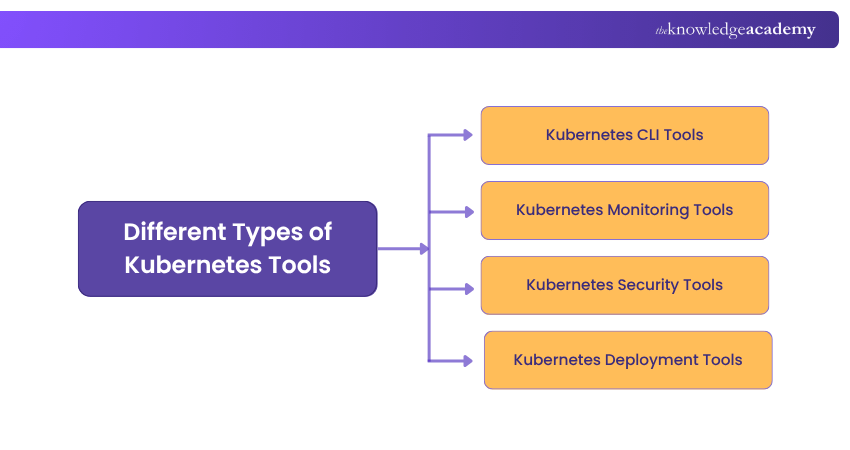
1) Kubernetes CLI Tools: These tools enable precise Cluster Management through command-line interactions.
2) Kubernetes monitoring Tools: They offer real-time insights into application and cluster performance.
3) Kubernetes security Tools: These tools enhance cluster security with access control and threat detection features.
4) Kubernetes deployment tools: These tools work to streamline application deployment and updates for enhanced efficiency.

Best Kubernetes Tools for Cluster Management
Efficient cluster management is essential for ensuring smooth operations in Kubernetes environments.
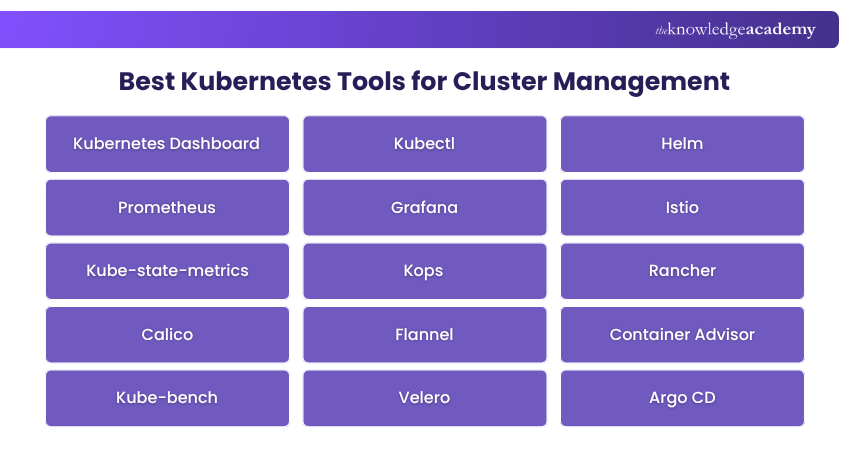
In the below sections, you will study the best Kubernetes DevOps Tools for performing efficient Cluster Management:
1) Kubernetes Dashboard
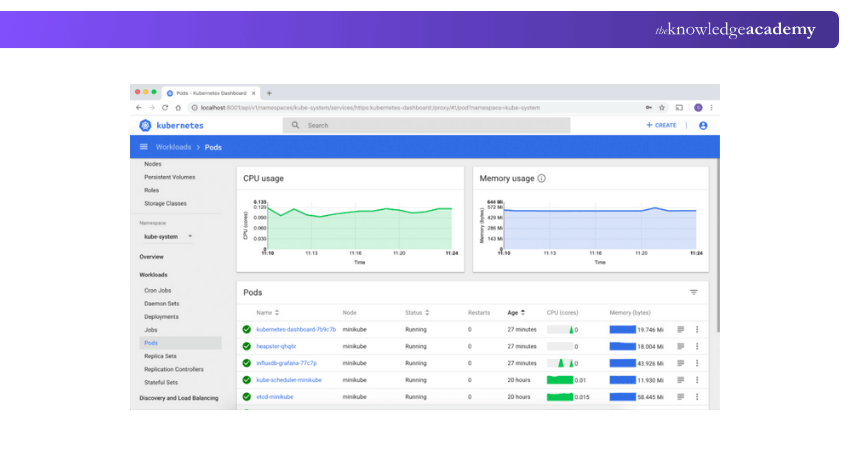
Kubernetes Dashboard offers a virtual Graphical User Interface (GUI), allowing users to manage and monitor Kubernetes clusters efficiently through a web-based platform. It provides a clear visual representation of cluster components such as nodes, pods, services, and deployments.
With Kubernetes Dashboard, administrators can easily install applications, troubleshoot issues, and monitor resource usage in real time. The intuitive, user-friendly interface simplifies all aspects of cluster management, making it accessible to both beginners and experienced professionals working with Kubernetes clusters.
2) Kubectl

The command line interface (CLI) that is most commonly used to communicate with Kubernetes clusters is called Kubectl. It is the main tool of administration that enables administrators to perform different commands to control, supervise and investigate Kubernetes resources.
Using Kubectl, one can use it to create and scale deployments, manipulate secrets and configurations, run health checks and also debug cluster problems. More so, it is a tool that can not be excluded in the Cluster Management and the versatility and the flexibility is a plus.
3) Helm
Helm is defined as a Package Manager for Kubernetes that streamlines the deployment and application management. It allows users to define application configurations in form of "Helm charts," which include the package of all the necessary Kubernetes resources and dependencies into a single, versioned artifact.
Additionally, Helm simplifies the process of deploying complex applications with a few simple commands to ensure consistency and reproducibility throughout the process. It also supports versioning, rollbacks, and easy sharing of application templates within the Kubernetes community.
4) Prometheus
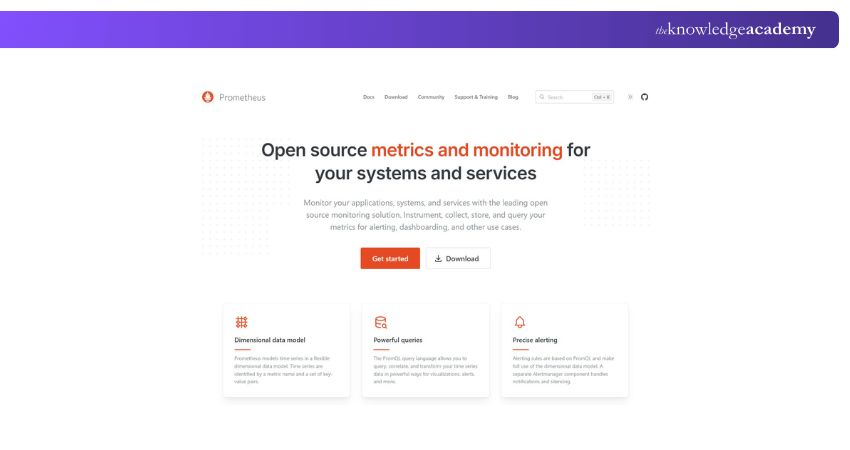
Prometheus is a powerful open-source monitoring and alerting system tool designed to optimise Kubernetes' utilisation. It collects time-series metrics from different components within the cluster, allowing administrators to gain insights into the performance and health of their applications.
Prometheus also offers a flexible query language and rich visualisation options, allowing users to create custom dashboards and graphs. Moreover, with its robust alerting capabilities, administrators can set up proactive alerts to promptly detect and respond to anomalies.
5) Grafana
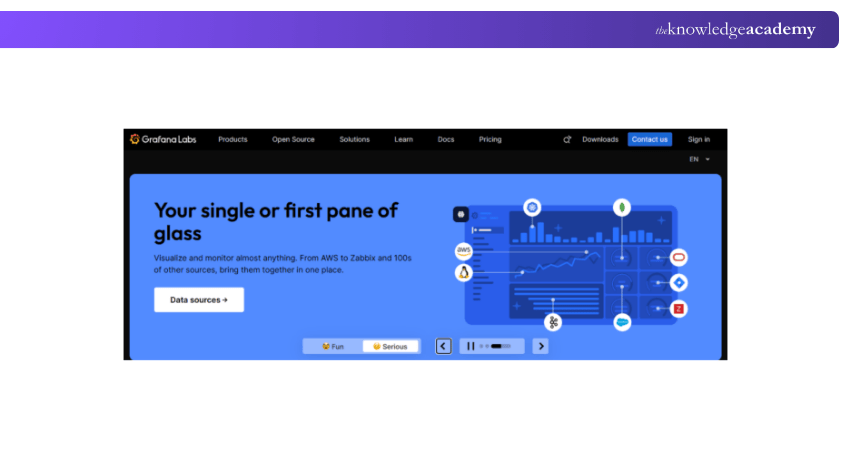
Grafana is one more well-known open-source appliance aimed at time-series data visualisation and analysis. It is compatible with Prometheus and other data sources so that administrators can build beautiful dashboards and visualisations, which they can use to monitor Kubernetes clusters. To understand its features, it is better to get acquainted with it, particularly when reading the Grafana Interview Questions, which tend to encompass information on its combinations, alarms, and the dashboards.
Moreover, Grafana scope contains a broad spectrum of visualisation tools as well, in the form of graphs, charts, and tables, which allows making sense even of complicated metrics. This edge alerting capability allows the administrators to configure the alerts to be sent on a specific threshold to be aware of the critical events happening on the cluster in real-time. To get a more accurate grasp of the concept of how Grafana alerting features can be configured, candidates can resort to studying Grafana Interview Questions and Answers.
6) Istio
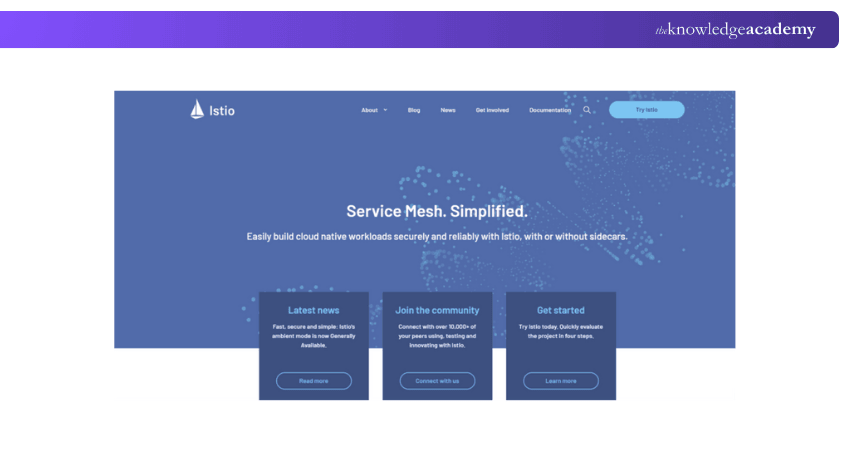
Istio is a service mesh tool capable of simplifying the management of micro services within Kubernetes clusters and it is feature loaded. It offers sophisticated traffic control, load balancing and visibility.
Istio has highly effective routing and control methods, through which administrators can apply policies, secure service-to-service communication, and can implement traffic shaping. The Istio improves cluster management, scalability, and security by delegating essential functionality of single services to the service mesh layer.
7) Kube-State-Metrics
Kube-state-metrics is a Kubernetes add-on that exposes cluster state information as Prometheus metrics. It provides valuable insights into the health and status of various Kubernetes resources, such as nodes, pods, deployments, and services.
In addition, Kube-state metrics enable administrators to monitor resource allocation, identify performance bottlenecks, and detect any misconfigurations. By leveraging all these metrics, administrators can adequately ensure their Kubernetes clusters' proper functioning and stability.
8) Kops
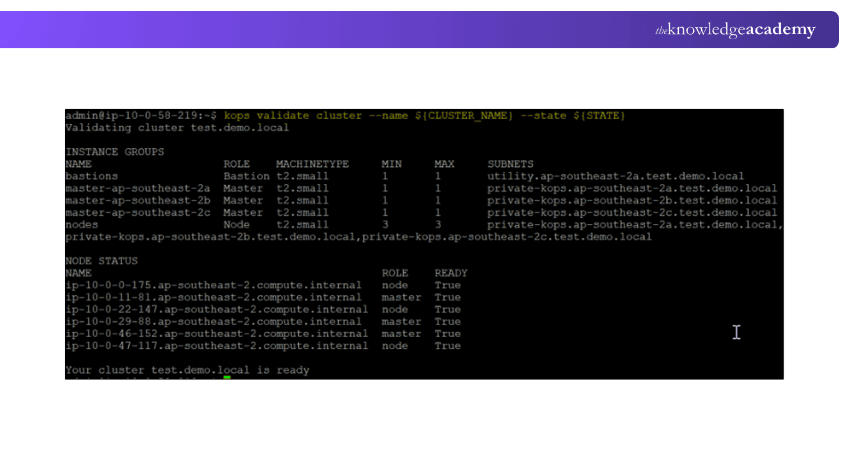
Kops, an abbreviation for Kubernetes Operations, is a command-line tool designed specifically for managing Kubernetes clusters on cloud infrastructure, particularly in Amazon Web Services (AWS). It performs such operations by simplifying the provisioning, scaling, and upgrading of Kubernetes clusters by automating the underlying infrastructure setup.
In addition, it handles tasks, ranging from creating Virtual Private Clouds (VPCs), configuring networking to managing auto-scaling groups. With Kops, administrators can easily create and manage production-grade Kubernetes clusters on AWS.
9) Rancher
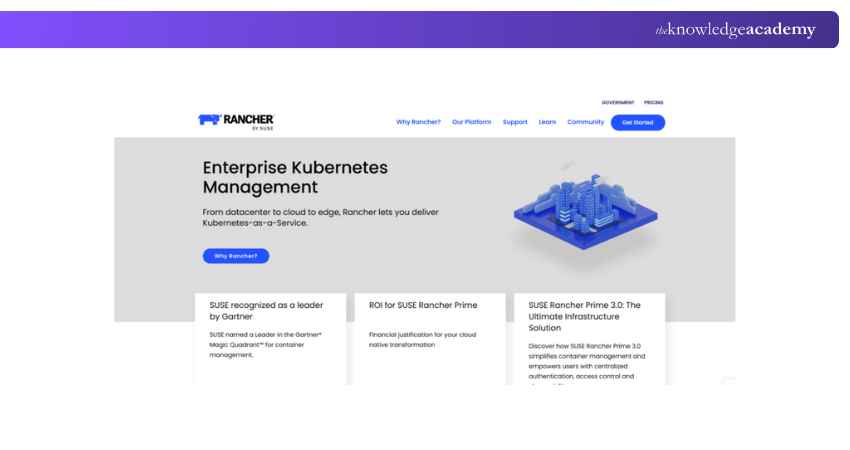
Rancher is a fully featured container management platform tool that offers Kubernetes Cluster Management capabilities at the enterprise level. It provides a centralised management interface and high-end security controls and also integrates well with other Kubernetes Tools.
Not only that, Rancher also streamlines work, such as cluster provisioning and application deployment, and comes with monitoring, so it is suitable for organisations that also have large-scale Kubernetes installations. Its easy-to-use User Interface and functionality are what empower administrators to control and scale out their clusters effectively.
10) Calico
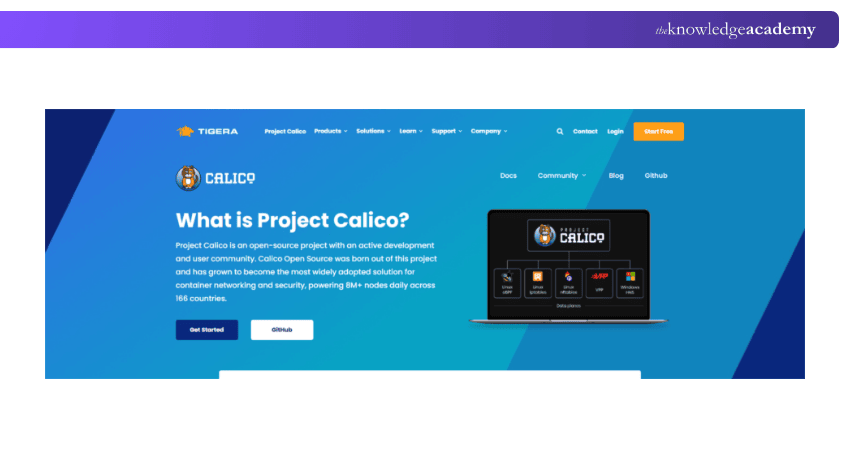
Calico is a popular networking and network security solution tool for Kubernetes clusters that provides advanced network policy enforcement, secure network connectivity, and network isolation capabilities.In addition, it’s flexible architecture and scalability make it highly suitable for clusters of any size.
It also simplifies network management by abstracting the underlying networking complexity and providing a straightforward way to define and enforce network policies. Calico enhances security, reliability, and performance within Kubernetes clusters.
11) Flannel
Flannel is another widely adopted networking solution tool for Kubernetes clusters. It enables pod-to-pod communication across multiple hosts by assigning each pod a unique IP address.
Additionally, Flannel utilises overlay networks to create a seamless virtual network fabric for connecting pods. It also provides a reliable and scalable networking solution that works across various cloud providers and on-premises environments. The key feature of Flannel is its simplicity, flexibility, and robustness, making it among the preferred choice for Kubernetes networking.
12) Container Advisor
Container Advisor is a Google product that offers the resource utilisation of containers deployed in Kubernetes packs. It gathers and examines container metrics comparable with CPU usage, memory utilisation, and I/O statistics.
Futhermore, Container Advisor enables administrators to detect resource bottlenecks, optimise the utilisation levels of resources and enhance the running of a cluster. With the knowledge of container-level resource usage, administrators are in a position to make a decision to guarantee effective resource usage in their Kubernetes clusters.
13) Kube-Bench
Kube-Bench is a security-focused tool that scans Kubernetes clusters against the Centre for Internet Security (CIS) benchmarks. It assesses the security vulnerabilities, misconfigurations, and best practices violations.
Moreover, Kube-bench provides a detailed report on any identified issues and suggests remediation steps. By regularly running Kube-bench, administrators can ensure that their Kubernetes clusters adhere to security standards and maintain a robust security posture.
14) Velero
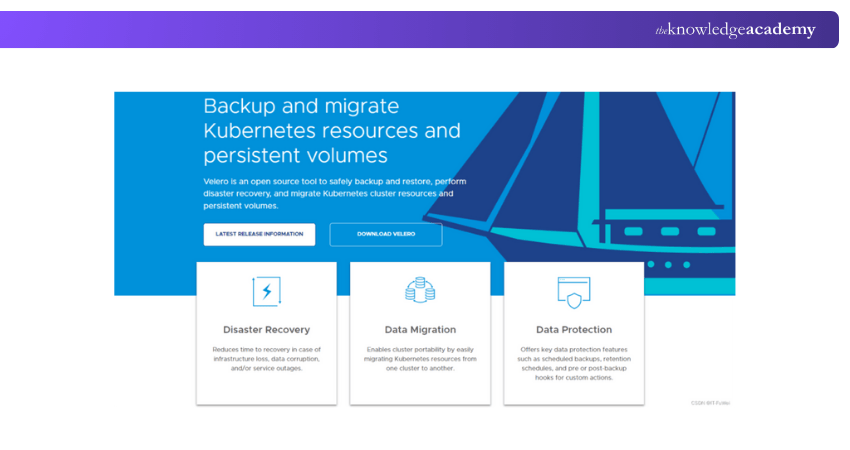
Velero is a backup and restore tool designed specifically for Kubernetes clusters. It enables administrators to create scheduled backups of cluster resources that include persistent volumes, configurations, and metadata.
Moreover, Velero simplifies disaster recovery and migration scenarios by allowing users to restore cluster resources to a previous state. It also provides an essential safety net to ensure the protection of critical data and configurations against accidental deletion, cluster failures, or other unforeseen events.
Automate your ML workflows with Kubeflow Training- accelerate your careers now!
15) Argo CD
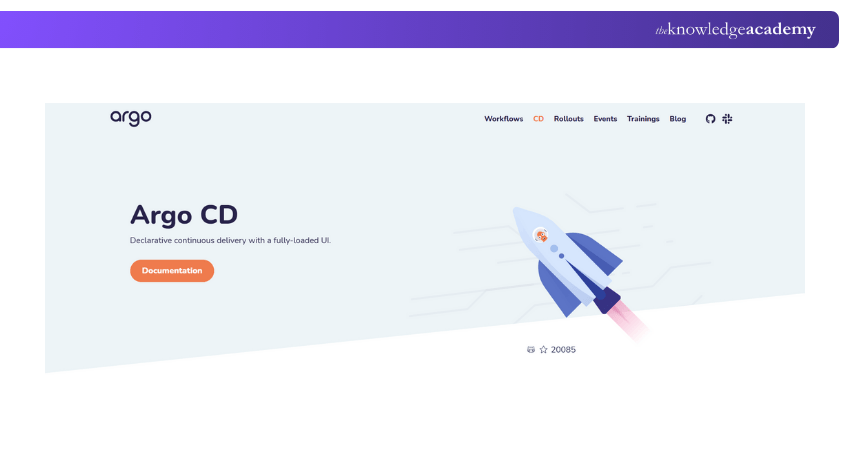
Argo CD is a declarative Continuous Delivery (CD) tool for Kubernetes that allows for deployment automation, scaling, and management of applications in Kubernetes clusters. It works by continuously monitoring changes in a Git repository and automatically applying those changes to the target Kubernetes cluster.
In addition, it offers a straightforward way to manage application deployments, rollbacks, and synchronisation across multiple environments. Argo CD simplifies the CD process and ensures consistency in application deployments, reducing manual effort and minimising errors.
16) Jenkins X
Jenkins X is a cloud-native CI/CD solution built on top of Jenkins, designed specifically for Kubernetes environments. It automates the process of Continuous Integration and Continuous Delivery (CI/CD), offering features like automated pipelines, built-in GitOps, and preview environments. Jenkins X provides a streamlined and opinionated approach, reducing manual intervention and helping development teams deliver applications faster and more efficiently, especially when comparing Kubernetes vs Jenkins in terms of automated workflows and deployment.
By integrating seamlessly with Kubernetes, Jenkins X enables DevOps Engineers to manage cloud-based workloads with ease while ensuring scalability and flexibility in their deployment processes. Its focus on automation and containerisation makes it a powerful tool for modern DevOps practices.
Kubernetes Cost Management Optimisation Tools
Controlling expenses and ensuring efficient resource allocation is an arduous challenge for many organisations. That's where Kubernetes cost management and optimisation tools come in handy for the developers. They help reduce expenses as well as ensure effective allocation of resources. Below, we have described the key Kubernetes cost management and optimisation tools.
1) CloudZero: CloudZero is a powerful tool designed to help businesses gain granular insights into their Kubernetes costs. It provides detailed cost breakdowns, offering visibility into how different services and workloads contribute to overall expenses. With CloudZero, organisations can make data-driven decisions to optimise resource allocation and reduce unnecessary spending.
2) Kubecost: Kubecost is an open-source platform that focuses on cost monitoring and allocation in Kubernetes clusters. It offers real-time visibility into resource usage, enabling users to identify underutilised resources and make informed scaling decisions. Moreover, it also provides cost forecasts, helping organisations to set and manage budgets effectively.
3) Loft Labs: Loft Labs offers a unique approach to Kubernetes cost optimisation by focusing on resource-sharing within the cluster in order to maximise efficiency. Furthermore, by sharing resources like databases, users can reduce the overall resource footprint and associated costs.
Optimise cloud-native DevOps practices with our Certified DevOps Professional (CDOP) Training- register today!
Kubernetes Command-line Tools
Kubernetes command-line tools are important for the effective management of Kubernetes clusters. These utilities efficiently handle various aspects of cluster operations, ranging from application deployment to troubleshooting. Let's explore some of the crucial examples of these Command-line tools:
1) Kubectx + Kubens: These tools offer a user-friendly solution for switching between different Kubernetes contexts and namespaces. This feature is particularly important for administrators and developers working with multiple clusters and namespaces simultaneously.Explore efficient strategies for managing Kubernetes Namespace, especially for administrators and developers working with multiple clusters simultaneously.
2) Stern: Stern stands as a robust tool designed to perform real-time log streaming in Kubernetes pods. Furthermore, iIt simplifies the process of debugging and monitoring applications by allowing users to track and analyse container logs as they are generated.
3) K9s: K9s is a highly efficient terminal-based Kubernetes management tool. It provides valuable insights into resource utilisation, logs, and overall cluster health. This enhanced visibility streamlines cluster management and facilitates more informed operational decisions.
These command-line utilities empower administrators and developers, making Kubernetes management more accessible and effective.
Kubernetes Networking & Service Mesh Tools
Kubernetes service mesh tools play a crucial role in enhancing microservice communication and security. They are indispensable for organisations looking to optimise their microservices architecture. Here are some noteworthy examples of Kubernetes Mesh Tools:
1) Contour: Contour is an efficient Ingress controller that seamlessly integrates with the open-source proxy Envoy. This combination simplifies routing and load balancing to ensure that microservices manage their traffic efficiently. In addition, Contour is an excellent choice for organisations seeking to streamline traffic control.
2) Istio: Istio is a powerhouse in the service mesh domain, offering a comprehensive feature set. It excels in traffic management, load balancing, and end-to-end encryption. This makes it a robust choice for managing the complex architecture of microservices, ensuring their seamless operation.
3) Gloo Mesh: Gloo Mesh is an enterprise-grade service mesh platform that takes service discovery, routing, and observability to the next level. It caters to organisations that require a high degree of control and customisation for their microservices. Gloo Mesh empowers organisations to fine-tune their microservices' performance and reliability.
These service mesh tools are indispensable for streamlining microservices communication, safeguarding data, and offering real-time insights into service behaviour. They contribute significantly to enhancing the performance and reliability of microservices in a Kubernetes environment.
Kubernetes Deployment & Configuration Management Tools
Confused about container orchestration? Explore our in-depth comparison of OpenShift vs Kubernetes now!
Kubernetes deployment tools are important for streamlining the deployment of applications within Kubernetes environments. They offer valuable utilities that ensure consistent, reliable, and efficient application deployment. Let's explore some of the noteworthy examples of Kubernetes Deployment Tools:
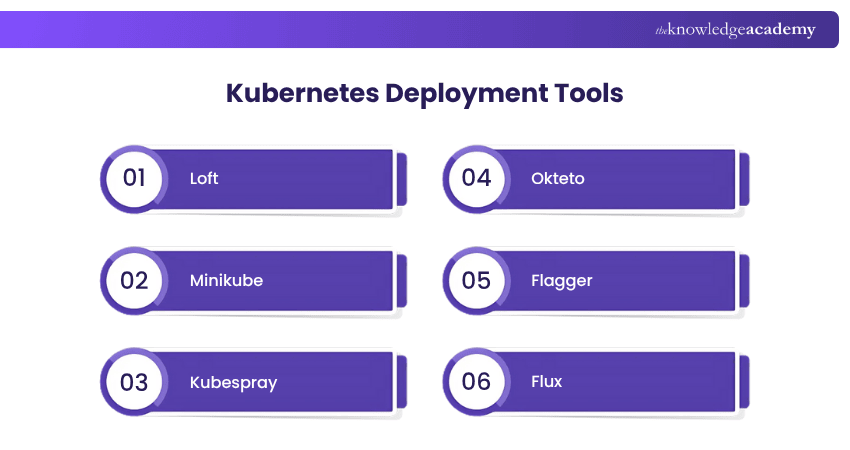
1) Loft: Loft adopts a resource-sharing approach that maximises cluster efficiency. By performing this type of function, it reduces resource wastage and enhances cost-effectiveness, making application deployment more efficient and seamless.
2) Minikube: This lightweight tool is specifically designed to simplify local Kubernetes development and testing. MiniKube performs this function by creating a hassle-free environment for experimentation, enabling developers to experiment with applications conveniently.
3) Kubespray: Kubespray is a robust and powerful tool that enables the simplification of the deployment of Kubernetes clusters across diverse cloud providers. Additionally, it ensures that the deployed clusters are consistently prepared for production, saving time and effort.
4) Okteto: Oktero tool has been developed with the user-friendliness of the developers in mind. Additionally, Okteto empowers these key professionals to build, test, and iterate on applications directly within Kubernetes environments. This approach helps streamline the development process and accelerates application refinement and innovation.
5) Flagger: Flagger is a useful tool that specialises in automating canary deployments. It allows organisations to embrace progressive delivery strategies by automating this process, which reduces the risk associated with introducing new application versions in a production environment.
6) Flux: Flux is similar to ArgoCD in that it adheres to the GitOps philosophy. It synchronises Kubernetes clusters with the defined states stored in Git repositories to ensure consistency and reliability in application deployment.
Kubernetes Monitoring & Logging Tools
Kubernetes Monitoring Tools are among the key components that play an essential role in observing, managing, and maintaining the health and performance of infrastructure within Kubernetes clusters. These tools further play a pivotal role in ensuring that applications run smoothly, identifying and addressing real-time issues, and optimising resource utilisation. In the below sections, we have listed some notable examples of Kubernetes monitoring tools:
1) Headlamp: Headlamp isanother useful Kubernetes web-based UI for Prometheus. It works to simplifyingies the process of visualising and exploring Prometheus data. This makes it easier for the developers to monitor the health of Kubernetes applications.
2) Lens: Lens is an integrated development and operations tool for Kubernetes. It provides real-time monitoring, management, and troubleshooting capabilities for Kubernetes clusters.
3) Falco: Falco is a container security platform tool that focuses majorly on runtime security. It provides real-time threat detection and response for Kubernetes environments.
4) Open Policy Agent (OPA): Open Policy Agent is a policy-based control tool designed especially for cloud-native environments. It allows organisations to define and enforce policies across the Kubernetes stack, ensuring compliance and security.
Master configuration management using Ansible- gear up for our Ansible Essentials Training today!
What are Kubernetes CI/CD Integration Tools?
Kubernetes CI/CD integration tools are platforms and services designed to automate the software development lifecycle from code integration to deployment within Kubernetes environments. These tools streamline the process of building, testing, and deploying applications, ensuring consistency and reducing manual intervention.
Popular options include Jenkins X, which is tailored for Kubernetes and supports automated CI/CD pipelines, and Argo CD, a declarative GitOps tool used for continuous delivery. Other common tools like GitLab CI/CD, Tekton, and Flux also offer robust support for integrating Kubernetes deployments directly from version control repositories. These tools help teams deploy faster, maintain better control, and minimise errors during releases.
What are the Alternative Kubernetes Tools for Development?
Alternative Kubernetes tools for development provide additional layers of convenience, abstraction, or specialisation that enhance the developer experience. Tools like Minikube allow local Kubernetes cluster creation, which is ideal for development and testing before moving to production. Skaffold enables continuous development workflows by automating build and deploy cycles, while Tilt provides real-time feedback loops, speeding up debugging.
For those seeking alternatives to raw kubectl interactions, tools like Lens offer a GUI-based cluster management solution. These alternatives help developers work more efficiently with Kubernetes by simplifying processes and improving visibility across development stages.
Conclusion
We hope you understand this comprehensive overview of Kubernetes Tools. The best Kubernetes Tools discussed in this blog provide valuable sources for developers to monitor, manage, and secure Kubernetes clusters. Furthermore, by leveraging these critical tools for Kubernetes, administrators can not only streamline operations but also proactively address issues and maximise the benefits of Kubernetes in their organisations. Additionally, exploring Kubernetes Interview Questions can help reinforce key concepts and prepare individuals for real-world applications in Kubernetes administration and development.
Simplify app management with our Docker Course- kickstart your journey now!
Frequently Asked Questions
What Is Kubernetes Tool Used For?

Kubernetes is used for automating the deployment, management, and scaling of containerised applications across multiple servers. It works by optimising resource utilisation, enhancing application resilience, and simplifying orchestration tasks. These include load balancing, service discovery, and self-healing of apps.
How Many Namespaces Can You Have in Kubernetes?
There is no hard limit on the number of namespaces you can create in Kubernetes. However, practical limits may depend on the resources available, such as CPU and memory. Too many namespaces could lead to performance issues, which depend on your infrastructure and workload.
What are the Other Resources and Offers Provided by The Knowledge Academy?
The Knowledge Academy takes global learning to new heights, offering over 3,000+ online courses across 490+ locations in 190+ countries. This expansive reach ensures accessibility and convenience for learners worldwide.
Alongside our diverse Online Course Catalogue, encompassing 17 major categories, we go the extra mile by providing a plethora of free educational Online Resources like Blogs, eBooks, Interview Questions and Videos. Tailoring learning experiences further, professionals can unlock greater value through a wide range of special discounts, seasonal deals, and Exclusive Offers.
What is The Knowledge Pass, and How Does it Work?
The Knowledge Academy’s Knowledge Pass, a prepaid voucher, adds another layer of flexibility, allowing course bookings over a 12-month period. Join us on a journey where education knows no bounds.
What are the Related Courses and Blogs Provided by The Knowledge Academy?
The Knowledge Academy offers various DevOps Certification, including Kubernetes Training, Kubeflow Training, and Certified DevOps Professional (CDOP). These courses cater to different skill levels, providing comprehensive insights into Kubernetes Pods.
Our Programming & DevOps Blogs cover a range of topics related to software development, automation, and cloud infrastructure, offering valuable resources, best practices, and industry insights. Whether you are a beginner or looking to advance your Programming and DevOps skills, The Knowledge Academy's diverse courses and informative blogs have got you covered.

Lily Turner


Senior AI/ML Engineer and Data Science Author
Lily Turner is a data science professional with over 10 years of experience in artificial intelligence, machine learning, and big data analytics. Her work bridges academic research and industry innovation, with a focus on solving real-world problems using data-driven approaches. Lily’s content empowers aspiring data scientists to build practical, scalable models using the latest tools and techniques.
View Detail

 If you wish to make any changes to your course, please


