


 Top Rated Course

We may not have the course you’re looking for. If you enquire or give us a call on +44 1344 203999 and speak to our training experts, we may still be able to help with your training requirements.
What is a Mirror Site and Why is it Important?
John Davies 29 April 2026A Mirror Site is a replica of a website hosted on a different server to improve accessibility, distribute traffic, and ensure site availability. It helps users access content faster and supports global reach. It also acts as a backup during downtime or server failures and as an effective way to keep websites fast and safe.

Training Outcomes Within Your Budget!
We ensure quality, budget-alignment, and timely delivery by our expert instructors.
Table of Contents

What if your users couldn’t access your website when they need it the most? Feels like a nightmare, right? For businesses, even a few minutes of downtime can mean lost visitors, lost revenue, and lost trust. This is the signal that you need Mirror Sites, which are the exact copies of your websites hosted on different servers.
They ensure that no matter how much traffic you get or where your users are located, your content stays available. This reliability is what makes the technology so valuable for modern businesses. Are you curious to know how? Continue reading this blog to explore what Mirror Site is and how it helps you!
Table of Contents
1) What is a Mirror Site?
2) Why is a Mirror Site Important?
3) How a Mirror Site Works?
4) Essential Elements and Steps to Create Mirror Sites
5) Types of Mirror Sites
6) Benefits of Using Mirror Sites
7) Challenges Associated with Mirror Sites
8) Best Practices for Managing Mirror Sites
9) Conclusion
What is a Mirror Site?
A Mirror Site is a copy of an existing website stored on a different server, often in another location. Its main purpose is to make the same content available to users more quickly and reliably, especially during high traffic or server issues. Mirror sites are widely used to improve speed, balance traffic load, and provide backup access if the original site goes down.
For example, when a popular software is released, downloads may be hosted on multiple mirror sites so users around the world can access it faster without overloading one server. This ensures smoother performance and a better user experience.

Why is a Mirror Site Important?
A Mirror Site plays a key role in making websites faster and reliable. Let’s look at its importance in detail:
1) Traffic Management
When thousands of users try to access a website at the same time, it may overload the server. Mirror Sites are capable of sharing this traffic load by redirecting users to different servers. This ensures that server isn’t overwhelmed.
This not only improves user satisfaction but also protects your Search Engine Optimisation (SEO) rankings, since downtime or slow speeds can negatively affect search visibility.
2) Load Balancing
Mirror Sites are often part of a load balancing technique. Load balancing spreads user requests to multiple servers so that everyone gets fast and smooth website access. Without this, users might face slow loading times or error messages when they are trying to access the website.
Quicker loading times and reduced server response delays make users happy. This also helps to improve search rankings.
3) Content Availability
Sometimes, the main website might go offline due to technical problems, cyberattacks, or maintenance. In such times, Mirror Sites act as backups. This ensures that people can access the content even when the original website is down.
In other words, Mirror Sites make sure your website is always within reach, enhancing user experience.
How a Mirror Site Works?
Mirror Sites work by creating a duplicate copy of the original website. This version will be regularly updated to stay in sync with the original site. This ensures that any changes, new content, or updates made to the main site are quickly reflected on the mirror. The process usually involves:
1) Replication: All the content from the original site is copied to the Mirror Site.
2) Synchronisation: The Mirror Site is kept updated with the changes made on the main site.
3) Redirection: When users try to access the main website, they may be redirected to the nearest or least busy Mirror Site automatically.
4) Caching: Some Mirror Sites use caching methods to deliver static content like images, videos, and documents more quickly.
In this way, no matter where a user is, they will get quick and easy access to the website.
Learn the strategies for cloud network security with our Certified Network Defender Certification – Register today!
Essential Elements and Steps to Create Mirror Sites
Now, let’s check the essential steps and elements that you should consider while creating a Mirror Site for your website:
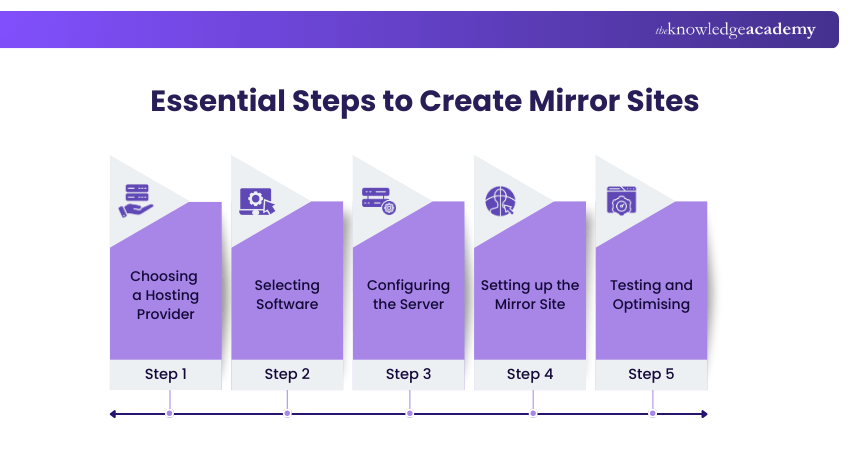
1) Choosing a Hosting Provider
The first step is selecting a reliable web hosting provider. The provider needs to have enough resources to store and deliver mirrored content smoothly. Many businesses prefer hosting providers with global data centres or Content Delivery Networks (CDNs) so that the users can access the nearest server at a faster speed.
2) Selecting Software
Next, you need the right software to replicate and synchronise content. Popular tools include rsync, wget, or specialised website replication software. These ensure that the Mirror Site is always updated with the original. You can choose any free open-source software or advanced paid solutions with added features like automation, scheduling, and better security.
3) Configuring the Server
Once hosting and software are set up, the server needs to be configured correctly. This includes installing necessary web server software like Apache or Nginx. Once done, you need to set up security protections such as firewalls and SSL certificates and enable monitoring and backup systems to ensure stability. You also need to adjust settings to handle expected traffic loads.
4) Setting up the Mirror Site
The replicated content is then uploaded and set up on the mirror server. All visible website content is systematically transferred to the mirror server. This includes like pages, images, media, background code and functionality. Domain names or subdomains (such as mirror.example.com) can be created to make it clear that it is a Mirror Site.
5) Testing and Optimising
Finally, testing is essential to ensure that the Mirror Site works like the original website. Developers will check speed, functionality, and security to ensure it matches the original site. Ongoing optimisation, such as enabling caching and adjusting server performance, ensures the mirror runs efficiently over time.
Types of Mirror Sites
Mirror Sites are classified into two types based on specifications. Here are those two types:
Static Copy
A static copy is a simple duplicate of a website at a fixed point in time. It does not update automatically. If the main website has any changes, the static mirror will not show them. This type is useful for archiving purposes or when updates are not frequently required.
Example: If a static mirror captured the website on January 1st, it will always display that exact version, even if the main site adds new posts, updates, or design changes later.
Dynamic Mirrors
Dynamic mirrors, sometimes called live mirrors, are more advanced. They will automatically update the changes that are made on the original site. These are ideal for websites that regularly update the content.
Example: If any new content is added, a page is edited, or design changes are made, the dynamic mirror will reflect those updates almost instantly.
Want to integrate DevOps security practices? Join our Certified DevSecOps Engineer Certification soon!
Benefits of Using Mirror Sites
Mirror Sites have several benefits to businesses, organisations, and end users. Let's check those benefits:
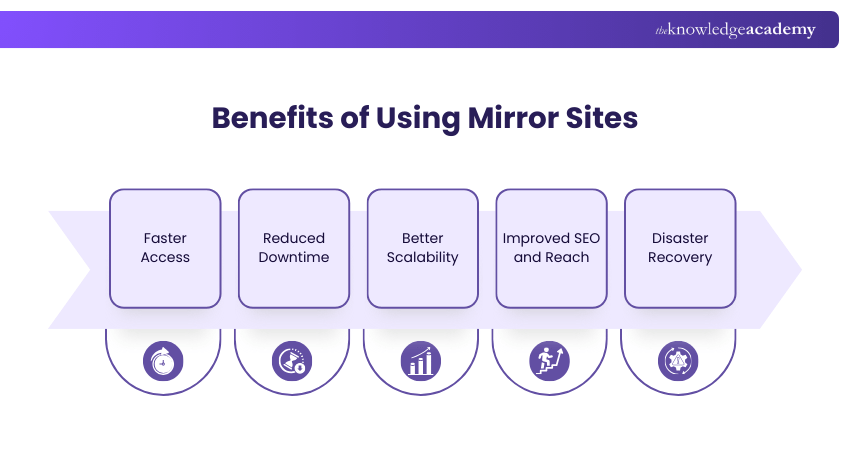
1) Faster Access: Users can connect to a server closer to their location, reducing delays.
2) Reduced Downtime: If the main server fails, the Mirror Site can help with uninterrupted website access.
3) Better Scalability: As website traffic grows, these Mirror Sites help handle the increased demand.
4) Improved SEO and Reach: When managed properly with canonical tags, Mirror Sites can help websites reach wider audiences without penalties for duplicate content.
5) Disaster Recovery: In case of cyberattacks or technical failures, Mirror Sites will be a good option to serve as reliable backups.
Challenges Associated with Mirror Sites
While Mirror Sites offer high benefits, they have some challenges, too. Here are its challenges:
1) Duplicate Content Issues: If search engines detect multiple identical sites, they may lower rankings if canonical tags are not used.
2) Spamdexing & Link Farming: Some might misuse these mirrors to boost their website rankings with fake or paid links. This will end up risking penalties.
3) White Hat vs Grey Hat SEO: Ethical mirrors improve access, but manipulative ones can harm rankings and credibility.
4) Maintenance Costs: Setting up and maintaining multiple servers can be expensive.
5) Outdated Content: Without proper synchronisation, some Mirror Sites may show older versions of content.
Best Practices for Managing Mirror Sites
Here are some best practices to ensure that Mirror Sites deliver maximum value:
1) Use Canonical Tags to Indicate the Primary Site
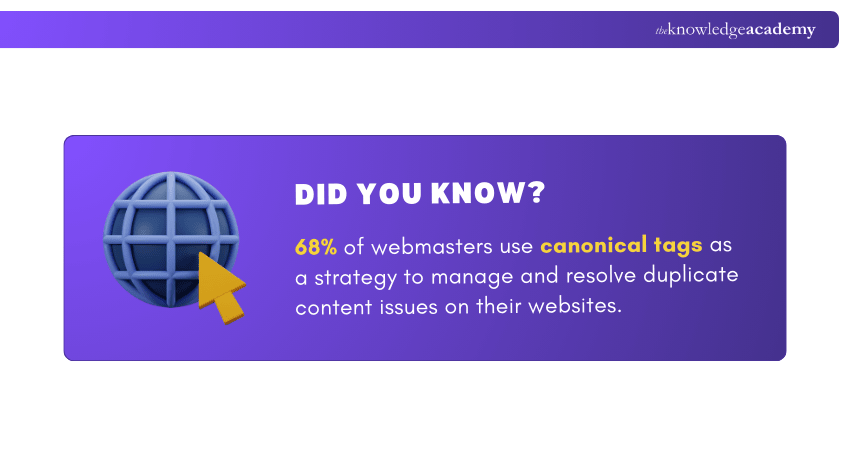
Always add a canonical tag () to your Mirror Sites. This tells search engines which website is the main one, so they don’t treat the content as a duplicate.
2) Ensure Your Content is the Same Across All Mirrors
Your Mirror Sites should always have the same content as the main website. If something is missing or old, visitors may stop trusting the Mirror Site and only use the main site. You can try using the synchronisation tools to keep everything updated.
3) Distribute Traffic Using Load Balancing
Load balancing helps spread visitor traffic between the main site and mirrors. This keeps the site fast and stable, even during busy times like sales or events. You can try using this technique.
4) Avoid Using Your Mirror Sites Unethically
Don’t create lots of Mirror Sites just to trick search engines. This can get your website banned from results. You need to use Mirror Sites only for good reasons, like making the site more accessible.
5) Inform Your Visitors of the Mirror Site
Sometimes users may notice they’ve been redirected to a Mirror Site. To prevent confusion or suspicion, you can inform them that they are visiting a Mirror Site. This transparency builds trust and avoids confusion, especially if there are differences in design or domain name.
Conclusion
Mirror Sites are powerful tools that improve website performance, availability, and user experience. By distributing traffic, balancing loads, and acting as backups, they ensure that content remains accessible worldwide. Whether for businesses or public services, Mirror Site makes sure that websites remain available, secure, and trusted, no matter how much demand they face.
Implement robust security protocols with our EC – Council Certification – Sign up now!
Frequently Asked Questions
Are Mirror Sites Legal?

Yes, Mirror Sites are legal if they are created and managed by the real website owner or with their permission. But if someone makes a Mirror Site without permission, especially for piracy or illegal use, then it is illegal.
What is the Difference Between a Duplicate Site and a Mirror Site?
A duplicate site copies content from the original website without any permission. It may also aim to deceive or manipulate search rankings. A Mirror Site, on the other hand, is an exact version of a website, usually created with consent to improve accessibility or distribute traffic.
What are the Other Resources and Offers Provided by The Knowledge Academy?
The Knowledge Academy takes global learning to new heights, offering over 3,000+ online courses across 490+ locations in 190+ countries. This expansive reach ensures accessibility and convenience for learners worldwide.
Alongside our diverse Online Course Catalogue, encompassing 17 major categories, we go the extra mile by providing a plethora of free educational Online Resources like Blogs, eBooks, Interview Questions and Videos. Tailoring learning experiences further, professionals can unlock greater value through a wide range of special discounts, seasonal deals, and Exclusive Offers.
What is The Knowledge Pass, and How Does it Work?
The Knowledge Academy’s Knowledge Pass, a prepaid voucher, adds another layer of flexibility, allowing course bookings over a 12-month period. Join us on a journey where education knows no bounds.
What are the Related Courses and Blogs Provided by The Knowledge Academy?
The Knowledge Academy offers various EC – Council Certification, including Certified Ethical Hacker (CEH) Certification, Certified Network Defender Certification and Certified DevSecOps Engineer Certification. These courses cater to different skill levels, providing comprehensive insights into Endpoint Security.
Our IT Security & Data Protection Blogs cover a range of topics related to Mirror Sites, offering valuable resources, best practices, and industry insights. Whether you are a beginner or looking to advance your IT Security skills, The Knowledge Academy's diverse courses and informative blogs have got you covered.

John Davies


Cyber Security Governance & Assurance Specialist
John Davies is a cybersecurity expert specialising in governance, risk management, and compliance. With over 15 years in the field, he has led enterprise-wide security programmes across finance, healthcare and public sector organisations. His content provides practical guidance on building secure environments, managing risk and aligning with regulatory frameworks.

Upcoming IT Security & Data Protection Resources Batches & Dates
Date
 Certified Ethical Hacker (CEH) Certification
Certified Ethical Hacker (CEH) Certification
Mon 17th Aug 2026
Certified Ethical Hacker (CEH) Certification
Mon 19th Oct 2026
Certified Ethical Hacker (CEH) Certification
Mon 23rd Nov 2026

 If you wish to make any changes to your course, please


