


 Top Rated Course

We may not have the course you’re looking for. If you enquire or give us a call on +60 1800812339 and speak to our training experts, we may still be able to help with your training requirements.
What Is Time Management? An Ultimate Guide
The Knowledge Academy 27 February 2026Time management is the practice of planning and organising tasks to use time wisely, improving your productivity, efficiency, and overall effectiveness. It also helps reduce stress, prioritise key goals, maintain focus, and create a balanced workflow that supports long-term personal and professional success.

Training Outcomes Within Your Budget!
We ensure quality, budget-alignment, and timely delivery by our expert instructors.
Table of Contents
Time is a finite resource, and how we manage it can greatly impact our personal and professional lives. Time Management is an essential skill that helps us make the most of our limited time, ensuring that we achieve our goals and maintain a healthy work-life balance. In this blog, we will explore What is Time Management and the various techniques and tips for successful Time Management.
Table of Contents
1) What is Time Management?
2) Key Components of Time Management
3) Benefits of Time Management
4) Challenges of Time Management
5) Time Management Techniques
6) Tips for Successful Time Management
7) Conclusion
What is Time Management?
Before we delve deeper into the concept, we will first define Time Management. Time Management is the process of planning, organising, and prioritising tasks and activities to make the best use of your time. It involves setting goals, creating schedules, and making conscious choices about how to allocate your time to various tasks and responsibilities. Effective Time Management, as highlighted in the Time Management Skills Guide, helps you accomplish more in less time, while reducing stress and improving your overall quality of life. Recognising the Benefits of Time Management boosts organisation, productivity, and work-life balance.

Key Components of Time Management
Now that we know the definition of Time Management, we will explore its basics. This section of the blog will expand on the core components of Time Management.

1) Setting Goals
Setting clear and measurable goals gives your tasks direction and purpose. Specific, time-bound objectives help you focus on priorities and track progress effectively, ensuring each activity contributes to your larger aims.
2) Prioritisation
Prioritisation helps identify which tasks matter most. Using tools like the Eisenhower Matrix, you can categorise tasks by urgency and importance to focus on high-impact activities and manage time wisely.
Ready to take your time and use it effectively, refer to our blog on Time Management Books.
3) Creating a Schedule
A structured schedule ensures you allocate time efficiently across important tasks. Include buffer time for delays and keep your plan realistic, balancing productivity with flexibility throughout your day.
4) Time Tracking
Tracking how you spend your time reveals habits and inefficiencies. By reviewing time data or using tracking tools, you can align daily activities with goals and continuously improve time management practices.
Benefits of Time Management
Effective time management improves productivity, focus, and overall workplace harmony. It ensures that time is used wisely, leading to better performance, reduced stress, and higher satisfaction among employees and teams.
a) Happier employees: Proper time allocation reduces stress and burnout, improving overall job satisfaction.
b) Improved creativity: A balanced schedule allows employees to think clearly and produce innovative ideas.
c) Lower absenteeism: Reduced stress leads to fewer sick days and time off.
d) Higher retention: Employees with manageable workloads are more likely to stay longer in their roles.
e) Increased productivity: Efficient time use helps teams focus on key priorities and deliver better results.
f) Enhanced reputation: Organisations promoting time management are viewed as supportive and productive workplaces.
Challenges of Time Management
Time management challenges can be divided into two main categories: internal barriers and external barriers. Understanding these helps individuals identify what affects their productivity and how to overcome it.
Internal Barriers:
a) Lack of self-control: Distractions and impulsive actions reduce focus and goal achievement.
b) Procrastination: Delaying tasks leads to stress and reactive decision-making.
c) Lack of motivation: Without clear purpose, individuals struggle to prioritise effectively.
d) Anxiety: Stress impacts concentration and productivity.
e) People pleasing: Trying to satisfy everyone spreads efforts too thin.
f) Multitasking: Handling too many tasks at once decreases efficiency and accuracy.
External Barriers:
a) Heavy workload: Too many tasks can overwhelm individuals and reduce quality.
b) Job constraints: Workplace structure or policies may limit efficiency.
c) Insufficient resources: Lack of tools or support can slow progress.
d) Distractions: External factors like social media, noise, or emergencies interrupt focus.
While external barriers are often beyond control, individuals can improve their response to them through awareness, prioritisation, and adaptive time management strategies.
Time Management Techniques
This section of the blog will expand on some commonly used Time Management Techniques.
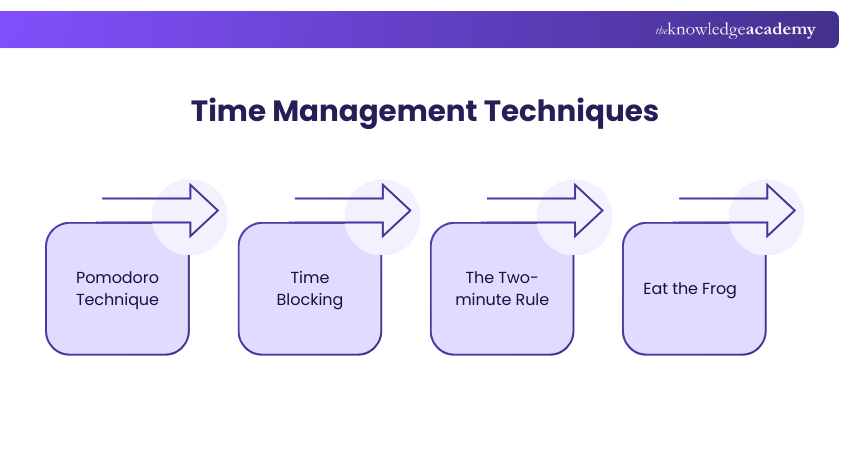
1) Pomodoro Technique
The Pomodoro Technique promotes focused work through short, timed sessions. You work intensely for 25 minutes, followed by a 5-minute break. After four sessions, take a longer rest of 15–30 minutes. This cycle helps sustain attention, reduce fatigue, and improve productivity by balancing focus and relaxation.
2) Time Blocking
Time blocking divides your day into dedicated segments for specific tasks or activities. Assign high-priority work during your most productive hours, and include breaks to avoid burnout. This method helps prevent task overlap, encourages discipline, and ensures consistent progress toward goals.
3) The Two-Minute Rule
The Two-Minute Rule encourages completing quick tasks immediately if they take two minutes or less. This approach clears small tasks before they pile up, keeps your to-do list manageable, and promotes a proactive mindset that combats procrastination effectively.
4) Eat the Frog
“Eat the Frog” means tackling your toughest or most important task first. By completing it early in the day, you gain momentum and motivation for the rest of your work. It reduces stress, boosts confidence, and ensures your highest-priority goals are met.
Boost Your Interview Preparation – Check out these top Time Management Interview Questions to impress your interviewer.
Tips for Successful Time Management
Effective Time Management is necessary for achieving goals and maintaining balance in life. By understanding Time Management Theories and applying practical tips, you can optimise how you allocate your time. Here are some tips to help you master this skill:
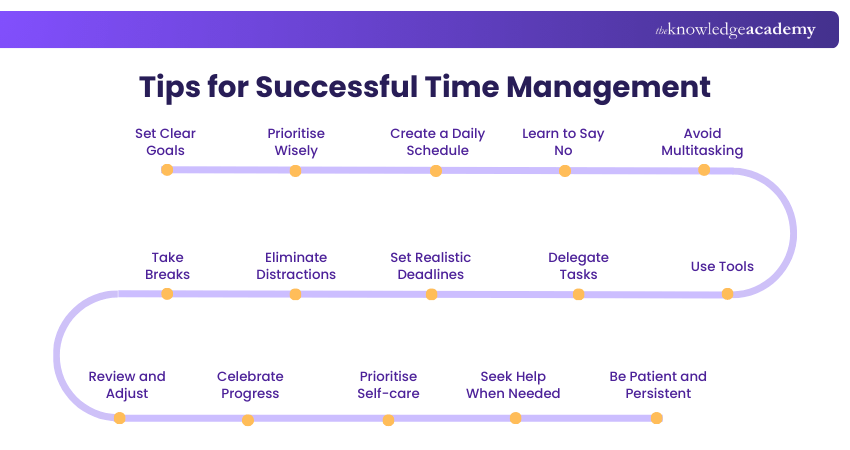
1) Set Clear Goals: Begin with well-defined, measurable objectives to give purpose to your tasks
2) Prioritise Wisely: Use tools like the Eisenhower Matrix to focus on what's most important and time-sensitive
3) Create a Daily Schedule: Plan your day realistically, allocating time blocks for various activities, including breaks
4) Learn to Say No: Avoid overloading yourself by declining tasks that can wait or are beyond your capacity
5) Avoid Multitasking: Concentrate on one particular task at a time to enhance efficiency and quality
6) Use Tools: Explore Time Management Tools, calendars, and lists to organise your work and deadlines
7) Delegate Tasks: Share responsibilities with team members when appropriate to free up your time
8) Set Realistic Deadlines: Avoid undue stress by setting achievable timeframes for your tasks
9) Eliminate Distractions: Identify and mitigate common interruptions in your workspace for focused work
10) Take Breaks: Regular pauses revitalise your mind and maintain productivity throughout the day
11) Review and Adjust: Periodically evaluate your Time Management Strategies and adapt to changing circumstances
12) Celebrate Progress: Acknowledge and reward your accomplishments to stay motivated
13) Prioritise Self-care: Ensure you get adequate sleep, exercise, and relaxation to sustain your well-being
14) Seek Help When Needed: If you struggle with Time Management, consult mentors or professionals for guidance
15) Be Patient and Persistent: Remember that mastering Time Management is an ongoing process requiring perseverance and adaptability
Ready to boost your productivity and master Time Management? Join our Productivity and Time Management Course today!
Conclusion
Time Management is a skill that can significantly improve your productivity, reduce your stress, and enhance your overall quality of life. By defining your goals, prioritising tasks, and implementing effective Time Management techniques and strategies, you can make the most of your limited time and achieve your desired outcomes. Using tools like a Time Management Template can also help you stay organised and focused. With dedication and practice, you can become a master of your time, achieving your goals and enjoying a balanced, fulfilling life. We hope we could answer all your queries about "What is Time Management"!
Unlock your true potential with our Personal Development Training - sign up now and get started on a transformative journey!
Frequently Asked Questions
What are the Four Types of Time Management?

The four main types of time management are planning, prioritising, scheduling, and monitoring. Planning sets clear goals, prioritising focuses on important tasks, scheduling organises time effectively, and monitoring tracks progress to ensure consistent productivity and balanced work performance.
What is the Golden Rule of Time Management?
The golden rule is prioritised what matters most. Focus on tasks that align with your goals and values and allocate time effectively to achieve them. Prioritise tasks that reflect your goals and values, and manage your time wisely to accomplish them.
What are the Other Resources and Offers Provided by The Knowledge Academy?
The Knowledge Academy takes global learning to new heights, offering over 3,000+ online courses across 490+ locations in 190+ countries. This expansive reach ensures accessibility and convenience for learners worldwide.
Alongside our diverse Online Course Catalogue, encompassing 19 major categories, we go the extra mile by providing a plethora of free educational Online Resources like Blogs, eBooks, Interview Questions and Videos. Tailoring learning experiences further, professionals can unlock greater value through a wide range of special discounts, seasonal deals, and Exclusive Offers.
What is The Knowledge Pass, and How Does it Work?
The Knowledge Academy’s Knowledge Pass, a prepaid voucher, adds another layer of flexibility, allowing course bookings over a 12-month period. Join us on a journey where education knows no bounds.
What are the Related Courses and Blogs Provided by The Knowledge Academy?
The Knowledge Academy offers various Personal Development Courses, including the Content Writing and Practitioner Course, and the Creative Writing Course. These courses cater to different skill levels, providing comprehensive insights into What is Emotional Resilience.
Our Business Skills Blogs cover a range of topics related to Journalism and Writing Courses, offering valuable resources, best practices, and industry insights. Whether you are a beginner or looking to advance your Business Management skills, The Knowledge Academy's diverse courses and informative blogs have got you covered.

The Knowledge Academy


Global Training Provider
The Knowledge Academy is a world-leading provider of professional training courses, offering globally recognised qualifications across a wide range of subjects. With expert trainers, up-to-date course material, and flexible learning options, we aim to empower professionals and organisations to achieve their goals through continuous learning.

Upcoming Business Skills Resources Batches & Dates
Date
 Time Management Training
Time Management Training
Fri 10th Jul 2026
Time Management Training
Fri 11th Sep 2026

 If you wish to make any changes to your course, please


