


 Top Rated Course

We may not have the course you’re looking for. If you enquire or give us a call on +60 1800812339 and speak to our training experts, we may still be able to help with your training requirements.
What is Leadership in Organisational Behaviour? A Complete Overview
William Brown 17 September 2025This comprehensive blog delves into the intricate dynamics of leadership within organisational frameworks. You can explore its multifaceted dimensions and how it fosters a thriving workplace culture. Besides explaining how Leadership in Organisational Behaviour can influence individuals, this blog will help them achieve their objectives.
Home
 Resources
Business Analysis
What is Leadership in Organisational Behaviour? A Complete Overview
Resources
Business Analysis
What is Leadership in Organisational Behaviour? A Complete Overview
Resources
Business Analysis
What is Leadership in Organisational Behaviour? A Complete Overview

Training Outcomes Within Your Budget!
We ensure quality, budget-alignment, and timely delivery by our expert instructors.
Table of Contents
Leadership plays a crucial role in Organisational Behaviour and is vital for an organisation's high performance and effectiveness. It unites all the methods applied for this purpose to direct and influence individuals, even within a group. Essentially, a solid grasp of Leadership in Organisational Behaviour can help people perform their duties appropriately.
Additionally, Leadership in Organisational Behaviour stimulates positive transformation and creativity. Through this blog, one can understand the steps of forming an organisation that improves sustainable growth and success.
Table of Contents
1) What is Leadership in Organisational Behaviour?
2) Factors influencing Organisational Behaviour
3) Phases of leadership development
4) Essential skills for organisational leadership
5) Benefits of effective leadership
6) Practices to avoid as a competent organisational leader
7) Conclusion
What is Leadership in Organisational Behaviour?
Leadership in Organisational Behaviour refers to guiding a team toward a common goal by inspiring individuals to perform at their best, rather than simply holding a position of authority. Approaches like Situational Leadership emphasise adapting leadership styles based on the needs of the team and situation, making leadership more effective. Strong leadership plays a vital role in shaping organisational culture, fostering innovation, and enhancing employee engagement—ultimately supporting long-term success.
 Factors influencing Organisational Behaviour
Understanding the factors influencing Organisational Behaviour is essential for effective leadership. Let’s explore some of those factors in detail:
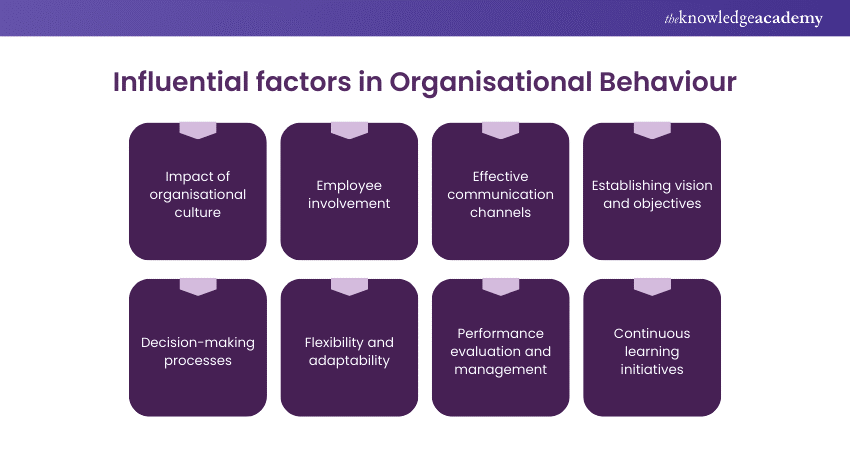
Impact of organisational culture
Organisational culture specifically shapes leadership styles and behaviours. Leaders must align their actions with the prevailing culture to foster cohesion and alignment within the organisation. A strong culture encourages shared values, which in turn influence how leaders interact with their teams and make decisions.
Employee involvement
To communicate their vision, objectives, and expectations, leaders must create open and transparent channels of communication. Strengthening relationships and inspiring increased involvement can be achieved by leaders through active listening, timely feedback, and cultivating open communication.
Effective communication channels
Leaders must establish clear and open channels of communication to convey vision, goals, and expectations. By listening actively, providing timely feedback, and fostering open dialogue, leaders can build stronger relationships and inspire greater engagement.
Establishing vision and objectives
Effective leadership entails formulating a compelling vision and turning it into attainable goals. Leaders encourage others to unite behind a single cause and strive towards common objectives by clearly outlining their expectations. Passionate and clear visionaries inspire their people to work together towards a single objective.
Decision-making processes
Making difficult decisions that affect the organisation and its stakeholders is a necessary part of being a leader. To take advantage of many viewpoints and reduce risks, leaders need to implement inclusive and participatory decision-making procedures. Leaders can make better decisions that promote good change by considering all possible consequences and involving relevant stakeholders.
Flexibility and adaptability
Adapting to change and embracing innovation enables leaders to steer the organisation towards growth and resilience. By remaining agile and responsive to shifting market dynamics, leaders can navigate uncertainty with confidence. They can further position their organisations for long-term success.
Performance evaluation and management
Leadership extends to nurturing talent and fostering a culture of continuous improvement. Effective performance evaluation and management practices provide feedback, recognition, and support for employee development. Setting clear performance expectations and providing feedback can empower their teams to excel and achieve their full potential.
Continuous learning initiatives
Leadership consists of continuous learning and development. Hence, leaders must invest in training and development sessions. By doing so, they can promote knowledge sharing, foster a growth mindset and cultivate a high-performance culture.
Turn into an efficient leader with our BCS Foundation Certificate in Organisational Behaviour – join us now!
Phases of leadership development
Leadership development is a journey marked by distinct phases, each offering valuable lessons and opportunities for growth. Here are key pointers on the phases of leadership development:
Early leadership stages
Early-stage leaders frequently prioritise developing their core competencies and obtaining real-world experience. This stage is marked by self-awareness development, seeking mentorship, and learning from mistakes. Emerging leaders build the foundation for their success and development in the future by accepting challenges and asking for criticism.
Developmental leadership progression
As leaders progress in their careers, they transition from individual contributors to team managers and decision-makers. This phase involves honing interpersonal skills, delegation, and conflict resolution. By mastering the art of delegation and effectively managing teams, leaders position themselves for greater responsibilities and leadership roles.
Transformational leadership evolution
Transformational leaders inspire and empower others to achieve extraordinary results. They cultivate a shared vision as well as foster a culture of innovation and collaboration. By leveraging their influence and charisma, transformational leaders drive organisational change and inspire others to reach their full potential.
Legacy leadership impact
The legacy of effective leadership endures beyond one's tenure. Leaders who leave a lasting impact build strong organisational cultures, develop future leaders, and create sustainable business practices. By investing in talent development and fostering a culture of continuous improvement, leaders ensure that their legacy lives on.
Legacy leadership impact
The legacy of effective leadership endures beyond one's tenure. Leaders who leave a lasting impact build strong organisational cultures, develop future leaders, and create sustainable business practices.
Secure excellent opportunities with our BCS Foundation Certificate in Business Analysis– join us now!
Essential skills for organisational leadership
Effective organisational leadership demands a diverse skill set that enables leaders to navigate complex challenges and inspire high performance. Here are key pointers on essential skills for organisational leadership:
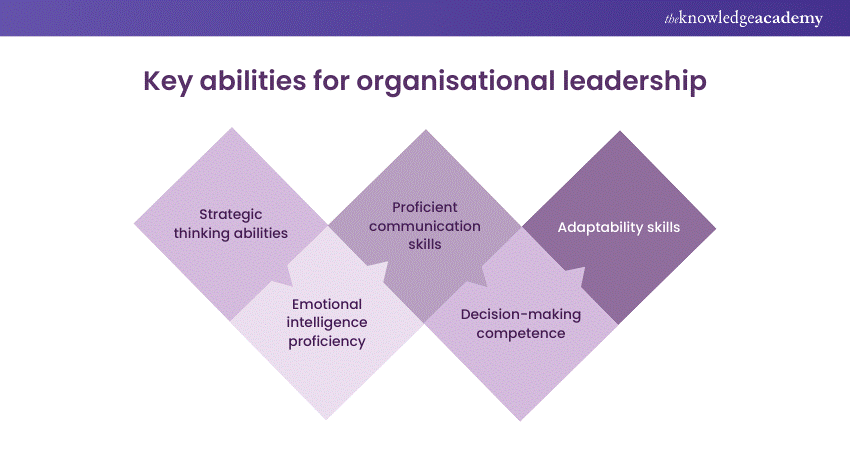
Strategic thinking abilities
Effective leaders must think strategically and anticipate future trends. They formulate long-term plans and adapt strategies to changing market dynamics. By analysing data, identifying opportunities, and aligning resources with organisational goals, strategic leadershipdrives innovation and competitive advantage, positioning their organisations for long-term success.
Emotional intelligence proficiency
Emotional intelligence is essential for building meaningful relationships and navigating complex interpersonal dynamics. Leaders with high emotional intelligence demonstrate empathy, self-awareness, and social skills. By understanding their own and others' emotions, emotionally intelligent leaders foster a positive work environment and effectively resolve conflicts.
Proficient communication skills
Clear and effective communication guarantees successful leadership. Leaders must articulate their vision, provide feedback, and resolve conflicts with clarity and empathy. By communicating openly and transparently, leaders foster trust, inspire confidence, and align their teams towards common goals, driving organisational success.
Decision-making competence
Leadership requires making tough decisions with incomplete information. Hence, leaders must excel in decision-making and possess critical thinking skills, analytical acumen, and the courage to take calculated risks. By gathering relevant data and weighing the potential outcomes, competent decision-makers minimise risks and seize opportunities.
Adaptability skills
Adaptability is essential in an ever-changing business landscape. Leaders who embrace change, pivot strategies, and learn from failures are better equipped to navigate uncertainty and drive innovation. Fostering a culture of agility and experimentation, adaptable leaders can inspire creativity and empower their teams.
Build a Systematic Leadership Approach! Learn the Core Principles of Bureaucratic Leadership.
Benefits of effective leadership
Effective leadership brings numerous benefits to organisations, ranging from improved productivity to enhanced brand reputation. Here are key pointers on the benefits of effective leadership:
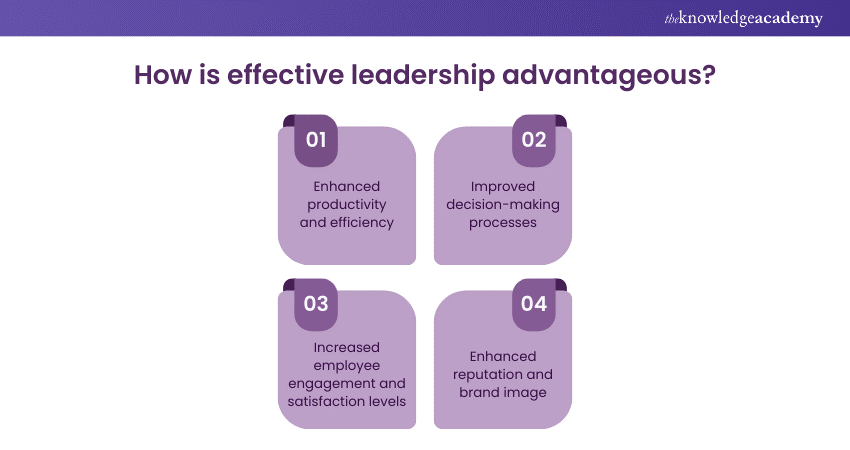
Enhanced productivity and efficiency
Effective leadership fosters a culture of accountability and high performance, resulting in increased productivity and efficiency across the organisation. By setting clear expectations and recognising achievement, leaders can empower employees in different ways.
Improved decision-making processes
Well-informed and inclusive decision-making processes lead to better outcomes and organisational alignment. Effective leaders gather input from diverse perspectives and make the best decisions, leading to more effective execution of strategies.
Increased employee engagement and satisfaction levels
Skills for Cross Functional Leadership play a crucial role in cultivating a supportive work environment where employees feel valued and empowered. By fostering open communication, providing growth opportunities, and recognising individual contributions, leaders can inspire greater engagement and satisfaction among their teams. This, in turn, leads to higher retention rates and overall organisational success.
Enhanced reputation and brand image
Organisations led by effective leaders enjoy a positive reputation and strong brand image. By consistently delivering on promises, acting with integrity, and prioritising stakeholder interests, leaders build credibility and goodwill. They can also enhance an organisation's reputation and position it for long-term success in the marketplace.
Accelerate Your Career with our BCS Foundation Certificate in Agile – join us now!
Best practices of a competent organisational leader
To lead effectively, it's crucial to not only understand what practices to adopt but also what to avoid. Here are key pointers on practices to avoid as a competent organisational leader:
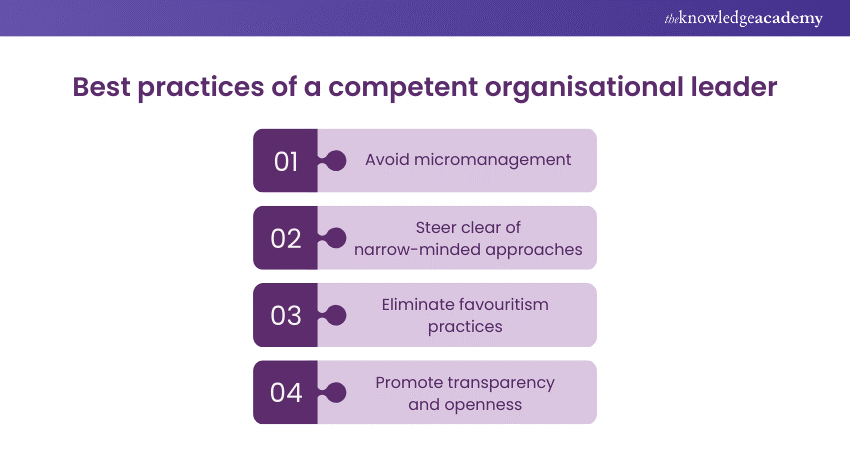
Avoid micromanagement
Micromanagement stifles creativity and demotivates employees. Leaders should empower their teams, delegate tasks, and trust in their abilities to achieve results. By providing clear expectations and support, leaders can lead to increased engagement and productivity.
Steer clear of narrow-minded approaches
Leaders must embrace diversity and inclusion to harness the full potential of their teams. Narrow-mindedness limits innovation and stifles creativity within the organisation. By valuing diverse perspectives and promoting inclusivity, leaders foster a culture of collaboration and respect.
Eliminate favouritism practices
Fairness and equity are essential for maintaining trust and morale within the organisation. Leaders should avoid favouritism and treat all employees with respect and impartiality. By implementing transparent policies and practices, leaders build credibility and create a level playing field for all employees.
Promote transparency and openness
Lack of transparency erodes trust and undermines organisational cohesion. Leaders should foster a culture of openness, honesty, and accountability to build strong relationships with stakeholders. By communicating openly, soliciting feedback, and addressing concerns promptly, leaders demonstrate integrity and build trust.
Conclusion
Leadership in Organisational Behaviour is multifaceted and encompasses various factors that shape organisational culture, drive performance and foster innovation. By cultivating essential skills, leaders can propel their organisations towards sustainable success and growth. We hope this blog teaches about proficient leadership roles.
Empower your career through our BCS Foundation Certificate in Business Change – register today!
Frequently Asked Questions
What are the four essential roles of leadership?

The four essential roles of leadership are vision-setting, decision-making, inspiring, and enabling. Leadership encompasses a multifaceted role that involves leading a team toward a common goal.
What is the nature of Leadership in Organisational Behaviour?
In Organisational Behaviour, leadership influences individuals to achieve organisational goals through direction, alignment and commitment. It encompasses various styles, traits and crucial behaviours for organisational success.
What are the other resources and offers provided by The Knowledge Academy?
The Knowledge Academy takes global learning to new heights, offering over 3,000 online courses across 490+ locations in 190+ countries. This expansive reach ensures accessibility and convenience for learners worldwide.
Alongside our diverse Online Course Catalogue, encompassing 19 major categories, we go the extra mile by providing a plethora of free educational Online Resources like News updates, Blogs, videos, webinars, and interview questions. Tailoring learning experiences further, professionals can maximise value with customisable Course Bundles of TKA.
What is the Knowledge Pass, and how does it work?
The Knowledge Academy’s Knowledge Pass, a prepaid voucher, adds another layer of flexibility, allowing course bookings over a 12-month period. Join us on a journey where education knows no bounds.
What are related courses and blogs provided by The Knowledge Academy?
The Knowledge Academy offers various Business Analysis Courses, including the BCS Certificate in Business Analysis Practice, BCS Foundation Certificate in Organisational Behaviour, and BCS Foundation Certificate in Business Analysis. These courses cater to different skill levels, providing comprehensive insights into Incremental Refresh in Power BI.
Our Business Analysis Blogs cover a range of topics related to organisational leadership, offering valuable resources, best practices, and industry insights. Whether you are a beginner or looking to advance your Business Analysis skills, The Knowledge Academy's diverse courses and informative blogs have got you covered.

William Brown


Senior Business Analyst and Strategic Advisor
William Brown is a senior business analyst with over 15 years of experience driving process improvement and strategic transformation in complex business environments. He specialises in analysing operations, gathering requirements and delivering insights that support effective decision making. William’s practical approach helps bridge the gap between business goals and technical solutions.
View Detail
Upcoming Business Analysis Resources Batches & Dates
Date
 BCS Business Analysis Diploma Oral Preparation Workshop
BCS Business Analysis Diploma Oral Preparation Workshop
Fri 24th Apr 2026
BCS Business Analysis Diploma Oral Preparation Workshop
Fri 19th Jun 2026
BCS Business Analysis Diploma Oral Preparation Workshop
Fri 28th Aug 2026
BCS Business Analysis Diploma Oral Preparation Workshop
Fri 11th Dec 2026

 If you wish to make any changes to your course, please


