


 Top Rated Course

We may not have the course you’re looking for. If you enquire or give us a call on + 800 908601 and speak to our training experts, we may still be able to help with your training requirements.
Top 16 Benefits of Facility Management for Modern Businesses
The Knowledge Academy 24 March 2026Facility Management improves safety, reduces operational costs, and extends asset life through proactive maintenance and efficient space management. It is an essential strategy for modern organisations seeking long-term growth and operational efficiency, leading to optimised resources, extended asset life, and controlled operations costs.

Training Outcomes Within Your Budget!
We ensure quality, budget-alignment, and timely delivery by our expert instructors.
Table of Contents
Have you ever wondered how large hospitals, airports, or corporate buildings run smoothly every day? Behind these well-organised spaces is effective Facility Management that plays an important role in keeping workplaces functional. This is why understanding the Benefits of Facility Management helps businesses recognise how proper maintenance and planning support daily operations.
It improves productivity, operational efficiency, and business performance by enhancing workplace safety, reducing disruptions, and optimising asset use. In this blog, you will explore Facility Management, the Benefits of Facility Management, and more. Keep reading to learn ahead!
Table of Contents
1) What is Facility Management?
2) Key Benefits of Facilities Management
3) What is the Role of Facility Management in Hybrid Workplaces?
4) What is the Role of Facility Management in Crisis Situations?
5) Conclusion
What is Facility Management?
Facility Management refers to the practice of managing and maintaining buildings, infrastructure, and workplace services to ensure they operate safely and efficiently. Its primary focus is to create a comfortable, functional, and well-maintained environment where people can work, live, or access services without disruption.
It brings together people, processes, and physical spaces to support daily business operations. It requires overseeing maintenance, safety, space management, and support services so all systems work smoothly. This helps organisations improve productivity and provide a better experience for employees and visitors.

Key Benefits of Facilities Management
Following are the key benefits of Facilities Management Functions. These key Benefits of Facility Management demonstrate how effective Facility Management can transform and elevate your organisation's operations, potentially influencing industry standards, including Energy Manager Salary trends. Let’s look at them below:
1) Cost Saving
a) This leads to significant cost savings by optimising resources and negotiating better deals with service providers.
b) Preventive maintenance helps avoid costly repairs and replacements.
c) Energy management initiatives lower utility bills.
d) Implementing energy-efficient systems and practices results in substantial long-term savings.
2) Improved Efficiency
a) Enhances efficiency in an organisation by streamlining processes and implementing Best Practices of Facilities Management.
b) Reduces downtime and increases productivity.
c) Regular maintenance schedules, supported by Facility Management Software, prevent unexpected equipment failures, ensuring continuous business operations.
3) Space Optimisation
a) One key Benefits of Facility Management is that it helps organisations use workspace efficiently by analysing how employees occupy and use different areas within a building.
b) Facility managers study occupancy patterns, workplace needs, and movement within facilities to ensure space is neither overcrowded nor underused.
c) Using planning tools and workplace data, organisations can redesign layouts, improve comfort, and support employee productivity.
4) Better Business Continuity Planning
a) Facility Management supports business continuity planning by preparing organisations for unexpected disruptions, such as system failures or operational risks.
b) Facility Managers develop contingency plans and ensure essential systems can continue operating or recover quickly during emergencies.
c) These structured plans help organisations maintain critical operations and reduce the impact of disruptions on business activities.
Improve collaboration and lead productive discussions with Facilitation Skills Training – Join now!
5) Strategic Decision-making
a) One more essential Benefits of Facility Management is that it provides insights that support informed business decisions.
b) Analysing data on space usage, maintenance costs, and asset performance helps organisations improve efficiency.
c) These insights help leaders make strategic investments, facility upgrades, and long-term business planning.
6) Extended Asset and Equipment Lifecycle
a) Facility Management extends the lifespan of building systems and equipment through proactive maintenance.
b) Practices such as condition monitoring, preventive servicing, and accurate documentation help to prevent costly breakdowns.
c) Proper asset tracking and maintenance schedules ensure equipment operates efficiently in the longer run.
7) Vendor and Contractor Management
a) Facility Management teams oversee the selection, coordination, and performance of vendors and contractors who support facility operations.
b) They manage service agreements, monitor contractor performance, and ensure work meets quality and safety standards.
c) Effective vendor management saves time, improves service reliability, and helps organisations maintain smooth facility operations.
8) Improved Integration
a) Promotes better integration across various departments within an organisation.
b) Facilitates communication and collaboration to align different functions towards common goals.
c) Ensures all aspects of the business work together seamlessly, improving overall performance.
d) Integrating IT with Facility Management Trends can enhance technology utilisation and improve space planning efficiency.
9) Enhanced Safety and Security
a) Ensures the safety and security of a building and its occupants by implementing and maintaining security systems.
b) Conducts regular safety audits and ensures compliance with health and safety regulations.
c) Proactively manages risks and addresses potential hazards to create a safer environment.
10) Effective Risk Management
a) Integral to effective risk management within an organisation.
b) Identifies potential risks and implements strategies to mitigate them.
c) Protects the organisation from threats like natural disasters, security breaches, equipment failures, and health and safety issues.
d) Proactive risk management prevents costly incidents and ensures business continuity.
11) Embrace Sustainable Practices
a) Promotes and implements sustainable practices, such as reducing energy consumption and waste, promoting recycling, and using eco-friendly materials.
b) Significantly reduces the environmental impact of an organisation.
c) Sustainable practices benefit the environment, enhance the organisation's reputation, and reduce costs.
Learn supply chain coordination and operational efficiency with Logistics Management Training – Sign up now!
12) Compliance With Regulations
a) Facility Management helps organisations ensure that buildings and workplace operations follow relevant laws, safety standards, and industry regulations.
b) Facility managers monitor compliance requirements and ensure that facilities meet legal and operational standards.
c) This reduces legal risks, supports workplace safety, and helps organisations maintain responsible operations.
13) Clarity in Goals
a) Aligns facility operations with the overall strategic objectives of the business.
b) Sets clear goals and performance metrics to ensure all activities contribute to the organisation's success.
c) Clarity in goals helps prioritise tasks, allocate resources effectively, and measure progress.
14) Stress Reduction
a) Significantly reduces stress for employees and management alike by ensuring a safe, comfortable, and well-maintained work environment.
b) Creates a positive atmosphere that allows employees to focus on their tasks without worrying about facility-related issues.
c) Leads to higher job satisfaction, improved morale, and increased productivity.
15) Improved Communication
a) Acts as a central point of contact for various departments and service providers.
b) Ensures accurate information conveyance, prompt issue resolution, and alignment among all parties.
c) Improved communication leads to better coordination and more efficient operations.
16) Effective System Management
a) Oversees and manages various systems within a building, such as HVAC, electrical, plumbing, and security systems.
b) Ensures systems are well-maintained and operating efficiently.
c) Prevents issues before they arise, prolongs equipment lifespan, and creates a comfortable and safe environment for occupants.
Enhance system performance and reduce failures with Reliability Engineering Training now!
What is the Role of Facility Management in Hybrid Workplaces?
Facility Management plays an important role in supporting hybrid work environments where employees work both remotely and in the office. It involves coordinating workspace design, systems, and workplace services to ensure offices remain functional, safe, and adaptable to changing employee needs.
Facility Managers focus on flexible space planning, occupancy monitoring, cleaning, and maintenance to keep workplaces efficient and comfortable. They also collaborate with departments, such as HR, to create environments that support employee productivity, collaboration, and overall well-being.
What is the Role of Facility Management in Crisis Situation?
During crisis situations, such as natural disasters or public health emergencies, organisations must respond quickly to maintain operations and protect employees. Facility Management plays an essential role in crisis preparedness and response by ensuring buildings, systems, and workplaces remain functional and adaptable. Let’s look at its role below:
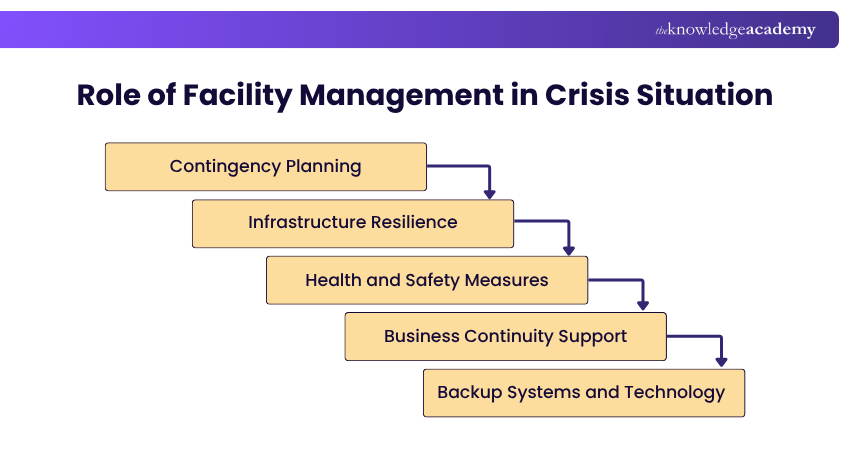
a) Contingency Planning: Facility Management teams prepare for potential crises, such as power outages, natural disasters, or health emergencies, by creating structured response plans and recovery strategies.
b) Infrastructure Resilience: Facility managers ensure that critical systems, such as electrical and plumbing, can withstand disruptions and continue operating during emergencies.
c) Health and Safety Measures: During crises, such as pandemics, facility teams implement safety protocols including sanitation practices, improved ventilation, and safe workplace layouts.
d) Business Continuity Support: Facility Management helps organisations maintain essential operations by ensuring facilities remain functional during disruptions.
e) Backup Systems and Technology: Facility Managers oversee backup power systems and use monitoring technologies to manage building operations even when teams cannot be on-site.
f) Adaptable Workspaces: Facilities teams design flexible workspaces that can quickly adjust to changing needs, such as supporting remote or hybrid working during crises.
Conclusion
Facility Management plays an integral role in helping organisations create safe, efficient, and productive workplaces. From improving operational efficiency and supporting business continuity to extending asset life and optimising space, the Benefits of Facility Management help businesses operate smoothly and adapt to changing needs. This creates workplaces that support both employees and business growth.
Strengthen your professional expertise and stay competitive in today’s evolving business landscape with Industry Training – Register now!
Frequently Asked Questions
What is the Primary Role of a Facilities Manager?

A facilities manager's key role is to ensure efficient, safe, and productive environments. They achieve this by overseeing maintenance, optimising resources, and implementing strategic improvements, all of which are essential to help you Become a Facilities Manager.
What are the Key Considerations in Facility Planning?
The four major factors in facility planning are space utilisation, operational efficiency, safety and compliance, and sustainability. Balancing these elements ensures a functional, cost-effective, and environmentally responsible facility that meets organisational needs.
What are the Other Resources and Offers Provided by The Knowledge Academy?
The Knowledge Academy takes global learning to new heights, offering over 3,000+ online courses across 490+ locations in 190+ countries. This expansive reach ensures accessibility and convenience for learners worldwide.
Alongside our diverse Online Course Catalogue, encompassing 17 major categories, we go the extra mile by providing a plethora of free educational Online Resources like Blogs, eBooks, Interview Questions and Videos. Tailoring learning experiences further, professionals can unlock greater value through a wide range of special discounts, seasonal deals, and Exclusive Offers.
What is The Knowledge Pass, and How Does it Work?
The Knowledge Academy’s Knowledge Pass, a prepaid voucher, adds another layer of flexibility, allowing course bookings over a 12-month period. Join us on a journey where education knows no bounds.
What are the Related Courses and Blogs Provided by The Knowledge Academy?
The Knowledge Academy offers various Industry Training, including Facilities Management Training, Facilitation Skills Training, Product Management Training and Logistics Management Training. These courses cater to different skill levels, providing comprehensive insights into Facilitation Techniques.
Our Business Skills Blogs cover a range of topics related to Facilities Management, offering valuable resources, best practices, and industry insights. Whether you are a beginner or looking to advance your Business skills, The Knowledge Academy's diverse courses and informative blogs have got you covered.

The Knowledge Academy


Global Training Provider
The Knowledge Academy is a world-leading provider of professional training courses, offering globally recognised qualifications across a wide range of subjects. With expert trainers, up-to-date course material, and flexible learning options, we aim to empower professionals and organisations to achieve their goals through continuous learning.

Upcoming Business Skills Resources Batches & Dates
Date
 Facilities Management Training
Facilities Management Training
Fri 24th Jul 2026
Facilities Management Training
Fri 20th Nov 2026

 If you wish to make any changes to your course, please


