


 Top Rated Course

We may not have the course you’re looking for. If you enquire or give us a call on +44 1344 203 999 and speak to our training experts, we may still be able to help with your training requirements.
Counselling vs Therapy: Which is Right for You?
The Knowledge Academy 04 November 2025Counselling offers short-term support for issues like grief, while therapy provides long-term help for deeper emotional and mental health challenges. Both aim to improve well-being by helping individuals process emotions, build resilience, and develop coping strategies. Choosing between them depends on personal needs and goals.

Training Outcomes Within Your Budget!
We ensure quality, budget-alignment, and timely delivery by our expert instructors.
Table of Contents
Imagine feeling lost after a major life change or struggling to manage work stress and personal relationships. That is where Counselling vs Therapy comes in. Both of them are supportive in their own way, yet you should know the difference to select the most appropriate one.
Once difficulties begin to interfere with your daily existence, you may be confused about the necessity to seek short-term guidance or additional emotional Therapy. Counselling vs Therapy provides two different avenues of healing and development. We are going to discuss the functioning of each of the approaches and discover which one may be suitable for you.
Table of Contents
1) What is Counselling?
2) What is Therapy?
3) What are the Differences Between Counselling and Therapy?
4) Qualifications Required for Each Type of Specialist
5) What Type of Counselling or Therapy Will be Best for You?
6) Is Counselling or Therapy Better for Anxiety?
7) Conclusion
What is Counselling?
Counselling is a form of talking Therapy that helps individuals manage emotional challenges in a safe and confidential setting. It is commonly used to address issues such as grief, anxiety, relationship difficulties, and low self-esteem. Depending on the individual's needs, Counselling can be short-term or long-term.
Sessions are typically goal-oriented and guided by a trained counsellor who listens without judgement, helping clients gain clarity and emotional insight. Counselling can be delivered face-to-face, online, via phone, or through email and live chat services, depending on what feels most comfortable for the client.
What is Therapy?
Therapy refers to the process of talking with a qualified mental health professional to gain a clearer understanding of your thoughts, feelings, and behaviours. It helps you explore the causes of distress and discover healthier ways to cope with emotional challenges.
Therapy supports you in overcoming difficult moments and promotes long-term personal growth. There are various types of Therapy, including Cognitive Behavioural Therapy (CBT), Psychodynamic Therapy, and Person-Centred Therapy. Each approach provides different techniques to help address issues such as anxiety, depression, trauma, or relationship difficulties.
What are the Differences Between Counselling and Therapy?
While Counselling and Therapy share the common goal of supporting individuals in their mental and emotional well-being, there are several key differences which set them apart. Below, we have described the differences between Counselling and Therapy:
1) Scope and Focus
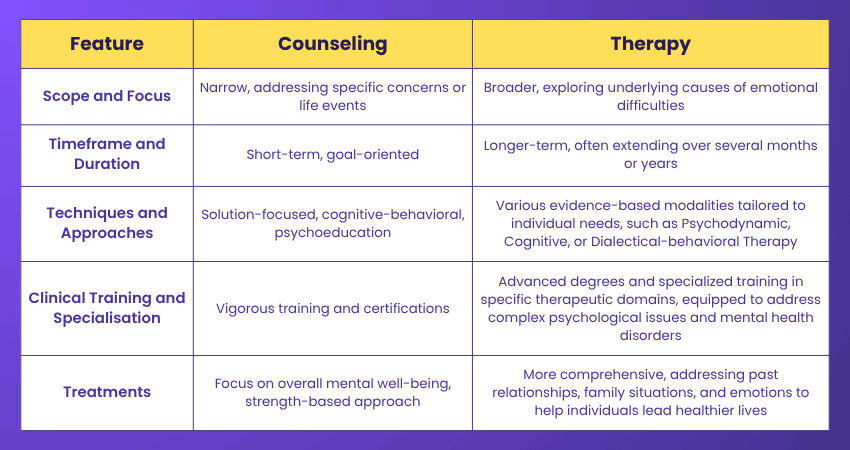
Counselling focuses on the narrower aspect by addressing specific concerns or life events. It delivers practical tools and strategies to help individuals handle immediate challenges with ease and smoothness. On the other hand, Therapy takes a broader approach by exploring the underlying causes of emotional difficulties and then working to address the cause and propel the individual’s life towards long-term personal growth.
Strengthen your mental endurance and emotional balance with our Handle Stress and Develop Your Resilience Course – Join today.
2) Timeframe and Duration
Counselling is generally short-term and goal-oriented, addressing immediate or short-lived concerns through fewer sessions. Therapy, in contrast, is a more comprehensive approach that involves a longer commitment, often extending over several months or even years. It allows individuals to explore their past, relationships, and behaviour patterns.
3) Techniques and Approaches
Counselling makes use of solution-focused techniques, cognitive-behavioural strategies, and psychoeducation to help individuals overcome specific kinds of issues. Therapy employs a wider range of evidence-based methods such as Psychodynamic Therapy, Cognitive Behavioural Therapy (CBT), or Dialectical Behaviour Therapy (DBT), tailored to each client’s needs.
4) Clinical Training and Specialisation
While both Counselling and Therapy professionals undergo rigorous training and certifications, Therapists often possess advanced degrees and specialised training in specific therapeutic domains. These Psychology-based professionals, especially those in Counselling Psychology, are equipped to address complex psychological issues and Mental Health disorders, while Counsellors have a narrower focus on specific areas of expertise or life events.
5) Counselling Treatments
Counselling treatments emphasise emotional well-being rather than treating mental disorders. Clinical mental health counsellors often use a strength-based approach, focusing on an individual’s unique abilities and coping skills.
6) Therapy Treatments
Therapy treatments are more in-depth and comprehensive. Licensed therapists may explore past relationships, family history, and emotional patterns contributing to mental distress. The goal of Therapy is to relieve symptoms, promote healing, and support a healthier, more fulfilling life. Different therapeutic techniques are applied depending on the client’s needs.
Qualifications Required for Each Type of Specialists
Even though the qualifications of therapists and counsellors may sometimes overlap, there are some differences between the qualifications for each specialist. These differences are described below:
Qualifications Required to Become a Counsellor
The qualifications required to become a Counsellor are:
1) At least a Bachelor's in Psychology, Counselling, or any other related field. Having a master’s degree will be an added advantage.
2) They must undergo Specialised certification and training before they are fit to provide any sessions. There are different Types of Counselling, such as marriage, family, school guidance, etc. The training for each type of Counselling is different and requires separate expertise to handle different situations.
3) Excellent grasp of communication. If counsellors cannot effectively communicate with their patients and vice versa, then they cannot provide the necessary solutions to their problems.
4) Constantly remain updated with the recent news or information pertaining to the field of psychology.
Qualifications Required to Become a Therapist
Here are the qualifications necessary to become a therapist. These are as follows:
a) A master's or doctorate in the same field or in Counselling. In addition, there are a greater number of courses for them, which include Cognitive Behavioural Therapy (CBT) and Dialectical Behaviour Therapy (DBT).
b) License to practice. The requirements for all these licenses vary from state to state and country to country. Therapists also need to undergo licensing exams before they start their practice.
c) If you want to become a Therapist who deals with trauma and other cognitive behaviour disorders, you require specialised training and certifications.
Empower yourself with professional psychological tools with our Psychological Skills Training for Human Wellness Training – join today!
What Type of Counselling or Therapy Will be Best for You?
There are various types of Therapies or Counselling that you can undergo. However, not all Therapies or Counselling sessions are applicable to each individual. Typically, the kind of Therapy or Counselling session is dependent on the individual’s situation, past scenarios, relationships, family situations, etc.
It's important to know that every individual is different and has diverse psychotherapy requirements. Therefore, the severity of the problems will differ from one person to another, and so will the choice of Psychotherapy.
Become an expert in Anxiety Management techniques- Join our Anxiety Courses today!
Is Counseling or Therapy Better for Anxiety?
Both Counselling and Therapy can help manage anxiety, but therapy is often more effective for deeper, long-term relief. Counselling focuses on immediate concerns and coping strategies, while therapy; like Cognitive Behavioural Therapy (CBT); explores the root causes of anxiety to create lasting emotional change.
Conclusion
Anxiety support could seem different for everyone, and what works well may differ between individuals as well. Both Therapy and Counselling provide effective methods of decreasing the symptoms and enhancing emotional well-being. The trick here is to discover a professional style that suits you. Trust yourself when answering the question, Counselling vs Therapy, so that you can opt in the direction that is conducive to your near future mental health.
Develop compassionate communication and wellbeing skills through expert-led training – Join our Mental Health Courses now!
Frequently Asked Questions
Is Therapy More Expensive Than Counselling?

Therapy is often more expensive than Counselling due to its clinical nature, specialised training, and longer sessions. However, costs vary widely depending on location, provider qualifications, and treatment type. Always compare options based on your needs and budget.
How do you Know if you Need Therapy or Counseling?
Therapy may help if you experience constant worry, sleep issues, or emotional overwhelm. It provides support and strategies to manage anxiety, depression, grief, and other mental health challenges effectively.
What are the Other Resources and Offers Provided by The Knowledge Academy?
The Knowledge Academy takes global learning to new heights, offering over 3,000 online courses across 490+ locations in 190+ countries. This expansive reach ensures accessibility and convenience for learners worldwide.
Alongside our diverse Online Course Catalogue, encompassing 19 major categories, we go the extra mile by providing a plethora of free educational Online Resources like Blogs, eBooks, Interview Questions and Videos. Tailoring learning experiences further, professionals can unlock greater value through a wide range of special discounts, seasonal deals, and Exclusive Offers.
What is The Knowledge Pass, and How Does it Work?
The Knowledge Academy’s Knowledge Pass, a prepaid voucher, adds another layer of flexibility, allowing course bookings over a 12-month period. Join us on a journey where education knows no bounds.
What are the Related Courses and Blogs Provided by The Knowledge Academy?
The Knowledge Academy offers various Mental Health Courses, including Counselling Course, Psychological Skills Training for Human Wellness, and Anxiety Courses. These courses cater to different skill levels, providing comprehensive insights into A Detailed Overview on Psychological Disorders.
Our Health & Safety Blogs cover a range of topics related to workplace safety and compliance, offering valuable resources, best practices, and industry insights. Whether you are a beginner or looking to advance your safety management skills, The Knowledge Academy's diverse courses and informative blogs have got you covered.

The Knowledge Academy


Global Training Provider
The Knowledge Academy is a world-leading provider of professional training courses, offering globally recognised qualifications across a wide range of subjects. With expert trainers, up-to-date course material, and flexible learning options, we aim to empower professionals and organisations to achieve their goals through continuous learning.

Upcoming Health & Safety Resources Batches & Dates
Date
 Counselling Course
Counselling Course
Fri 26th Jun 2026
Counselling Course
Fri 2nd Oct 2026
Counselling Course
Fri 11th Dec 2026

 If you wish to make any changes to your course, please


