


 Top Rated Course

We may not have the course you’re looking for. If you enquire or give us a call on +44 1344 203 999 and speak to our training experts, we may still be able to help with your training requirements.
Asset Management vs Wealth Management: What's the Difference?
Scarlett Adams 15 December 2025Asset Management focuses on growing investments, while Wealth Management takes a broader approach, covering investments along with overall financial planning. Together, they help maximise returns while protecting wealth. They also guide individuals in achieving both short-term and long-term financial goals with clarity and confidence.

Training Outcomes Within Your Budget!
We ensure quality, budget-alignment, and timely delivery by our expert instructors.
Table of Contents
Imagine you’ve just started investing and want expert help to grow your portfolio. In this case, Asset Management vs Wealth Management may sound similar, but Asset Management is what you need, it focuses on analysing markets, picking the right investments, and maximising returns. Now think about a business owner planning retirement and ensuring a secure future for their family. That’s where Wealth Management comes in, offering a complete financial roadmap.
So, which path should you take - Asset Management vs Wealth Management? In this blog, we’ll explore their differences and career opportunities to help you understand which approach suits your financial goals best.
Table of Contents
1) What is Asset Management?
2) What is Wealth Management?
3) Difference Between Asset Management and Wealth Management
4) Career Opportunities in Asset Management vs Wealth Management
5) Conclusion
What is Asset Management?
Asset Management is the professional process of developing, operating, maintaining, and growing investments to maximise returns while minimising risks. It involves making informed decisions about stocks, bonds, real estate, and other assets to achieve specific financial goals.
By analysing market trends and diversifying portfolios, Asset Managers help individuals and businesses increase wealth efficiently. This service not only focuses on profit growth but also ensures financial security by aligning investments with risk tolerance, time horizons, and long-term objectives.
What is Wealth Management?
Wealth Management is a holistic financial service that goes beyond investments to cover all aspects of an individual’s financial life. It combines Asset Management with services like tax planning, retirement strategies, estate planning, and risk management. The goal is to preserve and grow wealth while ensuring financial stability for the future.
By offering personalised advice, Wealth Managers help clients make informed decisions. They also support them in achieving both short- and long-term goals. In addition, they assist in building a secure financial legacy for individuals and their families.
Difference Between Asset Management and Wealth Management
Here are some key distinctions between Asset Management and Wealth Management based on various aspects:
Here’s the table version based on the image you shared:
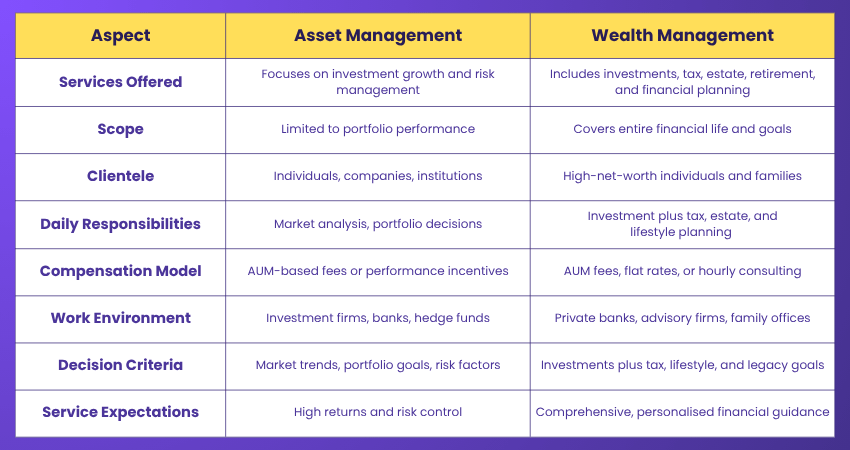
Asset Management vs Wealth Management: Comparison of Services
Asset Management focuses on strategic portfolio allocation and investment growth across asset classes like stocks, bonds, and real estate. Wealth Management offers a broader suite of services, including investment management, tax planning, estate planning, retirement strategies, and insurance solutions.
Asset Management vs Wealth Management: Scope
Asset Management is primarily concerned with optimizing investment returns and managing risk. Wealth Management encompasses the client’s entire financial life, integrating investment strategies with long-term financial planning.
Asset Management vs Wealth Management: Clientele
Asset Managers serve institutional investors, corporations, and high-net-worth individuals focused on portfolio performance. Wealth Managers typically work with high-net-worth individuals and families, offering personalized financial guidance across multiple domains.
Asset Management vs Wealth Management: Day-to-Day Responsibilities
Asset Managers analyze market trends, construct portfolios, and execute investment strategies. Wealth Managers not only manage investments but also advise on taxes, estate planning, retirement, and overall financial well-being.
Asset Management vs Wealth Management: Compensation
Asset Managers often earn fees based on Assets Under Management (AUM) or performance bonuses. Wealth Managers may charge AUM-based fees, flat advisory rates, or hourly consulting fees, depending on service scope.
Asset Management vs Wealth Management: Work Environment
Asset Managers typically work in investment firms, banks, or hedge funds, focusing on financial instruments and market performance. Wealth Managers are found in private banks, financial advisory firms, or family offices, focusing on holistic client relationships.
Asset Management vs Wealth Management: Decision-making Criteria
Asset Managers base decisions on market data, portfolio goals, and risk tolerance. Wealth Managers consider investment performance alongside tax efficiency, lifestyle needs, and legacy planning.
Asset Management vs Wealth Management: Service Level Expectations
Clients expect Asset Managers to deliver strong returns and manage investment risks by Managing Asset Management System. In Wealth Management, clients expect comprehensive, tailored advice that aligns with both short-term needs and long-term goals.
Master internal audit techniques for Asset Management systems with our ISO 55001 Internal Auditor Training – Join Now!
Career Opportunities in Asset Management vs Wealth Management
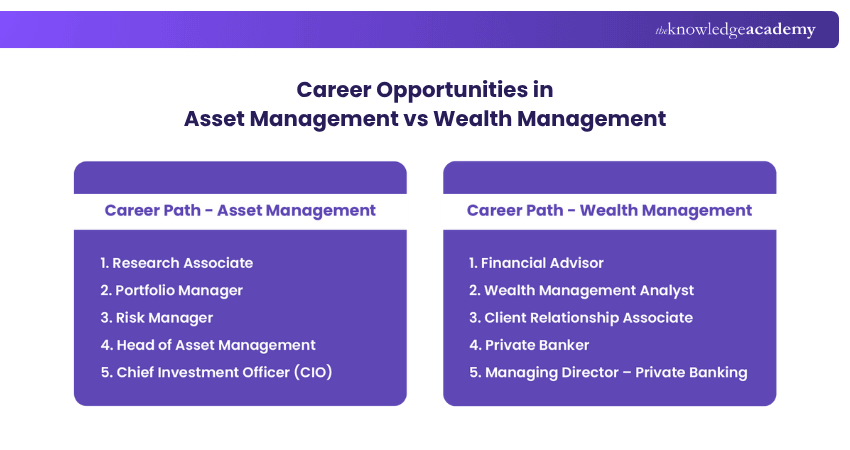
Both Asset Management and Wealth Management offer rewarding career paths, but the roles and responsibilities vary depending on the level of experience. From entry-level positions to senior leadership roles, each stage provides unique opportunities for growth and expertise.
Career Opportunities in Asset Management
Entry-Level Roles
These positions focus on Data Analysis, financial modelling, market research, and supporting Portfolio Managers with investment decisions.
a) Investment Analyst
b) Junior Portfolio Analyst
c) Research Associate
Mid-Level Roles
These roles involve managing portfolios, assessing risks, making buy/sell decisions, and directly interacting with clients or institutions.
a) Portfolio Manager
b) Risk Manager
c) Fund Manager
Senior-Level Roles
These positions focus on leading investment strategies, overseeing teams, and ensuring portfolios align with long-term financial objectives.
a) Chief Investment Officer (CIO)
b) Head of Asset Management
c) Senior Fund Director
Career Opportunities in Wealth Management
Entry-Level Roles
These positions focus on client support, preparing financial plans, assisting advisors, and handling administrative tasks.
a) Client Relationship Associate
b) Junior Financial Advisor
c) Wealth Management Analyst
Mid-Level Roles
These roles involve advising clients, building long-term relationships, and offering tailored financial solutions including tax, estate, and retirement planning.
a) Financial Advisor
b) Private Banker
c) Wealth Strategist
Senior-Level Roles
These positions focus on managing high-net-worth clients, leading advisory teams, and shaping overall wealth strategies for long-term growth and security.
a) Senior Wealth Manager
b) Head of Wealth Management
c) Managing Director – Private Banking
Conclusion
Understanding the difference between Asset Management vs Wealth Management helps you make smarter financial choices. While Asset Management focuses on growing investments, Wealth Management offers a broader, holistic plan. Choosing the right path depends on your goals, priorities, and long-term vision for financial security.
Learn to audit Asset Management systems and drive organisational improvement with our ISO 55001 Lead Auditor Training – Join now!
Frequently Asked Questions
What Pays More, Wealth or Asset Management?

Wealth Management generally pays more than Asset Management due to its focus on high-net-worth clients and broader financial planning services. Wealth Managers often earn higher base salaries, commissions, and performance bonuses, while Asset Managers primarily earn from investment performance and fund size.
What is the Difference Between Financial Management and Asset Management?
Financial management focuses on overseeing an individual’s or organisation’s overall financial health, including budgeting, forecasting, and financial planning. In contrast, Asset Management specifically involves managing investments and assets such as stocks, bonds, or property to maximise returns and grow wealth over time.
What are the Other Resources and Offers Provided by The Knowledge Academy?
The Knowledge Academy takes global learning to new heights, offering over 3,000 online courses across 490+ locations in 190+ countries. This expansive reach ensures accessibility and convenience for learners worldwide.
Alongside our diverse Online Course Catalogue, encompassing 19 major categories, we go the extra mile by providing a plethora of free educational Online Resources like Blogs, eBooks, Interview Questions and Videos. Tailoring learning experiences further, professionals can unlock greater value through a wide range of special discounts, seasonal deals, and Exclusive Offers.
What is The Knowledge Pass, and How Does it Work?
The Knowledge Academy’s Knowledge Pass, a prepaid voucher, adds another layer of flexibility, allowing course bookings over a 12-month period. Join us on a journey where education knows no bounds.
What are the Related Courses and Blogs Provided by The Knowledge Academy?
The Knowledge Academy offers various ISO 55001 Training Courses, including the ISO 55001 Lead Implementer Training Course, the ISO 55001 Lead Auditor Training and the ISO 55001 Foundation Training Course. These courses cater to different skill levels, providing comprehensive insights into Fixed Asset Management.
Our IT Service Management Blogs cover a range of topics related to ISO 55001 Training, offering valuable resources, best practices, and industry insights. Whether you are a beginner or looking to advance your IT Service Management skills, The Knowledge Academy's diverse courses and informative blogs have got you covered.
Upcoming IT Service Management Resources Batches & Dates
Date
 ISO 55001 Lead Implementer Training
ISO 55001 Lead Implementer Training
Mon 29th Jun 2026
ISO 55001 Lead Implementer Training
Mon 30th Nov 2026

 If you wish to make any changes to your course, please


