


 Top Rated Course

We may not have the course you’re looking for. If you enquire or give us a call on +44 1344 203 999 and speak to our training experts, we may still be able to help with your training requirements.
What is Business Strategy? A Comprehensive Guide
The Knowledge Academy 03 February 2026Business Strategy is a plan that outlines how a company will achieve its goals, compete in the market, allocate resources, and ensure long-term growth. It defines a clear direction, helps businesses adapt to market shifts, and drives growth. Understanding Business Strategy is essential for the organisation. Read ahead to know more!

Training Outcomes Within Your Budget!
We ensure quality, budget-alignment, and timely delivery by our expert instructors.
Table of Contents
Picture this scenario: you have just launched a promising product, but instead of soaring, it’s struggling to make an impact. What happened? More often than not, is the root problem a weak or missing Business Strategy? In essence, it is the game plan that aligns with your goals, decisions, and actions to help you stay competitive, adaptable, and profitable.
Moreover, Business Strategy may serve as your organisation’s Global Positioning System (GPS), guiding you through market shifts, competition, and unexpected obstacles. Ready to explore how this approach can fuel success and growth? Let’s dive into this comprehensive blog.
Table of Contents
1) What is Business Strategy?
2) The Importance of Business Strategy
3) Key Components of a Business Strategy
4) Levels of Business Strategy
5) How to Develop a Business Strategy?
6) When to Prioritise Business Strategy?
7) Conclusion
What is Business Strategy?
The long-term guide for companies to reach their targets while functioning in the market with effective resource distribution is called a Business Strategy. The strategic plan creates a decision framework which guides business progress toward financial achievement and longevity.

A business achieves lasting success by defining clear goals followed by external and internal factor evaluation and operational alignment with strategic objectives.
The Importance of Business Strategy
Several important factors depend on establishing a detailed Business Strategy. Implementing this strategy provides companies with focused direction, elevation of their Decision Making, and competitive advantages. The proper use of resources depends on this strategy to achieve alignment with organisational goals across the entire entity. Referring to the Business Model and Strategy Guide can help in structuring an effective approach for long-term success.
A business without a strategy faces challenges from poor efficiency, market ambiguity, and a lack of organisational synergy, leading to a situation where it stagnates or fails to survive. A well-crafted Business Development Executive Job Description can help address these challenges by outlining clear strategies and roles for driving growth and aligning the team towards common goals.
Key Components of a Business Strategy
A strong Business Strategy is built on several key components that drive growth, efficiency, and competitive advantage. Each element shapes the company’s direction and ensures long-term success. Below are the essential components of this strategy:
1) Vision and Objectives
Every successful Business Strategy begins with a strong vision. This defines the long-term aspirations of the company. Objectives break down the vision into measurable targets that guide daily operations and decision-making.
2) Core Values
Core values define the ethical and cultural foundation of a business. They influence decision-making, company culture, and customer perceptions. A well-defined value system ensures consistency in Business Operations Management and fosters stakeholder trust.
Enhance Problem-solving skills with our Practical Thinking Course – Join Today!
3) SWOT Analysis (Strengths, Weaknesses, Opportunities, and Threats)
Businesses can identify key differences between internal assets and weaknesses and external possibilities and challenges by adopting the SWOT Analysis Strategies.
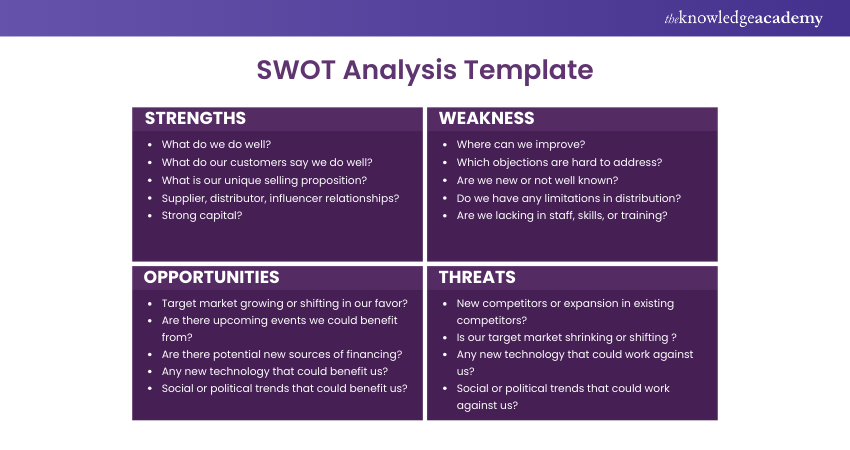
The analysis delivers important knowledge which helps leaders make strategic decisions by harnessing their business advantages and controlling dangers.
4) Tactics and Operational Delivery
Tactics refer to the short-term actions that help achieve long-term strategic goals. Operational delivery ensures that plans are executed effectively, with teams working towards strategic objectives through daily tasks, projects, and initiatives.
5) Resource Allocation
Effective resource allocation, supported by a Feasibility Study, ensures that financial, human, and technological resources are utilized efficiently. Businesses must prioritize investments and distribution of resources to maximize productivity and growth.
6) Measurement and Analysis
A strong Business Strategy requires continuous monitoring. Performance metrics, Key Performance Indicators (KPIs), and regular reviews ensure that strategies remain effective and adaptable to changing market conditions.
Levels of Business Strategy
A well-structured Business Strategy operates at different organisational levels, ensuring alignment across the entire business. Each level is crucial in decision-making, resource allocation, and achieving long-term goals.
Understanding these levels helps businesses create a cohesive approach to strategy execution. The three main levels of Business Strategy are:
Corporate Level Strategy
This is the highest Corporate Strategy vs Business Strategy level, focusing on overall organisational growth and expansion. It includes decisions about mergers, acquisitions, diversification, and long-term goals.
Business Level Strategy
This strategy is concerned with how a company competes within a specific industry. It includes competitive positioning, market segmentation, and differentiation strategies.
Functional Level Strategy
This involves department-specific strategies that support the broader Business Strategy. It includes marketing, finance, operations, and human resources strategies to ensure alignment with business objectives.
How to Develop a Business Strategy?
A strategic business requires evaluation of market dynamics and future-oriented decision making together with thoughtful planning, often using a Business Plan Template Guide. A properly structured strategic plan connects business goals to market openings, leading to long-term business expansion and market dominance. Here are the essential steps to develop an effective Business Strategy:
1) Define Your Vision
A clear vision provides direction and purpose for the organisation. It sets long-term aspirations and defines where the company wants to be. When crafting a vision:
a) Ensure it is ambitious yet achievable
b) Align it with the company’s core values and mission
c) Communicate effectively across all levels of the business
2) Set Clear Objectives
Objectives translate the vision into actionable and measurable goals. To set effective objectives:
a) Use the Specific, Measurable, Achievable, Relevant, and Time-bound (SMART) framework.
b) Ensure they align with business priorities and market opportunities.
c) Regularly review and adjust objectives based on performance and market trends.
3) Analyse Your Business and Market Environment
Understanding the internal and external business environment is crucial for strategic planning. This involves:
a) Conducting a SWOT Analysis to evaluate strengths, weaknesses, opportunities, and threats.
b) Assessing industry trends, customer behaviour, and competitor strategies.
c) Identifying potential risks and preparing contingency plans.
4) Identify Your Competitive Advantage
To stand out, businesses must define their unique value proposition. This can be achieved through:
Innovation in products or services.
a) Cost leadership by offering competitive pricing
b) Superior customer experience and service excellence
c) Brand positioning and differentiation strategies
5) Create a Strategic Framework
A strategic framework provides a roadmap for achieving objectives. It includes:
a) Developing key initiatives that align with business goals
b) Prioritising actions based on impact and feasibility
c) Assigning responsibilities to teams and departments
By following these steps, businesses can develop a Business Strategy that is adaptable, competitive, and geared for sustainable success.
Inspire and engage your team with our Staff Motivation Training – start learning today!
When to Prioritise Business Strategy?
A Business Strategy should always be an ongoing priority, but certain situations make it even more critical. Businesses must reassess and refine their strategy in the following circumstances:
1) Entering a New Market
When expanding into a new market, businesses must adapt their Business Strategy to account for local consumer behaviour, competition, regulations, and economic conditions. A well-planned strategy ensures a smooth transition and a higher chance of success.
2) Launching a New Product or Service
Introducing new products or services needs a specific business plan that involves studying markets, pricing plans, marketing approaches, and operational modifications. The effectiveness of market impact depends on the ability of strong business strategies to correctly position products for maximum results.
3) Facing Increased Competition
Companies must evaluate their approach to stay competitive against marketplace changes caused by competitor innovation, price adjustments, or market expansion. A business must take different actions, including product differentiation, improved customer service, and new technological adoption.
4) Experiencing Financial Challenges
Periods of declining revenue, high operational costs, or economic downturns require a reassessment of financial priorities. A revised Business Strategy can help restructure costs, explore new revenue streams, and improve financial stability.
5) Scaling or Expanding Operations
When a business grows, its structure, processes, and resources must evolve. Strategic planning ensures that expansion efforts are sustainable and operational efficiency is maintained during growth.
6) Adapting to Market or Industry Changes
Technological advancements, regulatory updates, and changing consumer preferences can impact business operations. A proactive Business Strategy helps companies stay ahead by adapting to new trends and innovations.
7) Mergers, Acquisitions, or Partnerships
Major structural changes, such as mergers or acquisitions, require a well-aligned strategy to integrate teams, optimise resources, and maintain brand identity while capitalising on new opportunities.
8) Crisis Management and Recovery
Unexpected disruptions such as economic recessions, supply chain breakdowns, or global events (e.g., pandemics) demand a quick and effective strategic response. A strong Business Strategy ensures businesses can pivot, minimise risks, and recover efficiently.
Drive growth and adaptability with our Business Model Innovation Training – join today!
Conclusion
A solid Business Strategy is your roadmap to growth, helping you tackle challenges and seize opportunities with confidence. It’s not just about planning; rather it is about adapting, evolving, and staying ahead. Embracing Business Model Innovation as part of your strategy can provide the flexibility and foresight needed to thrive in changing markets. Success doesn’t happen by chance, so why leave it to luck? Take control and steer your business where it needs to go!
Develop leadership skills with our Leadership Courses – register now!
Frequently Asked Questions
What is the Purpose of Strategy?

The purpose of Business Strategy is to provide a clear roadmap for achieving long-term goals, ensuring competitiveness, and optimising resource allocation. It helps businesses navigate challenges, seize opportunities, and align operations with their vision for sustainable growth and success.
What are the 4 P’s of Business Strategy?
The purpose of Business Strategy is to provide a clear roadmap for achieving long-term goals, ensuring competitiveness, and optimising resource allocation. It helps businesses navigate challenges, seize opportunities, and align operations with their vision for sustainable growth and success.
What are the Other Resources and Offers Provided by The Knowledge Academy?
The Knowledge Academy takes global learning to new heights, offering over 3,000 online courses across 490+ locations in 190+ countries. This expansive reach ensures accessibility and convenience for learners worldwide.
Alongside our diverse Online Course Catalogue, encompassing 19 major categories, we go the extra mile by providing a plethora of free educational Online Resources like Blogs, eBooks, Interview Questions and Videos. Tailoring learning experiences further, professionals can unlock greater value through a wide range of special discounts, seasonal deals, and Exclusive Offers.
What is The Knowledge Pass, and How Does it Work?
The Knowledge Academy’s Knowledge Pass, a prepaid voucher, adds another layer of flexibility, allowing course bookings over a 12-month period. Join us on a journey where education knows no bounds.
What are Related Leadership Courses and Blogs Provided by The Knowledge Academy?
The Knowledge Academy offers various Leadership Courses, including Agile Leadership Training, Design Thinking Course and Creative and Analytical Thinking Training. These courses cater to different skill levels, providing comprehensive insights into Business Relationship Management.
Our Business Skills Blogs cover a range of topics related to Business Strategy, offering valuable resources, best practices, and industry insights. Whether you are a beginner or looking to advance your Leadership skills, The Knowledge Academy's diverse courses and informative blogs have you covered.

The Knowledge Academy


Global Training Provider
The Knowledge Academy is a world-leading provider of professional training courses, offering globally recognised qualifications across a wide range of subjects. With expert trainers, up-to-date course material, and flexible learning options, we aim to empower professionals and organisations to achieve their goals through continuous learning.

Upcoming Business Skills Resources Batches & Dates
Date
 Business Development Training
Business Development Training
Fri 22nd May 2026
Business Development Training
Fri 21st Aug 2026
Business Development Training
Fri 13th Nov 2026

 If you wish to make any changes to your course, please


