


 Top Rated Course

We may not have the course you’re looking for. If you enquire or give us a call on +39 800580270 and speak to our training experts, we may still be able to help with your training requirements.
Margin Trading vs Short Selling: A Detailed Comparison
Hailey Davis 11 February 2026Margin Trading vs. Short Selling enhance market positions. Margin trading uses borrowed funds to increase potential profits or losses, while short selling benefits from falling stock prices by repurchasing at a lower price. This blog explores Margin Trading vs. Short Selling, how to do it, its risks, advantages, and disadvantages of it.

Training Outcomes Within Your Budget!
We ensure quality, budget-alignment, and timely delivery by our expert instructors.
Table of Contents

Trading in financial markets can be difficult, especially using advanced tactics such as Margin Trading and Short Selling. Margin Trading is when you borrow money to increase your trading position, amplifying your investments for more significant profits or losses. Short Selling involves making money from decreasing stock prices through selling borrowed shares and repurchasing them at a cheaper price. These methods can boost profits and elevate the level of danger. Any trader must comprehend the crucial distinctions between Margin Trading vs Short Selling.
This blog will examine the basics of Margin Trading vs. Short Selling, the dangers, and benefits of each method. Thus, it will offer valuable information for interested individuals wanting to learn about these intricate Day trading tactics.
Table of Content
1) What is Margin Trading?
2) What is Short Selling?
3) Differences Between Margin Trading and Short Selling
4) Conclusion
What is Margin Trading?
Margin Trading, also known as MTF, enables you to invest beyond the funds in your trading account with a SEBI-certified broker. By opening a margin account, you can use margin financing to buy more securities than you can with your funds. In essence, the broker enables you to increase your buying ability.
If your trading account has a negative balance, interest charges will be applied. A margin account allows you to participate in Margin Trading with just a portion of the total cost of shares, allowing you to take bigger positions in your trades, a strategy also applicable in Intraday Trading.
Nevertheless, it is vital to uphold the minimum balance in your margin account to satisfy the broker's maintenance requirements.

Advantages of Margin Trading
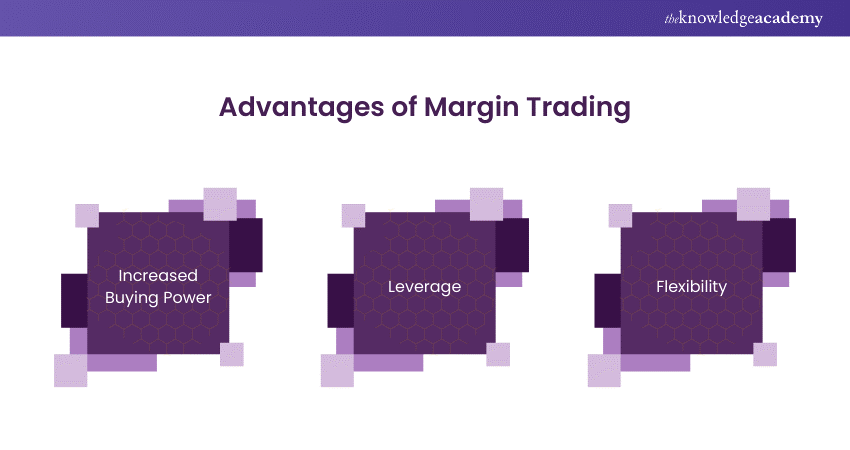
a) Increased Buying Power: Margin Trading permits you to acquire more stocks than you can use solely in your funds, potentially boosting returns.
b) Leverage: Leverage enables you to maximise your investments, resulting in increased returns if the market works in your favour.
c) Flexibility: You can capitalise on market opportunities promptly without liquidating other assets.
Risks of Margin Trading
a) Higher Losses: While leverage can boost profits, it can also increase losses, occasionally surpassing your original Investment.
b) Interest Costs: Interest expenses arise from borrowing money, increasing the investment's overall cost.
c) Margin Calls: If your account's equity drops below a certain level, you might receive a margin call to add more money or sell assets to make up for the deficit.
How Margin Trading Works
To begin Margin Trading, you must create a margin account with your broker. The broker uses your current portfolio as collateral to lend you money to purchase securities. In the event that your investments decrease in value, you may be required to deposit additional funds into your account to satisfy the minimum equity threshold, which is crucial in managing your marginal cost of trading.
Learn and master the Stock Market with our comprehensive Stock Trading Course today!
What is Short Selling?
It is important to understand the mechanics of short selling before identifying the key distinctions between margin trading and Short Selling. Short Selling is a popular technique for selling shares that are not held in your Demat account, typically taking advantage of the broker's Margin Trading feature.
After activating your MTF facility, you can take advantage of this feature. Even if the shares are not in your Demat account, you can still control them using your margin account. However, it’s important to manage risks carefully to avoid a Budget Deficit, as Short Selling provides the opportunity to profit when the stock price decreases, which is crucial.
Advantages of Short Selling
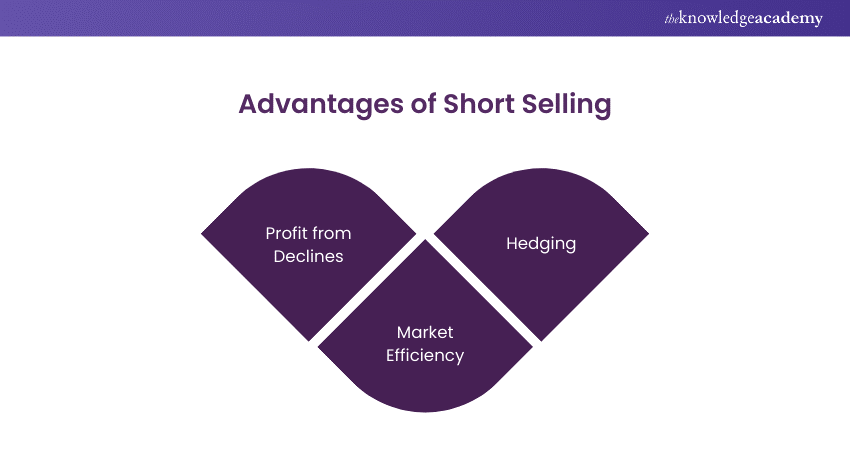
a) Profit from Declines: Short Selling enables you to make money when stock prices decrease.
b) Hedging: Hedging can be utilised to protect against potential losses in alternative investments.
c) Market Efficiency: Short sellers play a role in revealing overvalued stocks, thus enhancing market efficiency.
Risks of Short Selling
a) Unlimited Risks: With traditional stock purchases, your maximum loss is your initial investment. Short Selling poses unlimited risk as there is no limit to how high the price of stock can rise, Trading Psychology is most important in such scenerio.
b) Borrowing Costs: There will be expenses for borrowing stocks, which can reduce your earnings.
c) Margin Calls: If the stock price increases, additional funds may be required for deposit to mitigate potential losses in your account.
How Short Selling Works
To do Short Selling, you must have a margin account. The shares you want to sell are borrowed from your broker. You trade these shares on the market expecting to purchase them back at a reduced price. The profit or loss equals the selling price minus the repurchase price after subtracting borrowing costs and fees.
Elevate your Forex Trading skills with our expert led Forex Trading Course – Sign up now!
Differences Between Margin Trading and Short Selling
Both trading styles involve borrowing to cater to different market conditions. Let’s explore some of the differences between Margin Trading and Short Selling.
1) Market Trend
Margin Trading is profitable in bullish markets as it involves buying securities with borrowed funds to increase potential gains. In contrast, Short Selling is profitable in bearish markets as it involves selling borrowed securities with the expectation of buying them back at a lower price.
2) Risk Assessment
Margin Trading carries risks such as magnified losses due to leverage and the potential for margin calls if the account's equity falls below the required level. Short Selling, on the other hand, involves unlimited risk because there is no limit to how high the stock price can rise, in addition to borrowing costs.
3) Duration
Margin Trading is typically used for both short-term and long-term investments, allowing traders to hold positions as long as they maintain margin requirements. Short Selling is usually a short-term strategy due to the cost of borrowing shares and market volatility, making it impractical for long-term holding.
4) Loan and Interest Expenses
Margin Trading involves interest on borrowed funds, which increases the overall cost of the investment and can affect profitability. Short Selling involves fees for borrowing shares, which can significantly impact potential profits, especially if the stock price does not decline as expected.

Simplify your finances with our Book Keeping Course! Learn essential skills to manage your business accounts with ease.
Conclusion
We hope you now understand the essential distinctions between Margin Trading vs Short Selling. Margin trading amplifies investments during both Bullish and Bearish markets and raises the possibility of more significant losses and expenses. Short Selling earns money from price decreases but involves boundless risk of loss and borrowing expenses. Trading Psychology plays a crucial role in managing risks and making informed decisions in both approaches. Before pursuing either approach, conducting in-depth research and seeking advice from financial professionals is essential.
Unlock your Trading potential with our MiFID II Professional Course- Register now!
Frequently Asked Questions
Can Margin Trading and Short Selling be Used Together?

Yes, investors can utilise both strategies simultaneously to broaden their methods and protect against different market situations.
Are There Limits to How Much I Can Margin Trade or Short Sell?
Yes, brokers set restrictions according to regulations and policies, such as margin requirements and short sale limits.
Who Can Participate in Margin Trading and Short Selling?
Usually, experienced investors have a solid grasp of the potential risks. A margin account and consent from your broker are required.
What are the Other Resources and Offers Provided by The Knowledge Academy?
The Knowledge Academy takes global learning to new heights, offering over 3,000+ online courses across 490+ locations in 190+ countries. This expansive reach ensures accessibility and convenience for learners worldwide.
Alongside our diverse Online Course Catalogue, encompassing 19 major categories, we go the extra mile by providing a plethora of free educational Online Resources like Blogs, eBooks, Interview Questions and Videos. Tailoring learning experiences further, professionals can unlock greater value through a wide range of special discounts, seasonal deals, and Exclusive Offers.
What is The Knowledge Pass, and How Does it Work?
The Knowledge Academy’s Knowledge Pass, a prepaid voucher, adds another layer of flexibility, allowing course bookings over a 12-month period. Join us on a journey where education knows no bounds.
What are the Related Courses and Blogs Provided by The Knowledge Academy?
The Knowledge Academy offers various Finance Courses, including the MiFID II Professional Course, Personal Finance Course, and Financial Risk Management Certification Training. These courses cater to different skill levels and provide comprehensive insights into Swing Trading vs Day Trading.
Our ISO & Compliance Blogs cover a range of topics related to ISO & Compliance, offering valuable resources, best practices, and industry insights. Whether you are a beginner or looking to advance your ISO & Compliance Skills, The Knowledge Academy's diverse courses and informative blogs have got you covered.

Hailey Davis


Compliance Officer
Hailey Davis is an ISO compliance expert with over 10 years of experience in audit, quality management systems (QMS), and regulatory compliance. She has worked with various industries, including manufacturing, healthcare, and technology, ensuring organisations achieve and maintain ISO certifications. Hailey’s content provides practical, actionable insights on navigating compliance challenges and improving business processes.
View Detail
Upcoming Accounting and Finance Resources Batches & Dates
Date
 MiFID II Professional
MiFID II Professional
Fri 17th Jul 2026
MiFID II Professional
Fri 27th Nov 2026

 If you wish to make any changes to your course, please


