


 Top Rated Course

We may not have the course you’re looking for. If you enquire or give us a call on +36 18508731 and speak to our training experts, we may still be able to help with your training requirements.
Inbound and Outbound Logistics: An Overview
The Knowledge Academy 27 February 2026Inbound and Outbound Logistics are crucial components of supply chain management, ensuring efficient material flow from suppliers to production and finished products. Effective logistics enhance productivity, reduce costs, and improve customer satisfaction, making them vital for seamless operations and competitive advantage.

Training Outcomes Within Your Budget!
We ensure quality, budget-alignment, and timely delivery by our expert instructors.
Table of Contents
In today’s fast-paced business landscape, logistics management is essential for ensuring the seamless movement of goods—from sourcing raw materials to delivering finished products. Inbound and Outbound Logistics are two components of the supply chain that directly impact efficiency, cost-effectiveness, and overall business success.
This blog explores the importance of Inbound and Outbound Logistics, their key differences, common challenges, and strategies for optimisation. By implementing effective logistics solutions, businesses can enhance efficiency, improve sustainability, and elevate customer experience—ultimately driving long-term growth.
Table of Contents
1) Understanding Inbound Logistics
2) Importance of Inbound Logistics
3) Understanding Outbound Logistics
4) Importance of Outbound Logistics
5) Key Differences Between Inbound and Outbound Logistics
6) Optimising Inbound and Outbound Logistics
7) Conclusion
Understanding Inbound Logistics
Inbound Logistics means the process of receiving, storing, and managing raw materials and goods that a company needs to produce its products or offer its services. It involves the coordination of activities relating to sourcing, transportation, and inventory management.
Challenges of Inbound Logistics and How to Overcome Them
Inbound logistics faces challenges like supply chain disruptions, rising transportation costs, and inefficient inventory management, affecting operational efficiency. Here the following are the challenges of Inbound Logistics:
a) Supply Chain Disruptions: Unexpected delays caused by worldwide crises, weather, or supplier problems may impact inventory and production schedules.
Solution: Diversify suppliers, implement predictive analytics, maintain buffer stock, and establish alternative transport routes to mitigate disruptions.
b) High Transportation Costs: Increased fuel prices, poor routing, and convoluted freight charges drive total logistics costs up.
Solution: Use route optimisation tools, negotiate bulk shipping discounts, explore multimodal transportation, and invest in fuel-efficient vehicles.
c) Inventory Management Issues: Inadequate demand planning, overstocking, or understocking result in monetary losses and inefficiencies in operations.
Solution: Implement automated inventory management, leverage AI-driven demand forecasting, and use Just-in-Time (JIT) inventory strategies.
d) Supplier Reliability: Relying on several suppliers can cause inconsistencies in delivery time, product quality, and cost fluctuations.
Solution: Conduct regular supplier audits, establish long-term contracts, implement dual sourcing, and maintain strong supplier relationships.
e) Lack of Visibility: Inadequate real-time tracking and data analysis hinder the ability to track shipments and predict delays.
Solution: Invest in IoT-enabled tracking, use blockchain for supply chain transparency, and integrate cloud-based logistics management systems.
f) Compliance & Regulatory Challenges: Complying with evolving trade regulations, customs rules, and environmental policies can make logistics operations complex.
Solution: Stay updated with trade regulations, use automated compliance tracking software, and train teams on international trade laws and sustainability policies.
Importance of Inbound Logistics
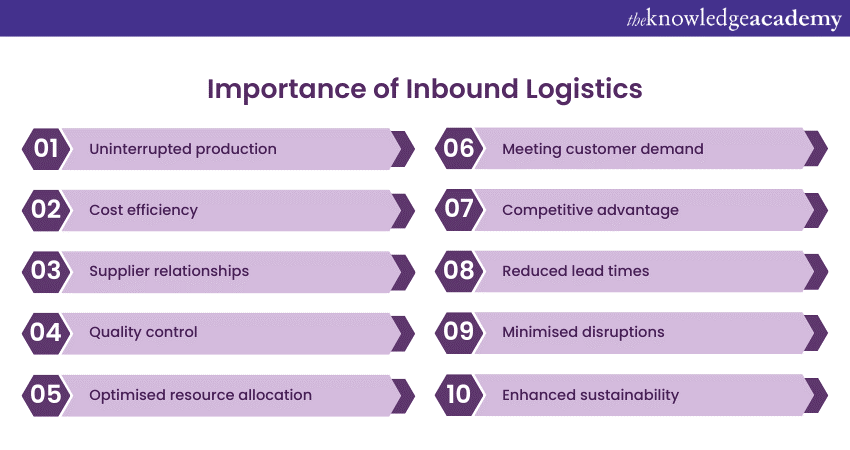
Inbound Logistics, one of the important Types of Logistics is like the backstage manager of a show – it might not be in the spotlight, but it's incredibly important for making the performance happen smoothly. Let's break down why Inbound Logistics really matters:
Uninterrupted Production
Inbound logistics ensures that components and raw materials needed for production are delivered on schedule. Without a well-organised Inbound Logistics system, production could be halted or delayed due to shortages of essential inputs.
Cost Efficiency
Efficient Inbound Logistics management reduces inventory carrying costs. By having the right number of materials available at the right time, a company can minimise excess inventory and associated expenses.
Supplier Relationships
Inbound Logistics requires strong communication and coordination with suppliers. Developing and maintaining good relationships with suppliers can lead to favourable terms, better pricing, and priority in fulfilling orders.
Quality Control
Inbound Logistics involves inspecting received materials for quality and quantity. This process ensures that only acceptable and accurate materials are used in production, reducing the likelihood of defects and rework.
Keen to understand how logistics impact business workflow, refer to our blog on Importance of Logistics.
Optimised Resource Allocation
An effective Inbound Logistics system helps allocate resources optimally. By having a clear understanding of when materials will arrive, a company can plan its workforce, equipment, and space requirements more efficiently.
Meeting Customer Demand
Inbound Logistics contributes to meeting customer demand by ensuring a consistent flow of materials. This, in turn, supports on-time production and delivery of finished products to customers.
Competitive Advantage
Companies with streamlined Inbound Logistics have a competitive advantage. They can respond more swiftly to market changes, customer preferences, and emerging trends, giving them an edge over competitors.
Reduced Lead Times
Efficient Inbound Logistics shortens lead times from order placement to product delivery. This is crucial in meeting customer expectations for prompt delivery, particularly in industries with high demand fluctuations.
Minimised Disruptions
Proactive management of Inbound Logistics helps anticipate potential disruptions, such as transportation delays or supply shortages. By recognising and addressing these issues in advance, a company can reduce the impact of disruptions on its operations.
Enhanced Sustainability
Effective Inbound Logistics can contribute to sustainability efforts. By optimising transportation routes and modes, companies can reduce carbon emissions and their environmental footprint.
Ready to master export and trade compliance? Explore our Export and Trade Compliance Training - sign up now!
Understanding Outbound Logistics
Outbound Logistics is the method of managing and coordinating the movement of finished products from a company to its customers. It involves everything from packaging the products to delivering them to the customers' doorsteps.
Once a customer places an order, the Outbound Logistics process begins. It includes activities such as order processing, picking and packing products, selecting appropriate transportation methods, and ensuring on-time delivery.
Challenges of Outbound Logistics and How to Overcome Them
Here are the challenges that are associated with Outbound Logistics and solutions to overcome them:
a) Delivery Delays: Road traffic, weather, or poor route planning may delay delivery.
Solution: Employ GPS tracking, optimise routes, and have multiple distribution centres to make deliveries faster.
b) High Shipping Costs: Fuel charges, warehousing charges, and last-mile delivery charges inflate the cost of operations.
Solution: Contract low-cost carriers, arrange bulk shipping discounts, and use automated logistics solutions.
c) Order Accuracy Problems: Incorrect or damaged deliveries cause customer discontent and returns.
Solution: Implement barcode scanning, automatic inventory control, and quality checks prior to shipment.
d) Poor Returns Management: No efficient returns procedure can cause clogs in logistics.
Solution: Create a distinct returns policy, implement return tracking systems, and provide multiple drop-off locations.
e) Customer Demand for Quick Shipping: Same-day or next-day delivery pressures logistics networks.
Solution: Implement micro-fulfilment centres, partner with local delivery providers, and provide flexible delivery.
f) Limited Visibility of Shipments: Customers need real-time tracking, but older systems do not necessarily report accurately.
Solution: Leverage IoT-based tracking, cloud-based logistics software, and automated status reporting.
Importance of Outbound Logistics
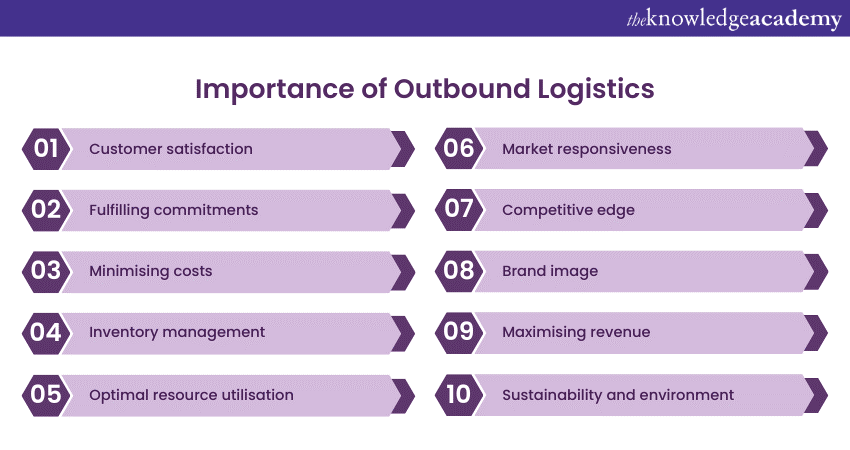
Outbound Logistics plays a pivotal role in the success of a business. It involves the processes that ensure products are efficiently delivered to customers after they have been manufactured. Here's why Outbound Logistics is crucial:
Customer Satisfaction
Outbound Logistics directly affects customer satisfaction. When things are delivered on time and just right, customers are happy. They might buy again and tell others about the business.
Fulfilling Commitments
When a business promises to deliver products by a certain date, Outbound Logistics ensures this promise is kept. Meeting commitments builds trust with customers and enhances the business's reputation.
Minimising Costs
Efficient Outbound Logistics helps in cost management. It reduces the chances of delays or mistakes that could lead to additional expenses, such as rush deliveries or customer returns.
Inventory Management
Outbound Logistics is closely linked to inventory management. Proper coordination ensures that products are dispatched from warehouses or production facilities in a manner that maintains optimal inventory levels.
Optimal Resource Utilisation
Outbound Logistics involves planning the most effective transportation routes and methods. This maximises the use of resources like vehicles, fuel, and manpower.
Market Responsiveness
Businesses have to respond quickly to changing market demands. Outbound Logistics ensures that products can be dispatched swiftly to cater to shifting consumer preferences.
Competitive Edge
Reliable Outbound Logistics can provide a competitive advantage. Businesses that consistently deliver on time are more likely to stand out in the market and retain loyal customers.
Brand Image
A business's reputation is greatly influenced by its delivery process. A well-executed Outbound Logistics system contributes positively to the brand's image and reliability.
Maximising Revenue
When products reach customers on time, it leads to quicker sales cycles and faster revenue generation. Effective Outbound Logistics contribute to improved cash flow.
Sustainability and Environment
Efficient Outbound Logistics can also contribute to sustainability efforts. Optimised delivery routes and methods can reduce fuel consumption and emissions.
Stay competitive and gain industry-specific knowledge with our Industry Training today!
Key Differences Between Inbound and Outbound Logistics
Inbound and Outbound Logistics represent distinct phases that serve different purposes within the overall process. Here are the key differences that set them apart:

Definition and Scope
Inbound Logistics pertains to the processes that involve receiving, transporting, and managing materials, components, and goods as they flow into a company's premises. It focuses on the movement of inputs required for production. On the other hand, Outbound Logistics deals with the distribution, transportation, and management of finished products from the company to its customers. It centres on the movement of goods ready for consumption.
Direction of Movement
A major difference is on the movement’s base focus. A firm’s suppliers are external entities that provide materials and goods whose Inbound logistics deal with bringing them into the company.
However, outbound logistics relates to the movement of the firm’s products out of the company to the customers or other distribution points.
Focus and Goals
Inbound logistics focus on effectiveness with an overriding concern for efficiency and cost consideration. The prompt movement of materials optimises their resource utilisation, removes obstructions and delays.
Outbound Logistics, to the contrary, focuses firmly on customer satisfaction. Ensuring the customer receives the product on time and in the condition expected is the core focus of the services.
Transportation and Warehousing
With respect to logistics services, Inbound takes care of transporting larger amounts of inventory in bulk while Warehousing pays special attention to storing the materials until they are ready to be used in the production process.
Outbound Logistics, however, focuses on a relatively smaller quantity of packaged products being prepared for separate individual shipments. In this case, warehousing refers to staging and packing the products for effective allocation.
Customer Interaction
Inbound Logistics comes with little customer contact. The focus is primarily on nurturing the suppliers’ side and ensuring availability of the materials for production.
However, Outbound Logistics does encompass customer contact during the delivery. It covers confirming the delivery times, solving the customer’s problems, and making sure that the order is completed without any problems.
Importance of Timing
Inbound Logistics integrates smooth production cycles along with strict uninterrupted business processes. Most companies suffer greatly in regards to their ability of product manufacturing due to any losses suffered from delays inbound logistics.
Conversely, customer satisfaction increases with the quality of Outbound Logistics. However, mistakes made with timing or deliveries do cause defects in customer satisfaction and most definitely tarnish the company’s name.
Product Handling
Inbound Logistics often involves receiving and inspecting raw materials for quality and quantity. These materials may need processing before they are used in production. In contrast, Outbound Logistics focuses on ensuring that products are well-packaged, labeled accurately, and ready for delivery to customers.
Integration with Production
Inbound Logistics is tightly integrated with a company's production process. It affects a company's ability to manufacture products based on the availability of materials. Outbound Logistics is integrated with order processing and customer service, as it directly impacts the final stage of delivering products to customers.
Explore new industry horizons with our Logistics Management Training - Join for growth today!
Optimising Inbound and Outbound Logistics
Here are the techniques for optimising Inbound and Outbound Logistics:
1) Streamlining Reverse Logistics:
Introduced an easy-to-use returns policy through return tracking and collaborations with 3PLs to enhance return processing productivity.
2) Strengthening Supplier Relationships:
Fostering relationships with dependable suppliers ensures uninterrupted inbound logistics as they can readily provide timely deliveries.
3) Improving Inventory Management:
A hybrid approach that combines WMS with JIT inventory systems guarantees order fulfilment with no incidences of overstocking or stockouts.
4) Enhancing Warehouse Efficiency:
Adopting cross docking, automated picking systems, and lean warehousing techniques shortens order processing timelines significantly while increasing the productivity of warehouse personnel by reducing the time taken to perform warehouse tasks.
5) Optimising Transportation and Routing:
The use of real time GPS tracking along with shipping route optimisation algorithms as well as multimodal transport techniques lessen the cost incurred towards shipping and the delay seen in delivering goods.
6) Leveraging Technology and Automation:
The incorporation of AI powered forecasting, IoT tracking, and automated inventory control does increase accuracy as well as visibility in the logistics but also improves efficiency.
Conclusion
Inbound and Outbound Logistics are important to help stuff come in and go out the right way. Knowing how they work; companies can make sure things happen smoothly and customers are happy. Achieving these goals aligns with the Objectives of Logistics, which focus on ensuring timely deliveries, reducing inventory costs, and enhancing overall supply chain performance. It is important to keep customer satisfaction steady and Logistics helps in that if done properly.
Improve your Logistics knowledge with Logistics Management Training. Sign up now!
Frequently Asked Questions
What are the Three Types of logistics?

The three primary types of logistics are:
a) Inbound Logistics: Focuses on sourcing and receiving goods
b) Outbound Logistics: Manages distribution and delivery
c) Reverse Logistics: Handles returns, recycling, and disposal of products
Examples of Inbound and Outbound Logistics
Inbound Logistics: Includes activities like raw material procurement, deliveries, and stocking.
Outbound Logistics: Encompasses order fulfilment, shipping, and delivery.
For instance, a car manufacturer receiving engine parts is an example of inbound logistics, while delivering finished cars to dealers represents outbound logistics.
What are the Other Resources and Offers Provided by The Knowledge Academy?
The Knowledge Academy takes global learning to new heights, offering over 3,000 online courses across 490+ locations in 190+ countries. This expansive reach ensures accessibility and convenience for learners worldwide.
Alongside our diverse Online Course Catalogue, encompassing 17 major categories, we go the extra mile by providing a plethora of free educational Online Resources like Blogs, eBooks, Interview Questions and Videos. Tailoring learning experiences further, professionals can unlock greater value through a wide range of special discounts, seasonal deals, and Exclusive Offers.
What is The Knowledge Pass, and How Does it Work?
The Knowledge Academy’s Knowledge Pass, a prepaid voucher, adds another layer of flexibility, allowing course bookings over a 12-month period. Join us on a journey where education knows no bounds.
What are the Related Courses and Blogs Provided by The Knowledge Academy?
The Knowledge Academy offers various Industry Training, including the Import Export Course, Logistics Management Training and the Supply Chain Management Training. These courses cater to different skill levels, providing comprehensive insights into Methods of Demand Forecasting.
Our Business Skills Blogs cover a range of topics related to Inbound and Outbound Logistics, offering valuable resources, best practices, and industry insights. Whether you are a beginner or looking to advance your Logistics Management skills, The Knowledge Academy's diverse courses and informative blogs have got you covered.

The Knowledge Academy


Global Training Provider
The Knowledge Academy is a world-leading provider of professional training courses, offering globally recognised qualifications across a wide range of subjects. With expert trainers, up-to-date course material, and flexible learning options, we aim to empower professionals and organisations to achieve their goals through continuous learning.

Upcoming Business Skills Resources Batches & Dates
Date
 Logistics Management Training
Logistics Management Training
Fri 17th Jul 2026
Logistics Management Training
Fri 9th Oct 2026

 If you wish to make any changes to your course, please


