


 Top Rated Course

We may not have the course you’re looking for. If you enquire or give us a call on +852 2592 5349 and speak to our training experts, we may still be able to help with your training requirements.
Top 27 Project Management Skills and Tips to Improve Them
David Evans 29 April 2026Mastering Project Management Skills requires technical, leadership, and organisational knowledge with communication, planning, budgeting, and time management. Strengthen these by gaining hands-on experience, using modern tools, and pursuing certifications. Constant learning and feedback are crucial for continuous improvement and successful project delivery.

Training Outcomes Within Your Budget!
We ensure quality, budget-alignment, and timely delivery by our expert instructors.
Table of Contents
Got goals? Great. Now you need the skills to turn them into results. Project Management is the engine that powers successful delivery across industries, from tech to construction. But what separates an average manager from a standout leader? Let’s discover!
This blog reveals the essential Project Management Skills every aspiring or active PM should have, with simple ways to improve and apply them. In this polished toolkit, you'll find practical tips to boost your effectiveness and confidence. Let’s build our path to project leadership, one skill at a time.
Table of Contents
1) What are Project Management Skills?
2) Soft Skills for Project Managers
3) Six Hard Skills for Project Managers
4) Technical Skills for Project Managers
5) How to Improve Project Management Skills?
6) What are the Hard Skills Needed to be A Project Manager?
7) Is Project Management a Skill or Competency?
8) Conclusion
What are Project Management Skills?
Project management skills include a set of abilities and knowledge needed to plan, execute, and complete projects successfully. These skills ensure tasks are finished on time, stay within budget, and meet set objectives. Key areas include defining project scope, building practical timelines, allocating resources wisely, and handling potential risks effectively.

Key Takeaways:
1) Strong communication helps guide teams and keep everyone on the same page
2) Leadership and team-building skills are key to motivating and managing people
3) Being adaptable helps you handle sudden changes or problems smoothly
4) Problem-solving is essential to fix issues quickly and keep projects moving
5) Project management needs both technical know-how and people skills
6) Staying updated with trends helps you use the best tools and methods for success
Soft Skills for Project Managers
Project Managers use people skills and emotional understanding to work well with their team, clients, and stakeholders. These soft skills help make communication clear and teamwork easier. Common examples of soft skills include:
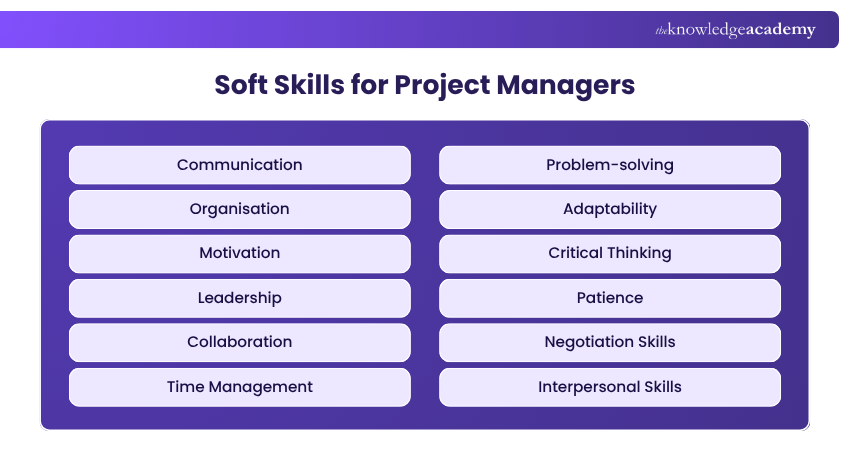
1) Communication
Here are the reasons why Communication Skills Matter in Project Management:
1) Project managers must be good at clear and effective communication.
2) Lack of communication often leads to delays, extra costs, and project failure.
3) It’s about knowing who to talk to, when, and how often.
4) Set clear expectations for how and when updates will be shared at the start.
5) Good communication keeps everyone on the same page and avoids confusion.
2) Organisation
Organisation Skills in Project Management and their importance:Soft Skills for Project Managers
1) Organisation means planning tasks and setting priorities
2) It helps to manage time and resources as it is needed.
3) Project managers need to stay organised as they handle various parts of a project
4) Examples include budget, scope, risks, and qualityof the project.
5) Being organised helps them finish the project on time, stay within budget, and meet all goals.
3) Leadership
Leadership Skills in Project Management and their importance:
1) Leadership means guiding and motivating others toward a common goal.
2) Project managers need strong leadership to clearly explain goals, roles, and responsibilities.
3) Good leadership builds trust, teamwork, and confidence within the team.
4) It also helps in solving conflicts and handling issues during the project.
4) Collaboration
Collaboration in Project Management and their importance:
1) Collaboration helps teams work faster and more efficiently.
2) Working with different teams brings fresh ideas and creative solutions.
3) To improve collaboration, teams should communicate often, listen actively, and keep conversations open.
4) Creating a culture where everyone works together boosts teamwork and performance.
5 ) Time Management
Time Management in Project Management with their importances:
1) Time management and organisation go hand in hand.
2) Organising tasks well gives a clear view of what needs to be done and how long it will take.
3) Staying focused can be tough, but making a task priority list helps reduce delays.
4) Doing the most important tasks first keeps work on track and boosts productivity.
5) When deadlines are tight, techniques like "Crashing" can speed things up to meet project timelines.
6 ) Problem-solving
Problem-Solving Skills in Project Management and their skillset:
1) Problem-solving means working with others to find smart ways to fix issues.
2) It’s about thinking clearly and creatively.
Using data and careful analysis helps improve decision-making.
7 ) Adaptability
Adaptability means adjusting to changes in the project environment, like new requirements or unexpected problems.
1) It helps keep the project on track, even when things don’t go as planned.
2) Good project managers know when to change direction and how to do it smoothly.
3) Being self-aware and mindful helps them stay calm and focused during change.
4) They manage their own emotions to show adaptability
5) It helps them lead the team confidently through uncertainty
8 ) Critical Thinking
Critical thinking means analysing situations carefully before making decisions.
1) It helps project managers evaluate information and think about long-term effects.
2) They can spot problems early and prepare them in advance.
3) It allows them to compare different options and pick the best one.
4) This leads to smart planning and better project results through clear, informed choices.
Step into Strategic Success - Join Our Project Management Office Fundamentals Course Now!
9 ) Patience
Patience means staying calm in tough or stressful situations.
1) It’s about waiting without frustration, even when things take time.
2) Project managers need patience to deal with delays, changes, and complex tasks.
3) It helps them manage pressure and stay focused under stress.
4) Patience also helps in handling feedback, criticism, and adapting to new situations smoothly.
10 ) Negotiation Skills
Negotiation skills help project managers resolve conflicts, secure resources, align stakeholder expectations, and manage scope or budget changes. Strong negotiators maintain project momentum while building trust and cooperation across teams.
You can improve it by practicing active listening, understanding stakeholder interests, and aiming for win-win outcomes. Role-play scenarios and negotiation workshops to sharpen your skills.
11 ) Interpersonal Skills
These skills help managers share ideas clearly, understand others’ views, and handle emotions and expectations effectively.
1) Interpersonal skills help you connect and communicate well with others.
2) They include listening, speaking, writing, presenting, and showing empathy.
3) Project managers need these skills to work with different teams and people.
Good interpersonal skills build strong relationships with stakeholders.
Six Hard Skills for Project Managers
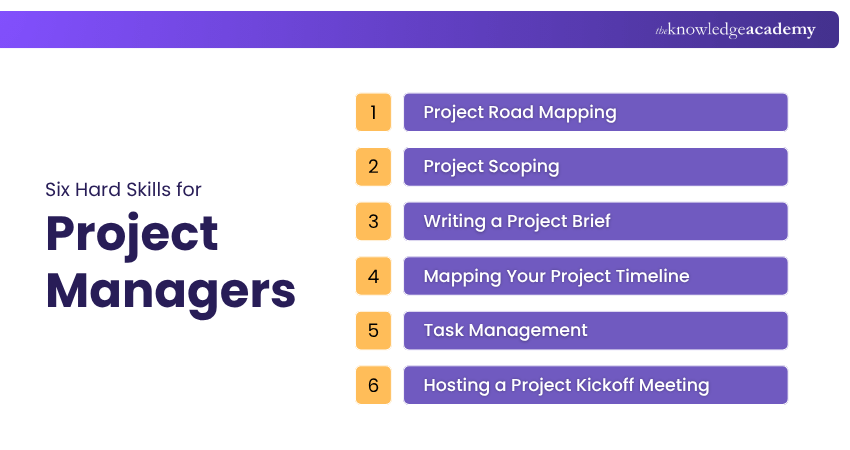
1) Project Road Mapping
A high-level visual representation of the entire project lifecycle including key stages, deliverables, and deadlines. It helps stakeholders see the big picture and aligns the team with strategic goals. Benefits include enhancing transparency, setting priorities, and preventing delays.
Tip to Improve: Use tools like Gantt charts, Microsoft Project, or road mapping software to clearly define timelines, dependencies, and phases.
2) Project Scoping
The process of defining the project’s boundaries, goals, deliverables, and constraints. Clarifies what’s included and what’s not, helping avoid misaligned expectations. It prevents scope creep, facilitates resource allocation, and supports better planning.
Tip to Improve: Develop a scope statement and collaborate with stakeholders early to confirm all assumptions and requirements.
3) Writing a Project Brief
A concise summary document outlines who, what, why, when, and how of the project. It provides a quick reference for stakeholders and team members throughout the project. Project Brief improves clarity, communication, and early buy-in from all parties.
Tip to Improve: Include essential details, project goals, timeline, budget, team, stakeholders, and KPIs. Keep it focused and simple.
4) Mapping Your Project Timeline
Creating a detailed timeline that breaks down phases, tasks, and milestones across the project duration. It helps in time management, task sequencing, and resource planning. Prevents overlaps, reduces bottlenecks, and ensures delivery on time.
Tip to Improve: Use project scheduling software (e.g., Smartsheet, Wrike) to visualise and adjust timelines dynamically as projects need to evolve.
Learn Project Management Office Green Belt Course that builds careers – Join today!
5) Task Management
Assigning, organising, tracking, and updating tasks across the project. Proper task management ensures accountability and keeps the project moving forward. Prevents missed deadlines, improves workload balance, and increases productivity.
Tip to Improve: Leverage task boards like Kanban, and tools like Jira or Click Up; prioritise tasks using methods like MoSCoW or Eisenhower Matrix.
6) Hosting a Project Kickoff Meeting
The first official meeting introduces the project, team, and goals to everyone involved. Sets the tone, clarifies expectations, and energises the team. It fosters team alignment, encourages questions early, and builds a shared understanding.
Tip to Improve: Prepare an agenda, introduce team members, review scope and timeline, and outline communication plans. Use this moment to inspire collaboration.
Technical Skills for Project Managers
Technical skills for Project Managers are the abilities and knowledge related to the specific technologies, tools, and methods used in managing projects. These skills are essential for Project Managers to plan, execute, monitor, and control projects effectively and efficiently, and they should be highlighted in a well-crafted Project Manager CV. Some of the technical skills for Project Managers are:
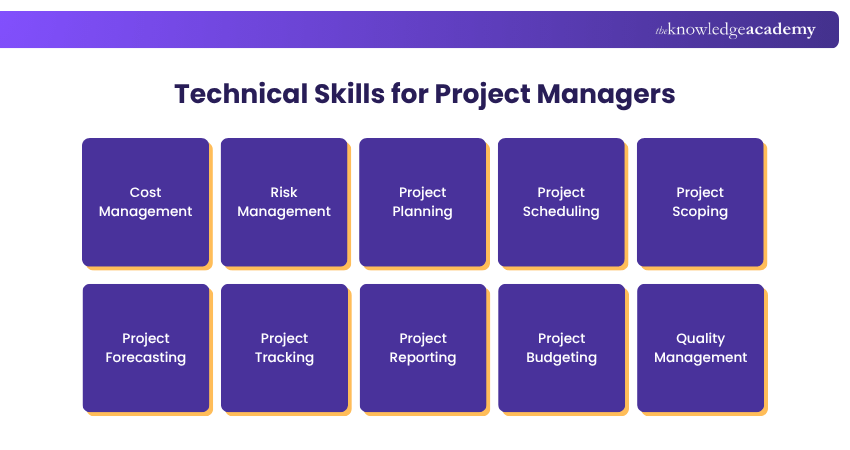
1) Cost Management
Cost Management entails planning and controlling the project budget to ensure costs remain within approved limits. This involves detailed cost estimation, creating a realistic budget, and ongoing cost control to track and manage expenses.
Effective Cost Management helps prevent budget overruns and ensures the project is financially sustainable from start to finish.
2) Risk Management
Risk Management involves identifying, assessing, and mitigating risks that could impact the project. This process includes developing comprehensive Risk Management plans and contingency strategies to address potential issues before they become critical.
By proactively managing risks, Project Managers can minimise negative impacts on the project's timeline, budget, and overall success.
Master Risk Management Black Belt Course for advanced Project Managers – join now!
3) Project Planning
It involves defining the project scope, objectives, deliverables, milestones, tasks, and resources. Project planning also involves creating a project charter, management plan, and a work breakdown structure, which can be referenced in a Project Management Planning Guide.Project planning helps to establish the project direction, scope, and baseline.
4) Project Scheduling
It involves developing and maintaining a project schedule that shows the sequence, duration, dependencies, and resources of project activities. Project scheduling also involves using tools like Gantt Charts, Network Diagrams, and Critical Path Analysis.
Project scheduling helps to coordinate and track the progress and performance of the project.
5) Project Scoping
It involves defining and managing the project scope, the set of features, functions, and requirements the project must deliver. Project scoping also involves identifying and controlling the scope changes and ensuring the project meets the stakeholders' expectations and needs. Project scoping helps to avoid scope creep and ensure the project quality.
6) Project Forecasting
It involves predicting the future outcomes and trends of the project based on the current data and information. Project forecasting also involves techniques such as earned value, trend, and variance analysis. Project forecasting helps anticipate and mitigate project risks and issues and adjust the project plan accordingly.
7) Project Tracking
Project tracking measures progress by monitoring activities involved in a project. It determines if the project is on schedule, identifies issues causing delays, and provides resolutions.
This essential process begins early and continues throughout the project. Both progress and performance are tracked to stay on schedule and address bottlenecks, ensuring timely delivery within budget constraints.
8) Project Reporting
It involves communicating and presenting the project status, results, and outcomes to the project stakeholders and other relevant parties. Project reporting also involves using dashboards, charts, graphs, and tables. Project reporting helps inform and update the project stakeholders and other relevant parties about its performance and progress and solicit their feedback and support.
9) Project Budgeting
The project budget drives the project, turning concepts into action. Effective budget management involves estimating, tracking, and controlling costs and resources throughout the project's life cycle to ensure expenses stay within the planned budget. This process includes creating a project budget, cost baseline, and Cost Management plan, ensuring the project's profitability and viability.
10) Quality Management
Quality Management ensures project deliverables meet required standards and specifications through quality planning, assurance, and control. Quality planning identifies necessary standards, ensures that processes are implemented to meet these standards, and controls.
It monitor results for compliance, and addresses defects as needed. This ensures the final product meets stakeholders' expectations and predefined criteria.
Transform your Project Management career - join our Project Management Black Belt Course and unlock your Leadership potential now!
How to Improve Project Management Skills?
Improving Project Management Skills is essential for delivering successful projects, leading teams effectively, and adapting to changing business needs. Here’s how you can elevate your skills across core areas:
1) Pursue Formal Education and Certifications
1) Enrol in certifications like PMP, PRINCE2, or CAPM to build foundational and advanced knowledge.
2) These validate your expertise and increase career opportunities.
Tip: Choose a certification based on your industry, experience, and project type.
2) Practice Real-world Project Planning
1) Manage small projects or assist in ongoing ones to gain hands-on experience.
2) Learn how to create project plans, budgets, timelines, and scope documents.
Tip: Volunteer for internal initiatives or freelance projects to build a diverse portfolio.
3) Strengthen Communication Skills
1) Clear communication helps you manage stakeholders, delegate tasks, and resolve conflicts.
2) Practice active listening, assertiveness, and concise reporting.
Tip: Host regular check-ins and use structured communication channels (e.g., Slack, emails, dashboards).
Level Up Your Career with our Project Risk Management Course - Join now!
4) Master Project Management Tools
1) Familiarise yourself with tools like Trello, Asana, Jira, Microsoft Project, or Monday.com.
2) These tools streamline task management, timelines, and team collaboration.
Tip: Try different tools and choose what best suits your project size and complexity.
5) Learn Agile and Traditional Methodologies
1) Understand when to use Waterfall vs. Agile or hybrid approaches.
2) Being method-flexible makes you adaptable to different project needs.
Tip: Take short courses or read case studies on Agile, Scrum, Kanban, or PRIN
What are the Hard Skills Needed to be a Project Manager?
Hard skills for project managers are the technical abilities and knowledge needed to plan, execute, and deliver projects successfully.
These include proficiency in project management software like MS Project or Asana, budgeting and financial planning, risk management, data analysis, and scheduling.
Is Project Management a Skill or Competency?
Project management is both skill and competency. As a skill, it involves specific abilities like planning, organising, leading projects, and using methods such as Top-Down Estimating. As a competency, it reflects a broader capability that combines knowledge, experience, and judgment to manage projects effectively.
Conclusion
In simple terms, Project Management Skills help you plan, lead, and complete tasks successfully. Whether it’s organising a team, managing time, or using the right tools, these skills are key to getting things done. With the right mix of hard and soft skills, anyone can become a strong project manager and lead projects with confidence.
Kickstart your Project Management career with our Project Management Certification Course - join today!
Frequently Asked Questions
Which Project Management Skills are Crucial for Career Advancement?

Crucial Project Management Skills for career advancement include effective communication, Leadership, Time Management, Risk Management, and problem-solving. Mastery of these skills ensures successful project execution and positions you as an asset in any organisation. These skills help deliver projects successfully and show your value as a dependable leader, making you stand out in any organisation.
How do Advanced Project Management Skills Impact Job Opportunities?
Advanced Project Management Skills enhance job opportunities by showcasing your ability to lead projects successfully and manage risks. Meeting goals effectively makes you a highly valuable candidate for employers. These skills also demonstrate strategic thinking, adaptability, and leadership, qualities that are crucial for senior roles and high-impact projects across industries.
What are the Other Resources and Offers Provided by The Knowledge Academy?
The Knowledge Academy takes global learning to new heights, offering over 3,000+ online courses across 490+ locations in 190+ countries. This expansive reach ensures accessibility and convenience for learners worldwide.
Alongside our diverse Online Course Catalogue, encompassing 17 major categories, we go the extra mile by providing a plethora of free educational Online Resources like Blogs, eBooks, Interview Questions and Videos. Tailoring learning experiences further, professionals can unlock greater value through a wide range of special discounts, seasonal deals, and Exclusive Offers.
What is The Knowledge Pass, and How Does it Work?
The Knowledge Academy’s Knowledge Pass, a prepaid voucher, adds another layer of flexibility, allowing course bookings over a 12-month period. Join us on a journey where education knows no bounds.
What are the Related Courses and Blogs Provided by The Knowledge Academy?
The Knowledge Academy offers various Project Management Courses, including Introduction to Project Management Certification Course and Project Management Masterclass. These courses cater to different skill levels, providing comprehensive insights into Project Management Methodologies.
Our Project Management Blogs cover a range of topics related to Project Management Skills, offering valuable resources, best practices, and industry insights. Whether you are a beginner or looking to advance your skills in Project Management, The Knowledge Academy's diverse courses and informative blogs have you covered.

David Evans


Certified Project Trainer and Agile Delivery Expert
David Evans brings over a decade of hands-on experience in project delivery, Agile transformation, and team leadership. With a background in technology and business consulting, David has led cross-functional teams through Agile and Waterfall projects in both public and private sectors. He combines technical knowledge with practical insights to help readers navigate the challenges of modern project environments.

Upcoming Business Skills Resources Batches & Dates
Date
 Project Management Office Fundamentals Certification Course
Project Management Office Fundamentals Certification Course
Fri 14th Aug 2026
Project Management Office Fundamentals Certification Course
Fri 13th Nov 2026

 If you wish to make any changes to your course, please


