


 Top Rated Course

We may not have the course you’re looking for. If you enquire or give us a call on + 1-866 272 8822 and speak to our training experts, we may still be able to help with your training requirements.
Fundamentals of Software Testing: Discussion
Richard Harris 16 July 2026Software testing is the systematic process of evaluating an application to verify that it meets specified requirements and is free of defects. It helps ensure functionality, performance, and security across systems. This process improves user experience and builds trust in the software’s overall reliability and quality.

Training Outcomes Within Your Budget!
We ensure quality, budget-alignment, and timely delivery by our expert instructors.
Table of Contents

The field of Software Testing is expanding with each passing day. Every testing project presents unique challenges to the tester since applications and systems are developed for a variety of domains and sectors. This is mainly because the tester must first comprehend the domain and the client’s perspective before beginning testing operations.
A tester might have to switch up the testing methodologies when moving from one project to another. Therefore, it is crucial to maintain the Principles of Software Testing. In this blog, you will explore the fundamentals of software testing, including key concepts, testing principles, methodologies, and commonly used testing techniques.
Software Testing is a key part of the Software Development Life Cycle (SDLC) that ensures the reliability of software as a product. A well-structured process ensures a top-quality software product with low cost and a short timeframe. Software Testing fundamentals include all the basic knowledge of Software Testing, such as definitions, types, principles, and how it works. Read this blog to learn more!
Table of Contents
1) What is Software Testing?
2) Why Do We Need Software Testing?
3) Types of Software Testing
4) Techniques of Software Testing
5) Different Levels of Software Testing
6) Conclusion
What is Software Testing?
Software Testing involves systematic evaluation of software applications to detect errors, bugs, and defects in the code. The primary goal of testing is to make sure that the software functions as intended and satisfies the specified requirements. This iterative process allows developers to identify and fix issues, making the software robust and reliable, a key advantage of integrating Manual and Automated Testing in the development cycle. SDLC (Software Development Life Cycle) plays a crucial part in analysing the software at each stage, following certain approaches to reach the goal of business success.

Why Do We Need Software Testing?
Building high-quality software that is highly logical and free of errors and bugs during coding is crucial. As software complexities reach new heights, there is a significant probability that the final code will have functional and design-related flaws. It is essential to perform Software Testing to identify problems before they become critical issues.
Software Testing is necessary because it allows for the early detection and correction of flaws and problems even before the software product is released. A robust testing strategy followed by software developers can make the difference between a project’s success and a catastrophic failure. The stability, security, and high performance of a thoroughly tested software solution guarantee time savings, cost-effectiveness, and user-friendliness. It plays a vital role in the procedure, serving as a support system. Therefore, a logical methodology is required to avoid redundancy and to save a considerable amount of money and resources for the organisation.
Boost your career with ISTQB Software Testing Foundation Course! Gain essential skills and join the ranks of top testing professionals today!
Types of Software Testing
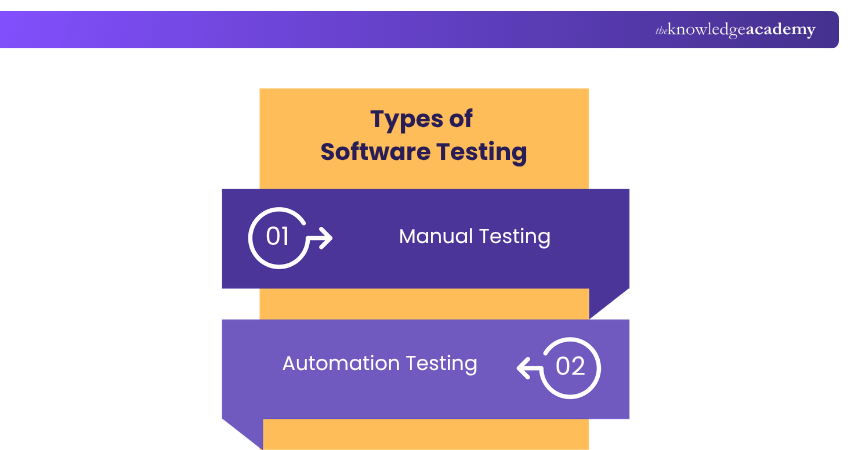
Companies use a variety of Software Testing approaches to make sure that modifications to their code function as planned. However, not all testing is created equal, and we examine how various testing methodologies vary from each other. Some of the popular ones are discussed below.
1) Manual Testing
Manual testing involves testers executing test cases without the use of automated tools. It requires human intervention to observe the software’s behaviour, identify defects, and record test results. This type of testing follows behavioural patterns to identify bugs in order to achieve the best outcomes. To prepare for roles in this field, practicing manual testing interview questions can help refine your skills and boost your confidence in interviews.
2) Automation Testing
Automated testing utilises specialised tools to automatically execute pre-defined test cases. It is ideal for repetitive tasks and regression testing, saving time and effort. The most significant advantage of this type of testing is that it doesn't require human intervention to be performed.
Techniques of Software Testing
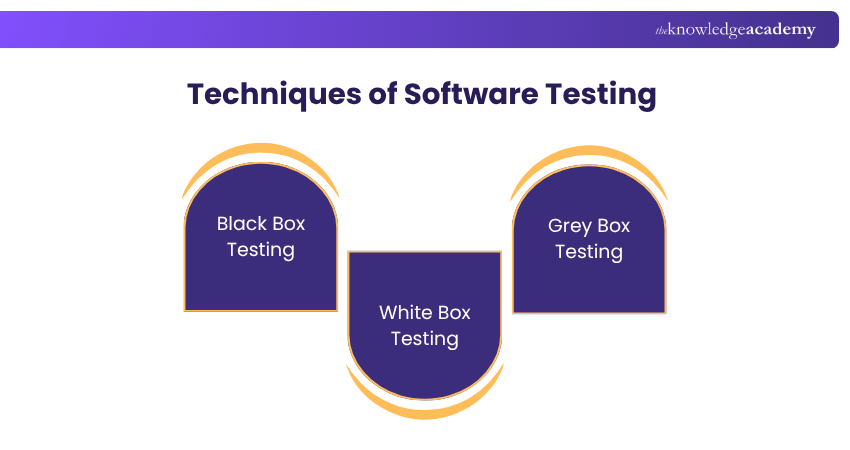
Each testing technique has unique characteristics, benefits, and drawbacks. Although we may have heard about some of it and worked on some before, not everyone is knowledgeable about it. In this segment, we will discuss some of the most used Software Testing techniques.
1) Black Box Testing
Black box testing focuses on the external functionality of the software without considering its internal code structure. Testers validate the software based on input and output expectations, regardless of its internal workings. Black box performs with utmost accuracy once given the right number of inputs to the system.
2) White Box Testing
White box testing examines the internal structure, code, and logic of the software. Testers design test cases based on an understanding of the code to ensure thorough coverage. When conducting White Box Testing in Software Engineering, the testing process is divided into three main categories based on the inputs provided to the system: testing the database, testing web forms, and testing the source code. These categories help ensure that the system's functionality is thoroughly verified and the results align with the expected outcomes.
3) Gray Box Testing
Here, testing is performed from the user's perspective. Grey box testing combines elements of both black box and white box testing. Testers have partial knowledge of the internal code, allowing them to design more effective test cases to check how well software can perform in a real-world scenario.
Different Levels of Software Testing
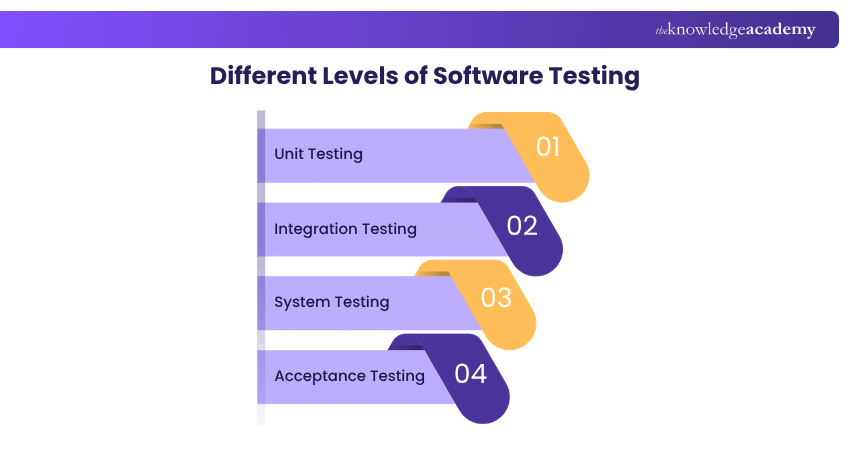
There are many steps to follow along the Software Testing process before an engineering team begins working on anything new inside the project pipeline. In this part of the blog, we will focus on various steps required before the deployment of software.
1) Unit Testing
This level of testing involves testing individual units or components of the software in isolation. It ensures that each unit functions correctly and interfaces well with other units. It validates that the application performs tasks according to the design specifications. Unit testing relies heavily on derived schemes; therefore, this method of testing can't be entirely trusted.
2) Integration Testing
Integration testing verifies the interaction between different units or modules to uncover any integration issues. There could be several opportunities for customer requirements to alter throughout module development. This form of testing basically emphasises data communication channels to maintain the fluency of the software. It's possible that these additional requirements can't be unit tested; hence, system integration testing is required, often supported by data driven testing to validate diverse data scenarios effectively.
Supercharge your automation testing skills with our JUnit 5 Course – Register today!
3) System Testing
System testing evaluates the complete and integrated software product to identify vulnerabilities and weaknesses in the software. The goal is to enhance the workability of each component and ensure that they function as a unified setup. In this level of testing, testers validate the entire system against specified requirements to ensure it meets customer expectations.
4) Acceptance Testing
Acceptance testing is known as the final stage of testing and involves assessing whether the software meets the user’s acceptance criteria. In other words, it assesses the user-friendliness and ease of navigating the software conducted by end-users or stakeholders to determine if the software is ready for production.
Supercharge your automation testing skills with our Automation Testing With JUnit 5 Course – Register today!
Conclusion
Software Testing is a pivotal aspect of the software development process that ensures the delivery of high-quality, reliable, and functional products. Understanding the different types, techniques, and levels of testing, such as Path Testing in Software Testing, is crucial for developers and testers to create robust software that aligns with user expectations. By integrating effective testing practices throughout the SDLC (Software Development Life Cycle), organisations can enhance satisfaction and secure a competitive edge in the market.
Become a Software Testing Professional! Enhance your skills, validate your expertise, and advance your career. Join our certification program today!
Frequently Asked Questions
What is the Software Testing Life Cycle (STLC)?

The Software Testing Life Cycle (STLC) is a structured process that defines the stages involved in testing a software application. It includes phases such as requirement analysis, test planning, execution, and defect reporting to ensure quality.
What is a Test Case?
A test case is a set of conditions, inputs, and expected outcomes used to verify a specific functionality of a software application. It helps ensure the system behaves as intended under defined scenarios and requirements.

Richard Harris


Senior Full Stack Developer and Technology Educator
Richard Harris is a highly experienced full-stack developer with deep expertise in both frontend and backend technologies. Over his 12-year career, he has built scalable web applications for startups, enterprises and government organisations. Richard’s writing combines technical depth with clear explanations, ideal for developers looking to grow in modern frameworks and tools.


 If you wish to make any changes to your course, please


