


 Top Rated Course

We may not have the course you’re looking for. If you enquire or give us a call on +30 2111995372 and speak to our training experts, we may still be able to help with your training requirements.
What is Creative Writing and Why Is It Important?
The Knowledge Academy 28 February 2026Creative Writing uses imagination and storytelling to express ideas and emotions, focusing on style, voice, and impact rather than just facts or instructions. It is a form of expression that goes beyond simple communication. It has various genres, such as fiction, poetry, and scripts, setting it apart from traditional writing.

Training Outcomes Within Your Budget!
We ensure quality, budget-alignment, and timely delivery by our expert instructors.
Table of Contents
Understanding What is Creative Writing opens doors to imagination, allowing ideas, emotions, and stories to flow in ways that captivate readers. Whether it appears through novels, poems, or heartfelt essays, Creative Writing helps us make sense of experiences and new worlds and express our thoughts deeply.
It is a powerful tool for reflection, self-discovery, and connection. It encourages individuals to think deeply, choose words intentionally, and craft narratives that resonate. In this blog, you will learn about What is Creative Writing, its importance, process, and more. Keep reading to learn more!
Table of Contents
1) What is Creative Writing?
2) Key Elements of Creative Writing
3) Importance of Creative Writing
4) Types of Creative Writing
5) The Creative Writing Process
6) Tips for Effective Content Writing
7) What are the 5 Cs of Creative Writing?
8) What are the Benefits of Creative Writing?
9) Conclusion
What is Creative Writing?
Creative writing is a form that goes beyond the traditional realms of general, professional, academic, or Technical Writing. Instead, it encompasses numerous genres and styles across various fields of fictional and non-fiction writing such as storytelling, playwriting, poetry, prose, etc. These diverse forms are often guided by the Principles of Creative Writing.
Creative Writing is supposed to be original and expressive of oneself, with the objectives of creative writing emphasizing narrative craft. It can be identified by focusing on elements such as narrative and plot, character development, and structure, all infused with imagination, invention, and story. No standard conventions bind it, and its craft uses a whole range of elements.

Key Elements of Creative Writing
Now that you know what creative writing means, let’s explore its key Elements of Creative Writing. They are as follows:
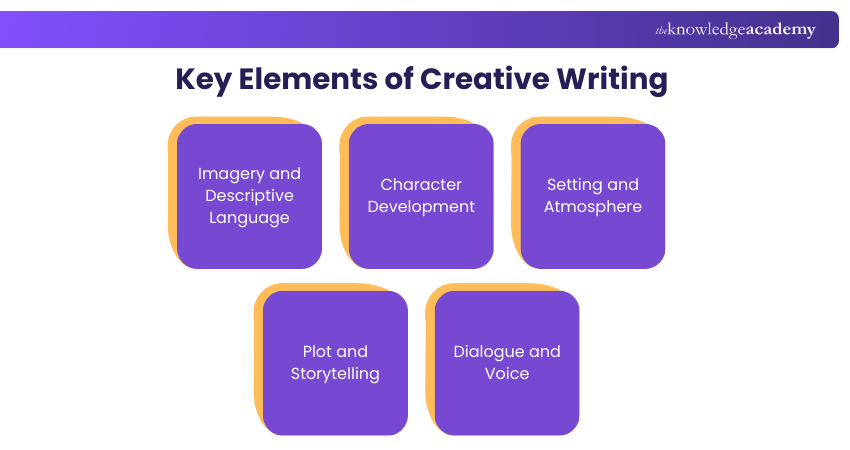
1) Imagery and Descriptive Language: One of the key ingredients of successful Creative Writing is the use of vivid imagery and descriptive language. By painting a detailed picture with words, Writers can evoke sensory experiences and immerse readers in the story's universe.
2)Character Development:Compelling characters are the heart of any great story. Through careful development, characters become relatable, complex, and capable of driving the plot forward.
3) Setting and Atmosphere: The setting and atmosphere create the backdrop for the story. By skilfully crafting these elements, Writers can enhance the overall mood and tone, allowing readers to feel like they're living within the story's world.
4) Plot and Storytelling: A well-crafted story keeps readers engaged and invested in the narrative's progression. This includes introducing conflicts, building tension, and crafting satisfying resolutions.
5) Dialogue and Voice: Dialogue adds authenticity to characters and provides insight into their personalities. A distinctive narrative voice also contributes to the story's uniqueness and captivates readers.
Envisioning a career as a fiction author? Our Fiction Writing Training will help you out – Sign up now!
Importance of Creative Writing
Creative writing bridges imagination and reality, fostering personal growth, communication skills, and cultural preservation. Here's a closer look at why understanding What is Creative Writing is of paramount importance:
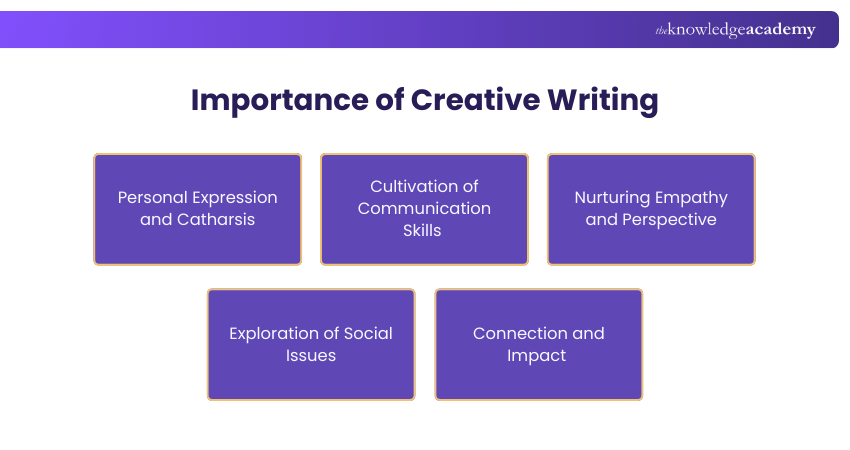
1) Personal Expression and Catharsis
Creative Writing is a sanctuary for self-expression. Individuals can voice their innermost thoughts, emotions, and experiences through poetry, stories, and essays. This act of sharing vulnerabilities and joy brings about a cathartic release, offering a therapeutic outlet for emotional expression. Moreover, it cultivates a deeper understanding of oneself, promoting self-awareness and self-acceptance.
2) Cultivation of Communication Skills
The art of Creative Writing cultivates effective Communication Skills that transcend the written word. Writers learn to convey ideas, concepts, and feelings coherently and captivatingly. This proficiency extends to verbal communication and enables Writers to articulate their thoughts with clarity and eloquence. As a result, it enriches interpersonal relationships and professional endeavours.
3) Nurturing Empathy and Perspective
Writers develop a heightened sense of empathy as they craft diverse characters and explore multifaceted narratives. Immersing oneself in the shoes of different characters fosters understanding and tolerance for various viewpoints and backgrounds. Readers, in turn, experience this empathy, gaining insight into the complexities of human nature and the diverse tapestry of human experience.
4) Exploration of Social Issues
Writers wield the power to effect change through their words. They can illuminate societal issues, challenge norms, and provoke critical conversations. By addressing topics such as equality, social justice, and environmental concerns, Creative Writing becomes a catalyst for positive transformation and advocacy.
5) Connection and Impact
Creative Writing builds bridges between individuals by establishing connections on emotional and intellectual levels. Stories resonate across cultures, transcending geographical and temporal boundaries. The impact of a well-crafted story can be enduring, leaving a mark on readers' hearts and minds.
Take control of your story and become a published author with Self Publishing Course now!
Types of Creative Writing
Creative Writing encompasses various genres and forms, each offering a unique platform for expressing creativity, storytelling, and emotion. As you delve into the world of Creative Writing, it's essential to explore the various types and discover which resonates with you the most. Here are some of the prominent types of Creative Writing

1) Poetry
Poetry is the art of condensing language to evoke emotions, provoke thoughts, and communicate complex ideas using rhythm, rhyme, and vivid imagery. Poem’s conciseness requires Writers to choose their words carefully, often crafting multiple layers of meaning within a few lines.
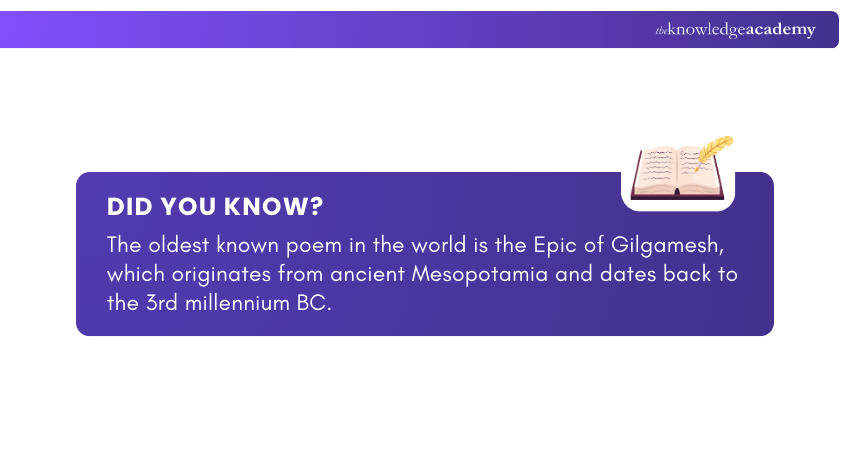
Poetry can take various forms, including sonnets, haikus, free verse, and slam poetry. Each form carries its own rules and conventions, allowing Poets to experiment with structure and sound to create impactful compositions. Moreover, poetry delves into the depths of emotions, exploring themes ranging from love and nature to social issues and personal reflections.
2) Fiction
Fiction is perhaps the most well-known type of Creative Writing. It involves inventing characters, settings, and plotlines from scratch. Writers have the freedom to create entire worlds and realities, whether they're set in the past, present, future, or even in alternate dimensions.
Novels, short stories, novellas, and flash fiction are all forms of fiction that engage readers through compelling characters, intriguing conflicts, and imaginative settings. In the ongoing debate of Fiction vs Nonfiction, fiction offers an escape from reality, transporting readers to new and exciting places. From fantasy realms to gritty crime dramas, fiction creates immersive worlds that captivate the imagination.
3) Creative Non-fiction
Non-fiction writing draws from real-life experiences, observations, and research to convey information, insights, and personal perspectives. This form includes genres such as essays, memoirs, biographies, autobiographies, and journalistic pieces.
Non-fiction Writers blend storytelling with factual accuracy, presenting their ideas in a compelling and informative manner. Personal essays offer a glimpse into the writer's thoughts and experiences. At the same time, memoirs and autobiographies share personal journeys and reflections, connecting readers with the author's life story.
4) Drama and Playwriting
Playwriting is the creation of scripts for theatrical performances. The challenge lies in crafting engaging dialogue and constructing scenes that captivate both the audience and the performers.
Dramatic Writing requires an understanding of pacing, character motivations, and the visual aspects of storytelling. While Theatrical Writing requires a keen sense of the following:
a) Character Dynamics: Building relationships between characters and exploring their motivations and conflicts.
b) Stage Directions: Providing clear instructions for actors, directors, and stage designers to bring the play to life.
c) Dramatic Structure: Crafting acts and scenes that build tension and engage the audience.
5) Satire and Humour
Satire and humour utilise wit, sarcasm, and clever wordplay to critique and mock societal norms, institutions, and human behaviour. This form of Creative Writing often challenges readers to view the world from a different perspective.
Moreover, it encourages them to question established conventions. Creative Writing Prompts can be a great way to inspire satirical works, whether in literature, essays, or satirical news articles, as they aim to entertain while also prompting reflection on serious topics.
Strengthen self-awareness and empathy to lead, collaborate, and succeed with Emotional Intelligence Training now!
The Creative Writing process
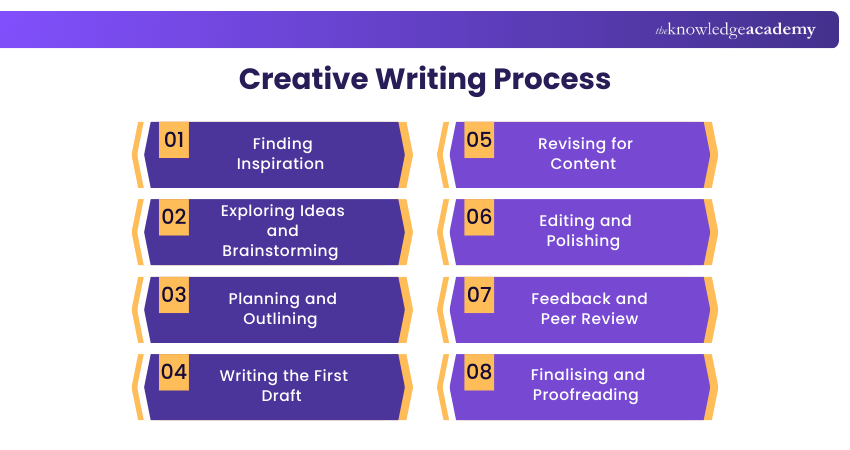
Creating a compelling piece of Creative Writing is a journey that involves numerous steps, each contributing to the evolution of your story. Whether you're Writing a Short Story, a novel, or a poem, here's a breakdown of the Creative Writing process in eight essential steps:
1) Finding Inspiration
The process begins with a moment of inspiration—a fleeting thought, an intriguing image, or a powerful emotion. Inspiration can strike anywhere—nature, experiences, dreams, or simple observation.
Keep a journal or digital note-taking app to capture these sparks of inspiration as they occur. Explore your interests, passions, and emotions to identify themes and ideas that resonate with you.
2) Exploring Ideas and Brainstorming
Once you've identified an inspiring concept, delve deeper. Brainstorm ideas related to characters, settings, conflicts, and themes. Jot down all possibilities, allowing your imagination to roam freely. This stage is about generating a wealth of creative options that will serve as building blocks for your story.
3) Planning and Outlining
Organise your thoughts by creating an outline. Outline your story's major plot points, character arcs, and pivotal moments. This outline acts as a roadmap, guiding you through the narrative's progression while providing flexibility for creative surprises.
4) Writing the First Draft
Once you are done with your outline, start writing your first draft. Don't worry about perfection—focus on getting your ideas onto paper. Let your creativity flow and allow your characters to surprise you. The goal is to have a complete manuscript, even if it's messy and imperfect, while keeping in mind the Report Writing Format for structure.
5) Revising for Content
Once the first draft is complete, take a step back before revisiting your work. During this stage, focus on revising for content. Analyse the structure of your plot, the development of your characters, and the coherence of your themes. Make necessary changes, add details, and refine dialogue. Ensure that your story's foundation is solid before moving on.
6) Editing and Polishing
Edit your Manuscript for grammar, punctuation, sentence structure, and style. Pay attention to clarity and consistency. Also, focus on enhancing the flow of your writing and creating a polished narrative that engages readers.
7) Feedback and Peer Review
Share your revised work with others—friends, writing groups, or beta readers—to gather feedback. Constructive criticism can highlight blind spots and offer perspectives you might have missed. Use this feedback to refine your work further.
8) Finalising and Proofreading
Incorporate the feedback you've received and make final revisions. Proofread meticulously for any remaining errors. Ensure that your work is formatted correctly and adheres to any submission guidelines if you plan to publish or share it.
Take control of your stress and develop healthier habits for overall well-being with the Stress Management Course today!
Tips for effective Creative Writing
Here are some of the useful Creative Writing Tips you should consider incorporating in your process of writing :
1) Show, Don't Tell: Instead of directly stating emotions or details, "showing" involves using actions, thoughts, and dialogue to convey information. This technique allows readers to draw their own conclusions and become more immersed in the story.
2) Use of Metaphors and Similes: Similes and metaphors offer creative ways to describe complex concepts by comparing them to something familiar. These literary devices bring depth and creativity into your writing.
3) Building Suspense and Tension: By strategically withholding information and creating unanswered questions, Writers can build suspense and keep readers eagerly turning pages.
4) Crafting Memorable Beginnings and Endings: A strong opening captures readers' attention, while a satisfying conclusion leaves a lasting impact. These elements bookend your story and influence readers' overall impression.
5) Experimenting with Point of View: The choice of point of view (first person, third person, etc.) shapes how readers experience the story. Experimenting with different perspectives can lead to unique narrative opportunities.
What is an Example of Creative Writing?
Poetry is one of the oldest forms of Creative Writing and includes epics such as The Mahabharata, Ramayana, and The Odyssey. There are various forms of Poetry, including Sonnets, Haikus, Ballads, and Villanelles. William Shakespeare’s Sonnets are classic Creative Writing Examples that showcase the beauty and complexity of this literary form.
What are the 5 C's of Creative Writing?
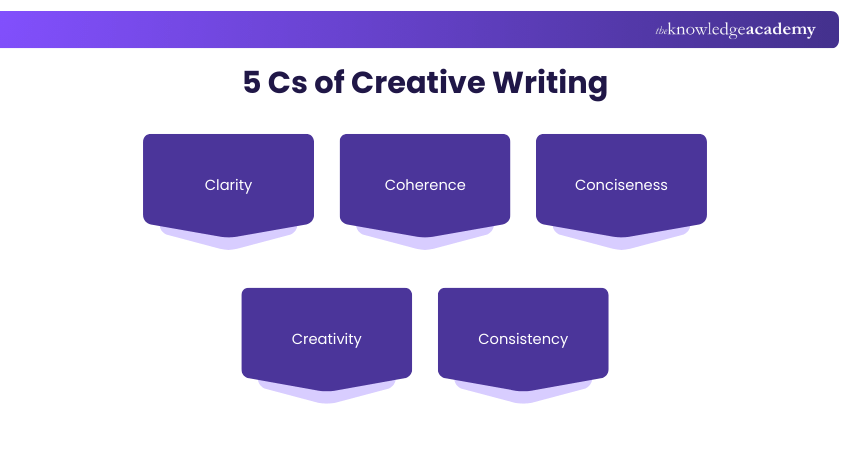
The Five C's of Creative Writing are:
1) Clarity: Ensures ideas are easy to understand, allowing readers to follow the story without confusion.
2) Coherence: Ties your ideas smoothly so that the narrative flows naturally, logically, and in a unified piece.
3) Conciseness: Means to express ideas using the right number of words to make your writing sharp, impactful, and free of unnecessary fillers.
4) Creativity: Brings originality, imagination, and fresh perspectives to your writing to make your stories unique.
5) Consistency: Keeps your tone, style, and perspective aligned throughout the piece, ensuring a seamless reading experience.
Discover the distinctions between Editing vs Proofreading vs Revising and find out which stage is crucial for your writing!
Upgrade your academic skills and writing precision with Academic Writing Course today!
What are the Benefits of Creative Writing?
Creative Writing offers far more than the ability to craft engaging poems or stories. It helps individuals develop communication, thinking, and emotional skills. Let’s look at some of its valuable benefits for a better understanding of what Creative Writing is:
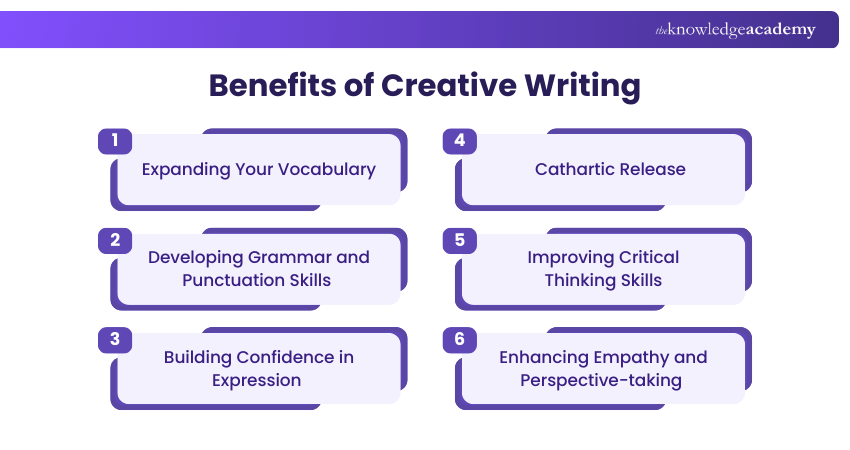
1) Expanding Your Vocabulary
Creative Writing encourages the search for the perfect words to express emotions and ideas vividly. As you compare alternatives and experiment with language, your vocabulary naturally becomes richer and more expressive. Over time, this habit strengthens your word choice and improves overall communication.
2) Developing Grammar and Punctuation Skills
Creative Writing gives you regular practice with grammar, sentence structure, and punctuation. You begin noticing where commas, pauses, and transitions are needed for writing clearly. This consistent practice helps you communicate accurately and confidently in different writing forms.
3) Building Confidence in Expression
Creative Writing provides a safe space to express thoughts, emotions, and opinions without the fear of judgement or criticism. As you freely explore ideas through characters or personal reflections, your self-expression becomes clearer, stronger, and more confident.
4) Cathartic Release
Creative Writing enables you to release emotions, process stress, and reflect on personal experiences. Whether through storytelling, poetry, or journaling, it becomes a therapeutic outlet for self-expression.
5) Improving Critical Thinking Skills
When developing plots or characters, it requires you to analyse situations and make thoughtful decisions. This helps to sharpen your ability to evaluate information, solve problems, and plan logically.
6) Enhancing Empathy and Perspective-taking
Creative Writing helps you understand characters’ emotions, challenges, and motivations from different viewpoints. This practice broadens your perspective and strengthens your ability to relate to others with greater empathy in real life.
Conclusion
Understanding What is Creative Writing improves your communication, boosts creativity, and helps to gain deeper emotional and intellectual awareness. Exploring stories, perspectives, and ideas becomes a pathway to self-expression, confidence, and personal growth. Ultimately, it is the freedom to imagine, reflect, and connect with others.
Transform your mindset and unlock your best self today with Personal Development Courses now!
Frequently Asked Questions
How is Creative Writing Different From Content Writing?

Creative Writing focuses on imagination, emotion, and artistic freedom, allowing flexibility, pace, and personal expression. In contrast, Content Writing serves a specific purpose, such as marketing or information, following briefs, brand tone, structure, and deadlines.
What Resources or Recommended Readings can Aid in Honing Creative Writing Skills?
Some recommended resources to improve Creative Writing include books, such as On Writing by Stephen King, Bird by Bird by Anne Lamott, and Writing Down the Bones by Natalie Goldberg. Also, join book clubs, read diverse authors and genres, and practice regular writing.
What are the Other Resources and Offers Provided by The Knowledge Academy?
The Knowledge Academy takes global learning to new heights, offering over 3,000+ online courses across 490+ locations in 190+ countries. This expansive reach ensures accessibility and convenience for learners worldwide.
Alongside our diverse Online Course Catalogue, encompassing 17 major categories, we go the extra mile by providing a plethora of free educational Online Resources like Blogs, eBooks, Interview Questions and Videos. Tailoring learning experiences further, professionals can unlock greater value through a wide range of special discounts, seasonal deals, and Exclusive Offers.
What is Knowledge Pass, and how Does it Work?
The Knowledge Academy’s Knowledge Pass, a prepaid voucher, adds another layer of flexibility, allowing course bookings over a 12-month period. Join us on a journey where education knows no bounds.
What are the Related Courses and Blogs Provided by The Knowledge Academy?
The Knowledge Academy offers various Personal Development Courses, including Creative Writing Course, Academic Writing Course, and Report Writing Course. These courses cater to different skill levels, providing comprehensive insights into Reading Skills.
Our Business Skills Blogs covers a range of topics related to Creative Writing, offering valuable resources, best practices, and industry insights. Whether you are a beginner or looking to advance your Creative Writing skills, The Knowledge Academy's diverse courses and informative blogs have you covered.

The Knowledge Academy


Global Training Provider
The Knowledge Academy is a world-leading provider of professional training courses, offering globally recognised qualifications across a wide range of subjects. With expert trainers, up-to-date course material, and flexible learning options, we aim to empower professionals and organisations to achieve their goals through continuous learning.

Upcoming Business Skills Resources Batches & Dates
Date
 Creative Writing Course
Creative Writing Course
Fri 10th Jul 2026
Creative Writing Course
Fri 2nd Oct 2026

 If you wish to make any changes to your course, please


