


 Top Rated Course

We may not have the course you’re looking for. If you enquire or give us a call on +30 2111995372 and speak to our training experts, we may still be able to help with your training requirements.
How to Clean a Coffee Maker: Keep Your Machine Running Like New
The Knowledge Academy 18 April 2026Clean and descale your coffee maker by washing parts, brewing vinegar-water, then rinsing with fresh water to keep coffee fresh and flavorful. Understanding How to Clean a Coffee Maker is essential in your barista journey. It removes mineral buildup, extends machine life, improves hygiene, and ensures every brew tastes perfect.

Training Outcomes Within Your Budget!
We ensure quality, budget-alignment, and timely delivery by our expert instructors.
Table of Contents

Ever wondered why your morning coffee sometimes tastes dull or bitter? Knowing How to Clean a Coffee Maker is the secret to restoring freshness. Simple routines like washing, descaling, and rinsing keep flavours rich, extend your machine’s lifespan, and protect hygiene. Imagine sipping coffee that feels café-quality at home every day. Don’t let residue steal your brew’s charm. Discover the easy steps ahead and enjoy consistently delicious cups that make every morning feel special.
Table of Contents
1) Reasons to Clean a Coffee Maker
2) How Often Should You Clean Your Coffee Maker?
3) How to Clean a Coffee Maker?
4) Common Mistakes to avoid when Cleaning Coffee Machines
5) Conclusion
Reasons to Clean a Coffee Maker
Coffee Makers tend to build up mineral and coffee oil deposits, as water contains calcium, sodium, and magnesium. It ends up causing hard water spots inside a Coffee Maker. These leave a residue that restricts proper water flow, affecting the coffee's flavour.
The taste is a big concern for coffee lovers; however, what follows it is far worse. Given a warm damp place in a coffee machine you failed to clean, the residues facilitate the growth of gross mould and yeasts!
Keeping your Coffee Maker clean not only promises your brew tastes as good as the first time but also removes any health hazard caused due to impurities present within the coffee machine. A clean Coffee Maker results in a clean brew.

How Often Should You Clean Your Coffee Maker?
It is recommended that you always wash your coffee maker so that it can always be operating smoothly and so that each cup of coffee can always be fresh. The Kitchn stated that the removable items like the carafe and the filter basket ought to be cleaned using warm soapy water after each usage. This eliminates the accumulating process of oil, residue and bacteria.
Also, periodically a deep cleaning or descaling must be performed with the help of vinegar and water solution that eliminates mineral deposits that influence performance and flavour. It is a routine that is worth adhering to; this option will not only give your machine its average life but will also ensure that you have a delicious cup of coffee in the morning.
Understand sustainability practices for greener facilities. Join our Facilities Management Training now!
How to Clean a Coffee Maker?
Learning How to Clean Coffee Maker will make the process super easy. Regular keeps your coffee maker efficient and coffee fresh. Follow these steps to remove residue, oils, and buildup, ensuring a hygienic machine that consistently delivers great-tasting brews. Let's us see the steps to clean a Coffee Maker:
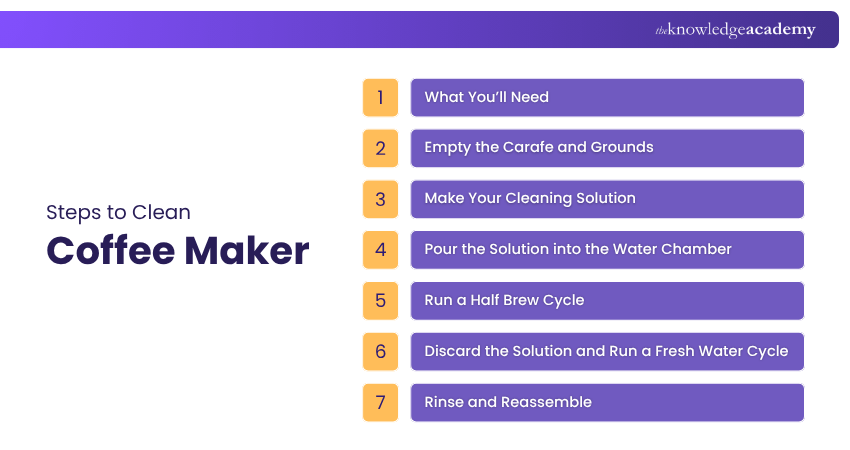
1) What You’ll Need
Prepare white vinegar, clean water, a sponge or cloth, and mild dish soap while cleaning a coffee maker. These supplies are necessary to dissolve scale, disinfect the machine, and ensure every cup of coffee tastes fresh, pure, and free from unwanted odours.
2) Empty the Carafe and Grounds
Discard any used coffee grounds and thoroughly empty the carafe. Rinse both items with warm, soapy water to eliminate oils, residue, or lingering flavours that could spoil your next brew, ensuring a fresh, hygienic start every time.
3) Make Your Cleaning Solution
Mix equal parts of white vinegar and fresh water to create a natural cleaning solution. This mixture effectively breaks down stubborn mineral buildup, eliminates hidden coffee oils, disinfects the system, and keeps your machine safe from harmful bacteria or mould.
4) Pour the Solution into the Water Chamber
Fill the reservoir with your vinegar-water solution, just as you would when preparing coffee. Ensure the chamber is filled to its maximum capacity, allowing the cleaning mixture to flow throughout the entire system and reach internal components.
5) Run a Half Brew Cycle
Turn on the machine and let it brew halfway. Stop the cycle and allow the solution to sit inside for 30–60 minutes, giving it enough time to dissolve mineral deposits and stubborn residues effectively.
6) Discard the Solution and Run a Fresh Water Cycle
Complete the brew cycle, pour out the used vinegar solution, and rinse thoroughly. Refill the reservoir with clean water, then run a full brewing cycle to flush away lingering vinegar traces and neutralise any leftover odours.
7) Rinse and Reassemble
Clean the carafe, basket, and removable components again with soap and water. Wipe the exterior thoroughly, allow everything to dry completely, and reassemble the machine, leaving it ready to deliver consistently delicious and fresh-tasting coffee.
Unlock opportunities for leadership roles in various industries with our Facilitation Skills Training – Join now!
Common Mistakes to avoid when Cleaning Coffee Machines
Cleaning a coffee machine seems simple, but many people make mistakes that affect both flavour and machine health. Avoiding these errors ensures better-tasting coffee, longer-lasting equipment, and a more hygienic brewing process.
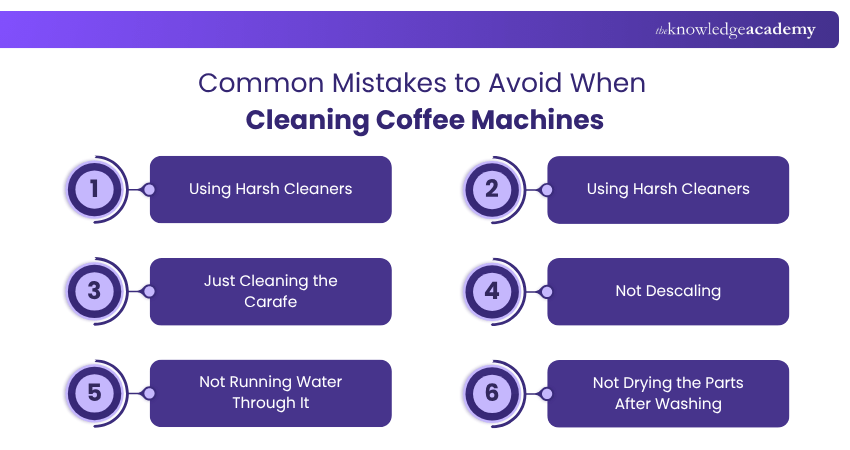
Using Harsh Cleaners
Avoid strong chemical-based cleaners as they may corrode parts and leave harmful residues. Stick to vinegar or mild soap solutions for safe cleaning without compromising your machine’s performance or coffee taste.
Just Cleaning the Carafe
Only cleaning the carafe leaves residue in the filter basket and reservoir. Oils and buildup in these areas affect flavour and hygiene, so wash all removable components thoroughly each time.
Not Descaling
Hard water causes mineral deposits that clog your coffee machine. Skipping descaling reduces efficiency and spoils flavour. Regularly descale with vinegar or a proper solution to maintain performance and quality.
Not Running Water Through It
After descaling or cleaning, failing to run water cycles leaves vinegar traces and bitterness. Always brew clean water to flush residues, ensuring fresh taste and safe, enjoyable coffee every time.
Not Drying the Parts After Washing
Reassembling wet parts encourages mould and bacteria growth. Always dry the carafe, basket, and removable pieces fully before putting them back to preserve hygiene and extend the machine’s lifespan.
Conclusion
With a clean coffee maker, it would mean that all cups will be delicious, fresh, and safe to drink. Not only flavour is spoilt, but there is always a risk of hygiene being compromised by impurities and buildup. Knowing now How to Clean a Coffee Maker and taking a small amount of time to clean your machine will keep you healthier, it will also extend your machine life and a couple of cups will be a feel-like-a-cafe moment. Wash it and continue having an ideal cup of coffee every day.
Secure future-ready career opportunities fast with our Industry Training – Join Today!
Frequently Asked Questions
Why is it important to clean a coffee maker regularly?

Regular cleaning removes oils, residue, and mineral deposits that affect flavour and hygiene. It prevents bacterial growth, keeps the machine efficient, and ensures every cup of coffee tastes consistently fresh and enjoyable.
Does a specialty coffee maker cleaner work better than vinegar?
Specialty cleaners are designed for coffee machines and can be more effective on stubborn scale. However, vinegar remains a safe, affordable, and natural option for regular cleaning and descaling needs.
What are the Other Resources and Offers Provided by The Knowledge Academy?
The Knowledge Academy takes global learning to new heights, offering over 3,000 online courses across 490+ locations in 190+ countries. This expansive reach ensures accessibility and convenience for learners worldwide.
Alongside our diverse Online Course Catalogue, encompassing 19 major categories, we go the extra mile by providing a plethora of free educational Online Resources like Blogs, eBooks, Interview Questions and Videos. Tailoring learning experiences further, professionals can unlock greater value through a wide range of special discounts, seasonal deals, and Exclusive Offers.
What are the other resources and offers provided by The Knowledge Academy?
The Knowledge Academy’s Knowledge Pass, a prepaid voucher, adds another layer of flexibility, allowing course bookings over a 12-month period. Join us on a journey where education knows no bounds.
What are related Courses and blogs provided by The Knowledge Academy?
The Knowledge Academy offers various Industry Training, including Basic Barista Course, Facilitation Skills Training and Floristry Introduction Course. These courses cater to different skill levels, providing comprehensive insights into How to Make Coffee from Beans to Brew
Our Business Skills Blogs covers a range of topics offering valuable resources, best practices, and industry insights. Whether you are a beginner or looking to advance your skills, The Knowledge Academy's diverse courses and informative blogs have you covered.

The Knowledge Academy


Global Training Provider
The Knowledge Academy is a world-leading provider of professional training courses, offering globally recognised qualifications across a wide range of subjects. With expert trainers, up-to-date course material, and flexible learning options, we aim to empower professionals and organisations to achieve their goals through continuous learning.

Upcoming Business Skills Resources Batches & Dates
Date
 Basic Barista Course
Basic Barista Course
Fri 24th Jul 2026
Basic Barista Course
Fri 16th Oct 2026

 If you wish to make any changes to your course, please


