


 Top Rated Course

We may not have the course you’re looking for. If you enquire or give us a call on +33 805638382 and speak to our training experts, we may still be able to help with your training requirements.
What Is Sentiment Analysis? Techniques, Tools, and Applications
The Knowledge Academy 21 April 2026Sentiment Analysis uses AI and natural language processing to detect and classify emotions or opinions in text as positive, negative, or neutral. It helps businesses understand customer feedback, monitor brand perception, and improve decisions. This approach transforms raw text into meaningful insights that support smarter strategies.

Training Outcomes Within Your Budget!
We ensure quality, budget-alignment, and timely delivery by our expert instructors.
Table of Contents

These days, people are always sharing how they feel, whether it’s through a tweet, a product review, or a quick comment on a brand’s post. Behind all those words are emotions that carry real meaning. This is where Sentiment Analysis comes in. It’s a smart way to read between the lines and understand the mood behind the message.
Brands use it to stay connected, make better decisions, and keep their customers happy. In this blog, we’ll explore exactly What is Sentiment Analysis and why it’s becoming such an important part of how businesses operate. Get ready to discover how decoding emotions is helping brands build smarter, deeper connections. Let’s get started!
Table of Contents
1) What is Sentiment Analysis?
2) Importance of Sentiment Analysis
3) Types of Sentiment Analysis
4) How Does Sentiment Analysis Work?
5) Sentiment Analysis Approaches
6) Benefits of Sentiment Analysis
7) Drawbacks of Sentiment Analysis
8) Real-world Use Cases of Sentiment Analysis
9) Sentiment Analysis vs Opinion Mining
10) Tools Used for Sentiment Analysis
11) Future of Sentiment Analysis
12) Conclusion
What is Sentiment Analysis?
Sentiment Analysis, also known as opinion mining, is an automated method used to identify and interpret emotional tones behind words. It helps businesses and researchers understand how people feel about topics, products, brands, or individuals by analysing vast quantities of text. This can range from short tweets and customer reviews to lengthy Blogs and online forums.
For example, imagine you're launching a new clothing line. Sentiment Analysis can reveal if customers genuinely adore the styles you've designed or if there’s room for improvement based on their initial reactions. By processing phrases, sentences, and paragraphs, Sentiment Analysis categorises them into positive, negative, or neutral sentiments, providing clear and quantifiable insights.

Importance of Sentiment Analysis
Sentiment Analysis is not just another trending analytics tool, but it is an important part of assisting organisations gain perception of public opinion and use it to make a more informed decision. Based on industry knowledge, it allows businesses to be able to read customer feelings on a large scale and act on them in a strategic manner. Key reasons highlighting its importance include:
1) Enables Data-driven Decision Making: Gives organisations a clear picture of what customers think of their products, services, and campaigns, which helps them to perfect their strategies.
2) Discloses Strengths and Gaps: Finds out what is valued by customers and where it needs to be enhanced, to direct service and product improvements.
3) Track Market Trends in Real Time: Monitors changes in the mood of the people on social media and digital platforms and allows responding in time.
4) Enhances Crisis Response: Identifies negative feedback in its early stages, and companies can react to the difficulties promptly and save their reputation.
5) Improves Customer Experience: Promotes active interaction through feedback analysis resulting in higher satisfaction and better relationships.
6) Develops Brand Credibility: Regular monitoring and a responsive communication channel will ensure that a good image is preserved, and the customer gains confidence in the brand in the long term.
Types of Sentiment Analysis
Sentiment Analysis isn't a one-size-fits-all approach. Various types cater to specific analytical needs. Let’s delve into some key types:
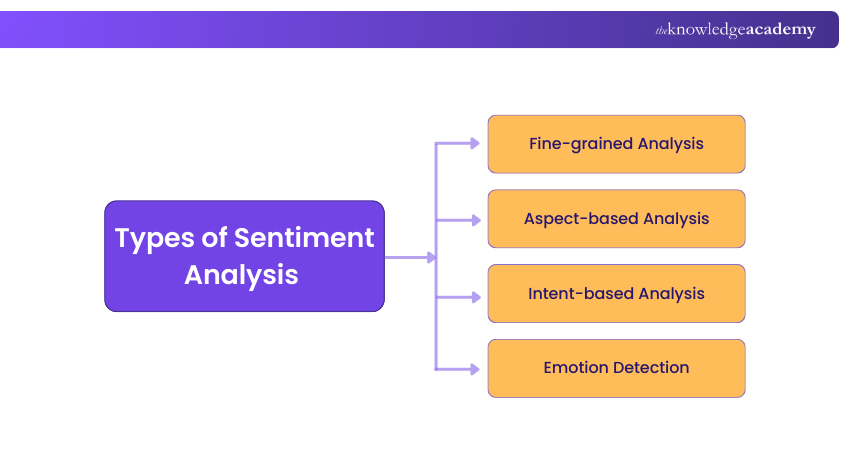
1) Fine-grained Analysis
Fine-grained analysis provides detailed categorisation, often using a scale (e.g., very positive, positive, neutral, negative, and very negative). It’s valuable for nuanced customer feedback, especially when broad categorisations aren't detailed enough. This method provides richer insights by clearly distinguishing different levels of satisfaction or dissatisfaction.
2) Aspect-based Analysis
Aspect-based Sentiment Analysis breaks down text into individual aspects or components and analyses sentiment around each separately. Think of a hotel review: guests may praise your service yet criticise room cleanliness. This technique clearly identifies strengths and weaknesses, helping businesses target their improvement efforts more precisely.
3) Intent-based Analysis
Intent-based analysis examines the underlying intentions behind messages. For example, it can determine if a customer’s tweet shows an intention to buy, complain, or recommend. This type helps businesses identify potential sales leads and improve customer support proactively.
4) Emotion Detection
Emotion detection goes beyond identifying general positivity or negativity. It pinpoints specific emotions such as happiness, anger, fear, or sadness. Imagine launching an emotional marketing campaign designed to inspire joy. Emotion detection will tell you precisely whether your content hits the mark or needs tweaking.
Learn problem-solving techniques for complex engineering challenges with our Soft Skills Engineering Course – Join now!
How Does Sentiment Analysis Work?
Sentiment Analysis involves several stages, including data preprocessing and applying analytical techniques. Let’s break it down.
1) Data Preprocessing
Before analysis begins, data must be cleaned and organised. Preprocessing includes tasks like removing irrelevant information (such as HTML tags or special characters), correcting misspellings, and normalising text. Think of it as tidying your workspace before starting an important project; it ensures more accurate and reliable results later.
2) Analytical Techniques
After preprocessing, Sentiment Analysis employs techniques such as Natural Language Processing (NLP), Machine Learning (ML) algorithms, or lexicon-based methods. NLP helps computers understand human language, while Machine Learning algorithms classify data into sentiment categories by learning from previously labelled datasets. Lexicon-based methods use predefined lists of positive and negative words to assess sentiment.
Sentiment Analysis Approaches
There are several approaches to Sentiment Analysis, each suited to different scenarios. Here's a quick look at three popular methods.
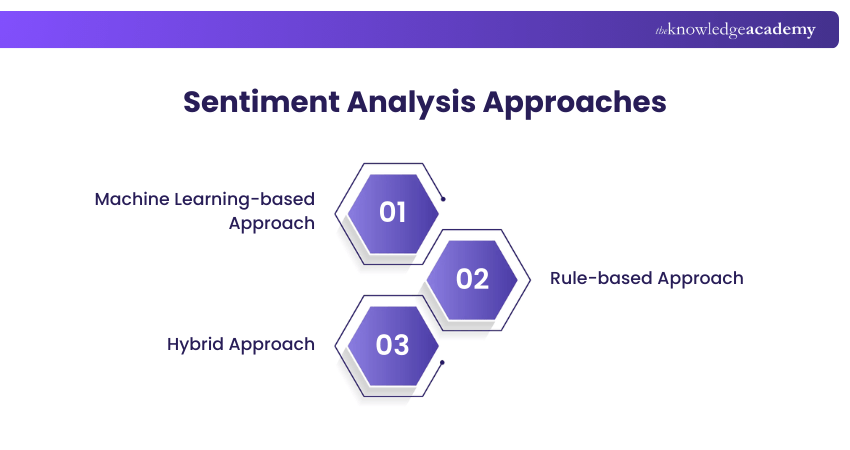
1) Machine Learning-based Approach
Machine Learning methods involve training algorithms with large datasets, teaching them to identify sentiment automatically. This approach becomes more accurate over time, continuously learning from new data, making it highly effective for handling vast quantities of text.
2) Rule-based Approach
A rule-based system relies on linguistic rules and lexicons (dictionaries of positive and negative words) to classify sentiment. While simpler to set up and quicker to implement, it may lack accuracy when facing complex language nuances.
3) Hybrid Approach
The hybrid approach combines Machine Learning and rule-based methods to balance flexibility and accuracy. This method typically yields the best results, capturing both complex linguistic nuances and large-scale data processing.
Benefits of Sentiment Analysis
Using Sentiment Analysis has several significant benefits, including:
1) Better Decision-making: Companies gain valuable insights, enabling informed, data-driven decisions.
2) Enhanced Customer Engagement: Businesses can proactively address customer concerns and personalise responses.
3) Improved Crisis Management: Early detection of negative sentiment allows for rapid response, mitigating potential crises.
4) Competitive Advantage: Understanding market sentiment gives companies a clear advantage over competitors less attuned to customer emotions.
5) Cost-efficiency: Automated Sentiment Analysis reduces the time and cost associated with manually processing vast amounts of customer feedback.
Learn ways to persuade people to change their behaviour with our Persuasion Training – Join today!
Drawbacks of Sentiment Analysis
Despite its significant benefits, Sentiment Analysis isn't without challenges. Here are some common drawbacks:
Detecting Sarcasm and Irony
Sentiment Analysis applications can frequently be unable to understand sarcasm, irony, humour, or connotation. Algorithms are often based on keywords and patterns, so they can be used to perform a false classification of the statements whose literal descriptions do not match the intended feeling.
Limitations in Context Comprehension
AI models may find it difficult to fully understand context, especially when sentiment depends on surrounding text, industry-specific terminology, or evolving conversations. Without deeper contextual awareness, results can lack accuracy and nuance.
Language and Cultural Variability & Mixed Sentiments
Language differences, slang, dialects, and cultural expression pose interpretation problems. Moreover, mixed emotions can be obtained in one sentence, and models find it more difficult to label a single, obvious sentiment.
Dependence on Data Quality
Sentiment Analysis requires clean data, well-marked, and structured data in order to be reliable. Unfinished, vicious, or badly refined data may result in bias findings and unreliable conclusions.
Bias in Data
When the training data is biased in terms of demographics, culture, or language, then the model can reproduce those biases in its prediction. This may end up giving distorted information and biased or misguided information.
Real-world Use Cases of Sentiment Analysis
Sentiment Analysis has numerous practical applications across various industries. Let’s look at some key examples.
1) Enhancing Customer Service
By analysing customer feedback, Sentiment Analysis reveals patterns and trends indicating customer satisfaction or frustration. This helps companies respond quickly to issues and personalise customer experiences, significantly enhancing customer service. Imagine instantly knowing a customer is unhappy and proactively helping before their frustration escalates.
2) Monitoring Social Media
Social media Sentiment Analysis provides instant insights into public perception and brand reputation. Companies can rapidly detect and respond to potential crises, manage their reputation effectively, and understand how campaigns resonate with their audience.
3) Insights in Marketing
Marketers use Sentiment Analysis to gauge campaign effectiveness, measure brand perception, and refine strategies. If you launch an advertising campaign, Sentiment Analysis quickly indicates whether the audience reacted positively or negatively, enabling timely adjustments and improved Return on Investment (ROI).
Strengthen Customer Relationships and boost loyalty with expert Customer Relation Management Training – Join now!
Sentiment Analysis vs Opinion Mining
Although the two concepts of sentiment analysis and opinion mining have been used interchangeably, there are some major distinctions between the two concepts that are significant in the manner in which organisations extract and interpret feedback. As per industry views Opinion Mining is wider in nature, which is, it is the process of locating and harvesting subjective facts in writing in order to comprehend the opinions and attitudes of people.
Sentiment Analysis is one of the key components of this process and specifically identifies emotional tone (positive, negative, neutral) that is conveyed in that text. Opinion mining can involve sentiment detection and further analysis of opinions regarding particular topics, features or attributes providing more detailed information on why individuals feel a particular way and what they are referring to in their feedback.
Tools Used for Sentiment Analysis
The following are some of the common tools that are used to accomplish sentiment analysis as identified in industry literature:
1) MonkeyLearn: It is an easy to use AI platform which assists in the analysis of the sentiment of a text in reviews, surveys and social media as well as provides visual dashboards and integrates with workflows easily.
2) Brand24: This is a social listening and sentiment tool, which monitors online mentions on platforms, calculates sentiment scores, and assists brands to track reputation in real-time.
3) Lexalytics: A sentiment analysis system based on the use of NLP and able to analyse unstructured data such as customer feedback in order to identify themes, trends, and emotional tone.
4) Hootsuite Insights: Integrates sentiment analysis with social media management, allowing teams to monitor sentiment and react to audience response within a single dashboard.
5) Qualaroo: Provides integrated sentiment analysis to product and UX teams, which will include context-rich feedback provided by users and automatically classify their sentiments.
Future of Sentiment Analysis
In the future, Sentiment Analysis will undergo a dynamically developing evolution due to the advancement of AI, NLP, and analytics technologies. Experts demonstrate a number of crucial trends that outline its future:
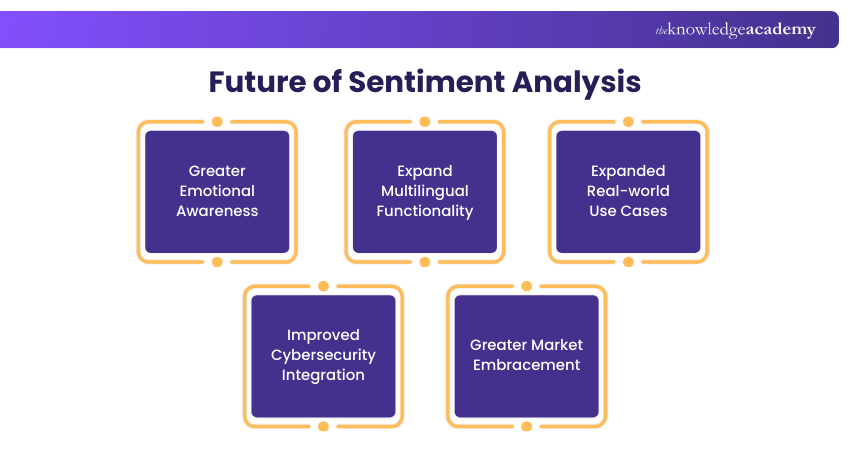
Greater Emotional Awareness: New models of NLP will transcend polarity to understand human feelings, situations and motive in written form more accurately, enhancing precision in a variety of uses.
Expand Multilingual Functionality: There will be expanded use of multilingual analysis tools, which will provide sentiment analysis at cross-linguistic, cross-dialect, and cross-cultural boundaries.
Expanded Real-world Use Cases: Customer experience, security and political surveillance will become part of the sentiment tools to identify trends, threats and behavioural patterns.
Improved Cybersecurity Integration: Hypothetical sentiment systems are projected to better detect malicious content, hate speech, and online threats to enable safer online social interactions.
Greater Market Embracement: With increased interested in more data-driven intelligence, more investment in sophisticated sentiment models, real-time analytics, and AI-enhanced understanding will increase across industries.
Conclusion
Sentiment Analysis helps businesses understand emotions, opinions, and attitudes hidden in text data. Its wide range of uses makes it vital in the data-driven world. With so many benefits, more companies are now asking, What is Sentiment Analysis, and how can it support growth? Despite some limitations, ongoing tech advancements are improving its accuracy and impact, helping organisations build stronger customer connections and drive success. Strengthen your network, build lasting connections, and grow your influence.
Empower yourself with tools that drive professional growth with our Personal Development Courses – Explore now!
Frequently Asked Questions
Which Algorithm is Used in Sentiment Analysis?

Algorithms commonly used include Naive Bayes, Support Vector Machines (SVM), Random Forests, and neural networks like LSTM and BERT. These algorithms analyse text, identify patterns, classify sentiments accurately, and handle complex language nuances for precise emotional insights.
Is Sentiment Analysis Suitable for Small Businesses?
Yes. Sentiment analysis helps small businesses monitor customer feedback, understand public opinion, and improve products or services. By analysing reviews and social media comments, they can make informed decisions, strengthen customer relationships, and compete more effectively without large research budgets.
What are the Other Resources and Offers Provided by The Knowledge Academy?
The Knowledge Academy takes global learning to new heights, offering over 3,000+ online courses across 490+ locations in 190+ countries. This expansive reach ensures accessibility and convenience for learners worldwide.
Alongside our diverse Online Course Catalogue, encompassing 17 major categories, we go the extra mile by providing a plethora of free educational Online Resources like Blogs, eBooks, Interview Questions and Videos. Tailoring learning experiences further, professionals can unlock greater value through a wide range of special discounts, seasonal deals, and Exclusive Offers.
What is The Knowledge Pass, and How Does it Work?
The Knowledge Academy’s Knowledge Pass, a prepaid voucher, adds another layer of flexibility, allowing course bookings over a 12-month period. Join us on a journey where education knows no bounds.
What are the Related Courses and Blogs Provided by The Knowledge Academy?
The Knowledge Academy offers various Personal Development Courses, including the Customer Experience Training and Practitioner Course, and the Exceptional Customer Service Training. These courses cater to different skill levels, providing comprehensive insights into Customer Service Management.
Our Business Skills Blogs cover a range of topics related to Customer Experience Management, offering valuable resources, best practices, and industry insights. Whether you are a beginner or looking to advance your Communication and Customer Relation skills, The Knowledge Academy's diverse courses and informative blogs have got you covered.

The Knowledge Academy


Global Training Provider
The Knowledge Academy is a world-leading provider of professional training courses, offering globally recognised qualifications across a wide range of subjects. With expert trainers, up-to-date course material, and flexible learning options, we aim to empower professionals and organisations to achieve their goals through continuous learning.

Upcoming Business Skills Resources Batches & Dates
Date
 Customer Relation Management Training
Customer Relation Management Training
Fri 7th Aug 2026
Customer Relation Management Training
Fri 30th Oct 2026

 If you wish to make any changes to your course, please


