


 Top Rated Course

We may not have the course you’re looking for. If you enquire or give us a call on +33 805638382 and speak to our training experts, we may still be able to help with your training requirements.
The Five Levels of Leadership: An Overview
Benjamin Walker 20 February 2026Explore the various Levels of Leadership, from entry-level to executive, and grasp the skills and responsibilities needed to navigate each stage effectively. Discover how Leaders progress through position, permission, production, people development, and finally, pinnacle to reach their full potential and inspire greatness in others.

Training Outcomes Within Your Budget!
We ensure quality, budget-alignment, and timely delivery by our expert instructors.
Table of Contents

Are you a manager or a Leader aiming to improve your influence and impact on your team and organisation? If you're new to the role or looking to enhance your Leadership skills, understanding the Levels of Leadership can significantly advance your Leadership journey. With the different Levels of Leadership, the challenge lies in progressing from one level to the next and reaching your full potential.
This comprehensive blog addresses your concerns by presenting a clear overview of the five Levels of Leadership based on the model developed by John C. Maxwell, a renowned Leadership expert. Whether you're a seasoned Leader or just starting, this blog will assist you in assessing your current Leadership Level. Further, it helps identify the gaps and opportunities for growth and ensures you choose the right actions to elevate your Leadership qualities.
Table of Contents
1) What is Leadership?
2) What are the 5 Levels of Leadership?
a) Level 1: Position
b) Level 2: Permission
c) Level 3: Production
d) Level 4: People development
e) Level 5: Pinnacle
3) How to reach Level 5 of Leadership?
4) Conclusion
What is Leadership?
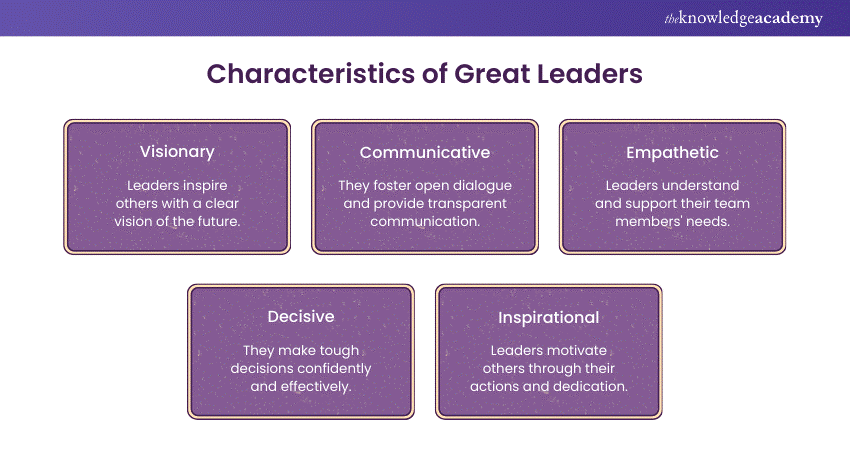
Leadership is the art of inspiring and guiding people towards a common goal or vision. It involves influencing others positively, motivating them to achieve their best, and navigating challenges effectively.
Leadership encompasses a diverse range of skills, traits, and behaviours and is not limited to those in formal positions of authority. It is about fostering collaboration, building trust, and empowering others to reach their full potential. The Characteristics of Leadership PDF provides deeper insights into the fundamental attributes that shape effective leaders.
Influential Leaders possess a combination of interpersonal, communication, and decision-making skills, as well as emotional intelligence and resilience. They lead by example, demonstrating integrity, accountability, and empathy in their interactions with others. Leadership is not about asserting control or dominance but inspiring confidence and creating a supportive environment where individuals can thrive.
Leadership can manifest in various contexts, including business, politics, academia, and community organisations. Effective leaders exhibit vision, adaptability, and a willingness to embrace innovation, especially when navigating VUCA (Volatile, Uncertain, Complex, and Ambiguous) environments. Whether leading a team, managing a project, or driving organisational change, they understand the importance of collaboration and diversity, leveraging the strengths of individuals to achieve collective success.
Leadership is a consistent growth and learning journey characterised by self-awareness, humility, and a commitment to serving others. It involves building strong relationships, fostering a positive culture, and striving to make a meaningful impact on the world. Compassionate Leadership adds an additional layer of care, allowing leaders to be more in tune with the emotional needs of their teams, ultimately creating a supportive and inclusive environment.
What are the 5 Levels of Leadership?
Leadership is a complex and dynamic concept encompassing various levels of influence, responsibility, and impact within organisations and groups. Understanding the different Levels of Leadership can provide valuable insights into how Leaders can effectively lead and inspire others to achieve common goals. Let us delve into each of the five Levels of Leadership:
Level 1: Position

Positional Leadership represents the most basic Level of Leadership, where individuals derive authority solely from their formal title or position within an organisation. Leaders at this level may have the power to direct the actions of others, but their influence is often limited to compliance rather than genuine commitment. While positional Leaders may command obedience due to their authority, they may struggle to inspire genuine loyalty or engagement from their team members.
At this level, leadership effectiveness is determined by how individuals can assert their authority and enforce directives. However, relying solely on positional power may lead to resistance, resentment, or apathy among team members. To overcome these challenges, leaders must recognise the limitations of their authority within the context of a broader Leadership Framework and Leadership Development Framework, which encourages building influence through trust and collaboration.
Moreover, they should strive to earn the trust and respect of their team through their actions, decisions, and integrity. By demonstrating competence, fairness, and consistency, positional Leaders can begin to establish the foundation for more impactful Leadership at higher levels.
Level 2: Permission

Permission-based Leadership shifts the focus from authority to relationships, emphasising the importance of building trust, rapport, and mutual respect with team members. Leaders at this level recognise that genuine influence stems from the quality of their relationships rather than their formal position. They seek to connect with their team personally, listening actively to their concerns, empathising with their perspectives, and genuinely caring about their well-being.
Leaders at this level, particularly those with ILM Level 2 qualifications, prioritise open communication, transparency, and collaboration. This helps foster an environment where team members feel valued, heard, and empowered to contribute their ideas and opinions.
Permissive-based Leaders encourage creativity, innovation, and initiative among their team members by promoting a culture of trust and psychological safety. They recognise that effective Leadership is not about control or authority but earning permission to lead through character, integrity, and interpersonal skills.
Start your journey towards effective Leadership with our Successful People Management and Team Leadership Course. Sign up now!
Level 3: Production

Production-oriented Leadership focuses on achieving results and driving performance through clear goals, expectations, and accountability. Leaders at this level prioritise productivity, efficiency, and effectiveness, striving to deliver tangible outcomes and measurable progress toward organisational objectives. They set high standards for themselves and their team, establishing clear performance metrics and holding everyone accountable for their contributions, principles that are also introduced in programmes like ILM Level 3, which emphasise core leadership behaviours.
Leaders at the production level are adept at identifying opportunities for improvement, streamlining processes, and optimising resources to maximise productivity and output. They provide direction, guidance, and support to their team members, empowering them to perform at their best and achieve their full potential. Production-oriented Leaders inspire motivation, commitment, and a sense of accomplishment among their team by fostering a results-driven culture and celebrating achievements.
Level 4: People development

People development represents a shift from focusing solely on results to investing in individual team members' growth, development, and success. Leaders at this level recognise their ultimate responsibility is to deliver outcomes, cultivate talent, build capabilities, and nurture future Leaders within their organisations.
Leaders who prioritise “People development” invest time, resources, and energy in coaching, mentoring, and training their team members. This investment aims to enhance skills, broaden knowledge, and unleash potential. They provide constructive feedback, guidance, and opportunities for growth, encouraging continuous learning and professional development. By fostering a culture of learning and development, Leaders at this level empower their team members to take ownership of their career paths, pursue their aspirations, and contribute to the organisation's collective success.
Level 5: Pinnacle

At the pinnacle Level of Leadership, individuals have transcended their focus on individual achievement and personal success to become visionary Leaders who inspire and influence others on a broader scale. Pinnacle Leaders are characterised by their unwavering commitment to a higher purpose, vision, or cause beyond their immediate influence.
Leaders at this level possess exceptional strategic insight, foresight, and innovation, envisioning the future trajectory of their organisation and guiding it toward new horizons of success and significance. They inspire others with their bold vision, compelling narrative, and unwavering optimism, rallying teams around a shared purpose and collective ambition.
Pinnacle Leaders lead by example, embodying their values, principles, and ideals, and inspiring others to follow suit. They foster collaboration, synergy, and collective action, drawing from various Leadership Models to harness the collective talents and energies of diverse individuals to achieve extraordinary results. Through their transformative Leadership, pinnacle Leaders leave a lasting legacy of positive impact, inspiring future generations to strive for excellence, integrity, and purpose-driven Leadership.
Transform your Leadership approach and drive success with our Agile Leadership Training. Join today!
How to reach Level 5 of Leadership?
Reaching Level 5 of Leadership, known as the Pinnacle, requires a combination of strategic vision, personal mastery, and impactful influence. To ascend to this Leadership Level, individuals must continuously strive for personal growth and professional development while demonstrating exceptional Leadership qualities. Referring to the Leadership Tools Guide can offer valuable strategies and insights to refine leadership skills and navigate this journey effectively. Here are some critical steps to reach Level 5: Here are some critical steps to reach Level 5:
a) Clarify your vision: Develop a clear and compelling vision for yourself and your organisation. Identify and align your long-term goals, values, and aspirations with the broader mission and objectives.
b) Lead with integrity: Uphold the highest ethical standards and integrity in all your actions and decisions. Build trust and credibility with your team members, stakeholders, and the broader community through transparency and authenticity.
c) Cultivate strategic thinking: Develop your strategic thinking skills by analysing trends, anticipating future challenges and opportunities, and formulating innovative solutions. Embrace complexity and ambiguity and seek diverse perspectives to inform your decision-making, which are essential aspects of strategic leadership.
d) Inspire and empower others: Be an inspirational role model and empower others to reach their full potential. Foster a culture of collaboration, creativity, and accountability, and encourage individuals to take ownership of their work and contribute to the collective vision.
e) Leave a lasting legacy: Aspire to leave a legacy by significantly impacting your organisation, industry, or society. Focus on building sustainable systems, nurturing future Leaders, and creating a culture of excellence that outlasts your tenure.
Enhance your Leadership skills and become a more effective Leader with our specialised Leadership Skills Course. Register Now!
Conclusion
In conclusion, understanding the Levels of Leadership provides valuable insights into the Leadership development journey. By recognising each level's distinct characteristics and responsibilities, individuals can effectively navigate their path to becoming more impactful Leaders. As you prepare for interviews, make sure you're ready for Leadership Interview Questions that assess your understanding and application of these leadership levels. Embrace the journey and strive for growth at every stage of your Leadership evolution.
Unlock your Leadership potential and elevate your career with our comprehensive Leadership Courses!
Frequently Asked Questions
What are the key differences between each Level of Leadership?

Each Level of Leadership differs in its focus, responsibilities, and impact. Level 1 emphasises authority, while Level 2 prioritises building relationships. Level 3 centres on achieving results, Level 4 on developing others, and Level 5 on leaving a lasting legacy and empowering others to lead.
How can individuals assess their current Leadership Level and develop strategies to progress to the next stage?
Each Level of Leadership differs in its focus, responsibilities, and impact. Level 1 emphasises authority, while Level 2 prioritises building relationships. Level 3 centres on achieving results, Level 4 on developing others, and Level 5 on leaving a lasting legacy and empowering others to lead.
What are the other resources and offers provided by The Knowledge Academy?
The Knowledge Academy takes global learning to new heights, offering over 3,000+ online courses across 490+ locations in 190+ countries. This expansive reach ensures accessibility and convenience for learners worldwide.
Alongside our diverse Online Course Catalogue, encompassing 19 major categories, we go the extra mile by providing a plethora of free educational Online Resources like Blogs, eBooks, Interview Questions and Videos. Tailoring learning experiences further, professionals can unlock greater value through a wide range of special discounts, seasonal deals, and Exclusive Offers.
What is Knowledge Pass, and how does it work?
The Knowledge Academy’s Knowledge Pass, a prepaid voucher, adds another layer of flexibility, allowing course bookings over a 12-month period. Join us on a journey where education knows no bounds.
What are related Business Skills courses and blogs provided by The Knowledge Academy?
The Knowledge Academy offers various Leadership Courses, including Leadership Skills and Agile Leadership Trainings. These courses cater to different skill levels, providing comprehensive insights into Organisational Leadership.
Our Business Skills blogs cover a range of topics related to Leadership skills and upskilling, offering valuable resources, best practices, and industry insights. Whether you are a beginner or looking to advance your Leadership skills, The Knowledge Academy's diverse courses and informative blogs have you covered.

Benjamin Walker


Leadership Development Coach and Management Consultant
Benjamin Walker is a leadership coach and business consultant with over 18 years of experience in guiding organisations through strategic growth and transformation. He specialises in developing leadership capabilities at all levels, from emerging managers to executive teams. Benjamin’s work focuses on practical leadership, team dynamics, and performance management.
View Detail
Upcoming HR Resources – Learn about Human Resources Batches & Dates
Date
 Leadership Skills Training
Leadership Skills Training
Fri 27th Mar 2026
Leadership Skills Training
Fri 29th May 2026
Leadership Skills Training
Fri 31st Jul 2026
Leadership Skills Training
Fri 2nd Oct 2026
Leadership Skills Training
Fri 27th Nov 2026

 If you wish to make any changes to your course, please


