


 Top Rated Course

We may not have the course you’re looking for. If you enquire or give us a call on +358 942454206 and speak to our training experts, we may still be able to help with your training requirements.
Cryptocurrency Trends: Emerging Forces Shaping Global Finance
The Knowledge Academy 02 March 2026Cryptocurrency is a digital form of money that uses blockchain technology to enable secure and decentralised transactions. Top Cryptocurrency Trends include Bitcoin, Ethereum, NFTs, DeFi, CBDCs and ETFs, and rapid expansion in Web3 and Layer-2 solutions. They reshape how people interact with money and digital assets worldwide.

Training Outcomes Within Your Budget!
We ensure quality, budget-alignment, and timely delivery by our expert instructors.
Table of Contents

Are you new to Cryptocurrency? Understanding today’s trends could be the smartest first step into the digital finance world. You don’t need to be a tech expert to get started. Today’s crypto landscape is more accessible than ever. From buying your first Bitcoin to exploring Decentralised Finance (DeFi) or learning how NFTs and Web3 are changing digital ownership, there are many simple and approachable ways to get involved.
In this blog, you can discover the most influential Cryptocurrency Trends shaping the future, helping you build confidence and clarity in this exciting financial frontier. Ready to get started? Let’s dive in!
Table of Contents
1) Top Cryptocurrency Trends
2) Impact of Bitcoin Trends on Major Cryptocurrencies
3) Importance of Understanding Current Crypto Trends
4) Role of Cryptocurrency in Future Economies
5) Is Crypto Better Than Stocks?
6) Is Crypto Like Gambling?
7) Conclusion
Top Cryptocurrency Trends
Cryptocurrency is a form of digital currency secured by cryptography and built on decentralised blockchain technology. It allows users to transfer value directly without relying on traditional banks. Cryptocurrency Trends reshape how individuals and institutions approach payments, investments, and asset ownership, signalling a shift towards more decentralised, transparent, and technology-driven financial systems worldwide.
Here are the top Cryptocurrency Trends for you:
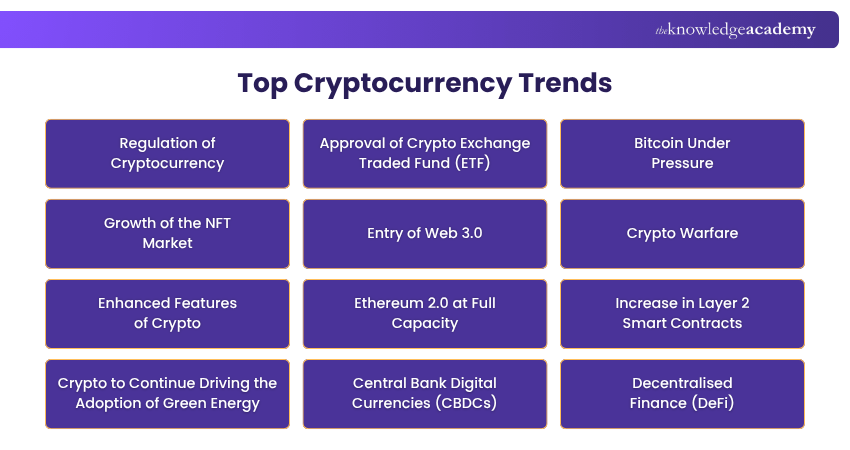
1) Regulation of Cryptocurrency
The regulation of Cryptocurrency comprises legal frameworks and guidelines instituted by either governments or regulatory bodies. The regulations are instituted to help them oversee the utilisation, trade, and taxation practices of Cryptocurrencies.
More importantly, they aim to prevent illicit activities, protect consumers, and maintain the market’s stability and the security of digital assets. Here are the many facets associated with the regulation of Cryptocurrencies:
a) Global Disparity: The laws governing digital currencies differ in different countries because some of them support new technologies while others restrict them. For example, Bitcoin is accepted as a mode of payment in Japan; however, China has restricted the use of such currencies.
b) Legal Framework: Global governments are trying to come up with laws by which the usage of Cryptocurrencies can be controlled. These can be such things as obtaining licenses for Cryptocurrency trading platforms also known as exchanges or the regulation of Initial Coin Offerings (ICOs).
c) Anti-money Laundering (AML): Correspondingly, the supervisory authorities may try to protect Cryptocurrencies from being involved in illicit operations, including money laundering or financing of terrorism. Some of these measures advocate for Know Your Customer (KYC) regulation on crypto exchanges.
d) Taxation: Tax authorities of the countries are increasingly integrating Cryptocurrency transactions into taxes. In many nations, Cryptocurrencies are considered for tax purposes as properties hence liable for capital gains tax.
e) Security Standards: Regulations are being put in place to ensure that exchanges and other Cryptocurrency service providers meet certain security standards to protect consumers and their digital assets.
f) Consumer Protection: Regulatory bodies strive to safeguard the rights of consumers in the crypto market, providing protection against fraud, misinformation, and market manipulation. This is a crucial area of regulation to maintain trust and stability within the Cryptocurrency market.

2) Approval of Crypto Exchange Traded Fund (ETF)
The Exchange Traded Fund (ETF) is a sort of investment fund and exchange-traded product that tracks an index, sector, commodity, or asset. ETF shares are typically traded on public stock exchanges. Here are some key aspects of an ETF’s approval, described as follows:
a) Market Exposure: The approval of a crypto ETF allows investors to gain exposure to Cryptocurrencies without the necessity to directly buy, store, or manage them, much like a Blockchain ETF, which similarly provides exposure to blockchain-related assets.
b) Liquidity: Crypto ETFs are traded on traditional stock exchanges and might be purchased and sold on the trading day at market prices, providing investors with increased liquidity.
c) Diversification: Crypto ETFs often track multiple cryptocurrencies, providing investors with the opportunity to make their portfolio diverse within the crypto market.
d) Regulatory Oversight: ETFs are subject to regulations by financial authorities. This oversight can provide a layer of protection for investors, enhancing trust in the crypto market.
e) Increased Adoption: Approval of a crypto ETF can signal regulatory acceptance, potentially leading to increased adoption of cryptocurrencies by traditional investors and institutions.
f) Risk Management: Crypto ETFs allow investors to access the potential returns of the volatile crypto market, while mitigating some of the associated risks with direct crypto ownership.
3) Bitcoin Under Pressure
Bitcoin is the first and globally well-reputed Cryptocurrency launched in 2009. It is basically a decentralised digital currency without a centralised bank system or an administrator. Here are the key reasons describing the pressure on Bitcoin in the coming years:
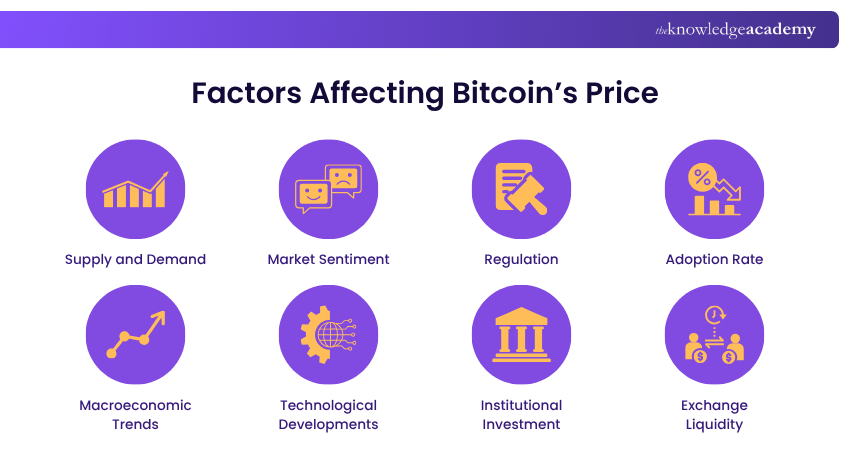
a) Regulatory Scrutiny: With its rising popularity, Bitcoin is facing increasing scrutiny from regulators worldwide. The regulatory changes can significantly impact its value and acceptance.
b) Scalability Issues: Bitcoin's current technology has scalability concerns. Its block size and processing time for transactions can limit its growth and functionality.
c) Environmental Concerns: Bitcoin mining consumes a significant amount of energy, leading to environmental concerns. These concerns may influence its acceptance and value in an increasingly eco-conscious world.
d) Competition: The rise of other cryptocurrencies, particularly those that offer improved technologies or functionalities, poses a challenge to Bitcoin's dominance.
e) Volatility: Bitcoin's price is extremely volatile, influenced by many factors such as market demand, investor sentiment, regulatory news, and macroeconomic trends. This volatility can deter potential users or investors.
f) Security Threats: Despite its cryptographic security, Bitcoin is a prime target for cybercriminals. Any security breaches can undermine confidence in Bitcoin and negatively affect its value.
Navigate the world of digital assets and smart investing with our Bitcoin and Cryptocurrency Course – Register today!
4) Growth of the NFT Market
Non-fungible Tokens (NFTs) are digital assets representing ownership or being a proof of authenticity of a distinct item or piece of content, using Blockchain Technology. Here are the various aspects of the NFT market’s growth, listed as shown below:
a) Digital Art Boom: The NFT market has seen substantial growth with the boom in digital art. High-profile sales, such as Beeple's artwork selling for 65 million GBP, have drawn significant attention to the space.
b) Broadening Scope: NFTs are expanding beyond digital art into other areas like music, real estate, and even tweets. This broadening scope is contributing to market growth.
c) Crypto Wealth: With the rise of cryptocurrency wealth, many investors are actively looking for new ways to diversify their portfolios, driving demand for NFTs.
d) Blockchain Adoption: As understanding and adoption of blockchain technology grow, so does the NFT market.
e) Celebrity and Brand Engagement: Many celebrities and brands have entered the NFT market by creating and trading their NFTs, which not only boosts market visibility but also adds credibility and attracts new investors.
f) User Engagement: NFTs offer a unique way for content creators to connect with their audiences, driving higher adoption rates and market expansion.
5) Entry of Web 3.0
Web 3.0, also called the ‘semantic web’, represents the next generation of internet technology. It is expected to deliver intelligent, personalised experiences and encourage efficient information exchange. Here are the many facets surrounding the entry of Web 3.0:
a) Artificial Intelligence: Web 3.0 leverages AI and Machine Learning to interpret content, understand context, and deliver more personalised user experiences.
b) Semantic Web: By structuring data in a way that machines can understand, Web 3.0 facilitates more accurate and targeted content retrieval, enhancing user interaction with the web.
c) 3D Graphics: Enhanced visualisation tools and 3D graphics are a significant part of Web 3.0, offering users a more immersive and engaging browsing experience.
d) Ubiquitous Connectivity: Web 3.0 aims for constant, seamless connectivity, integrating multiple platforms and devices for a smoother user experience.
e) Blockchain Integration: Web 3.0 integrates blockchain technology for better privacy, security, and decentralisation, empowering users to own and control their data.
f) Interoperability: Web 3.0 enhances interoperability between different web services, making the internet more collaborative and promoting the combination of services.
6) Crypto Warfare
Cyber Warfare in Cryptocurrency Trends refers to the usage of technology and the internet to conduct or counter warfare in cyberspace. It involves actions by a nation-state or international organisation to penetrate another nation's computer systems or networks with the agenda of causing damage or disruption.
a) Weaponisation of Cryptocurrencies: Cryptocurrencies, due to their anonymous and decentralised nature, can be used for illicit activities, including financing of terrorism and cyber warfare operations.
b) Crypto-jacking: This involves hackers using a victim's processing power to mine cryptocurrencies without their knowledge, a method which could be employed on a larger scale during cyber warfare.
c) Ransomware Attacks: In these attacks, hackers encrypt a victim's data and demand ransom in cryptocurrency to unlock it. Such tactics could be used as a form of economic warfare.
d) Disruption of Crypto Infrastructure: In the event of conflict, attacks could target cryptocurrency exchanges or blockchain infrastructure, aiming to disrupt financial systems and cause economic instability.
e) Use of Privacy Coins: Privacy-focused cryptocurrencies can be used to conduct covert operations, hiding the transactions from surveillance.
f) Cryptocurrency as a Financial Weapon: In a global economy, countries might use cryptocurrencies to bypass sanctions, manipulate economic stability, or exert economic influence.
7) Enhanced Features of Crypto
Cryptocurrencies offer a variety of enhanced features over traditional forms of money, leading to numerous unique use cases. Here is a list of the Cryptocurrency Trends’ features and use cases of crypto:
a) Decentralisation: Cryptocurrencies operate on decentralised networks using Blockchain Technology, removing the requirement for a central authority or intermediary. This feature is beneficial for reducing transaction costs and increasing financial inclusivity.
b) Security: The use of cryptographic protocols in Cryptocurrencies ensures secure transactions and protects against fraud, making them ideal for online transactions and digital economies.
c) Transparency: All of the Cryptocurrency transactions are recorded on the Blockchain, giving transparency and traceability. The transaction records can be particularly useful in areas such as Supply Chain Management.
d) Speed and Accessibility: Cryptocurrencies enable quick, global transactions, making them ideal for international transfers. They are also accessible to anyone having an internet connection, offering financial services to unbanked populations.
e) Programmability: Cryptocurrencies can be programmed to produce smart contracts that automatically get executed when certain conditions are met. This functionality is driving innovations in fields like Decentralised Finance (DeFi) and the creation of Decentralised Autonomous Organisations (DAOs).
f) Asset Tokenisation: Cryptocurrencies allow for the tokenisation of assets that are both tangible, like real estate, and intangible, like intellectual property. This can democratise investment.
8) Ethereum 2.0 at Full Capacity
Ethereum 2.0, also known as Eth2 or Serenity, is the upcoming an upgrade to the Ethereum blockchain. The crypto upgrade aims to improve the scalability, security, and sustainability of the Ethereum network.
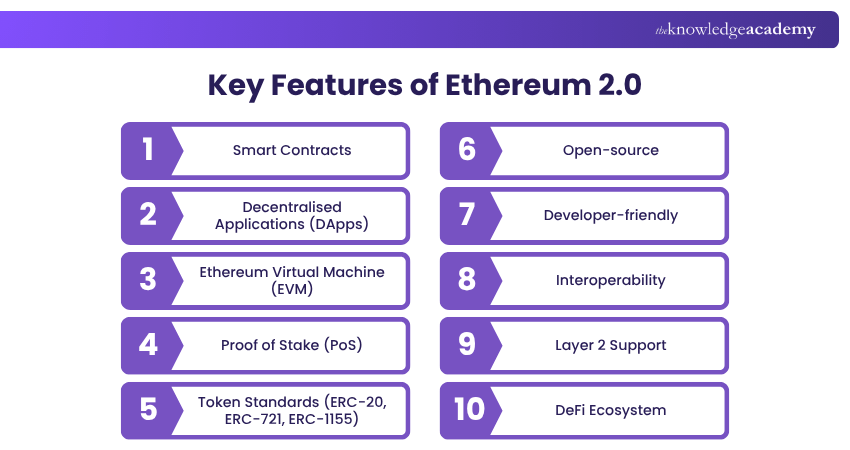
a) Proof of Stake (PoS): Ethereum 2.0 will switch from a Proof of Work (PoW) to a PoS consensus mechanism, which is more energy-efficient and can process transactions faster.
b) Sharding: To improve scalability, Ethereum 2.0 will introduce sharding. Shards are smaller chains that process their transactions and smart contracts, significantly increasing the network's capacity.
c) Crosslinks: Crosslinks are references to shard chains in the Ethereum 2.0 Beacon Chain. This system will ensure all shards are synced with the main chain, ensuring network security and integrity.
d) Ethereum Virtual Machine (EVM): The EVM, which enables the execution of smart contracts, will be optimised in Ethereum 2.0 to improve its efficiency and capabilities.
e) eWASM: An acronym for ‘Ethereum WebAssembly’, eWASM will replace EVM, allowing Developers to execute code faster, support more programming languages, and improve the developer experience on the platform.
f) Sustainability: By using PoS and sharding, Ethereum 2.0 aims to significantly reduce energy consumption, addressing one of the major crucial criticisms of blockchain technology and cryptocurrencies.
Learn to build smart contracts and decentralised applications with our Ethereum Developer Training – Join now!
9) Increase in Layer 2 Smart Contracts
Layer 2 (L2) smart contracts are gaining momentum, with experts predicting a lasting trend as one of the Cryptocurrency Trends. Bitcoin and Ethereum, for instance, belong to the category of "Layer 1" cryptocurrencies, serving as their settlement layer.
Nevertheless, Layer 1 blockchain networks face scalability challenges. As a solution, the development of an alternative framework, such as Layer 2 smart contracts, has been deemed essential to achieve enhanced scalability. This underscores the significance of L2 smart contracts in driving mainstream cryptocurrency adoption by enabling limitless scaling possibilities.
10) Crypto to Continue Driving the Adoption of Green Energy
Cryptocurrencies have been criticised for their environmental impact, particularly concerning Bitcoin mining, which is estimated to generate huge amount of carbon emissions in the United Kingdom alone.
Given the substantial carbon footprint associated with Proof of Work (POW) consensus mechanisms, which rely on fossil fuel-generated energy, there is a growing shift. Emerging blockchain networks are increasingly adopting more environmentally friendly consensus mechanisms to address these concerns.
11) Central Bank Digital Currencies (CBDCs)
An increasing number of central banks are considering the issuance of digital currencies. This innovation could transform our use and perception of money, making transactions quicker, more affordable, and more secure.
Moreover, digital currencies could improve financial inclusion by giving access to banking services for unbanked populations. As central banks explore this frontier, the regulatory landscape will need to adapt to ensure stability and security in the financial system.
12) Decentralised Finance (DeFi)
DeFi, or Decentralised Finance, involves creating financial systems by utilising Blockchain Technology without the need for intermediaries like banks. This rapidly growing trend offers greater financial freedom, transparency, and accessibility.
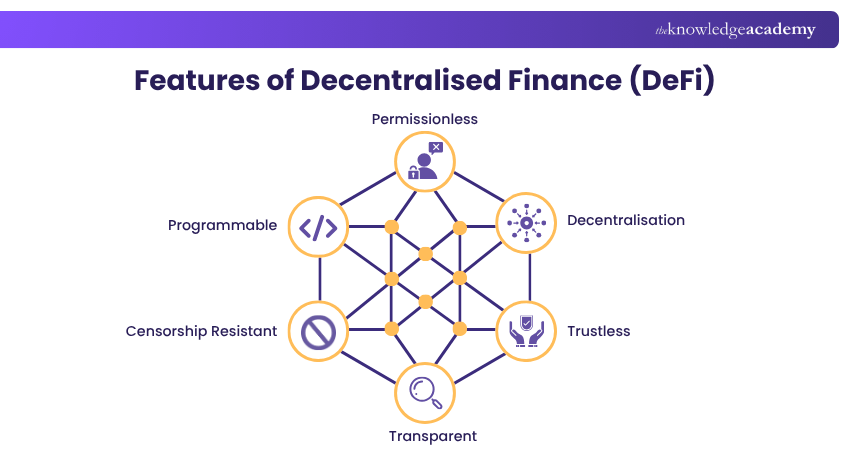
By eliminating intermediaries, DeFi reduces costs and increases efficiency in financial transactions. As this ecosystem evolves, it promises to democratise finance, making it more inclusive and innovative.
Discover the secrets of successful currency trading with our Foreign Exchange Training – Sign up soon!
Impact of Bitcoin Trends on Major Cryptocurrencies
The impact of Bitcoin trends on major cryptocurrencies is significant, as Bitcoin often sets the overall direction of the crypto market. When Bitcoin rises or falls, assets like Ethereum and other altcoins tend to follow due to investor sentiment and market correlation. Its dominance also influences liquidity flow, adoption trends, and overall market confidence across the cryptocurrency ecosystem.
Key Impacts Include:
1) Market Direction: Bitcoin price movements often dictate overall market trends.
2) Investor Sentiment: Positive Bitcoin momentum boosts confidence across altcoins.
3) Liquidity Flow: Capital frequently shifts between Bitcoin and altcoins based on trends.
4) Adoption Influence: Bitcoin adoption encourages wider acceptance of other cryptocurrencies.
5) Market Stability: Bitcoin stability reduces volatility across the broader crypto market.
Importance of Understanding Current Crypto Trends
In the ever-evolving Cryptocurrency world, staying informed about current trends is crucial. Let’s explore the necessity of comprehending these trends:
a) Recognising Market Trends: Analysing charts and historical data allows us to understand crypto market trends, whether they are moving upwards, downwards, or sideways. This insight enables informed decisions on when to buy or sell a Cryptocurrency.
b) Establishing Support and Resistance Levels: Technical analysis helps identify critical support and resistance levels, where demand or supply could halt price movements. Recognising these levels aids in strategic trading decisions.
c) Utilising Technical Indicators: Various technical indicators offer insights into trend strength, price momentum, and potential trend reversals. Familiarity with these indicators empowers traders to make well-informed decisions.
d) Interpreting Market Sentiment: Technical analysis helps gauge market participants’ sentiment, which significantly influences price movements. For instance, a bullish sentiment among traders can drive up the price of a particular Cryptocurrency.
e) Long-term Investment Strategy: Even for those not actively trading, understanding technical analysis informs long-term Investing in Cryptocurrency decisions. Observing a strong uptrend in a cryptocurrency may signal a favourable opportunity for long-term investment.
Role of Cryptocurrency in Future Economies
The Types of Cryptocurrency are poised to perform a transformative role in future economies. Let’s explore their role in detail:
a) Decentralisation: Cryptocurrencies offer a decentralised alternative to traditional financial systems, reducing reliance on central banks and intermediaries.
b) Financial Inclusion: They have the potential to enhance financial inclusion, particularly in regions where traditional banking services are scarce.
c) Efficiency: Cryptocurrencies facilitate faster and cheaper cross-border transactions, eliminating the need for intermediaries and lengthy processing times.
d) Transparency and Security: Blockchain technology enhances trust in financial transactions by providing transparency and security, reducing fraud and corruption.
e) Economic Growth: The rise of Decentralised Finance (DeFi) platforms creates new opportunities for lending, borrowing, and investing without traditional financial institutions, driving economic growth and diversification.
f) Global Trade: Enhanced efficiency in transactions can boost global trade and economic integration.
g) Innovation: Cryptocurrencies and Blockchain Technology foster innovation in financial services, resulting in new business models and economic opportunities.
Is Crypto Better Than Stocks?
Cryptocurrency and stocks serve different purposes. While stocks represent ownership in companies and offer long-term stability, crypto offers high-risk, high-reward potential through decentralised assets. Crypto markets are more volatile but can yield rapid gains. The better option is based on your risk tolerance, investment goals, and market understanding.
Is Crypto Like Gambling?
Cryptocurrency may seem like gambling because of its high volatility and speculative nature, but at its core, it's quite different. Gambling is based on luck, while crypto investing requires strategy, research, and market insight. However, approaching crypto with a get-rich-quick mindset and no risk management can make it resemble gambling.
Conclusion
The world of Cryptocurrency is evolving at a remarkable pace, reshaping how we think about money, ownership, and digital interaction. From the rise of DeFi and NFTs to the emergence of CBDCs and Web3, these Cryptocurrency Trends are laying the foundation for a new era of finance. By staying informed and open to innovation, you’ll be better equipped to make smart, future-ready decisions in this exciting digital landscape.
Unlock your financial potential with our Investment and Trading Training – Explore immediately!
Frequently Asked Questions
How Does Regulatory Uncertainty Impact Cryptocurrency Trends?

Regulatory uncertainty affects Cryptocurrency Trends by making the market unstable and causing confusion. When rules are unclear, investors and companies may hold back. On the other hand, clear and stable regulations can build trust, attract more people, and help crypto grow over time.
How Does Blockchain Donate to the Security of Cryptocurrencies?
Blockchain boosts the security of Cryptocurrencies by recording every transaction in a transparent, tamper-proof ledger. Each block links to the previous one, making it nearly impossible to alter past data. This decentralised system helps prevent fraud, double-spending, and unauthorised changes to the network.
What are the Other Resources and Offers Provided by The Knowledge Academy?
The Knowledge Academy takes global learning to new heights, offering over 3,000+ online courses across 490+ locations in 190+ countries. This expansive reach ensures accessibility and convenience for learners worldwide.
Alongside our diverse Online Course Catalogue, encompassing 17 major categories, we go the extra mile by providing a plethora of free educational Online Resources like Blogs, eBooks, Interview Questions and Videos. Tailoring learning experiences further, professionals can unlock greater value through a wide range of special discounts, seasonal deals, and Exclusive Offers.
What is The Knowledge Pass, and How Does it Work?
The Knowledge Academy’s Knowledge Pass, a prepaid voucher, adds another layer of flexibility, allowing course bookings over a 12-month period. Join us on a journey where education knows no bounds.
What are the Related Courses and Blogs Provided by The Knowledge Academy?
The Knowledge Academy offers various Investment and Trading Training, including Cryptocurrency Trading Training, Foreign Exchange Training and Stock Trading Course. These courses cater to different skill levels, providing comprehensive insights into the Pros and Cons of Cryptocurrency.
Our Advanced Technology Blogs cover a range of topics related to Cryptocurrency Trends, offering valuable resources, best practices, and industry insights. Whether you are a beginner or looking to advance your Cryptocurrency skills, The Knowledge Academy's diverse courses and informative blogs have got you covered.

The Knowledge Academy


Global Training Provider
The Knowledge Academy is a world-leading provider of professional training courses, offering globally recognised qualifications across a wide range of subjects. With expert trainers, up-to-date course material, and flexible learning options, we aim to empower professionals and organisations to achieve their goals through continuous learning.

Upcoming Advanced Technology Resources Batches & Dates
Date
 Cryptocurrency Trading Training
Cryptocurrency Trading Training
Fri 27th Mar 2026
Cryptocurrency Trading Training
Fri 8th May 2026
Cryptocurrency Trading Training
Fri 7th Aug 2026
Cryptocurrency Trading Training
Fri 30th Oct 2026

 If you wish to make any changes to your course, please


