


 Top Rated Course

We may not have the course you’re looking for. If you enquire or give us a call on +45 89870423 and speak to our training experts, we may still be able to help with your training requirements.
What is Performance Management: An Ultimate Guide
James Smith 18 February 2026Performance Management is a continuous process of setting goals, giving feedback, and supporting development to align employee performance with business aims. It involves clear goals, regular feedback, and performance review. Understanding What is Revenue Management helps boost productivity, employee development, and workplace engagement.

Training Outcomes Within Your Budget!
We ensure quality, budget-alignment, and timely delivery by our expert instructors.
Table of Contents
Have you ever worked hard on a given task but received feedback only during the yearly appraisal? Many employees share this predicament, leaving them unsure of what is going properly and what areas require improvement. This is why it is essential to understand What is Performance Management.
Performance Management is not about rating employees; it is about helping them grow and improve daily. When teams are given clear guidance, expectations, and acknowledgement for their efforts, they are motivated to bring more value. In this blog, you will learn What is Performance Management, its stages, practices and more to help you create a supportive work environment. Keep reading ahead!
Table of Contents
1) What is Performance Management?
2) Why is Performance Management Important?
3) Stages of Performance Management
4) Best Practices for Performance Management Processes
5) Benefits of Performance Management
6) What Tools Should I Use for Performance Management?
7) How to Track Performance Management Metrics?
8) What are the 5 C’s of Performance Management?
9) What are the 3 Ps of Performance Management?
10) Conclusion
What is Performance Management?
Performance Management refers to an ongoing process that helps companies guide and improve employee performance to meet business goals. It includes setting clear goals, giving regular feedback, and helping employees grow in their roles. This often involves goal-setting, reviews, coaching, and praise to boost both individual and team success.
An effective Performance Management helps employees clearly understand their roles and stay motivated to do their best. It builds a culture where people take responsibility, get recognised for their work, and get support to improve. It also improves communication between Managers and staff and keeps every team member working towards a common goal.
Why is Performance Management Important?
Performance Management is essential as it helps organisations and employees to succeed together. Some of the key reasons that make it so valuable are listed below.
1) Future-proofing Workforce Skills
Continuously monitoring employee skills, learning, and training progress helps organisations identify skill gaps early. This provides insights into the right development to provide and build a workforce prepared for future challenges. This is effective for giving organisations a competitive edge.
2) Higher Employee Engagement
With clear goals and regular communication, employees understand how their work contributes to the overall business success. When employees are supported with growth opportunities and feedback, they become more engaged, confident, and willing to improve.
3) Improved Employee Retention
Employees are more likely to stay when they are given multiple opportunities to grow their careers. Through conducting a transparent performance management process, they get clarity on the steps required to develop, get promoted, and build a strong future.
4) Culture of Feedback and Trust
Open and transparent communication from leaders encourages honesty and trust across the organisation. When senior managers provide constructive feedback respectfully, employees feel valued and prepared for challenges, which leads to a healthier workplace culture.
5) Improved Organisational Performance
It is important to support employees to excel in their roles to improve productivity, customer satisfaction, and drive desired business results. An effective Performance Management strategy keeps everyone focused on mutual goals, leading the path for organisational success.
Stages of Performance Management
As part of the process, implementing Business Performance Management strategies involves several key stages, each contributing to the overall success of the organisation.strategies involves several key stages, each contributing to the overall success of the organisation.
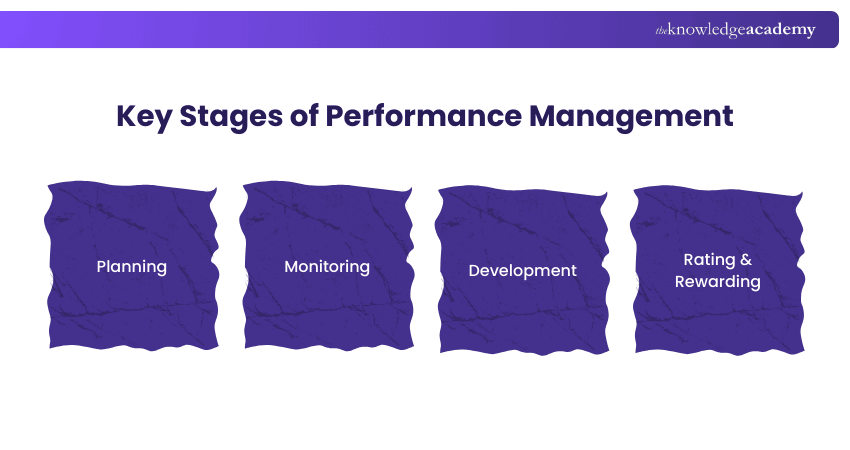
1) Planning
The initial stage focuses on setting clear expectations and performance goals. Here, employees and managers work to define SMART goals and performance metrics that align with organisational objectives. Also, flexibility is essential since goals may change as organisational needs evolve.
In the planning stage, HR plays a major role by providing tools, templates, performance metrics, and communication training to managers. By involving employees, it boosts motivation, clarity, and commitment.
2) Monitoring
This stage involves regularly checking employee progress against agreed goals. Rather than waiting for annual appraisals, managers provide continuous feedback and support to help employees develop and improve.
Performance Management software is valuable for tracking progress in real time, but personal conversations remain essential when discussing challenges, achievements, or areas for improvement.
3) Development
In the development stage, information is gathered to help employees improve in their respective roles. HR and managers may offer training, performance coaching, projects for building skills, and other learning opportunities.
In this stage, the primary goal is to close skill gaps, increase the capability of employees, and boost their confidence. This is useful for helping them to deliver positive outcomes and help to unlock their full potential.
4) Rating & Rewarding
In the final stage, employee performance is reviewed, rated, and recognised. Regular evaluations help managers understand contributions clearly and make fair decisions regarding rewards.
This may include appreciation, bonuses, pay rises, or promotions. If performance remains below expectations despite support, role adjustments or corrective measures may be considered. This approach ensures that high performance is valued and celebrated.
Begin your journey towards managerial excellence with our Introduction to Management Course – join today!
Best Practices for Performance Management Processes
Implementing some best practices enables organisations to establish an efficient Performance Management system that fosters employee development. Among these practices are:
1) Assessing Current Effectiveness
Before making any changes to the Performance Management process, organisations should conduct a thorough assessment of their current system. This involves gathering feedback from employees, Managers, and other stakeholders to identify strengths and weaknesses. Organisations can make informed decisions about changes by understanding what is working well and where improvements are needed.
2) Selecting the Appropriate Approach
Performance Management is not a one-size-fits-all solution. Different organisations might require different approaches based on their culture, size, and industry. It is essential to tailor this management process to suit the specific objectives of an organisation. This can involve customising performance metrics, goal-setting methods, and feedback mechanisms to align with organisational goals.
3) Training and Engaging Managers
Performance Management is a core part of a Manager’s role. It's important to support them with guidance on giving feedback and setting clear, measurable goals. Along with having the right knowledge, Managers also need the skills to lead effective performance conversations and support their team’s growth and development.
4) Embracing Continuous Performance Management
Embracing continuous Performance Management allows for more frequent feedback and discussions between Managers and employees. This approach enables timely adjustments and improvements. This, in turn, fosters a culture of ongoing learning and development. Frequent conversations guarantee employees receive prompt performance feedback, empowering them to enact essential enhancements and sustain their motivation.
5) Establishing a Formalised System
Having a formalised Performance Management system in place is crucial for consistency and fairness. This includes establishing clear documentation, guidelines, and processes that outline expectations and procedures. A formalised system also ensures that all employees are evaluated using the same criteria, promoting fairness across the organisation. This makes tracking employee progress and areas needing improvement easier.
Become a sought-after Senior Manager and take the journey from insight to influence with finesse! Sign up for our Senior Management Training now!
Benefits of Performance Management
Effective Performance Management brings forth numerous advantages. By implementing a robust system for managing employees’ performance, organisations can reap the following benefits:
1) Improving Employee Performance
Performance Management helps improve employee performance. When employees receive regular feedback and are provided with the necessary resources to succeed, they are more likely to excel.
Clear performance objectives and expectations set during the planning phase motivate employees to strive towards achieving their goals. As a result, organisations witness increased productivity and efficiency among their workforces.
2) Enhancing Employee Engagement
Engaged employees are vital assets to any organisation. An effective Performance Management improves engagement by fostering open communication, and guidance. When employees understand expectations clearly, they are more are connected to their roles.
Providing regular feedback and performance discussions helps employees to feel valued and acknowledged. This promotes higher job satisfaction and stronger commitment to their work, leading to less turnover and stability.
3) Making Better Decisions
Performance Management provides organisations with valuable data and insights into employee performance. By gathering and scrutinising performance metrics and feedback, organisations can make well-founded decisions.
These insights help leaders identify Areas for Improvement, enabling them to allocate resources effectively and make strategic decisions. Whether it's identifying training needs or adjusting workloads, Performance Management data serves as a valuable tool for driving organisational success.
4) Identifying High Performers
Through regular evaluations and assessments, Managers can pinpoint individuals who consistently exceed expectations and deliver exceptional results. Recognising these top performers is essential for employee morale and motivation.
Furthermore, identifying high performers allows organisations to provide targeted development opportunities and career advancement paths. This not only rewards top talent but also encourages others to strive for excellence.
As a Manager, your most valuable resource is the people in your team! Bring the best out of them with our Introduction to Managing People Course - Sign up now!
What Tools Should I Use for Performance Management
Performance Management has evolved through the rise of technology. Some of the key tools for enhancing the process of Performance Management are listed below.
1) Performance Management Software
A dedicated platform offers a centralised space to set goals, track Key Performance Indicators (KPIs), gather feedback, and conduct performance reviews. It is useful for automating time-consuming tasks, such as progress updates or reminders. By integrating dashboards and analytics, managers can identify performance patterns and make decisions for improvement.
2) Employee Feedback and Survey Tools
Performance Management requires effective and consistent communication. By using feedback tools, companies can collect real-time insights through pulse surveys and questionnaires. These tools are useful for measuring engagement, identifying areas needing support, and tracking how employees feel about changes within the organisation.
3) Goal-tracking and Objectives and Key Results (OKR) Software
For achieving a strong performance, everyone needs to work towards the shared organisational goals. Using tools that support OKRs makes it simpler to set clear targets and monitor progress effectively. They promote transparency, accountability, and alignment, ensuring employees understand how they are contributing to business outcomes.
How to Track Performance Management Metrics?
Tracking the right metrics helps you understand how well your Performance Management strategy is working. Some useful metrics include:
1) Work efficiency: Evaluates how effectively employees complete tasks while maintaining high quality.
2) Revenue per employee: Indicates the amount of income each person generates.
3) Errors: Repeated mistakes may indicate that someone requires additional training or support.
4) Absenteeism: Frequent absences can negatively impact team performance and indicate low employee engagement.
5) Overtime: Working extra hours often may show that the workload is too heavy or the pressure is too high. Keeping overtime in check helps prevent burnout.
Enhance business processing efficiency with Business Process Improvement Training – Join today!
What are the 5 C's of Performance Management?
Here are the five C’s of Performance Management:
1) Clarity: Clearly define roles, goals, and expectations so everyone knows what they're working toward.
2) Context: Explain why tasks matter and how they fit into bigger organisational goals.
3) Consistency: Regularly communicate and act in reliable ways—follow up and stay on track.
4) Courage: Be prepared to have honest conversations, offer direct feedback, and address challenging issues.
5) Commitment: Stay dedicated to the process, keep investing energy in developing your team, and show true belief in the work.
What are the 3 Ps of Performance Management?
The three Ps of Performance Management are:
1) Purpose: This aligns performance practices with the company’s broader goals. This helps you make sure that every action contributes to organisational success.
2) People: This focuses on empowering employees and Managers by actively involving them in goal-setting, feedback, and development.
3) Process: This establishes clear, consistent steps from setting expectations and monitoring progress to coaching and reviewing performance.
Conclusion
Understanding What is Performance Management can help your team grow, stay focused, and reach their goals without a hitch. When done well, it boosts communication, supports employee development, and builds a culture of trust and improvement. By establishing clear goals and giving regular feedback, companies can bring out the best in their people and achieve better results over time.
Harness your managerial prowess and turn your employees from team players to trailblazers! Sign up for our Management Courses now!
Frequently Asked Questions
What is the Difference Between Performance Management and Performance Appraisal?

Performance Management is the process by which managers give regular feedback and support improvement throughout the year. A Performance Appraisal is a periodic review (often annually) that evaluates past performance.
What is the Purpose of Performance Management?
Performance Management's core purpose is to help both individuals and teams do their best work, which supports the company’s goals. When employees are guided and supported well, they become more engaged, skilled, and prepared for the future. This leads to better results and overall business success.
What are the Other Resources and Offers Provided by The Knowledge Academy?
The Knowledge Academy takes global learning to new heights, offering over 3,000+ online courses across 490+ locations in 190+ countries. This expansive reach ensures accessibility and convenience for learners worldwide.
Alongside our diverse Online Course Catalogue, encompassing 19 major categories, we go the extra mile by providing a plethora of free educational Online Resources like Blogs, eBooks, Interview Questions and Videos. Tailoring learning experiences further, professionals can unlock greater value through a wide range of special discounts, seasonal deals, and Exclusive Offers.
What is The Knowledge Pass, and How Does it Work?
The Knowledge Academy’s Knowledge Pass, a prepaid voucher, adds another layer of flexibility, allowing course bookings over a 12-month period. Join us on a journey where education knows no bounds.
What are the Related Courses and Blogs Provided by The Knowledge Academy?
The Knowledge Academy offers various Management Courses, including the Performance Management Training ,Senior Management Training and the Business Process Improvement Training. These courses cater to different skill levels, providing comprehensive insights into Operational Efficiency.
Our Business Skills Blogs cover a range of topics related to Performance Management, offering valuable resources, best practices, and industry insights. Whether you are a beginner or looking to advance your Management skill , The Knowledge Academy's diverse courses and informative blogs have got you covered.

James Smith


Digital Marketing Manager and Trainer
James Smith is a digital marketing professional with over a decade of experience in SEO, content strategy, paid media and analytics. He has supported both SMEs and global brands in transforming their digital presence. James’s writing and training are rooted in results-driven tactics and the latest marketing trends.
View Detail
Upcoming Business Skills Resources Batches & Dates
Date
 Managing Remote Teams
Managing Remote Teams
Fri 19th Jun 2026
Managing Remote Teams
Fri 4th Sep 2026
Managing Remote Teams
Fri 27th Nov 2026

 If you wish to make any changes to your course, please


