


 Top Rated Course

We may not have the course you’re looking for. If you enquire or give us a call on +45 89870423 and speak to our training experts, we may still be able to help with your training requirements.
How to Make Coffee from Beans to Brew?
The Knowledge Academy 18 October 2025Making Coffee involves combining ground coffee beans with hot water through various brewing methods to extract flavour and aroma. From drip and French press to espresso and pour-over, each method offers a unique taste and strength. The right grind size, water temperature, and coffee-to-water ratio are key to a perfect brew.

Training Outcomes Within Your Budget!
We ensure quality, budget-alignment, and timely delivery by our expert instructors.
Table of Contents

How to Make Coffee?
The way to brew the perfect cup of joe depends on how properly you have stored the beans and what filters you've used to keep bitterness at bay. Exploring various types of coffee can also play a crucial role in finding the brewing method that is suitable according to your taste preferences and enhances the overall coffee experience.
Besides, here are some other components that you should keep in mind to make the best cup of joe:
1) Get the Right Beans
If you want to make the perfect cup of coffee, you need to start with the base of it: The coffee beans. Getting your hands on good quality coffee beans is super important. Depending on the quality and the flavour of your coffee beans you can determine the brewing process. There are different factors which influence the flavour factors of the coffee:
a) The country of origin,
b) The different class of beans it belongs to: Arabica, robusta, or a blend
c) The type of roast that the beans get
d) The texture to which the beans are grinded.

2) Get the Perfect Toast
There's no hard-and-fast rule for when to drink roasted coffee. However, it's wise to go with fresh toast to yield better results. When Making French Press Coffee, you should always question the quality of the roast and its preparation time. When you hunt to find the perfect roast, you will discover that some coffee must be consumed within six days of its roast date, while others can be consumed for a month. Find the proper roast based on your requirements.
3) Get the Right Water Temperature
The flavour of your coffee massively depends on the temperature of the water and to what extent you've agitated the coffee beans. If you add low-temperature water, you will observe that the coffee will turn more bitter.
On the contrary, if you use high-temperature water, you will observe that it results in better extraction from the beans. Also, it's essential to keep in mind the quality of the water. Make sure to use water that has relatively fewer minerals in it.
4) Get the Right Grind
There's no precise grind size to make a good cup of joe. The right grind always depends on your desire and preference. Besides, always ask yourself whether you want a caffeinated or sweetened cup. If you go with the finer grinds, you will have more coffee flavour than the coarse grind.
In addition, if you're using an old roast, make sure to use a finer grind to get the most out of the coffee flavour. If you're thinking of mixing the coffee grinds, be ready to derail your quest for the perfect cup. Also, it's better always to keep cleaning the grinder before accessing it to ensure no filth is left.
5) Get the Right Brewing Time
Getting the right brewing type for different Types of Coffee beans is crucial to create the perfect brew for you. There are various brewing methods out of which these are quite popular:
a) In the drip method, the contact time of the beans and the water should be approximately five minutes
b) If you are using a French press to make your coffee, then the contact time should be between two-four minutes
c) If you are planning for an Espresso, you would require a very brief time. The coffee grind should be only 20-30 seconds be in contact with water.
d) If you want a cold brew, then to get the maximum flavour of the beans you need to soak the coffee grind in water for over 12 hours.
However, if you feel that you are still not happy with the final product then you may either have over-extracted or under-extracted your coffee grind.
6) Equipment
You can have top-quality beans and the perfect grind, but without the right equipment, your brew will always miss the mark. It's not about splurging; it's about consistency, control, and bringing out the best in your coffee.
Start with a good burr grinder for an even grind and richer flavour. Then choose gear based on your brewing style: French press for bold brews, pour-over for cleaner cups. A gooseneck kettle adds precision, and a coffee scale ensures consistency. Clean tools matter too; since residue ruins taste.
Your setup reflects your coffee personality. Whether you keep it simple or go all in, the right tools make all the difference.
How to Prepare the Perfect Cup of Coffee at Home?
Before starting the coffee preparation, weigh the ground coffee to get a better result. Never measure it at random with measuring spoons, scoops, or cups. If you want to prepare 8 ounces of coffee, use around one tablespoon or around 15 grammes of ground coffee per ounce. You'll need about 60 grams, or four tablespoons of ground coffee, to make 4 cups.
Below are the ingredients and steps to make coffee:

Ingredients Require to Brew Coffee
Make sure to get your hands on all of these three ingredients to get your perfect brew:
1) Get filtered water to get authentic flavour.
2) The ideal proportion of the coffee-water mixture should be two tablespoons of ground coffee per eight ounces of water. You can adjust the quantity of coffee grinds according to your taste.
3) There is no such thing as a perfect grind because it depends on the machine. The longer the grounds are in contact with water, the coarser the grind will get.
Steps to Prepare the Perfect Brew
1) Place the filter around the basket of the coffee maker. Make sure to include medium-sized ground coffee beans. Add water to it.
2) Once the water gets filtered, bring it to a boil and let it sit for a minute.
3) Add sufficient water to the filter to ensure that it remains wet, and then let it drain into your cup. Later, remove the excess water.
4) Now measure the ground coffee present in the filter. Add enough water to wet the beans again, drain them into your cup, and then add the remaining water.
Join our renowned Train the Trainer course and gain the expertise you need to inspire and educate others effectively.
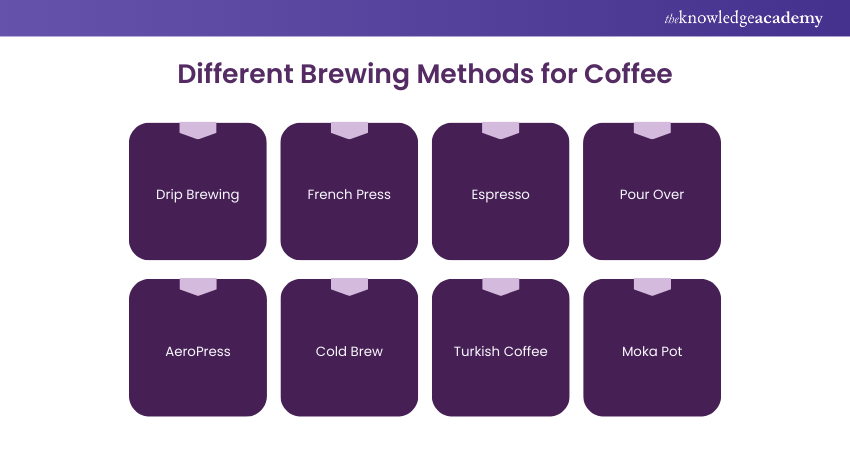
Different Brewing Methods for Coffee
There are many different modes of making coffee each contributes its own distinct trait to the flavour, Coffee's Aroma, and body of the product. Let’s look at some different brewing methods for coffee:
a) Drip Brewing
It means that the coffee is made by hot water dripping onto coffee grounds held in a filter, allowing the brewed coffee to slowly collect in a carafe or pot. Machines can also offer various temperature and time settings. Similarly, Making Arabic Coffee involves a distinct brewing process that enhances its unique flavour.
b) French Press
This method also called using a press pot, is achieved by allowing coarse coffee grounds to steep in hot water for some minutes, before separating the grounds from the water by plunging them away with a plunger. This leads to a robust and full flavour, since the coffee's natural oils and fine particles are not filtered out.
c) Espresso
This method uses a high-pressure espresso machine that forces hot water through very finely ground coffee, resulting in a rich and smooth shot with a layer of cream on top, commonly known as "crema." Since espresso serves as the base for many coffee drinks like lattes and cappuccinos, understanding the amount of caffeine in coffee can help you choose the right brew for your preference.
d) Pour over
This method involves making of coffee in brewing hot water over with the coffee grounds in a filter. The water drips through the coffee and filters into a carafe or a cup. The V60 or Chemex are some of the popular devices for this method, which allows to have the precise control over the brewing time and temperature.
e) AeroPress
The AeroPress is a rather new device, which can brew coffee through applying hot water under high pressure to the coffee grounds by pushing the plunger. This way is highly efficient, as it takes only about two minutes, and the final product is a smooth and rich tasting coffee.
Manage spaces like a pro — boost efficiency and control with our expert Facilities Management Training.
f) Cold Brew
For making Cold Brew Coffee grounds are soaked in cold or room temperature water for an extended period, typically 12 to 24 hours. This process yields a concentrate that is less pungent and can be served over ice cubes or diluted with water or milk.
g) Turkish Coffee
In this method, the coffee beans ground finely and brewed in water (sometimes with sugar) until the served drink is ready. The grounds settle down in the cup which makes the coffee strong, unfiltered, and has a unique taste.
h) Moka pot
This method is also referred to as a stovetop espresso maker, which is the Moka pot produces espresso coffee by letting the hot water being pressurised by steam flow through the ground coffee. It's less concentrated/intense than an espresso but more robust than drip coffee made with water.
Brownie Tips to Consider making the Best Coffee
Here are a handful of tips that you can consider to make the best coffee:

1) Get Your Hands on the Fresh Beans
Undeniably, coffee is best when consumed within a few days of roasting. Either roast it yourself or buy it from a local vendor to get fresh beans. Always avoid buying the beans in bulk, as exposure to bright light can destroy the coffee's flavour.
Choose stores that sell fresh beans and are very concerned about quality, especially when considering different Coffee Brewing Methods to enhance the taste and aroma of your brew. It's a safe bet to go with the coffee sellers who have packaged the beans well in a sealed bag and are pretty conscious of their quality.
2) Go With the Best-Quality Coffee
A coffee connoisseur would always strive for the taste of coffee. To ensure that you have the perfect cup of joe at the start of the day, select a brand of coffee that mentions the region and country of origin. Most people either prefer Robusta or Arabica. Arabica beans are known to have a better flavour.
Make sure to get your hands on pure Arabica beans. Robusta beans are the best option if you're on a tight budget and want to avoid splurging! It has more caffeine content. If you're looking to Become a Barista and want to balance quality with affordability, consider exploring your nearby grocery store for good brands that serve as great alternatives to gourmet beans at half the price!
Lead better conversations – enhance your skills on practical tools via our Facilitation Skills Training.
3) Get Good Coffee Filters
Don't use cheaper paper coffee filters, as they degrade the quality of the coffee. Instead, look for dioxin-free or oxygen-bleached filters. You can also use long-lasting gold-plated filters, as these paper filters are known to deliver the best flavours.
4) Clean Your Equipment
Old coffee oils and leftover grounds can ruin your next brew. Make it a habit to rinse and deep-clean your coffee gear regularly. Whether it’s your grinder, French press, or espresso machine, a clean setup ensures every cup tastes fresh and pure.
5) Understanding Your Grind
Different brewing methods call for different grind sizes. A French press likes it coarse, espresso demands a fine grind and pour-over sits somewhere in between. Using the wrong grind can lead to under or over-extraction, resulting in a bitter or sour cup.
6) Weight & Time
Precision makes perfect. Use a digital scale to measure your coffee and water ratio accurately. Time your brewing process to avoid guesswork. Even small variations can shift the taste dramatically, so weigh and time like a pro to unlock consistency.
Common Coffee Brewing Mistakes to Avoid
Even seasoned coffee lovers fall into these traps. Avoiding these simple yet common mistakes can help you brew a cup that’s smoother, richer, and full of character every time.

1) Not Pre-warming the Cup
Pouring hot coffee into a cold cup? That’s a fast way to lose heat and taste. Pre-warming your mug with a splash of hot water helps maintain the ideal temperature and keeps your coffee comforting from the first sip to the last.
2) Not Using Fresh Coffee Beans
Stale beans make dull coffee. If your brew tastes flat or lifeless, old beans could be the culprit. Buy beans in small batches, store them well, and use them within a couple of weeks for best results.
3) Lack of Regular Machine Cleaning
Your coffee machine is only as good as its last rinse. Oils and residue build up quickly, especially in espresso machines. A neglected machine can alter flavour and reduce performance, so give it the regular TLC it deserves.
4) Inconsistent Ratios
Winging your measurements might seem convenient, but it often leads to inconsistent results. Too much or too little coffee alters strength and flavour. Stick to a solid coffee-to-water ratio for a balanced brew every time.
5) Low Brewing Temperature
Water that’s too cold under-extracts coffee, leaving it weak and acidic. Aim for a brewing temperature around 90 to 96 degrees Celsius. Anything lower and you’ll miss out on the richness locked inside those beans.
6) Using the Wrong Kind of Milk for Coffee
Not all milk foams the same. Full-fat milk gives you a creamy texture, while skimmed milk creates larger bubbles and a lighter mouthfeel. If you’re going dairy-free, oat milk is often the best choice for barista-style results.
7) Guessing Measurements
Making coffee isn’t guesswork, it’s a craft. Whether it's the weight of the beans or the water volume, measuring removes uncertainty and leads to better flavour control. Invest in a digital scale and keep your brewing consistent.
8) Skipping on Water Quality
Bad water equals bad coffee. Tap water with too much chlorine or hardness can overpower delicate flavours. Filtered water or bottled spring water can dramatically improve the clarity and balance of your brew.
Learn the art of floristry from the ground up with our Floristry Introduction Course now!
9) Storing Beans Incorrectly
Exposure to air, light, moisture, and heat quickly degrades beans. Avoid transparent containers or leaving bags open. Store your beans in an airtight, opaque container in a cool, dry place to lock in freshness.
Quality of Coffee Beans
The foundation of every great cup of coffee lies in the beans. Quality beans are handpicked, carefully roasted, and packed with nuanced flavours that shine through when brewed correctly. Look for beans that are freshly roasted, sourced responsibly, and suited to your preferred brewing method. Bean quality affects everything from the aroma to the caffeine content, so it’s worth making the effort to choose wisely.
1) Not Grinding Beans Properly
Grinding your coffee just before brewing is essential but doing it wrong can spoil everything. A grind that’s too fine can clog your filter and lead to bitterness, while a grind that’s too coarse may leave your coffee weak and watery. Use a burr grinder for even, consistent results, and match the grind size to your brewing method.
2) Incorrect Brewing Method
Not all coffee is brewed equally. Using the wrong method for your bean type or roast level can flatten the flavour. For example, dark roasts might shine best in a French press, while light roasts sing in a pour-over. Understanding your brewing method helps highlight the unique character of each bean, delivering a more satisfying coffee experience.
Why Does My Homemade Coffee Taste bitter or Sour?
Bitter coffee often means it’s over-extracted, try using coarser grounds or shortening the brew time. Sourness usually means under-extraction, so go finer or brew a bit longer. Check your water temperature too. Aim for around 90 to 96°C for best flavour balance.
How Can I Froth Milk Without a Frother?
Yes, you can heat milk gently, pour it into a jar, and shake it vigorously until foamy. Or use a French press by pumping the plunger up and down to create froth. Warm milk whisks easily too, giving you silky foam in seconds without any fancy tools.
Conclusion
Now that you know how to make coffee from beans to brew, the perfect cup is just a few steps away. It’s all about picking quality beans, grinding them right, and brewing with care. Master the process, and every sip will feel like a café-quality treat; right from your kitchen.
Sign up for our Industry Training to imbibe insights into coffee brewing, floristry and phone repairing!
Frequently Asked Questions
How Do I Store Ground Coffee for Freshness?

Keep ground coffee in an airtight, opaque container in a cool, dry place away from light, moisture, and heat. Avoid the fridge or freezer. Use it within two weeks of opening for the best flavour and aroma. Freshness fades fast, so grind only what you need when possible.
What Are Three Layers of Coffee?
In espresso, the three layers are the heart, body, and crema. The heart is the rich, dark base with intense flavour. The body is the middle layer, smooth and full. The crema is the golden, foamy top, filled with aroma and oils. Together, they create a perfect espresso shot.
What are the Other Resources and Offers Provided by The Knowledge Academy?
The Knowledge Academy takes global learning to new heights, offering over 3,000 online courses across 490+ locations in 190+ countries. This expansive reach ensures accessibility and convenience for learners worldwide.
Alongside our diverse Online Course Catalogue, encompassing 19 major categories, we go the extra mile by providing a plethora of free educational Online Resources like Blogs, eBooks, Interview Questions and Videos. Tailoring learning experiences further, professionals can unlock greater value through a wide range of special discounts, seasonal deals, and Exclusive Offers.
What is The Knowledge Pass, and How Does it Work?
The Knowledge Academy’s Knowledge Pass, a prepaid voucher, adds another layer of flexibility, allowing course bookings over a 12-month period. Join us on a journey where education knows no bounds.
What are the Related Courses and Blogs Provided by The Knowledge Academy?
The Knowledge Academy offers various Industry Courses including Basic Barista Course, Floristry Introduction Course and Facilities Management Course. These courses cater to different skill levels, providing comprehensive insights into the What is a Barista?
Our Business Skills Blogs cover a range of topics related to musical instruments, offering valuable resources, best practices, and industry insights. Whether you are a beginner or looking to advance your skills as a Barista, The Knowledge Academy's diverse courses and informative blogs have you covered.

The Knowledge Academy


Global Training Provider
The Knowledge Academy is a world-leading provider of professional training courses, offering globally recognised qualifications across a wide range of subjects. With expert trainers, up-to-date course material, and flexible learning options, we aim to empower professionals and organisations to achieve their goals through continuous learning.

Upcoming Business Skills Resources Batches & Dates
Date
 Basic Barista Course
Basic Barista Course
Fri 24th Jul 2026
Basic Barista Course
Fri 16th Oct 2026

 If you wish to make any changes to your course, please


