


 Top Rated Course

We may not have the course you’re looking for. If you enquire or give us a call on +49 8000101090 and speak to our training experts, we may still be able to help with your training requirements.
What is Social Care: Importance, Types, and Principles
The Knowledge Academy 27 January 2026Social Care supports people of all ages with daily living, emotional needs, and independence due to illness, disability, age, or life challenges. It improves quality of life by offering practical support, emotional care, and services for individual needs, while working alongside healthcare to help people live with dignity and safety.

Training Outcomes Within Your Budget!
We ensure quality, budget-alignment, and timely delivery by our expert instructors.
Table of Contents
Caring for others is something we have encountered at different stages in life. Understanding What is Social Care helps to explain how this support is organised, delivered, and designed to protect well-being. Social Care goes beyond medical treatment; it focuses on daily living, independence, dignity, and emotional support.
As societies change and care needs more attention, knowing What is Social Care is important for individuals, families, and communities. In this blog, you will learn about Social Care, its types, its importance, and more. Keep reading to explore more!
Table of Contents
1) What is Social Care?
2) Types of Social Care
3) Why is Social Care Important?
4) Principles of Social Care
5) Difference Between Social Care and Healthcare
6) What Skills Do You Need to Work in Social Care?
7) Who is Supported by Social Care?
8) What are the Responsibilities of a Social Care Worker?
9) Key Challenges in Social Care?
10) Conclusion
What is Social Care?
Social Care is an essential sector that supports people of all ages who require help due to illness, ageing, disability, or life challenges. It includes a wide range of services designed to improve wellbeing, promote independence, and ensure safety. These services may involve personal care, emotional support, and access to specialised resources that support daily living.
Social Care also covers social, emotional, and psychological support to improve the quality of life. It helps build relationships, stay connected to communities, and feel included. Guided by legal frameworks, such as the Care Act 2014 in England, it follows a person-centred approach that supports individual needs, preferences, and circumstances.

Types of Social Care
Social Care encompasses loads of services tailored to meet the various needs of individuals requiring help in navigating life’s demanding situations. The following points outline unique varieties of What is Social Care, each addressing unique components of support and fostering a sense of community:
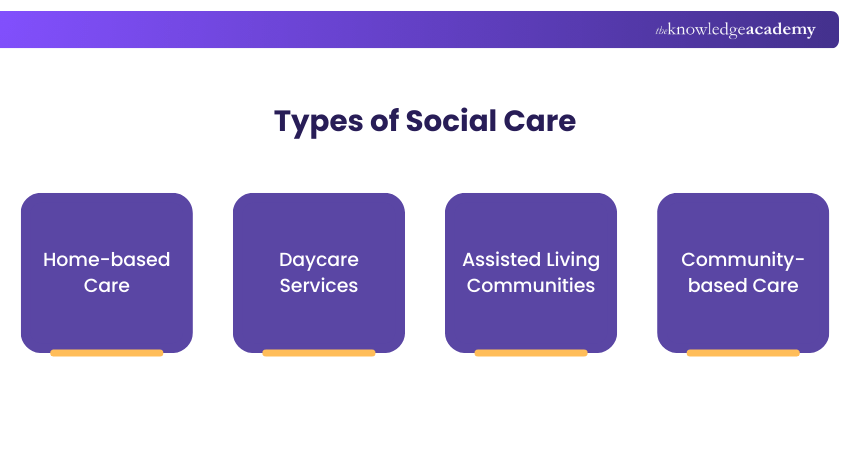
1) Home-based Care
Home-based care is a personalised method in which individuals obtain essential aid within the comfort their homes. This sort of Social Care is particularly useful for those who prefer to maintain their independence while requiring help with everyday tasks, personal care, and different critical activities.
2) Daycare Services
Daycare services provide a structured and supportive environment for individuals who may benefit from social interaction, recreational activities, and supervised care during the day. This type of care is especially valuable for those with family members working during the day or requiring additional social engagement.
3) Assisted Living Communities
Assisted living communities offer a residential option for individuals needing more support but still wanting independence. These communities balance independent living and assistance with daily activities, often including communal spaces, recreational activities, and access to on-site healthcare services.
4) Community-based Care
Community-based care focuses on providing support within the broader community setting. This may involve outreach trainings , support groups, and services in local community centres. Community-based care aims to enhance social integration, accessibility, and the overall well-being of individuals within their neighbourhoods.
By recognising the diverse needs of individuals, these types of Social Care services contribute to creating a comprehensive and inclusive support system that empowers individuals to lead a fulfilling life while receiving the assistance they require.
Build your skills with Personal Development Training and stay ahead of the learning curve!
Why is Social Care Important?
Now that we have a comprehensive understanding of the scope of Social Care, let's delve into why this sector holds such significance within the healthcare system. As previously mentioned, Social Care is directed towards those who are vulnerable and require assistance, which is vital in enabling individuals to lead fulfilling lives by providing essential support.
1) Standard of Living
Everyone has the right to live life to the fullest and realise their true potential. Social Care becomes instrumental in allowing people to engage in normal daily activities and undertake tasks that might otherwise be challenging. Whether it involves emotional, physical, or social support, Social Care has the power to profoundly impact lives, offering individuals experiences that would be otherwise unattainable.
2) Independence and Self-respect
Social Care allows everyone to live with dignity and, where feasible, maintain as much independence as possible. This proves transformative for many individuals who might struggle with daily tasks and self-care, serving as a significant confidence booster. Without the assistance provided by Social Care, isolation and confidence issues could become pervasive challenges for many.
3) Economic Concerns
For many individuals, Social Care represents the sole means to attend to their needs due to a lack of support and financial resources. By extending social support to elderly individuals without savings and family assistance, we ensure everyone can access necessities, preventing neglect and disregard.
The moral obligation is to ensure that everyone enjoys equal access to essential resources and receives the highest quality of care, thereby upholding principles of fairness and compassion within the society.
Learn what active listening is with our Active Listening Skills Training and stay ahead of the learning curve!
Principles of Social Care
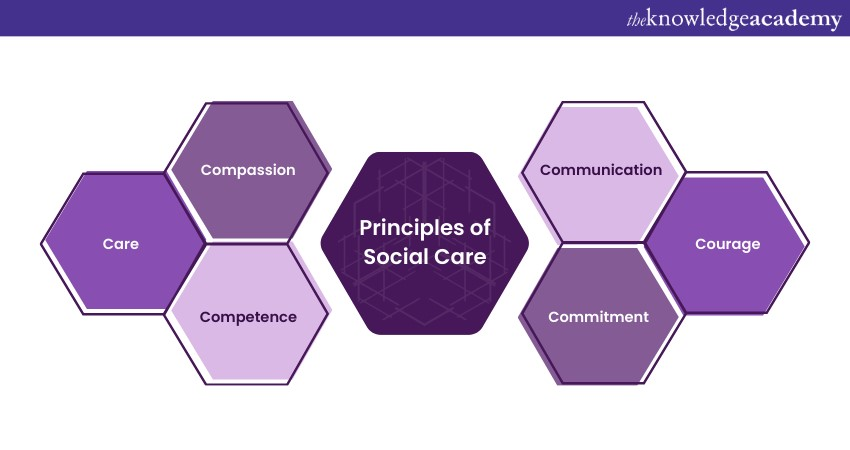
The six C's integral to health will help you understand What is Social Care :
1) Care
In Social Care, care goes beyond the routine tasks of medical attention. It involves a holistic approach to comprehending and addressing an individual's needs, focusing on physical, emotional, and psychological well-being. Care providers strive to build an environment where patients feel valued, respected, and supported.
2) Compassion
"Compassion" is the empathetic understanding of another person's feelings and experiences. In healthcare, a Health Care Social Worker plays a vital role in addressing the medical needs of individuals while also recognising and responding to their emotional and spiritual concerns. Compassionate care builds a sense of trust and connection between the care provider and the person receiving care.
3) Competence
"Competence" in health and Social Care is providing effective and efficient care. It involves a blend of expertise, skills, and discernment. Social Care providers stay informed about the latest medical advancements, continuously develop their skills, and make sound decisions to ensure the best possible outcomes for those under their care.
4) Communication
Effective communication is necessary in healthcare settings to ensure that all parties involved understand information accurately and effectively. Care providers must be adept at verbal and non-verbal communication, as clear and concise interactions build trust, prevent misunderstandings, and enhance the overall quality of care.
5) Courage
It involves confronting challenges and advocating for the well-being of individuals under care. This may include speaking up for patients' rights, addressing ethical concerns, or taking bold actions to ensure the best possible outcomes. Courageous care providers contribute to a culture of advocacy and empowerment.
6) Commitment
"Commitment" in health and Social Care entails a steadfast dedication to providing high-quality care over the long term. This involves a commitment to continuous learning, adapting to evolving medical practices, and advocating for the rights and dignity of individuals in care. Commitment is the driving force behind sustained efforts to enhance the overall quality of healthcare services.
Embracing these principles ensures not only the physical well-being of individuals but also contributes to nurturing a supportive and empathetic environment within healthcare settings.
Learn practical techniques to handle conflict calmly and communicate with confidence with Dealing with Difficult People Training – Join today!
Difference Between Social Care and HealthCare
Let's look at the difference between Social Care and healthcare in the table below:
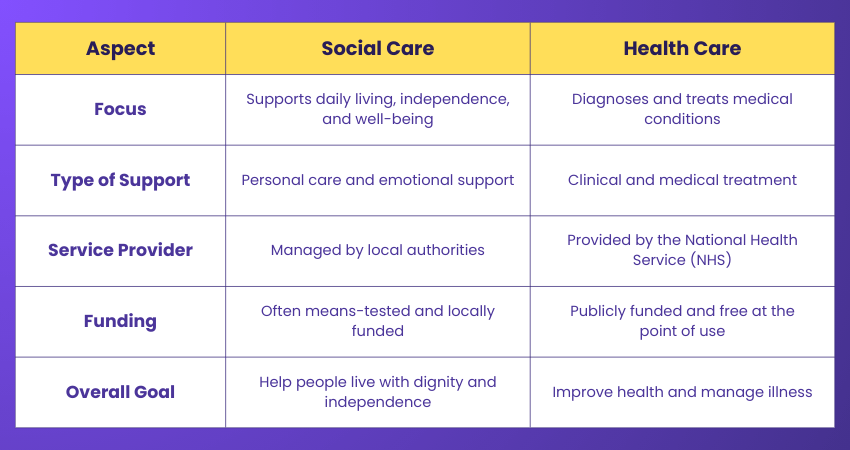
Social Care and healthcare differ mainly in their purpose and the type of support they provide. Social Care focuses on helping individuals manage daily life, maintain independence, and feel supported emotionally and socially. It is designed for people who may not need medical treatment but require ongoing assistance due to age, disability, or life challenges.
Healthcare is centred on medical needs, such as diagnosing illnesses, providing treatment, and preventing health conditions. It is delivered primarily through the National Health Service (NHS) to improve physical and mental health outcomes. While healthcare addresses clinical issues, Social Care complements it by making sure people live safely and with dignity.
What Skills do you Need to Work in Social Care?
To excel in a Social Care role, a genuine passion for helping others and a caring nature are essential. Additionally, you will need:
1) Interpersonal skills to develop strong relationships with clients or service users
2) Effective communication abilities for clear and empathetic interactions
3) Time management and organisational skills to handle pressure and prioritise tasks effectively.
4) Numerical aptitude for tasks that require basic calculations or budgeting
5) IT proficiency to manage records and use digital tools efficiently
6) Observation and analytical skills to assess situations and identify potential concerns.
7) Teamwork capabilities to collaborate effectively with colleagues
8) Problem-solving skills and the ability to cope up with any dynamic situation
9) Flexibility and adaptability to meet varying needs and challenges
10) A non-judgmental approach to ensure fairness and understanding
11) Commitment to dignity and respect, ensuring those in your care are treated with compassion.
Resilience, patience, and a sense of humour can also help brighten someone’s day and make challenging situations easier to manage. Depending on your role, a Disclosure and Barring Service (DBS) check or a valid driving license may be required. While not mandatory, proficiency in a second language can be an asset.
Strengthen self-awareness and empathy to lead, collaborate, and succeed with Emotional Intelligence Training now!
Who is Supported by Social Care?
Social Care is not confined to a specific age demographic; its scope extends across various life stages, encompassing child protection initiatives and end-of-life care. Services cater to adult and children's Social Care, acknowledging the diverse needs across age groups. For example, adults may also benefit from financial support like Personal Independence Payment, which helps those with long-term health conditions or disabilities.
With life expectancy increasing, there is a rising demand for services tailored to the elderly, reflecting the evolving landscape of Social Care to address the unique obstacles and requirements associated with different phases of life.
1) Social Care for Children
Children and young people receive support through social care services when they face challenges, such as protection from harm or disability. These services are designed to protect their well-being while supporting healthy development in a safe and supportive environment.
Support can include practical help at home, assistive technology, home adaptations, access to extracurricular activities, and educational opportunities. As young people reach adulthood, they move into adult social care services, ensuring continuity of support towards independent living.
2) Social Care for Adults
Adult Social Care is a comprehensive system that provides tailored support to individuals facing challenges, such as age or disability. It focuses on meeting individual needs while promoting independence and overall well-being.
Support can include personal care, health-related support, emotional and psychological assistance, home care, and more. The main aim is to help adults live fulfilling lives with dignity, choice, and respect, while protecting vulnerable individuals and encouraging social inclusion through care management.
What are the Responsibilities of a Social Care Worker?
Social Care workers play a crucial role in supporting individuals' well-being through diverse responsibilities, impactful contributions, and essential skills. Understanding How to Become a Social Care Worker is key to pursuing this meaningful and rewarding career.
1) Varied Roles in Social Care
Social Care workers perform numerous duties, tailored to the specific area within Social Care they operate in. Despite the diversity of roles, the common objective remains to enhance the well-being of individuals under their care, making these professionals indispensable in the sector.
2) Core Responsibilities
The responsibilities of Social Care workers often include providing emotional support to individuals, assisting them with everyday tasks, and fostering meaningful relationships. They also play a critical role in monitoring individuals to identify any potential concerns.
Additionally, they may organise activities and participate in outings to enrich the experiences of those they care for, contributing to their overall development and happiness.
3) Impactful Work
The diverse and adaptable nature of Social Care roles enables workers to address the unique needs of everyone. This adaptability, combined with the positive impact they have on people’s lives, makes this work deeply fulfilling for those who aspire to make a difference.
4) Essential Skills
Social Care workers require a genuine desire to help others, which forms the foundation of their role. Effective communication skills are vital for navigating complex and sensitive situations.
Patience is equally important, as the challenges in Social Care can vary greatly. Above all, empathy is crucial, enabling workers to build a compassionate and supportive environment for the individuals in their care.
Take control of your stress and develop healthier habits for overall well-being with the Stress Management Course today!
Key Challenges in Social Care
The Social Care sector faces significant challenges that affect both care providers and those who rely on their services. These issues help you effectively understand What is Social Care completely. The challenges are outlined below:
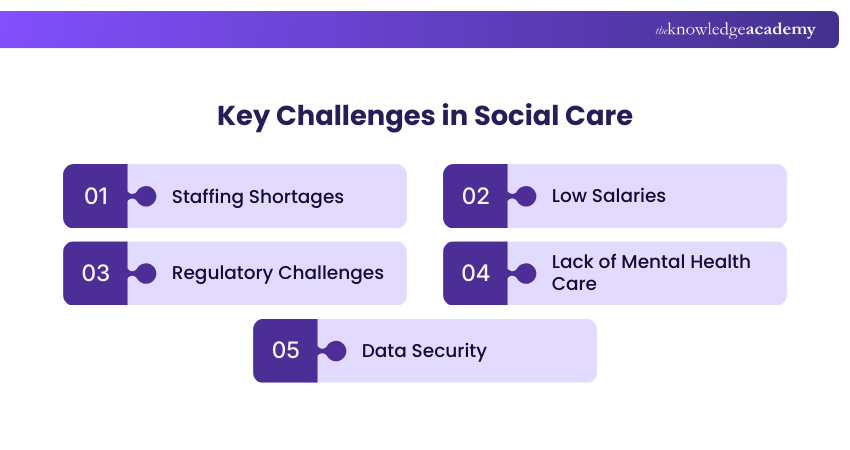
1) Staffing Shortages:
The Social Care sector faces a shortage of trained and experienced professionals, which directly affects service quality. This increases workloads, longer waiting times, and reduced personal attention.
2) Low Salaries:
Low pay discourages people from entering or staying in Social Care roles. This leads to high turnover and burnout. Thus, competitive salaries and fair recognition are essential to attract skilled workers.
3) Regulatory Challenges:
Social Care providers must comply with regulations that can be time-consuming and difficult to manage. While rules ensure legal safety, overall complicated processes take away time from delivering care.
4) Lack of Mental Health Care:
Mental health support in Social Care is often limited. Due to insufficient resources and limited trained professionals, it becomes harder to provide holistic care that supports both emotional and psychological well-being.
5) Data Security:
The increased use of digital systems raises concerns about protecting sensitive personal information. Strong cybersecurity practices and regular staff training are vital to prevent data breaches and maintain trust.
Conclusion
Social Care is the foundation of a compassionate and inclusive society, supporting people through life’s most vulnerable moments. Understanding What is Social Care helps to better appreciate the impact it has on individuals, families, and communities. Strengthening services that provide care ensures safer lives, greater independence, and better quality of life.
Discover your full potential by growing skills that shape personal and professional success with Personal Development Courses – Register now!
Frequently Asked Questions
How is Social Care Funded?

Social Care in England is funded through local authorities. For 2025/26, funding includes £5.9 billion from the Social Care Grant, a 2% care precept raising £650 million, and £2.64 billion via the Better Care Fund to support ongoing services.
What is Responsibility in Health and Social Care?
Responsibility in health and Social Care involves ensuring the safety, dignity, and well-being of individuals. It includes providing quality care, respecting rights, maintaining confidentiality, and adhering to professional standards to satisfy the physical, emotional, and social needs of those receiving care.
What are the Other Resources and Offers Provided by The Knowledge Academy?
The Knowledge Academy takes global learning to new heights, offering over 3,000+ online courses across 490+ locations in 190+ countries. This expansive reach ensures accessibility and convenience for learners worldwide.
Alongside our diverse Online Course Catalogue, encompassing 19 major categories, we go the extra mile by providing a plethora of free educational Online Resources like Blogs, eBooks, Interview Questions and Videos. Tailoring learning experiences further, professionals can unlock greater value through a wide range of special discounts, seasonal deals, and Exclusive Offers.
What is The Knowledge Pass, and How Does it Work?
The Knowledge Academy’s Knowledge Pass, a prepaid voucher, adds another layer of flexibility, allowing course bookings over a 12-month period. Join us on a journey where education knows no bounds.
What are the Related Courses and Blogs Provided by The Knowledge Academy?
The Knowledge Academy offers various Personal Development Courses, including the Social Skills Training, Active Listening Training, and Emotional Intelligence Training. These courses cater to different skill levels, providing comprehensive insights into How to Control Your Emotions.
Our Business Skills Blogs cover a range of topics related to Social Care and Well-being, offering valuable resources, best practices, and industry insights. Whether you are a beginner or looking to advance your Personal Health and Well-being knowledge, The Knowledge Academy's diverse courses and informative blogs have got you covered.

The Knowledge Academy


Global Training Provider
The Knowledge Academy is a world-leading provider of professional training courses, offering globally recognised qualifications across a wide range of subjects. With expert trainers, up-to-date course material, and flexible learning options, we aim to empower professionals and organisations to achieve their goals through continuous learning.

Upcoming Business Skills Resources Batches & Dates
Date
 Social Skills Training
Social Skills Training
Fri 20th Mar 2026
Social Skills Training
Fri 26th Jun 2026
Social Skills Training
Fri 18th Sep 2026
Social Skills Training
Fri 27th Nov 2026

 If you wish to make any changes to your course, please


