


 Top Rated Course

We may not have the course you’re looking for. If you enquire or give us a call on +41 315281584 and speak to our training experts, we may still be able to help with your training requirements.
Top 12 Reasons Why Projects Fail and Their Solutions in 2026
Grace Mitchell 28 May 2026Project Failures in 2026 stem from poor planning, miscommunication, resource mismanagement, and inadequate risk assessment. Identifying these pitfalls is crucial for success. Explore the top 12 reasons why projects fail and uncover practical solutions to improve efficiency, minimise risks, and achieve project goals with confidence.

Training Outcomes Within Your Budget!
We ensure quality, budget-alignment, and timely delivery by our expert instructors.
Table of Contents

You have just launched a high-stakes project with clear objectives, a skilled team, and a promising roadmap. But, as weeks pass, deadlines slip, resources are stretched thin, and stakeholders grow impatient. The project that once felt like a success story now teeters on the edge of failure. Does it sound familiar? Did you wonder Why Projects Fail despite careful Project Planning?
These days, Project Management is more complex than ever. Emerging technologies, shifting market dynamics, and evolving team structures introduce new challenges. Why Projects Fail isn’t always about a single misstep; it’s often a mix of poor communication, unrealistic goals, or resistance to change. But failure isn’t inevitable. Let’s dive into the 12 biggest reasons projects fail and how to prevent them in 2026!
Table of Contents
1) What is Project Failure?
2) 12 Reasons Why Projects Fail & Their Solutions
a) Unclear Objectives
b) Lack of Executive Support
c) Poor Communication
d) Scope Creep
e) Unrealistic Expectations
f) Limited Resources
g) Scheduling Delays
h) Lack of Transparency
i) Poor Alignment
j) Incomplete Requirements
k) Choice of Technology
l) Inexperience
3) Conclusion
What is Project Failure?
Failure of a project occurs when a project does not meet its anticipated objectives, in terms of budget, deadlines, or deliverables. Most times, this is due to poor planning, fuzzy goals, or poor resources, hence challenging it to maintain schedule. Unforeseen setbacks, like changes in priorities or communication breakdown, may also lead to its failure.

In order to avoid failure, teams should detect warning signs in advance and take corrective measures. Effective goal setting, What is Project Risk Management, and good stakeholder interaction can keep projects on track. With effective strategies, companies can reduce setbacks and enhance the prospects of project success.
12 Reasons Why Projects Fail & Their Solutions
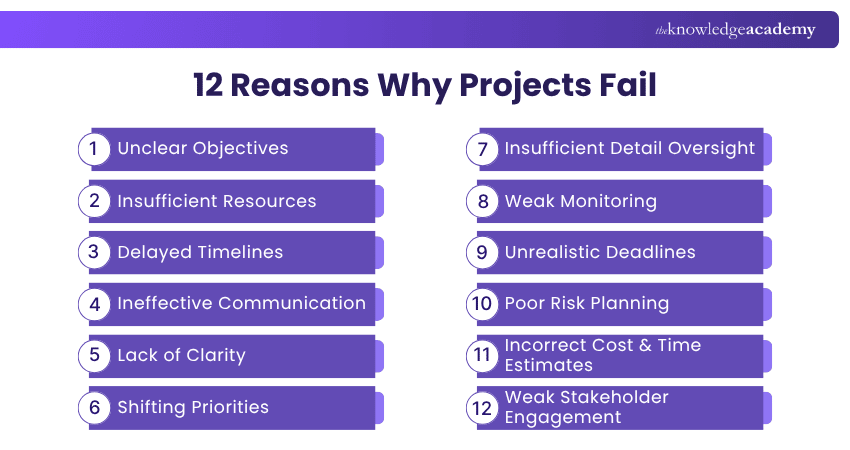
Most projects fail because of common pitfalls that disrupt progress, waste resources, and end in unmet objectives. The factors of unclear objectives, lack of communication, and unrealistic timelines create challenges that sidetrack success.
Yet, by recognising those risks ahead of time and using active interventions such as formal planning, risk management, and effective monitoring teams can enhance execution and bring projects to completion. Here are the main reasons why projects fail and their solutions:
1) Unclear Objectives
Problem: Projects often fail when goals are not clearly defined, leading to confusion, misaligned efforts, and wasted resources. Teams may work towards different outcomes without a shared understanding.
Solution: Define clear, measurable objectives at the start using frameworks like SMART goals and ensure all stakeholders agree on them.
Example: A marketing project without defined KPIs may focus on traffic instead of conversions, resulting in poor business impact.
2) Lack of Executive Support
Problem: Without leadership backing, projects may lack direction, funding, and authority, making it difficult to remove obstacles or make decisions.
Solution: Engage executives early, keep them informed, and ensure they actively support the project throughout its lifecycle.
Example: A digital transformation project may stall if senior leaders do not approve budgets or prioritise it.
Enhance your Project Management skills with our PRINCE2 Agile® Practitioner (Version 2) Course - Register now!
3) Poor Communication
Problem: Ineffective communication leads to misunderstandings, missed updates, and disconnected teams, increasing the risk of errors.
Solution: Establish clear communication channels, regular updates, and transparent reporting processes.
Example: A development team missing requirement updates may deliver features that do not meet client expectations.
4) Scope Creep
Problem: Uncontrolled changes or additions to the project scope can increase workload, delay timelines, and exceed budgets.
Solution: Implement a change control process and prioritise requirements based on business value.
Example: Adding extra features to a software project without adjusting deadlines can lead to missed delivery dates.
5) Unrealistic Expectations
Problem: Setting overly ambitious timelines or deliverables can put pressure on teams and result in poor quality outcomes.
Solution: Use realistic planning based on available resources, past data, and risk assessments.
Example: Expecting a complex system to be built in a few weeks may lead to rushed work and frequent errors.

6) Limited Resources
Problem: Insufficient budget, time, or skilled personnel can hinder progress and reduce project quality.
Solution: Allocate resources effectively, prioritise tasks, and adjust scope when necessary.
Example: A project with too few developers may face delays in completing critical tasks.
7) Scheduling Delays
Problem: Poor planning or unexpected issues can disrupt timelines, causing delays and increasing costs.
Solution: Create realistic schedules, include buffer time, and monitor progress regularly.
Example: Delays in vendor delivery can push back the entire project timeline.
Lead the projects with confidence with our PRINCE2® Foundation & Practitioner Training - Join now!
8) Lack of Transparency
Problem: When project status is not clearly visible, issues may go unnoticed until they become major problems.
Solution: Use dashboards, reporting tools, and regular updates to maintain transparency.
Example: Hidden delays in early stages may only surface close to deadlines, making recovery difficult.
9) Poor Alignment
Problem: Misalignment between stakeholders, teams, and business goals can lead to conflicting priorities and inefficiencies.
Solution: Ensure continuous alignment through regular meetings and shared project goals.
Example: A product team focusing on features while leadership prioritises cost reduction can create conflicts.
10) Incomplete Requirements
Problem: Missing or unclear requirements can lead to rework, confusion, and delays.
Solution: Gather detailed requirements and validate them with stakeholders before execution.
Example: Developing a feature without full specifications may require multiple revisions later.
11) Choice of Technology
Problem: Selecting unsuitable tools or technologies can limit performance, scalability, or integration.
Solution: Evaluate technology based on project needs, future scalability, and team expertise.
Example: Using outdated software may slow down development and reduce system efficiency.
Gain globally recognised certification and elevate your career – join our PRINCE2® Training now!
12) Inexperience
Problem: Lack of skills or experience within the team can result in poor decision-making and execution.
Solution: Provide training, hire experienced professionals, and ensure proper guidance.
Example: An inexperienced project manager may struggle with risk management, leading to project delays.
Conclusion
In essence, understanding Why Projects Fail is the first step towards ensuring they succeed. By identifying risks early, adapting to challenges, and implementing smart strategies, businesses can turn setbacks into stepping stones. The future of Project Management is about resilience, so lead it with confidence.
Advance your career with our industry-leading PRINCE2 Agile® Foundation And Practitioner (Version 2) Course - Sign up today!
Frequently Asked Questions
Where Do Most Projects Fail?

Most projects fail during the planning and execution phases due to unclear objectives, poor communication, and unrealistic deadlines. Contributing factors include inadequate resource allocation, weak monitoring, and shifting priorities. Without clear goals and proactive risk management, projects often struggle to stay on track.
How to Fix a Failing Project?
To fix a failing project, start by identifying the key issues and reassessing objectives. Establish clear communication channels, reallocate resources, and adjust timelines as needed. Implement risk mitigation strategies, engage stakeholders, track progress using KPIs, and ensure strong leadership to steer the project back on course.
What are the Other Resources and Offers Provided by The Knowledge Academy?
The Knowledge Academy takes global learning to new heights, offering over 3,000+ online courses across 490+ locations in 190+ countries. This expansive reach ensures accessibility and convenience for learners worldwide.
Alongside our diverse Online Course Catalogue, encompassing 17 major categories, we go the extra mile by providing a plethora of free educational Online Resources like Blogs, eBooks, Interview Questions and Videos. Tailoring learning experiences further, professionals can unlock greater value through a wide range of special discounts, seasonal deals, and Exclusive Offers.
What is The Knowledge Pass, and How Does it Work?
The Knowledge Academy’s Knowledge Pass, a prepaid voucher, adds another layer of flexibility, allowing course bookings over a 12-month period. Join us on a journey where education knows no bounds.
What are the Related Courses and Blogs Provided by The Knowledge Academy?
The Knowledge Academy offers various PRINCE2® Training, including the PRINCE2® Foundation & Practitioner Training, PRINCE2 Agile® Foundation and Practitioner (Version 2) Course and the PRINCE2 Agile® Practitioner (Version 2) Course. These courses cater to different skill levels, providing comprehensive insights into What is Project Integration Management.
Our Project Management Blogs cover a range of topics related to Project Management, offering valuable resources, best practices, and industry insights. Whether you are a beginner or looking to advance your Project Management skills, The Knowledge Academy's diverse courses and informative blogs have got you covered.

Grace Mitchell


Senior Project Management Consultant and Author
Grace Mitchell is a highly experienced project management professional with over 15 years of expertise in leading large-scale projects across industries, including construction, IT, and finance. With qualifications in PRINCE2®, PMP®, AgilePM®, and MSP®, Grace specialises in delivering complex programmes with precision and clarity. Her writing is grounded in real-world application and focuses on helping learners build confidence in project delivery and stakeholder management.
View Detail
Upcoming Project Management Resources Batches & Dates
Date
 PRINCE2 Agile® Foundation And Practitioner (Version 2)
PRINCE2 Agile® Foundation And Practitioner (Version 2)
Mon 15th Jun 2026
PRINCE2 Agile® Foundation And Practitioner (Version 2)
Mon 22nd Jun 2026
PRINCE2 Agile® Foundation And Practitioner (Version 2)
Mon 29th Jun 2026
PRINCE2 Agile® Foundation And Practitioner (Version 2)
Sat 4th Jul 2026, Sun 5th Jul 2026
PRINCE2 Agile® Foundation And Practitioner (Version 2)
Mon 6th Jul 2026
PRINCE2 Agile® Foundation And Practitioner (Version 2)
Mon 13th Jul 2026
PRINCE2 Agile® Foundation And Practitioner (Version 2)
Mon 20th Jul 2026
PRINCE2 Agile® Foundation And Practitioner (Version 2)
Mon 27th Jul 2026
PRINCE2 Agile® Foundation And Practitioner (Version 2)
Mon 3rd Aug 2026
PRINCE2 Agile® Foundation And Practitioner (Version 2)
Mon 10th Aug 2026
PRINCE2 Agile® Foundation And Practitioner (Version 2)
Mon 17th Aug 2026
PRINCE2 Agile® Foundation And Practitioner (Version 2)
Mon 24th Aug 2026
PRINCE2 Agile® Foundation And Practitioner (Version 2)
Tue 1st Sep 2026
PRINCE2 Agile® Foundation And Practitioner (Version 2)
Sat 5th Sep 2026, Sun 6th Sep 2026
PRINCE2 Agile® Foundation And Practitioner (Version 2)
Mon 7th Sep 2026
PRINCE2 Agile® Foundation And Practitioner (Version 2)
Mon 14th Sep 2026
PRINCE2 Agile® Foundation And Practitioner (Version 2)
Mon 21st Sep 2026
PRINCE2 Agile® Foundation And Practitioner (Version 2)
Mon 28th Sep 2026
PRINCE2 Agile® Foundation And Practitioner (Version 2)
Mon 5th Oct 2026
PRINCE2 Agile® Foundation And Practitioner (Version 2)
Mon 12th Oct 2026
PRINCE2 Agile® Foundation And Practitioner (Version 2)
Mon 19th Oct 2026
PRINCE2 Agile® Foundation And Practitioner (Version 2)
Mon 26th Oct 2026
PRINCE2 Agile® Foundation And Practitioner (Version 2)
Mon 2nd Nov 2026
PRINCE2 Agile® Foundation And Practitioner (Version 2)
Mon 9th Nov 2026
PRINCE2 Agile® Foundation And Practitioner (Version 2)
Mon 16th Nov 2026
PRINCE2 Agile® Foundation And Practitioner (Version 2)
Sat 21st Nov 2026, Sun 22nd Nov 2026
PRINCE2 Agile® Foundation And Practitioner (Version 2)
Mon 23rd Nov 2026
PRINCE2 Agile® Foundation And Practitioner (Version 2)
Mon 30th Nov 2026
PRINCE2 Agile® Foundation And Practitioner (Version 2)
Mon 7th Dec 2026
PRINCE2 Agile® Foundation And Practitioner (Version 2)
Mon 14th Dec 2026
PRINCE2 Agile® Foundation And Practitioner (Version 2)
Mon 21st Dec 2026

 If you wish to make any changes to your course, please


