


 Top Rated Course

We may not have the course you’re looking for. If you enquire or give us a call on 01344203999 and speak to our training experts, we may still be able to help with your training requirements.
Digital Marketing Career Path: How to Get Started
James Smith 27 August 2026Discover how to begin your Digital Marketing career, develop relevant skills, explore different roles and identify opportunities for long-term career growth.

Training Outcomes Within Your Budget!
We ensure quality, budget-alignment, and timely delivery by our expert instructors.
Table of Contents
Key Takeaways
1. Digital Marketing offers diverse career opportunities across SEO, content marketing, social media, email marketing, paid advertising, and analytics.2. Building a successful career requires a combination of creative, analytical, technical, and communication skills.3. Practical experience through projects, internships, freelancing, or volunteering can strengthen your portfolio and employability.4. Career paths range from specialist positions such as SEO Specialist and PPC Specialist to Digital Marketing Manager.5. Continuous learning is important as digital platforms, technologies, consumer behaviour, and marketing practices continue to evolve.
Imagine you're having coffee with a friend and they say, “I work in Digital Marketing.”
What do you picture? Someone posting on Instagram all day? Writing ads? Checking Google rankings?
The answer could be all of those things and much more. Digital Marketing Career Paths range from creative roles in content marketing to highly analytical roles in SEO, paid advertising, and marketing analytics. Read on to discover Digital Marketing Career options and find which path could suit you best.
What is Digital Marketing?
Digital Marketing is the practice of promoting brands, products, or services through digital channels to reach and engage target audiences. It uses channels such as search engines, websites, social media, email, and online advertising to attract customers, build relationships, and measure marketing performance.

How to Start a Career in Digital Marketing?
Building a career in Digital Marketing requires relevant knowledge, practical experience, and continuous skill development. Here are the steps to get started:
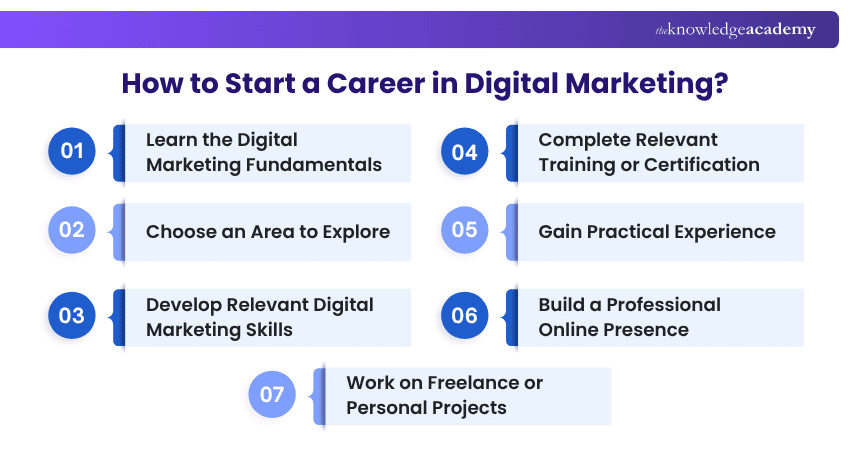
1) Learn the Digital Marketing Fundamentals
Understand the basics of Search Engine Optimisation (SEO), content marketing, social media marketing, email marketing, Pay-Per-Click (PPC) and marketing analytics. Knowing how these areas work together will give you a strong foundation for exploring more specialised roles.
2) Choose an Area to Explore
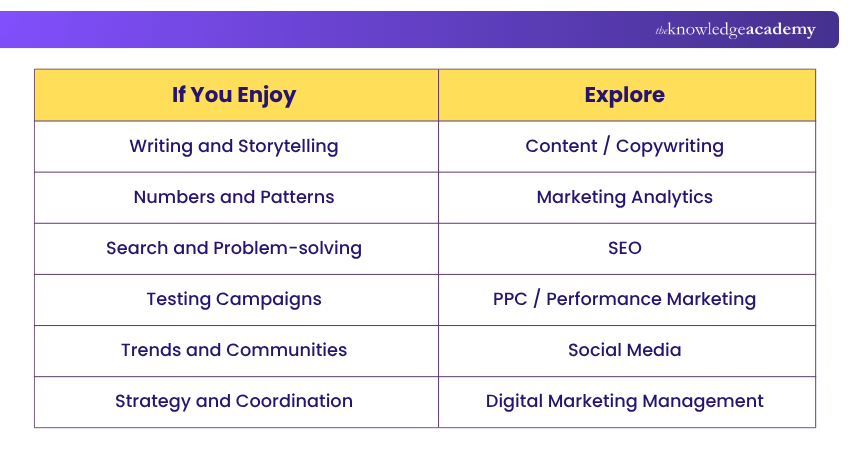
Identify which area interests you most, such as SEO, content, paid advertising, social media, email or analytics. You can specialise later as your experience grows. Consider your strengths and career interests when deciding which path to pursue.
3) Develop Relevant Digital Marketing Skills
Digital Marketing combines creative, analytical, and technical capabilities. Depending on the career path you choose, useful skills can include creating content, researching keywords, planning campaigns, analysing performance and working with commonly used marketing platforms and tools.
4) Complete Relevant Training or Certification
Digital Marketing training and relevant certifications can help you develop structured knowledge of important concepts, platforms and techniques. They can also demonstrate your commitment to developing skills within a particular area of Digital Marketing.
5) Gain Practical Experience
Look for internships, entry-level opportunities or hands-on marketing assignments where you can apply what you have learned. Practical experience helps you understand how real campaigns are planned, implemented, measured and improved.
6) Build a Professional Online Presence
Create a professional presence on platforms such as LinkedIn and showcase relevant projects, skills and achievements. A portfolio containing examples of campaigns, written content, SEO projects or analytics work can also help demonstrate your practical abilities.
7) Work on Freelance or Personal Projects
Freelance, volunteer and personal projects can help you apply your skills in practical situations. They can also strengthen your portfolio while exposing you to different industries, audiences and marketing challenges.
Pro Tip
Don't wait until you get your first Digital Marketing job to build a portfolio. Create a small SEO project, plan a social media campaign, write sample content, or analyse campaign data. Showing what you can do can make your skills more tangible to potential employers.
What are the Various Job Roles in the Digital Marketing Field?
Digital Marketing offers career opportunities across creative, analytical, and strategic areas. The responsibilities and skills required vary according to the role and organisation. Some of the common Digital Marketing roles include:
1) Digital Marketing Manager
A Digital Marketing Manager plans, coordinates, and evaluates an organisation's digital marketing activities. Their responsibilities can include overseeing SEO, content marketing, social media, email marketing, advertising and campaign analytics while coordinating teams, budgets and wider marketing objectives.
2) Social Media Manager
A Social Media Manager develops and manages an organisation's presence across relevant social platforms. Responsibilities can include planning content, managing publishing schedules, engaging with audiences, monitoring performance, and collaborating with writers, designers and other marketing professionals.
Learn the strategies behind better search visibility with SEO Course – Register today!
3) Email Marketing Specialist
An Email Marketing Specialist develops and manages email campaigns designed to engage audiences and support objectives such as lead nurturing, customer retention and conversions. Their responsibilities can include segmentation, email copy, automation, testing and campaign performance analysis.
4) Content Marketing Specialist
A Content Marketing Specialist plans and develops informative and engaging content for defined audiences. Content can include articles, blogs, guides, eBooks, case studies, landing pages and other resources designed to support various marketing requirements.
5) SEO Specialist
An SEO Specialist works to improve a website's visibility in organic search results. Their responsibilities can include keyword research, on-page optimisation, technical SEO, content optimisation, competitor research, link analysis, and monitoring organic search performance.
6) Copywriter
A Copywriter creates persuasive marketing copy designed to encourage a specific audience response or action. They can produce advertisements, landing pages, website copy, emails, product descriptions, social media copy, taglines, and other campaign materials.
Write with purpose and persuade with confidence with the Copywriting Course – Sign up soon!
7) PPC Specialist
A Pay-Per-Click (PPC) Specialist plans, manages and improves paid advertising campaigns across search engines, social media platforms and other advertising channels. Responsibilities can include keyword research, audience targeting, ad creation, budget management, testing, and performance analysis.
8) Digital Marketing Analyst
A Digital Marketing Analyst collects, examines and interprets marketing data to assess campaign performance. They analyse website traffic, audience behaviour, conversions, advertising performance and several other metrics to identify trends and support informed marketing decisions.
Test Yourself! What Would You Optimise?
Campaign Results:100,000 Impressions → 5,000 Clicks → 40 ConversionsWhat should you investigate first?A. ImpressionsB. ClicksC. Conversion JourneyD. Campaign BudgetAnswer: Investigate the conversion journey, as relatively few clicks resulted in conversions. Review the landing page, offers and conversion process to identify potential drop-off points.
What Skills are Essential for Digital Marketing?
Digital Marketing requires a combination of creative, analytical and collaborative abilities. While the skills needed vary by role, the following can be valuable across many Digital Marketing careers:
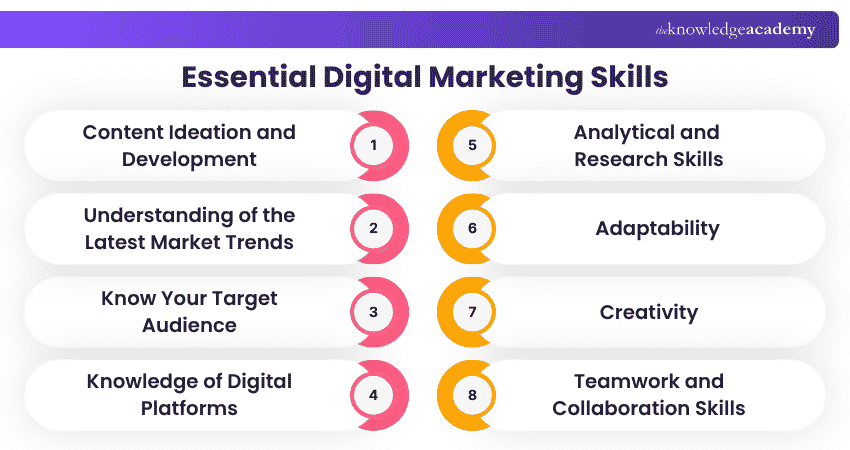
1) Content Ideation and Development
In Digital Marketing, content is a driving force. Everything that goes over the digital platforms requires some content, whether blogs or taglines or even videos. Therefore, a Digital Marketer needs to be a master at providing exciting and convincing content. At the same time, they should present it in a way that engages the audience and makes them come back to the website and social media.
2) Understanding of the Latest Market Trends
The digital world is dynamic and rapidly growing. In such a scenario, it becomes vital to keep pace with the new technology and trends in the market and simultaneously make your brand a success. Thus, Digital Marketers, particularly Social Media Strategists, Data Analysts, and Social Media Managers must deeply understand the business market trends.
3) Know Your Target Audience
Knowing about the target audience and what content they want is the basis of all Digital Marketing content. Thus, a Digital Marketer must be skilled in researching the audience’s interests, one-on-one customer interaction, consumer surveys, etc. This way, the marketing campaigns can become more successful.
4) Knowledge of Digital Platforms
Since the term includes “Digital,” unawareness about digital platforms will make all marketing efforts in vain. Whether it is Instagram, Twitter, Facebook, LinkedIn, or other web browsers, Digital Marketers should be well-versed in the algorithms and technicalities of all these platforms. This helps marketers create and optimise content for greater online visibility.
Transform LinkedIn connections into meaningful business opportunities with LinkedIn Marketing Course – Join now!
5) Analytical and Research Skills
Digital Marketing involves constantly working with data, audience behaviour and market trends. Strong analytical skills help marketers interpret campaign performance, identify patterns and understand what is working or needs improvement. Research skills are equally important for studying competitors, keywords, customer preferences and industry trends, helping marketers make better-informed marketing decisions.
6) Adaptability
Digital Marketing is constantly evolving as platforms, algorithms, technologies and audience behaviours change. Marketers need to adapt their strategies, learn new tools and respond to emerging trends. Being adaptable helps them adjust campaigns quickly and remain effective in a changing digital environment.
7) Creativity
Uniqueness is what makes every business stand out from the rest. However, Digital Marketers must be creative to offer new, exciting, and witty ideas to engage the audience. The success of a Digital Marketing campaign depends on the Digital Marketers' creativity and ingenuity. For example, you might have to develop funny and convincing taglines as a copywriter.
8) Teamwork and Collaboration Skills
Digital Marketing often involves collaboration with Content Writers, Designers, Developers, sales teams and other marketing professionals. Being a team player helps marketers communicate ideas, coordinate tasks and work towards shared campaign goals. Strong collaboration can also help keep projects organised and deliver consistent marketing campaigns.
Data Insight:
60% of employers surveyed by the World Economic Forum expect broader digital access to transform their businesses by 2030, making it the report’s most widely identified macrotrend.
Conclusion
A Digital Marketing Career offers opportunities to combine creativity, technology, communication and data-driven thinking across a wide range of roles. Building strong foundational skills, gaining practical experience and staying adaptable can help you find a career path that matches your strengths and interests. As digital platforms continue to evolve, continuous learning will remain an important part of growing in this field.
Create content that connects with audiences through Social Media Marketing Course – Start now!
Frequently Asked Questions
Is Digital Marketing Well Paid?

Yes, Digital Marketing can be well paid, particularly as professionals gain experience or specialise in areas such as SEO, PPC, analytics or strategy. Earnings vary depending on the role, experience, location, industry, employer and the individual’s level of expertise.
Will AI Replace Digital Marketers?
AI is more likely to reshape Digital Marketing roles than eliminate the field entirely. It can automate or assist with tasks such as content ideation, data analysis and campaign optimisation, while human judgement, strategy, creativity and audience understanding remain important.
Who is Eligible for Digital Marketing?
Digital Marketing is open to students, graduates, working professionals, business owners and career changers interested in marketing and digital platforms. While specific qualifications may help for certain roles, beginners can enter the field by developing relevant skills, practical experience and industry knowledge.

James Smith


Digital Marketing Manager and Trainer
James Smith is a digital marketing professional with over a decade of experience in SEO, content strategy, paid media and analytics. He has supported both SMEs and global brands in transforming their digital presence. James’s writing and training are rooted in results-driven tactics and the latest marketing trends.
View Detail

 If you wish to make any changes to your course, please


