


 Top Rated Course

We may not have the course you’re looking for. If you enquire or give us a call on +44 1344 203 999 and speak to our training experts, we may still be able to help with your training requirements.
10 Essential Business Analyst Skills You Need
William Brown 04 March 2026Essential Business Analyst Skills include communication, analytical thinking, Data Analysis, problem-solving, technical knowhow and negotiation to drive value. These skills enable professionals to gather requirements, assess processes and drive strategic decisions, ensuring effective solutions that align with business objectives.

Training Outcomes Within Your Budget!
We ensure quality, budget-alignment, and timely delivery by our expert instructors.
Table of Contents

The world of Business Analysis is about unlocking the motherlode of insights, strategies and smart decisions. This is why, behind every successful project is a Business Analyst who performs tasks ranging from decoding data to aligning stakeholders. So, mastering the right Business Analyst Skills is what sets exceptional Analysts apart in a world of rapid digital transformation.
This role demands a dynamic blend of analytical thinking, communication and strategic insight. This blog sheds light on it by exploring ten essential Business Analyst skills that help professionals uncover opportunities and drive meaningful business decisions. So read on!
Table of Contents
1) What is a Business Analyst?
2) Top 10 Essential Business Analyst Skills
3) How can You Improve Your Business Analyst Skills?
4) Ways to Demonstrate Business Analysis Skills in the Workplace
5) What is the Difference Between a Business Analyst and a Data Analyst?
6) Conclusion
What is a Business Analyst?
A Business Analyst is a professional who figures out what a company needs and then uses data to develop ways to improve goods, services and processes. They help clients and IT teams work together by gathering requirements, analysing data and ensuring that business goals and technology advances align with each other.
Business Analysts use methods like Strengths, Weaknesses, Opportunities, and Threats (SWOT) Analysis, process modelling and customer involvement in various businesses. They work together with leaders, Project Managers, and Developers to make solutions that work. To succeed in this job, you need to think critically, communicate clearly and understand how businesses work.
Core Responsibilities of a Business Analyst
The responsibilities of a Business Analyst can generally be grouped into four key areas:
1) Decode: Business Analysts investigate the challenges within an organisation. They analyse data and identify effective, often innovative solutions to these business problems.
2) Optimise: They focus on improving efficiency by designing and refining business processes, as well as analysing and resolving issues within systems and workflows.
3) Document: Throughout a project’s lifecycle, Business Analysts create and maintain clear documentation, including requirements, scope, processes, and final outcomes.
4) Communicate: Acting as a link between technical and non-technical stakeholders, they translate complex information into clear insights that support informed decision-making.

Top 10 Essential Business Analyst Skills
Let's discuss about some of the top skills that you require to become a Business Analyst. They are as follows:
1) Communication & Presentation Skills
Business Analysts act as a link between technical teams and non-technical stakeholders, making strong communication essential. They must be able to explain complex data and convert analytical findings into practical insights. They must also be able to present their analysis to diverse audiences. This means adapting their message to different levels of expertise and ensuring that the information is relevant to each group.
2) Analytical Thinking
Analytical thinking is vital for Business Analysts as it enables them to evaluate data, identify patterns and generate insights that support business decisions. They must be able to break down complex problems and conduct Root Cause Analysis to address challenges effectively. This skill also involves anticipating potential issues and exploring innovative ideas that can improve processes and drive business performance.
3) Problem-solving
Business Analysts use critical thinking to anticipate challenges and recommend effective solutions. They gather and analyse relevant information to clearly define problems and address their root causes rather than just the symptoms. They also evaluate different solution options and develop practical implementation plans. By taking a proactive approach, Business Analysts help improve processes and support long-term organisational success.
Gain advanced business strategy expertise with our Business Analyst Black Belt Course now!
4) Data Analysis
Data analysis is a key skill for business analysts, enabling them to interpret information and uncover meaningful insights from datasets. By examining trends, patterns, and performance metrics, analysts can identify problems and recommend practical solutions. Strong data analysis skills also support better decision making, helping organisations improve processes, efficiency, and overall business performance.

5) Critical Thinking
Critical thinking allows Business Analysts to gauge complex situations and analyse information objectively. They break down problems, identify the root causes and assess possible solutions while considering risks and potential outcomes. It also helps them review information from multiple perspectives and rely on credible data to provide balanced recommendations.
Solve complex business problems and maximise efficiency with our Mathematical Optimisation for Business Problems Training - Sign up now!
6) Research Skills
A Business Analyst must have strong research skills to gather, analyse, and interpret data for informed decision-making. They conduct market research, Competitor Analysis, and stakeholder interviews to identify business opportunities and risks.
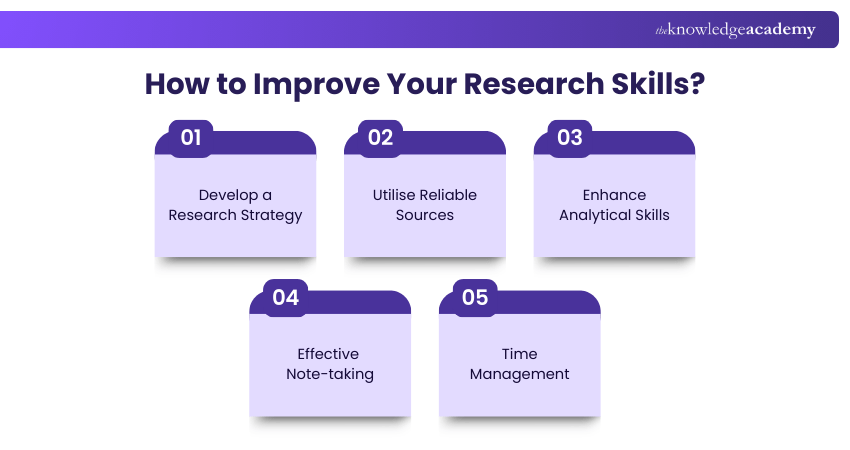
Thorough research helps develop data-driven solutions, ensuring strategies align with industry trends and organisational goals for long-term success.
7) Technical Knowledge
Business Analysts need a solid understanding of technical concepts to collaborate effectively with IT teams. Familiarity with databases, Software Development methodologies and system architectures allows them to translate business needs into technical requirements. Understanding technology constraints and capabilities ensures they propose realistic, scalable and efficient solutions that align with business objectives.
8) Time Management Skills
Strong Time Management skills enable Business Analysts to efficiently handle multiple tasks, deadlines, and stakeholder expectations. They must prioritise responsibilities, ensuring key deliverables are completed on time.
Using scheduling tools and Agile methodologies helps streamline workflows, balance workloads and maintain productivity, thus ensuring smooth project execution while meeting business objectives and timelines.
9) Interpersonal Skills
Business Analysts collaborate with clients, stakeholders, Developers and colleagues. Strong interpersonal skills are essential. Emotional intelligence helps them understand others’ perspectives and motivations. By building rapport and maintaining positive relationships, they can achieve better outcomes.
Learn key skills and best practices by joining our Business Analyst Fundamentals Training – book your spot now!
10) Negotiation and Persuasion
Balancing client expectations with business goals can be challenging. Business Analysts need strong negotiation skills to reach agreements that benefit both the client and the organisation. With experience, these skills improve. By conducting thorough research and recognising opportunities, Business Analysts can present valuable solutions that encourage clients to collaborate and invest in new projects.
How can you improve your Business Analyst Skills?
Harnessing the above-discussed Business Analyst Skills is not enough. You have to improve them over time as well so that you can stay competitive in the job market. There are some ways you can improve those skills as a Business Analyst. They are as follows:
1) Know More About Your Field
Your most important job before becoming a fully-fledged Business Analyst is to gather information regarding your field. Having updated and correct knowledge about your field will help you to connect more with people who are related to that field. Precise knowledge will also help you to put your ideas cohesively regarding the business before the stakeholders and business executives.
2) Use a Variety of Tools
Business Analysts have access to a wide range of tools that can amplify their effectiveness. By combining different techniques and methodologies in your assessments, you can gain a holistic perspective and achieve more accurate results. Commonly used tools include SWOT Analysis, Porter’s Five Forces and PESTLE Analysis.
3) Learn More About Your Organisation
It is always better that you go through all the organisational policies thoroughly. This will help you to converse with stakeholders and investors alike. Any misconception regarding your organisation can be cleared up only if you know about your organisation from the inside out. Catch up on the latest policies or mission and vision of the organisation if your business model has undergone some changes recently.
Unleash the potential of your Business Processes, streamline operations and drive efficiency with our Business Process Mapping Course – join now!
4) Get Certified
Your peers or seniors might tell you that a certification in Business Analysis is not required. However, even though they might be correct, it is always an added advantage that you get certification from a prestigious institution or organisation. Having a certification will not only boost your confidence but also build a sense of trust among consumers, peers, stakeholders and investors.
Ways to Demonstrate Business Analysis skills in the Workplace
As you progress in your career as a Business Analyst, it’s important to showcase your knowledge and professional expertise. Here are some effective ways to highlight your Business Analysis skills at work:
a) Seek Feedback: After completing a project, request feedback from clients, teammates and leadership. This can help you identify areas for improvement and clarify expectations.
b) Listen Actively: A key responsibility of a Business Analyst is to generate practical solutions. Active listening helps you fully understand the perspectives and needs of stakeholders and clients. By valuing every viewpoint, you may discover innovative solutions.
c) Practice Effective Communication: Each stakeholder or client may prefer a different method of communication. Make an effort to adapt to these preferences and engage through their preferred channels. Over time, this will strengthen your communication skills.
d) Manage Your Time Well: Showcase strong Time Management by completing projects ahead of schedule. When workloads become heavy, use strategies such as multitasking, seeking assistance and delegating responsibilities to maintain efficiency.
What is the Difference Between a Business Analyst and a Data Analyst?
Focussing on business needs, process optimisation, and linking stakeholders with IT teams, a Business Analyst. A Data Analyst generates reports, analyses data, and develops insights to back up decisions. Data Analysts offer data-driven proof for company changes, while Business Analysts help to define strategy.
Conclusion
Mastering the top Business Analyst Skills is what turns data into decisions and challenges into opportunities. It’s not just about analysis; it’s about influence, strategy and making a real impact. The right skills can set you apart and open more doors to exciting career growth. So, step up and become the Analyst every business needs.
Once you Control the process, you can master the outcome. Experience that in action in our Statistical Process Control Training - Register now!
Frequently Asked Questions
Is Coding Required for Business Analysts?

Knowledge of basic Programming is helpful but not required for Business Analysts. Gaining proficiency in SQL, Python or Excel macros can boost Data Analysis capabilities and encourage better communication with technical teams.
What Techniques do Business Analysts use?
Business Analysis Techniques such as Business Process Modelling (BPM), SWOT Analysis, stakeholder mapping, and Gap Analysis help Business Analysts align organisational goals with technical change. They also apply different methods, data flow diagrams and use case diagrams to identify requirements and improve workflows.
What are the Other Resources and Offers Provided by The Knowledge Academy?
The Knowledge Academy takes global learning to new heights, offering over 3,000+ online courses across 490+ locations in 190+ countries. This expansive reach ensures accessibility and convenience for learners worldwide.
Alongside our diverse Online Course Catalogue, encompassing 17 major categories, we go the extra mile by providing a plethora of free educational Online Resources like Blogs, eBooks, Interview Questions and Videos. Tailoring learning experiences further, professionals can unlock greater value through a wide range of special discounts, seasonal deals, and Exclusive Offers.
What is Knowledge Pass, and how does it work?
The Knowledge Academy’s Knowledge Pass, a prepaid voucher, adds another layer of flexibility, allowing course bookings over a 12-month period. Join us on a journey where education knows no bounds.
What are the Other Resources Provided by The Knowledge Academy?
The Knowledge Academy offers various Business Analyst Courses, including Certified Business Analyst Professional (CBA-PRO) Course, Creating Effective Stakeholder Engagement Training and Business Process Mapping Training. These courses cater to different skill levels, providing comprehensive insights into Research Analyst.
Our Business Analysis Blogs cover a range of topics related to Business Analyst Skills, offering valuable resources, best practices, and industry insights. Whether you are a beginner or looking to advance your Data Analysis & Reporting skills, The Knowledge Academy's diverse courses and informative blogs have got you covered.

William Brown


Senior Business Analyst and Strategic Advisor
William Brown is a senior business analyst with over 15 years of experience driving process improvement and strategic transformation in complex business environments. He specialises in analysing operations, gathering requirements and delivering insights that support effective decision making. William’s practical approach helps bridge the gap between business goals and technical solutions.
View Detail
Upcoming Business Analysis Resources Batches & Dates
Date
 Certified Business Analyst Professional (CBA-PRO)
Certified Business Analyst Professional (CBA-PRO)
Thu 9th Apr 2026
Certified Business Analyst Professional (CBA-PRO)
Thu 9th Jul 2026
Certified Business Analyst Professional (CBA-PRO)
Thu 8th Oct 2026

 If you wish to make any changes to your course, please


