


 Top Rated Course

We may not have the course you’re looking for. If you enquire or give us a call on +55 8000201623 and speak to our training experts, we may still be able to help with your training requirements.
What is Strategic Leadership: Skills, Strategies and Examples
Benjamin Walker 09 March 2026Strategic Leadership is the ability to set a clear long-term vision, make informed decisions, and align people and resources to achieve business goals. It helps navigate uncertainty, drive innovation, and respond to change effectively. This blog explores its principles and benefits to help you understand its role in effective management.

Training Outcomes Within Your Budget!
We ensure quality, budget-alignment, and timely delivery by our expert instructors.
Table of Contents
Related Courses
Picture this: You're at the helm of a company facing rapid technological advancements. Navigating these changes demands more than just management. It requires Strategic Leadership. But What is Strategic Leadership, and why is it crucial for modern organisations? It mostly involves guiding a team with a clear vision, adapting to changing environments, and driving innovation.
Understanding "What is Strategic Leadership" can empower you to harness these skills and lead with confidence. Let’s dive in and explore its core principles, characteristics, and styles that define effective Strategic Leadership.
Table of Contents
1) What is Strategic Leadership?
2) Essential Skills and Traits of a Strategic Leader
3) Strategies for Strategic Leadership
4) Can Strategic Leadership be Developed?
5) What are Examples of Strategic Leadership in Practice?
6) Conclusion
What is Strategic Leadership?
Strategic Leadership is the art of guiding an organisation through evolving economic and technological climates by creating a compelling vision. This vision isn't just about direction; it's a powerful tool to unite and motivate employees and departments, fostering a shared sense of purpose for implementing change. The primary objectives of Strategic Leadership are to streamline processes, enhance strategic productivity, and promote innovation.
Moreover, it aims to create an environment where employees feel empowered to be productive, independent, and proactive with their ideas. Strategic Leaders sometimes implement rewards or incentives to further encourage and support employees in achieving their goals. In essence, Strategic Leadership and Management is about steering the organization with foresight and inspiration.

Essential Skills and Traits of a Strategic Leader
To be a good Strategic Leader, you need to build a skillset that allows you to lead a team effectively. Here are some of the top skills and traits you must possess to be an excellent strategic leader:
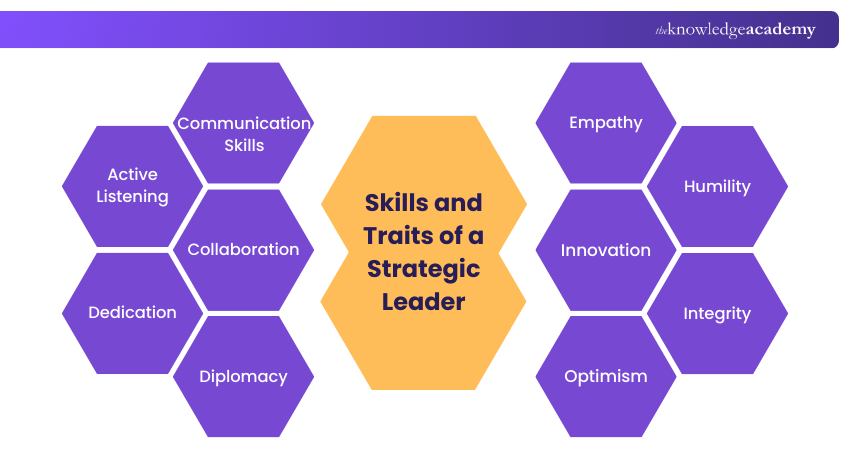
1) Communication Skills
Possessing a vision alone isn't enough to drive change if you cannot communicate it effectively to your team. The skill to clearly articulate precisely what needs to be done will help align your team with the strategy, uniting their individual efforts to successfully execute the plan. Successful leaders ensure they are always accessible to their team, ready to answer questions or listen to concerns and ideas. Developing strong communication skills is essential to achieving this.
2) Active Listening
Effective communication largely hinges on actively listening to others' contributions to the conversation. By doing so, you can truly receive your team's input and boost their confidence in collaboration.
Many believe they are good listeners, yet often, they are merely waiting for their turn to speak. Active listening, however, involves giving the speaker your undivided attention, allowing you to thoughtfully absorb their words before responding.
3) Collaboration
Adopting a collaborative leadership style ensures the transparency your team appreciates. By trusting your team to embrace this approach, you signal that open communication is encouraged and that their ideas are valued and crucial to the organisation's success.
4) Dedication
Demonstrating genuine enthusiasm for your work motivates your team to match your level of commitment. Dedication is a key trait of a Strategic Leader, driving you to follow through and set the example you wish to see in your team members. This is evident in your readiness to join the team, working alongside those you lead with equal effort towards a common goal.
Energise your workforce with proven strategies by joining our Staff Motivation Training now!
5) Diplomacy
Balancing honesty and tact is an essential skill for leaders, fostering a respectful and collaborative environment within teams, other departments, and with the public. Diverse perspectives and creative minds often spark innovation, but disagreements are inevitable.
Diplomacy combines negotiation skills and empathy to address conflicts impartially, reaching solutions that satisfy all parties.
6) Empathy
Understanding others’ perspectives is crucial for realistic solutions and building trust. Practically, empathy drives the execution of creative, effective strategies, boosting sales, mutual respect, and overall productivity.
7) Humility
Contrary to intuition, humble leaders who acknowledge their mistakes, give credit, and apologise, when necessary, earn their team's respect. These leaders accept their imperfections, recognising they may not always be the smartest in the room, but they keep egos in check to foster collaboration and innovation.
8) Innovation
A fresh perspective daily fuels creativity, vital for innovation. Encouraging your team to adapt and think creatively combines various viewpoints into the best ideas. Over time, this culture of openness and experimentation can lead to sustainable growth and long-term competitive advantage.
9) Integrity
Maintaining integrity ensures success, inspiring honesty and accepting every success and failure as part of the process. Integrity builds trust within and outside the team, promoting collaboration, transparency, and unity.
10) Optimism
Maintaining a positive outlook is essential, regardless of whether things go as planned. Leading by example, you encourage your team to persevere until they achieve the desired outcomes. A resilient mindset helps teams navigate setbacks with confidence rather than doubt. Such optimism strengthens morale, builds trust, and reinforces a culture focused on solutions rather than problems.
Strategies for Strategic Leadership
To be a Strategic Leader, you must adopt a set of strategies that benefit your leadership style and, in turn, your team. Here are some strategies that you can adopt to make yourself a good Strategic Leader:
1) Delegate
Distributing responsibilities in a way that empowers employees to grow in their respective domains while effectively managing their responsibilities is highly recommended. Granting autonomy to your team members, expressing confidence in their abilities, and encouraging problem-solving skills can help achieve this. Delegating responsibilities to capable team members also creates an opportunity to complete more tasks efficiently.
Learn to effectively delegate responsibilities by signing up with our Delegation Training!
2) Welcome Openness
Strategic leaders understand that sharing information is essential for creating new growth opportunities.
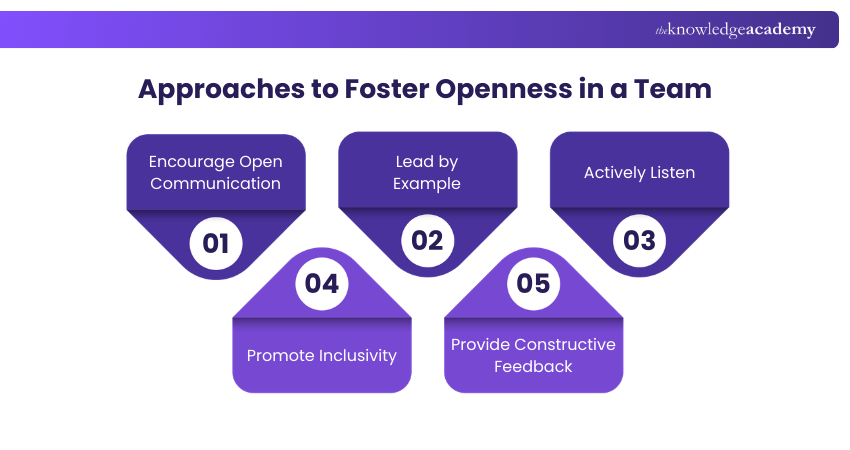
Providing access to relevant information empowers future leaders to challenge potentially inefficient processes and introduce better ideas to enhance company practices.
3) Promote Channels of Innovation and Communication
Effective Strategic Leadership involves presenting ideas clearly so that everyone fully understands and can contribute feedback. Removing limitations encourages future strategic leaders to embrace creativity for innovation, connecting solutions to the end goal.
4) Use Failures as Learning Tools
Many companies claim to tolerate employees' efforts to learn from mistakes. Accepting that failure is part of life and incorporating this into company expectations encourages practical learning through risky but potentially lucrative ideas. Strategic leaders recognise that failures can develop skills leading to future success.
5) Promote Cooperation Among Departments
Encouraging employees to work with others across the organisation enhances understanding of how different parts function together. Recognising the unique talents and traits of team members and those across the company can uncover opportunities for collaborative action.
6) Provide Opportunities for Experiential Learning
While leadership development often involves informative training, aspiring strategic leaders need the chance to apply theoretical strategies in real situations to gain practical feedback and results. Long-term success requires hands-on experience.
7) Hire for Potential
Managers may gravitate towards hiring people like themselves, but hiring objectively focuses on growth potential. Considering candidates' soft skills, drive, and transferable experience is crucial. Some organisations use sample tests to evaluate candidates' problem-solving processes and leadership potential.
8) Draw on Experience
Effective strategic leaders evaluate problems and formulate solutions based on past experiences, adapting lessons learned to current situations. Encouraging others to do the same fosters a comfortable environment for learning and application.
9) Practice Self-reflection
Recognising biases and assumptions is vital for strategic leaders. Reflecting on tendencies helps improve problem-solving approaches. Focusing on specific questions rather than dwelling on mistakes allows for productive self-reflection and learning from past experiences.
10) Promote Continuous Development
Strategic leaders recognise the importance of ongoing learning for themselves and others. Demonstrating humility and openness to learning encourages the team to embrace these qualities, fostering skill development and adaptability to new roles and industries.
Transform challenges into opportunities and fuel your success with our Growth Mindset Training – Sign up soon!
Can Strategic Leadership be Developed?
Yes, Strategic Leadership can be developed. Its core capabilities such as critical thinking, long-term planning, adaptability, and effective communication can be learned and strengthened over time. With the right training, experience, and self-awareness, leaders can refine their ability to guide organisations through complexity and change.
Practical experience, combined with structured leadership development programmes and a clear understanding of What is Strategic Leadership, helps individuals sharpen decision-making skills and cultivate a forward-thinking mindset essential for sustainable organisational growth.
What are Examples of Strategic Leadership in Practice?
Strategic Leadership becomes visible when leaders understand What is Strategic Leadership, anticipate change, make bold long-term decisions, and align their teams around a clear vision. In practice, it often involves transforming business models, driving innovation, or repositioning an organisation to remain competitive in evolving markets. Below are some of the examples of this leadership style:
One well-known example is Satya Nadella at Microsoft, who shifted the company’s focus towards cloud computing and collaboration. Rather than relying solely on traditional software licensing, he prioritised cloud platforms such as Azure and embraced a more open, partnership-driven approach.
Similarly, Elon Musk has demonstrated Strategic Leadership through long-term innovation at Tesla. His vision extended beyond producing electric vehicles; it centred on accelerating the world’s transition to sustainable energy.
In a similar way, Jeff Bezos displayed Strategic Leadership at Amazon by focusing on long-term customer value rather than immediate financial gains. His decision to continuously reinvest in technology, logistics, and innovation such as Amazon Web Services transformed the company from an online bookstore into a global technology and retail powerhouse.
Conclusion
In essence, Strategic Leadership is the compass that guides organisations through the complexities of modern business landscapes. By understanding What is Strategic Leadership, you can harness its principles to inspire, innovate, and drive meaningful change. It can shape successful teams and pave the way for sustainable growth and adaptability.
Develop the essential skills to lead with confidence – join our Leadership Skills Training now!
Frequently Asked Questions
What Challenges do Strategic Leaders Face?

Strategic Leaders face uncertainty, resistance to change, market volatility, and complex decision-making authority. They continually balance immediate performance demands with long-term objectives, manage stakeholder expectations, and ensure the organisation remains aligned with its overall strategic direction.
How Does Strategic Leadership Drive Organisational Growth?
Strategic Leadership drives organisational growth by setting clear direction, encouraging innovation, and aligning resources with long-term goals. It strengthens adaptability, improves decision-making, enhances employee engagement, and builds sustainable competitive advantages.
What are the Other Resources and Offers Provided by The Knowledge Academy?
The Knowledge Academy takes global learning to new heights, offering over 3,000+ online courses across 490+ locations in 190+ countries. This expansive reach ensures accessibility and convenience for learners worldwide.
Alongside our diverse Online Course Catalogue, encompassing 17 major categories, we go the extra mile by providing a plethora of free educational Online Resources like Blogs, eBooks, Interview Questions and Videos. Tailoring learning experiences further, professionals can unlock greater value through a wide range of special discounts, seasonal deals, and Exclusive Offers.
What is The Knowledge Pass, and How Does it Work?
The Knowledge Academy’s Knowledge Pass, a prepaid voucher, adds another layer of flexibility, allowing course bookings over a 12-month period. Join us on a journey where education knows no bounds.
What are Related Leadership Courses and Blogs Provided by The Knowledge Academy?
The Knowledge Academy offers various Leadership Courses, including the Introduction to Supervising a Team Course, the Delegation Course, and the Leadership and Management Course. These courses cater to different skill levels, providing comprehensive insights into Sustainability in Business Examples.
Our Business Skills Blogs cover a range of topics related to Strategic Leadership, offering valuable resources, best practices, and industry insights. Whether you are a beginner or looking to advance your Business skills, The Knowledge Academy's diverse courses and informative blogs have got you covered.

Benjamin Walker


Leadership Development Coach and Management Consultant
Benjamin Walker is a leadership coach and business consultant with over 18 years of experience in guiding organisations through strategic growth and transformation. He specialises in developing leadership capabilities at all levels, from emerging managers to executive teams. Benjamin’s work focuses on practical leadership, team dynamics, and performance management.
View Detail
Upcoming Business Skills Resources Batches & Dates
Date
 Leadership Skills Training
Leadership Skills Training
Fri 14th Aug 2026
Leadership Skills Training
Fri 9th Oct 2026

 If you wish to make any changes to your course, please


