


 Top Rated Course

We may not have the course you’re looking for. If you enquire or give us a call on +55 8000201623 and speak to our training experts, we may still be able to help with your training requirements.
What is Product Life Cycle? Stages, Importance and Examples
The Knowledge Academy 25 February 2026The Product Life Cycle is a model that describes the stages a product goes through from its introduction to the market until its decline or withdrawal. These stages: introduction, growth, maturity, and decline, help businesses plan effective marketing and pricing strategies for better market performance throughout a product’s lifespan.

Training Outcomes Within Your Budget!
We ensure quality, budget-alignment, and timely delivery by our expert instructors.
Table of Contents
Every product has a story. Some take off like a rocket, others struggle to survive, and a few quietly disappear without notice. If you’ve ever wondered why that happens, it all comes down to What is Product Life Cycle. Be it a trendy gadget, a skincare brand or your favourite fizzy drink, every product goes through stages, from being new and exciting to becoming outdated or replaced.
Knowing What is Product Life Cycle isn’t just for marketing experts. It’s useful for entrepreneurs, students, and anyone curious about how businesses grow and adapt. In this blog, we’ll break it down with real-life examples so you can see exactly how the product journey works and why it matters.
Table of Contents
1) What is Product Life Cycle?
2) Four Stages of the Product Life Cycle
3) Importance of the Product Life Cycle
4) Product Life Cycle vs BCG Matrix
5) Examples of the Product Life Cycle
6) Product Life Cycle Marketing Strategies
7) When to Use the Product Life Cycle?
8) Factors Affecting the Product Life Cycle
9) What Role Does Customer Feedback Play in the Product Life Cycle?
10) What are Some Common Mistakes When Managing a Product Life Cycle?
11) Conclusion
What is Product Life Cycle?
The term Product Life Cycle defines the duration when the product is launched into the market and introduced to the customers until it’s removed from the shelves. These are the important points to remember:
1) Management and marketing professionals determine when to increase promotions, adjust pricing, expand into new markets, or modify packaging.
2) The Product Life Cycle involves strategising ways to sustain and maintain a product.
3) The Product Life Cycle includes introduction, growth, maturity, and decline.
4) Initial marketing costs are high, but sales increase as product adoption grows.
5) The concept helps companies make key decisions on pricing, advertising, expansion, and cost-cutting.

Four Stages of the Product Life Cycle
Every Product Life Cycle revolves around four stages- introduction, growth, maturity and decline. Usually, each stage in the Product Life Cycle delivers a different set of marketing opportunities that directly or indirectly affect the Product sales. Let's understand each stage in detail:
Introduction Stage
a) The introduction stage is when the product is first launched in the market and introduced to customers.
b) Significant investment is made in promotion and advertising to build awareness and highlight the product's advantages.
c) Consumers may be unfamiliar with the product, requiring focused marketing efforts.
d) Competition is usually low, as rivals may still be developing or launching similar products.
e) Financial losses are common at this stage due to lower sales and high advertising costs.
Keen to crack a career in the field of SCADA, refer to our blog on SCADA Interview Questions.
Growth Stage
a) The product enters the growth stage if it gains popularity and demand increases.
b) This stage is marked by rising production and expanded market availability.
c) The duration of the introduction stage varies depending on the product and industry.
d) The product becomes more widely recognised.
e) Companies may continue investing in Advertising, focusing on differentiation rather than awareness.
f) Products may be refined based on customer feedback.
g) Sales and revenue may increase, but the competition also intensifies.
h) Rival products may push companies to reduce prices which will impact profit margins.
Learn how to implement Inventory Management for an efficient supply chain via our Supply Chain Management Training.
Maturity Stage
a) The maturity stage is the most profitable phase of the Product Life Cycle.
b) In this stage, production and marketing costs decrease, and profit margins get maximised.
c) Market saturation occurs which increases competition and reduces net profit over time.
d) Companies may focus on innovation or new strategies to maintain market relevance.
e) Gathering customer feedback and analysing demographics helps you refine the product.
f) Competition is intense as rival companies introduce improved alternatives.
g) In this stage, sales stabilise, and companies aim to extend this stage for sustained profitability.
4) Decline Stage
a) The decline stage marks the downward trend in the Product Life Cycle.
b) In this stage, an increase in competition leads to a loss of market share and declining sales.
c) Market saturation and alternative products contribute to reduced demand.
d) Companies may reduce marketing efforts as consumer trust is already established.
e) Some businesses choose to update or introduce a next-generation product.
f) If the new version is significantly improved, the company can re-enter the Product Life Cycle with a fresh launch.
According to the marketing terminologies, these four stages of the Product Life Cycle affect the changing pattern of the Product’s sales and market share over the period of time.
Want to effectively manage the Product Development lifecycle? Our Product Management Training will help you out.
Importance of Product Life Cycle
The term Product Life Cycle defines the duration from when a product is launched into the market and introduced to customers until it is eventually withdrawn. These are the importance of Product Life Cycle:
1) It allows businesses to decide when to increase promotions, reduce pricing, enter new markets, or refresh Branding Strategies.
2) The Product Life Cycle helps companies plan how to sustain, improve, or phase out a product based on market performance.
3) It includes four main stages: introduction, growth, maturity, and decline; each requiring a different approach.
4) Initial investment is usually high but returns increase during the growth and maturity stages as customer demand builds.
5) It supports smarter decision-making on pricing, marketing, innovation, and long-term product planning.
Product Life Cycle vs BCG Matrix
At first glance, the Product Life Cycle and Boston Consulting Group (BCG) Matrix might seem similar, but they serve distinct purposes. While one focuses on a product’s journey over time, the other examines its current market position. Here’s how they differ:

a) Focus
Think of the Product Life Cycle as a timeline; it tracks a product from launch to decline. The BCG Matrix, however, is more like a snapshot, showing where products stand based on market share and growth.
b) Purpose
The Product Life Cycle helps you decide what to do at each stage; from introducing a product to phasing it out. The BCG Matrix, on the other hand, tells you where to focus resources, invest in Stars, milk the Cash Cows, or rethink those Question Marks.
c) Perspective
While the Product Life Cycle is all about timing, the BCG Matrix zeroes in on market position. One looks at a product’s journey over time; the other evaluates its current standing.
d) Application
Use the Product Life Cycle to map out strategies over a product’s lifespan. Use the BCG Matrix to assess your entire product portfolio and prioritise investments.
e) The Big Picture
The Product Life Cycle shows you when to act, while the BCG Matrix helps you decide where to act. Together, they provide a comprehensive view; a timeline and a strategic roadmap.
Examples of the Product Life Cycle
These prominent examples will illustrate the Product Life Cycle:
1) iPhone
a) In 2007, Steve Jobs and Apple introduced the first iPhone.
b) The product initially faced scepticism, with doubts about the necessity of a touchscreen.
c) Jobs spent an hour presenting the iPhone during its launch event to generate interest.
d) Apple ran six months of marketing campaigns to highlight its benefits.
e) The promotional efforts built anticipation before the official release.
2) Air Fryers
a) The air fryer was first invented in 2010.
b) It gained significant popularity in 2015.
c) The product went through the growth stage over the next five years.
d) Between 2018 and 2020, social media drove its popularity.
e) Brands relied less on marketing as users enthusiastically shared their experiences online.
3) Oldsmobile
a) Oldsmobile began producing cars in 1897.
b) Merged with General Motors in 1908.
c) Introduced the first V-8 engine in 1916.
d) Reached one million cars produced by 1935.
e) Sales peaked in 1984, marking its highest-selling year.
f) General Motors announced the phase-out of Oldsmobile in 2000.
g) The last Oldsmobile was built on April 29, 2004.
4) Coca Cola
a) On April 23, 1985, Coca-Cola introduced "new Coke" with a revised formula.
b) The change aimed to regain market share after 15 years of decline.
c) Following the launch, Coca-Cola received 1,500 daily complaint calls.
d) Protest groups gathered 100,000 supporters demanding the return of the original formula.
e) "New Coke" completed its Product Life Cycle in just 79 days.
f) The product faced intense backlash and never reached the growth or maturity stages.
g) Less than three months later, Coca-Cola announced the return to its original recipe.
Register for our Logistics Management Training now and understand the Product design for environmental and sustainable logistics.
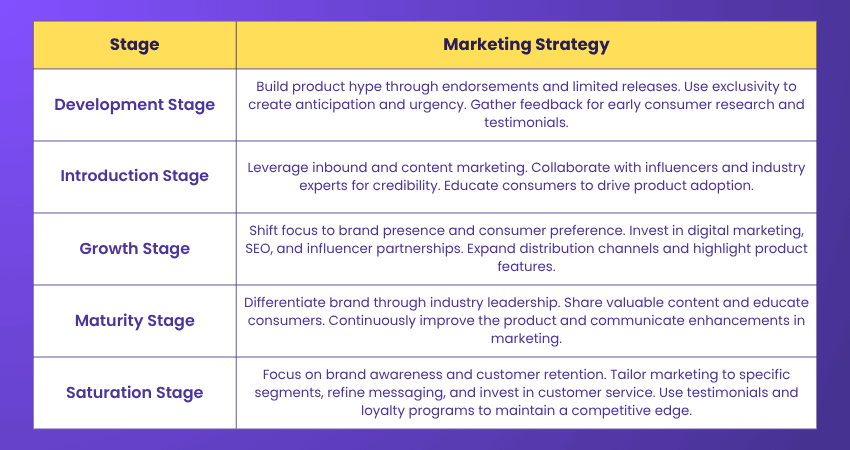
Product Life Cycle Marketing Strategies
Here’s a summary of the key marketing strategies pertaining to Product Life Cycle:
When to Use the Product Life Cycle?
The Product Life Cycle is a valuable tool for guiding strategic decisions throughout a product’s lifespan. Here’s when you should consider using it:
a)) Launching a New Product
b) Evaluating Product Performance
c) Planning Updates or Discontinuation
d) Managing Competition
e) Industry Relevance Check
Factors Affecting the Product Life Cycle
The Product Life Cycle is never a straight road. It twists and turns, rises and dips, and is often influenced by forces beyond a brand’s control.
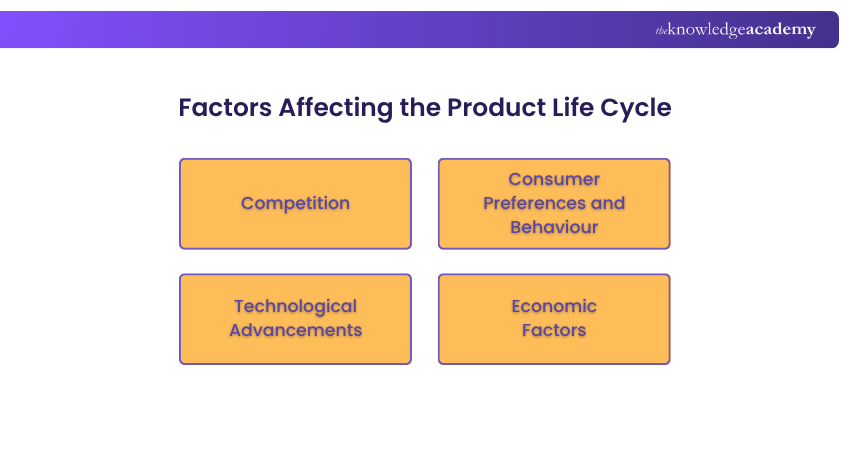
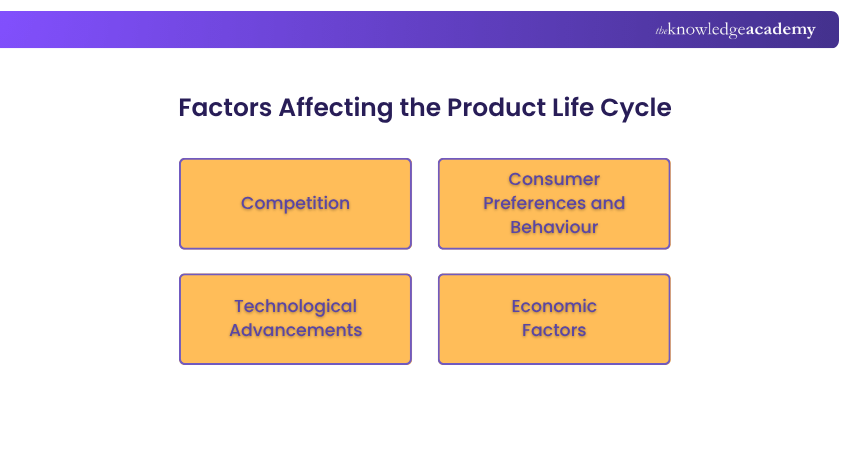
Below are some of the most influential factors that shape the life span of a product.
1) Competition
One of the most obvious yet powerful forces is competition. When rival products enter the market, they can significantly shorten a product’s growth or maturity phase. A new competitor with better features, lower prices or a stronger brand image can quickly shift consumer attention.
For example, in the smartphone industry, a single innovation from a competitor can send a best-seller into decline almost overnight. Staying ahead in the game requires constant innovation, clever marketing and a deep understanding of what your audience values most.
2) Consumer Preferences and Behaviour
Consumer trends can be unpredictable and incredibly fast-moving. What’s in demand today might be forgotten tomorrow. Changing lifestyles, cultural influences, ethical concerns and social media trends all play a part in shaping what people want.
Products that were once essentials may become obsolete because people no longer see them as relevant. Businesses that monitor and adapt to shifting preferences are better positioned to extend the maturity stage of their products or even reinvent them entirely.
3) Technological Advancements
Technology moves fast, and products must keep pace. New technologies can breathe life into old ideas or render existing products completely irrelevant. Just think about how streaming platforms disrupted the Digital Versatile Disc (DVD) market. Innovations can lead to shorter Product Life Cycles, particularly in sectors like electronics and software.
To stay competitive, companies must not only embrace innovation but also be prepared to invest in research and development. A tech-savvy approach can help products evolve rather than expire.
4) Economic Factors
The broader economic environment has a subtle yet significant impact on how a product performs over time. During times of economic growth, consumers are more willing to spend on new or premium products.
In contrast, during a downturn, spending habits shift towards essentials and cost-saving options. Inflation, interest rates and employment levels also affect demand. Brands that can adjust their pricing, packaging or value proposition in response to economic conditions often manage to sustain their products for longer periods.
What Role Does Customer Feedback Play in the Product Life Cycle?
Customer feedback plays a crucial role in every stage of the Product Life Cycle, serving as a compass that guides product improvements, innovation, and strategic decisions. From the introduction phase, where initial reactions help fine-tune offerings, to the maturity stage, where feedback can reveal new feature demands or usability issues, listening to customers ensures the product remains relevant and competitive.
What are Some Common Mistakes When Managing a Product Life Cycle?
Common mistakes in managing a Product Life Cycle include failing to adapt to market changes, ignoring evolving consumer needs, misjudging the timing of product updates or withdrawals, and investing too heavily in declining products. These missteps can lead to wasted resources, lost market share and a product that fades out much earlier than it should.
Conclusion
Now that you understand What is Product Life Cycle, it’s time to apply it strategically. In case you’re launching a new product or managing an existing one, recognising each stage helps you optimise marketing, investments, and growth. Leverage this framework to stay relevant, maximise returns, and outpace the competition.
Master risk methodologies to safeguard automated operations by joining our SCADA Training.
Frequently Asked Questions
How Does Product Life Cycle Affect Pricing?

Pricing changes as the product moves through its life cycle. New products often launch at higher prices to recover costs. During growth, competitive pricing may be used to attract more buyers. In maturity, prices may drop, and in decline, discounts are common to clear remaining stock.
What Two Things Shorten a Product's Life Cycle?
Two major factors that shorten a product’s life cycle are rapid technological advancements and intense market competition. New innovations or rival products can quickly make existing ones obsolete, pushing them into decline faster than expected. Staying relevant requires constant adaptation.
What are the Other Resources and Offers Provided by The Knowledge Academy?
The Knowledge Academy takes global learning to new heights, offering over 3,000+ online courses across 490+ locations in 190+ countries. This expansive reach ensures accessibility and convenience for learners worldwide.
Alongside our diverse Online Course Catalogue, encompassing 17 major categories, we go the extra mile by providing a plethora of free educational Online Resources like Blogs, eBooks, Interview Questions and Videos. Tailoring learning experiences further, professionals can unlock greater value through a wide range of special discounts, seasonal deals, and Exclusive Offers.
What is The Knowledge Pass, and How Does it Work?
The Knowledge Academy’s Knowledge Pass, a prepaid voucher, adds another layer of flexibility, allowing course bookings over a 12-month period. Join us on a journey where education knows no bounds.
What are the Related Courses and Blogs Provided by The Knowledge Academy?
The Knowledge Academy offers Industry Training, including the Product Management Training and the Facilities Management Course. These courses cater to different skill levels, providing comprehensive insights into What is Procurement Management.
Our Business Skills Blogs cover a range of topics related to Product Management, offering valuable resources, best practices, and industry insights. Whether you are a beginner or looking to advance your Product Management skills, The Knowledge Academy's diverse courses and informative blogs have got you covered.

The Knowledge Academy


Global Training Provider
The Knowledge Academy is a world-leading provider of professional training courses, offering globally recognised qualifications across a wide range of subjects. With expert trainers, up-to-date course material, and flexible learning options, we aim to empower professionals and organisations to achieve their goals through continuous learning.

Upcoming Business Skills Resources Batches & Dates
Date
 Product Management Training
Product Management Training
Fri 10th Jul 2026
Product Management Training
Fri 6th Nov 2026

 If you wish to make any changes to your course, please


