


 Top Rated Course

We may not have the course you’re looking for. If you enquire or give us a call on + 1-866 272 8822 and speak to our training experts, we may still be able to help with your training requirements.
What is SERP (Search Engine Results Page), and How Does it Work?
Scarlett Adams 20 August 2026A SERP is the page displayed by a search engine in response to a user's search query. This blog explains SERP features, how Google SERPs work, SEO visibility, and Brand SERP optimisation.

Training Outcomes Within Your Budget!
We ensure quality, budget-alignment, and timely delivery by our expert instructors.
Table of Contents
KEY TAKEAWAYS
1. SERPs bring together different types of results and features to help users find relevant information.2. Google uses ranking signals and search algorithms to determine which results appear for a search query.3. SEO helps websites improve their visibility and increase their chances of appearing in relevant search results.4. A Brand SERP shows the information users see when they search specifically for a brand.
You search for a product, a question or a company on Google, and within seconds you see a mix of links, ads, images, videos, maps and quick answers.
But have you ever wondered how all these results come together on one page?
That is where What is SERP becomes important. From understanding what appears on a Search Engine Results Page to learning how Google ranks results and how SEO influences visibility, this blog breaks down what happens behind every search. Read on!
What is a SERP?
SERP stands for Search Engine Results Page. It is the page you are directed to when you search for something on a search engine like Google, Yahoo, or Bing. The results displayed on this page are determined by factors such as keyword relevance, content quality, and search engine algorithms.
A SERP can include a variety of elements such as text links, ads, images, videos, and other features. In a nutshell, ranking at the top of the SERP is crucial for improving your website's visibility and driving traffic.

Core Features of SERPs
Search Engine Results Pages are generated based on factors like relevant keywords, page content, and complex ranking algorithms. These elements help search engines display the most accurate and valuable results. Below are the core features commonly found on SERPs:
Quick SERP Spot
Before exploring the features, imagine you search for “best laptops for students”. What might appear besides the usual blue website links?Think of as many SERP features as you can before continuing.
1) Top Stories
Top stories refer to the content that appears at the top of the SERP when you search for something. The most common top stories include news articles or stories related to the search. These are primarily news-related and include a headline, thumbnail image, and content source. The main purpose of Top Stories is to deliver the latest updates to users.
2) X (Twitter) Results
SERPs sometimes include posts from X (Twitter) that are relevant to the search query. X (Twitter) Results are especially common for live events, trending discussions, and breaking news, offering real-time updates directly within the search results.
3) People Also Ask
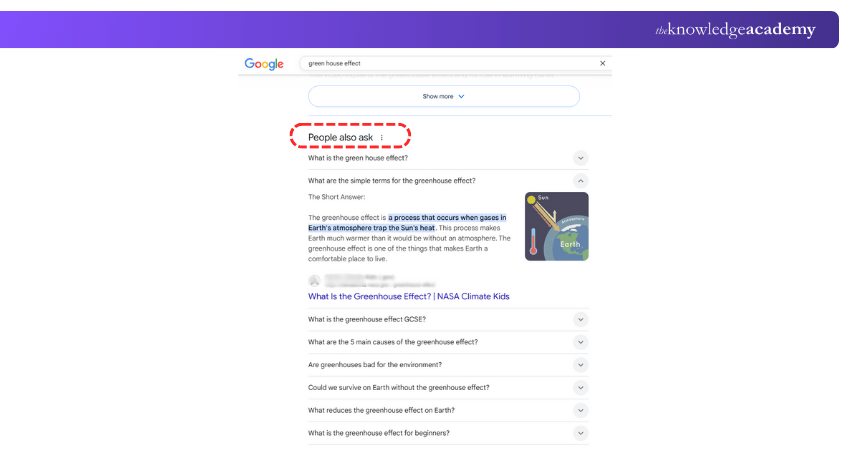
People Also Ask (PAA) is a list of questions that are related to the primary search of the user. It will be seen after a few snippets on the SERP. When you click one of the questions, it will show the website that has the content. If you click on the website, it will take you to the content page. There is a high chance for your website to appear in such PAA sections of a SERP.
4) Shopping
The shopping feature of SERP is used to show the products that are available when they’re searched. It will provide both organic and paid shopping results along with the reviews and its website. This SERP will include product details such as its name, image, price, and link to its website.
5) Featured Snippets
Featured Snippets are highlighted sections that provide direct answers to search queries. They are displayed at the top of the SERP and include a link to the source page. This feature is designed to provide users with quick answers without needing to click through.
6) Knowledge Graph
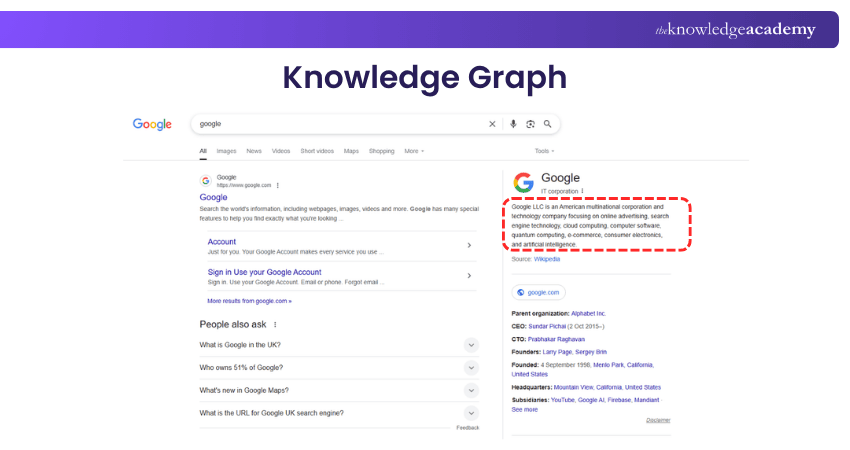
A knowledge graph is also referred to as a knowledge panel, which appears on the right side of your SERP within a box. It is filled with details that are collected from multiple websites, such as Wikipedia, etc. The function of a knowledge graph is to provide the information for your search, including dates, facts, and images.
7) Rich Snippets
Rich snippets, also known as rich results, are another feature of SERP. It includes more details compared to featured snippets, and it includes details like star ratings, images, prices, and so on. Even more, the rich snippets are way more compelling and visually appealing to the users.
8) Local Pack
Local pack in a SERP refers to the list of local businesses provided to you when you search for one. This search will give you the details of the location of the businesses with the Maps, along with the ratings, business phone numbers, and images. Think of it as if you are searching for locations of Amazon on Google, it will result in giving you the top nearby locations, including the above-mentioned details.
9) Video Results
Video results are one of the prominent features of SERP. It shows the relevant videos associated with your search. All you have to do is click the video's link to play it or visit the webpage that has the video.
10) Image Results
Image results are even called image packs, and they are the oldest form of SERP. While searching for something, the results page will provide you with some images related to your search, and they are referred to as image results.
Are you looking to develop impactful content that drives audience engagement? Join our Content Marketing Course now!
How do Google SERPs Work?
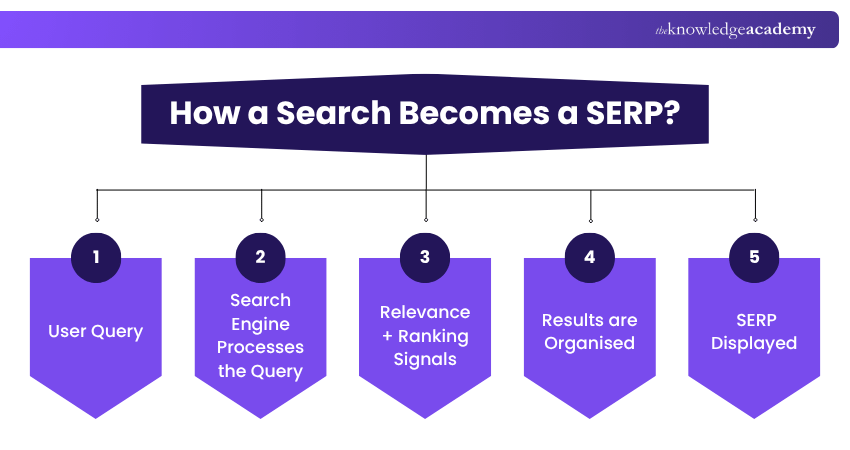
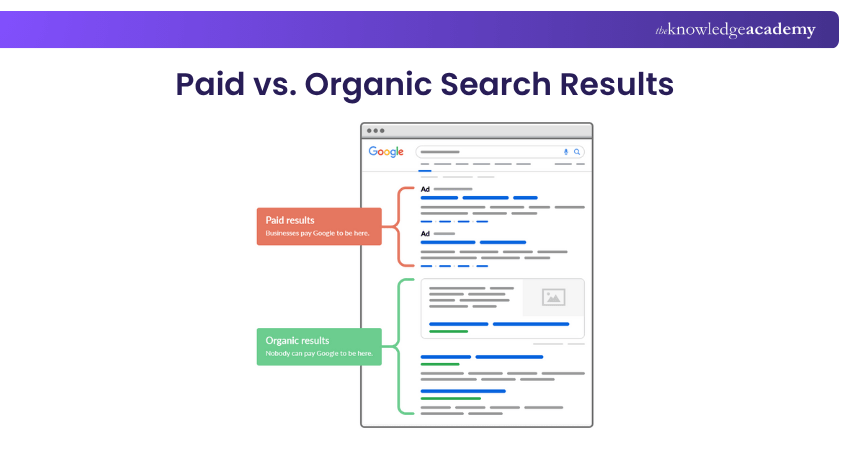
Once users search for something on Google, it displays results based on relevance and different ranking signals. The results page can contain both organic and paid content, with organic results generally ranked according to factors such as relevance, quality and usability.
1) Organic Results on the SERP
Organic results are unpaid listings that appear in search results. They rank based on how well the content meets the searcher's needs and relevant search factors. SEO helps websites optimise their content and improve their chances of appearing prominently.
2) Paid Results on the SERP
Paid results are advertisements that appear on search results pages. They are generally labelled as “Ad” or “Sponsored” and can appear above or alongside organic listings.
3) Ranking Signals and Search Algorithms
Ranking signals help search engines assess the relevance and quality of content. Search algorithms then use these and other signals to determine which results should appear and in what order.
How Does SEO Affect SERPs?
Search Engine Optimisation (SEO) influences how prominently a website can appear in organic SERPs. By improving content, website structure, technical performance and signals from other websites, SEO helps search engines understand a page and assess its relevance to a user's query.
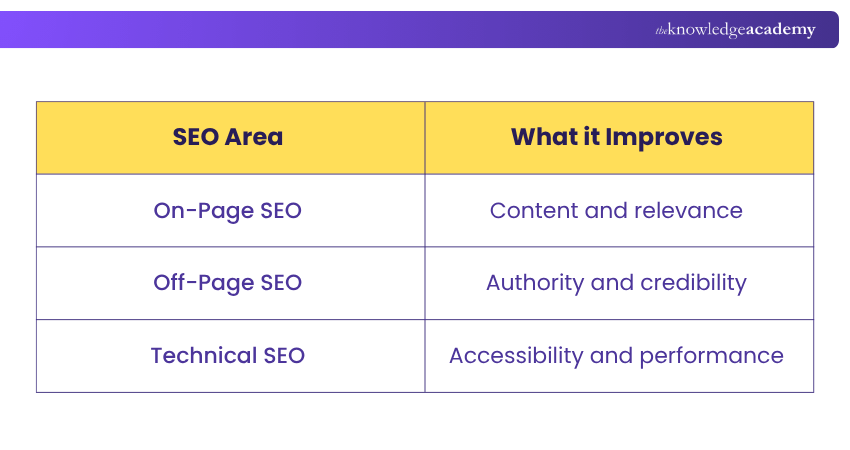
The main areas of SEO that can influence SERP visibility are:
1) On-Page SEO
Optimising content, headings, keywords, images, URLs and other page elements helps search engines understand what a page is about and how relevant it may be to a search query.
2) Off-Page SEO
Activities such as link building, content marketing and relevant brand mentions can strengthen a website's authority and support its visibility in organic search results.
3) Technical SEO
Technical SEO focuses on website structure, crawlability, indexing, mobile usability and performance, helping search engines access and understand website content effectively.
Would you like to learn how to create SEO-friendly content that appeals to your audience? Register for our SEO Course now!
How to Appear in SERP?
With the aim of appearing in SERP, there are certain modifications that you can do with your content and website. Let’s have a look at what you can do with SEO and Search Ads techniques to appear in SERPs:
1) Search Engine Optimisation (SEO)
As discussed above, On-Page and Off-Page SEO can help improve website visibility. Technical SEO is another part of SEO that involves improving the technical aspects of a website, including making it suitable for mobile and desktop users.
A clear website structure, good usability and technically sound pages can make it easier for users and search engines to navigate your website.
2) Search Ads
Search Ads are paid search results displayed as advertisements on result pages. Their purpose is to reach targeted users by appearing prominently for relevant searches.
To get started, you can set up a Google Ads account and create advertisements using appropriate keywords.
Pro Tip:
Don’t focus only on getting to the top of the SERP. Create useful, relevant content that genuinely answers the user’s query and makes the page easy to understand and navigate.
Brand SERP: A Practical SERP Use Case
When a user searches for a particular brand, the results page may bring together its website, social profiles, reviews, images, videos, news and other relevant information. This collection of brand-related results is known as a Brand SERP.
Why Does a Brand SERP Matter?
A Brand SERP can influence what users discover about a brand before they visit its website. Understanding and managing these results can therefore support a more consistent and informative online presence.
Your Brand SERP Checklist
Before finishing, check whether your brand has:☐ An accurate and informative website☐ Consistent brand information across platforms☐ Active and relevant official profiles☐ Useful branded content☐ Updated business and directory informationA strong Brand SERP is built through consistent signals rather than a single SEO action.
Conclusion
A SERP is more than a list of website links; it brings together different results and features based on a user's search. Understanding What is SERP, how it works, how SEO influences visibility and how Brand SERPs shape branded searches can help businesses build a more informed search strategy.
Explore advanced research methodologies and data collection techniques with our Marketing Research Training – Sign up now!
Frequently Asked Questions
Why Can the Same Search Show Different SERPs?

The results can vary because search engines consider factors such as location, search history, device, search intent and the context of the query. As these factors differ between users or searches, the results, rankings and SERP features displayed may also change.
Can a Website Appear in More Than One SERP Feature?
Yes. A website can appear in multiple SERP features when its content is relevant to different search elements. For example, the same website may have an organic listing while also appearing in a Featured Snippet, People Also Ask section or other relevant search feature.
Does Appearing at the Top of a SERP Guarantee More Clicks?
Not necessarily. A prominent position can improve visibility, but it does not guarantee clicks. Search intent, the relevance of the result, competing listings, SERP features and the information shown in the result can all influence whether a user chooses to visit the page.
How Often Do SERPs Change?
SERPs can change regularly as search engines update their systems, process new content and respond to changes in search behaviour and user queries. As a result, rankings, available SERP features and the order of results can fluctuate over time, even for the same search.

 If you wish to make any changes to your course, please


