


 Top Rated Course

We may not have the course you’re looking for. If you enquire or give us a call on 01344 203999 and speak to our training experts, we may still be able to help with your training requirements.
Data Analytics vs Machine Learning: Which Career is Better in 2026
Lily Turner 02 February 2026Data Analytics focuses on analysing past data to find patterns that help businesses make informed decisions. Machine Learning, on the other hand, uses algorithms to learn from data and predict future outcomes. While the first relies on human interpretation, the later automates learning, making it ideal for AI-driven applications.
Home
 Resources
Data, Analytics & AI
Data Analytics vs Machine Learning: Which Career is Better in 2026
Resources
Data, Analytics & AI
Data Analytics vs Machine Learning: Which Career is Better in 2026
Resources
Data, Analytics & AI
Data Analytics vs Machine Learning: Which Career is Better in 2026

Training Outcomes Within Your Budget!
We ensure quality, budget-alignment, and timely delivery by our expert instructors.
Table of Contents

Every business relies on data, but should they analyse it for insights or let Artificial Intelligence (AI) learn from it? That’s the core concept of Data Analytics vs Machine Learning. While AI helps make sense of past trends, Machine Learning (ML) builds smart systems that predict the future.
If you're wondering which path suits you best, you're in the right place! Whether you prefer uncovering hidden patterns or training machines to think like humans, Data Analytics vs Machine Learning offers exciting opportunities. This blog breaks down the key differences, skills, and career paths to help you.
Table of Contents
1) Data Analytics vs Machine Learning
2) Data Analytics vs Machine Learning
3) Data Analytics vs Machine Learning: Skills
4) Data Analytics vs Machine Learning: Career Options
5) How to Get into Data Analytics and Machine Learning
6) Conclusion
Data Analytics vs Machine Learning
The terms Data Analytics and Machine Learning share similar meanings to some people. However, they operate as separate tools in practice. How? Here's how: The assessment of past data via Data Analytics helps in yielding insights. Meanwhile, Machine Learning generates models from data to forecast outcomes!
These two approaches are vital in the present-day data-centric environment though they perform distinct functions. The distinction between these methods allows people and organisations to select the proper solution that matches their objectives and specifications.
What is Machine Learning?
Machine Learning (ML) is an Artificial Intelligence technology that enables systems to learn from data without any pre-programming. It develops algorithms to study patterns, predict outcomes, and enhance efficiency over time. Some applications include spam filtering, speech analysis, and individualised suggestions on Netflix and Amazon.
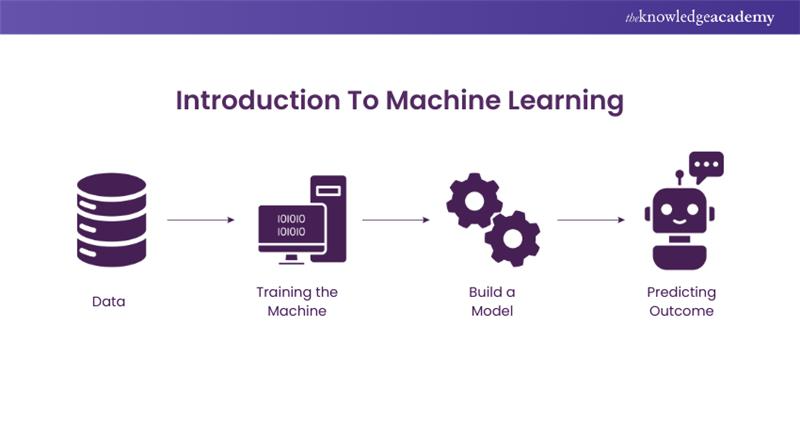
In sharp contrast with traditional programming, which requires rules to be predefined, ML algorithms modify rules on their own with the help of new data provided. This characteristic of Machine Learning makes it suitable for complex challenges such as forecasting stock prices, disease diagnostics, and automating functions in healthcare, finance, etc.
What is Data Analytics?
Data Analytics uses raw information analysis methods to find useful information that supports decisions making. Statistical procedures alongside data mining methods and business intelligence tools enable pattern and trend identification. Organisations employ Data Analytics to conduct marketplace investigations and group customers while maximising operational activities.
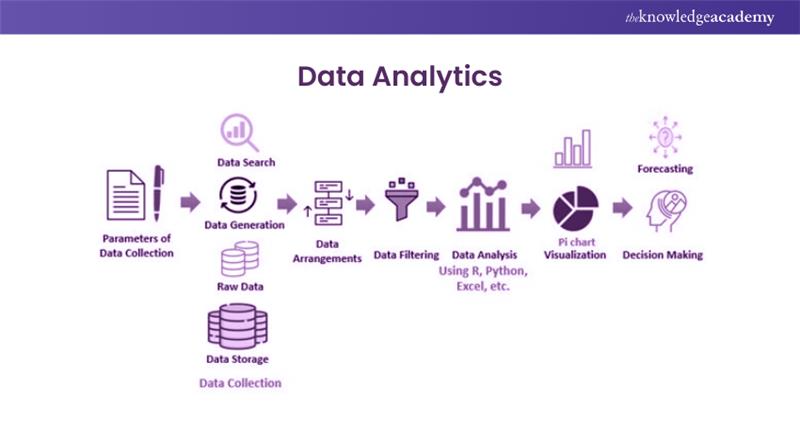
The automation of learning belongs to Machine Learning whereas Data Analytics depends on human interpretation for meaningful data presentation. The analysis of historical data through SQL and Tableau and Excel tools enables analysts to support business leadership decisions regarding strategic plans and product initiatives and customer choice direction.
Level up your data skills with our Big Data And Hadoop Solutions Architect - Join today!
Data Analytics vs Machine Learning
While Data Analytics and Machine Learning both involve working with data, their methods and objectives differ. Data Analytics focuses on helping businesses understand past events and make informed decisions based on trends.
In contrast, Machine Learning enables systems to automatically improve and make predictions. Recognising these distinctions can guide professionals in choosing the right career path and help organisations select the most suitable approach for their needs.
Data Analytics vs Machine Learning: Techniques
The techniques belonging to Data Analytics include descriptive, diagnostic, predictive and prescriptive analytics for extracting useful insights from historical data. Business performance improves through the combination of statistical models alongside data mining techniques and visualisation tools operated by analysts.
Machine Learning receives its definition from supervised learning and its subcategories together with unsupervised learning and reinforcement learning. Machine Learning constructs mathematical models to find concealed patterns while forecasting results and progressively enhancing its predictive ability thus making it perfect for artificial intelligence systems.
Data Analytics vs Machine Learning: Goal
Then goal of Data Analytics involves data analysis of historical information to detect patterns that enable organisations to make better business decisions. Through optimised marketing planning and augmented efficiency and upgraded customer experiences the system functions effectively.
The main objective of Machine Learning is to build predictive models that automate final decision outputs. Data scientists frequently apply this technique for fraud identification as well as natural language processing as well as AI recommendations.
Data Analytics vs Machine Learning: Independence
Data Analytics depends on human intervention, as analyst perform manual tasks because they need to interpret data results from predefined query inputs. Analysis accuracy depends entirely on the expert decision of the analyst conducting the work.
The system operates independently after completing training with Machine Learning technology. The ability of ML to refine its operational abilities through input from fresh information enables it to provide efficient real-time choices which recently has been used in predictive maintenance alongside autonomous systems.
Data Analytics vs Machine Learning: Scale
The analysis of structured data through Data Analytics suits small to medium-sized datasets in financial services as well as healthcare institutions. Analysts obtain their findings through the use of relational databases in combination with spreadsheets.
Machine Learning operates on extensive quantities of structured and unstructured data through its processing systems. The system's scalability quality provides suitability to meet the needs of artificial intelligence platforms including image recognition technology and speech processing protocols and big data automation systems.
Want to turn raw data into powerful insights with our Data Analysis And Visualisation With Python - Register today!
Data Analytics vs Machine Learning: Demand
Data Analytics jobs remain strongly demanded across retail and banking sectors and healthcare organisations because these industries require analytical insights to enhance operational efficiency. Organisations that create extensive data collections require analysts who possess demanding skill sets.
The rapid advancements in Artificial Intelligence technology have resulted in Machine Learning experiencing very quick growth. The finance sector and cybersecurity field alongside robotics have an ongoing need for machine learning experts because they want them to create automated systems and intelligent technology.
Data Analytics vs Machine Learning: Skills
Various abilities are essential for achieving success in the Data Analytics domain as well as the Machine Learning field. The interpretation of data forms the core of Data Analytics, yet Machine Learning primarily concentrates on creating algorithms coupled with model enhancement measures. Professionals need to select their training direction depending on what they want to achieve in their profession.
Skills Required for a Data Scientist
Data Scientists need proficiency in SQL, Excel, and programming languages such as Python and R. They utilise tools like Tableau and Power BI for data visualisation. A strong foundation in statistics and data manipulation is crucial for effective analysis.
Technical Skills
a) Statistical Analysis: Involves collecting, exploring, and interpreting large datasets to identify trends and correlations, aiding businesses in making data-driven decisions.
b) SQL: A fundamental language for managing and querying relational databases, enabling analysts to efficiently extract, update, and manipulate data.
c) Knowledge of R and Python: R is widely used for statistical analysis and visualisation, while Python offers powerful libraries like NumPy and Pandas for efficient data handling.
d) Data Visualisation: Tools like Tableau and Power BI transform complex datasets into easy-to-understand graphs and reports, providing valuable business insights.
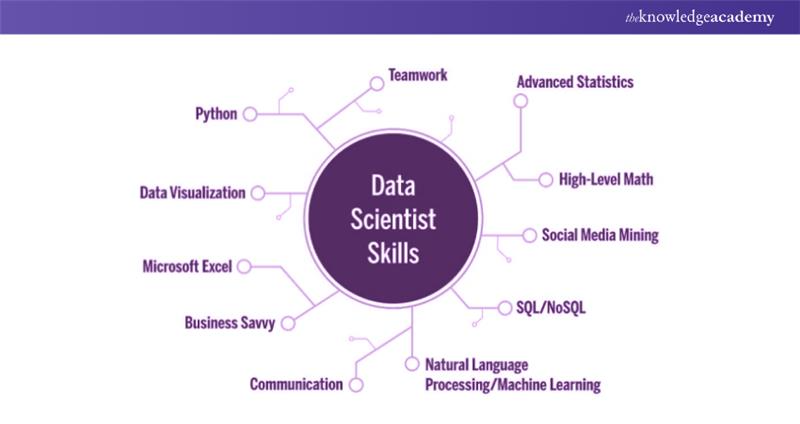
Equally important are soft skills like critical thinking, problem-solving, and communication. Data Scientists must present their findings in a way that helps businesses make informed decisions. Understanding industry-specific data needs is also vital for success.
Soft Skills
a) Analytical Thinking: Essential for breaking down large datasets into meaningful insights, enabling effective solutions to business problems.
b) Problem-solving: Empowers analysts to discover innovative methods for extracting and interpreting data, enhancing decision-making processes.
c) Communication Skills: Vital for presenting insights and reports to non-technical stakeholders in a clear, actionable manner.
d) Attention to Detail: Ensures accuracy when working with large datasets, preventing incorrect analysis and decision-making.
Skills Required for a Machine Learning Engineer
Machine Learning Engineers should be proficient in programming languages such as Python, Java, or C++. They need to be well-versed in ML frameworks like TensorFlow, Keras, and PyTorch to create predictive models. A solid understanding of data structures and algorithms is crucial for efficient model development.
Technical Skills
a) Natural Language Processing: A branch of AI that empowers machines to comprehend and process human language. It's utilised in applications such as voice assistants, chatbots, and email auto-fill suggestions.
b) Computer Vision: This field trains computers to recognise and interpret images and videos. It's extensively used in facial recognition, medical imaging, and autonomous driving.
c) Python, Java, or C++: These programming languages are crucial for implementing ML algorithms and frameworks like TensorFlow, PyTorch, and scikit-learn.
d) Big Data Technologies (Hadoop, Spark): These technologies are employed to manage large datasets in distributed computing environments, facilitating faster processing of Machine Learning algorithms.
Moreover, familiarity with cloud computing and big data technologies like Hadoop and Spark is important. Experience with deep learning and neural networks is highly beneficial for advanced AI applications, including computer vision and natural language processing.
a) Creativity: Vital for devising innovative solutions to complex AI and ML challenges.
b) Collaboration: Crucial for working alongside data scientists, engineers, and product teams to seamlessly integrate ML models into business processes.
c) Problem-solving: Necessary for debugging ML models and optimising algorithms to enhance accuracy and efficiency.
d) Attention to Detail: Ensures precise tuning of ML parameters, improving model predictions and minimising biases.
Want to gain in-demand analytics skills? Do so in complete ease, with our Data Analytics With R Course - join now!
Data Analytics vs Machine Learning: Career Options
Data Analytics and Machine Learning offer diverse career paths across various industries. Jobs in Data Analytics require experts to analyse data for business understanding but Machine Learning positions require specialists who develop AI systems and automation solutions. Professionals who develop the required competencies have the chance to benefit from high-demand and profitable opportunities in these fields.
Career Options in Data Science
Data Science experts analyse both organised dataset and unorganised records to generate business information that supports organisational decision-making process. Data Analyst serves as one common role because they interpret and visualise data and Business Intelligence Analyst serves as another common role because they drive organisational performance improvements through data-driven strategies.
Once data Engineers establish and maintain data infrastructure Market Research Analysts apply their research on customer behaviour for business decision support. The listed roles play essential functions in medical healthcare and banking industries as well as retail businesses.
Careers Options in Machine Learning
The primary responsibility of Machine Learning careers involves developing and deploying Artificial Intelligence models for automated predictions and process automation. The two essential machine learning roles consist of the Machine Learning Engineer who creates and optimises ML algorithms and the AI Research Scientist who advances deep learning methodology.
The integration of ML into autonomous systems is a robotics engineering duty and NLP Engineers focus on programming AI to understand human speech and text. The financial technology sector together with the cybersecurity domain and the technological industry actively recruit professionals for these roles.
How to Get into Data Analytics and Machine Learning
One needs to grasp essential ideas first when starting a career in Data Analytics and Machine Learning. Data science career beginners should first complete classes for statistics along with Python programming and SQL database management and Tableau or Power BI visualisation tool training.
A strong portfolio for these fields requires practical experience which can be developed through project work and hackathons along with internships. Trusted job opportunities become available for professionals who hold certifications in data science alongside AI and ML frameworks including TensorFlow and PyTorch.
Strategic learning remains vital because both industries transform at a fast pace. Professionals maintain their market competitiveness by keeping track of big data progressions and emerging AI technologies and industrial trends. Your career will advance through online community participation as well as expert networking and workshops attendance.
Success in Data Analytics or Machine Learning careers demands a formal study approach combined with practical experience to progress in business intelligence and AI-driven automation work.
Conclusion
When comparing Data Analytics and Machine Learning, the choice ultimately depends on your interests. If you enjoy uncovering insights and making data-driven decisions, Data Analytics is the right path for you. On the other hand, if you're captivated by AI and automation, Machine Learning is the way to go. Both fields are thriving, so whichever you choose, you'll have exciting career opportunities ahead.
Step up your career in data with our Advanced Data Analytics Course - Register now!
Frequently Asked Questions
What are the Five Pillars of Data Analytics?

The five pillars of Data Analytics are Data Collection, Data Processing, Data Analysis, Data Interpretation, and Data Visualisation. These steps ensure that raw data is gathered, cleaned, analysed for patterns, interpreted for insights, and presented in a clear, actionable format for decision-making.
What are the Five Main Challenges of Machine Learning?
The key challenges in Machine Learning include Data Quality, Model Overfitting, Lack of Interpretability, Computational Costs, and Ethical Bias. Poor data affects accuracy, overfitting leads to unreliable predictions, high computational demands make scaling difficult, and bias in AI models raises fairness concerns.
What are the Other Resources and Offers Provided by The Knowledge Academy?
The Knowledge Academy takes global learning to new heights, offering over 3,000+ online courses across 490+ locations in 190+ countries. This expansive reach ensures accessibility and convenience for learners worldwide.
Alongside our diverse Online Course Catalogue, encompassing 19 major categories, we go the extra mile by providing a plethora of free educational Online Resources like Blogs, eBooks, Interview Questions and Videos. Tailoring learning experiences further, professionals can unlock greater value through a wide range of special discounts, seasonal deals, and Exclusive Offers.
What is The Knowledge Pass, and How Does it Work?
The Knowledge Academy’s Knowledge Pass, a prepaid voucher, adds another layer of flexibility, allowing course bookings over a 12-month period. Join us on a journey where education knows no bounds.
What are the Related Courses and Blogs Provided by The Knowledge Academy?
The Knowledge Academy offers various Big Data and Analytics Training, including the Data Analytics With R, Data Science Analytics and the Hadoop Big Data Certification. These courses cater to different skill levels, providing comprehensive insights into What is Data Analysis.
Our Data, Analytics & AI Blogs cover a range of topics related to Data Analytics, offering valuable resources, best practices, and industry insights. Whether you are a beginner or looking to advance your Data Analytics and AI skills, The Knowledge Academy's diverse courses and informative blogs have got you covered.

Lily Turner


Senior AI/ML Engineer and Data Science Author
Lily Turner is a data science professional with over 10 years of experience in artificial intelligence, machine learning, and big data analytics. Her work bridges academic research and industry innovation, with a focus on solving real-world problems using data-driven approaches. Lily’s content empowers aspiring data scientists to build practical, scalable models using the latest tools and techniques.
View Detail
Upcoming Data, Analytics & AI Resources Batches & Dates
Date
 Hadoop Big Data Certification
Hadoop Big Data Certification
Thu 10th Sep 2026
Hadoop Big Data Certification
Thu 10th Dec 2026

 If you wish to make any changes to your course, please


