


 Top Rated Course

We may not have the course you’re looking for. If you enquire or give us a call on +44 1344 203 999 and speak to our training experts, we may still be able to help with your training requirements.
What is Agile Methodology and How is it Used?
David Evans 29 October 2025Agile Methodology is a flexible project approach using short sprints to boost teamwork, adapt to change, and deliver value faster. This Methodology is a Project Management approach that emphasises flexibility, collaboration, and improvement. It ensures high-quality results through iterative development and stakeholder involvement.

Training Outcomes Within Your Budget!
We ensure quality, budget-alignment, and timely delivery by our expert instructors.
Table of Contents

What do successful startups, smart product teams, and top-performing IT departments have in common? Most of them use Agile. But What is Agile Methodology? It has become the heartbeat of efficient, adaptive, and innovative work environments. Unlike old-school methods that demand you get everything perfect upfront, Agile invites teams to build, test, tweak, and grow in short bursts.
Agile helps teams collaborate, learn from mistakes quickly, and deliver real value, not just meet deadlines. It keeps the focus on customer value, not paperwork. If you’ve heard the term but aren’t sure what it means or how it’s used, this blog is your starting point. Let’s break down What is Agile Methodology, why, and how of Agile in a way that’s simple, clear, and useful.
Table of Contents
1) What is Agile?
2) What is the Agile Manifesto?
3) What is Agile Methodology in Project Management?
4) What are the 12 Agile principles?
5) How can Agile Methodology be Implemented into Projects?
6) Core Principles of Agile Methodology
7) Benefits of Agile Methodology
8) Types of Agile Methodologies
9) How to Implement Agile Methodology into Projects?
10) Who Should Lead an Agile Transformation?
11) Conclusion
What is Agile?
Agile is a working approach that delivers customer value in small, frequent updates rather than one major release. It promotes close collaboration, adaptability to change, and continuous feedback. Based on the Agile Manifesto, it includes frameworks like Scrum, Kanban, and Extreme Programming (XP).
Key Takeaways:
1) Agile techniques enhance quality and efficiency
2) Some of them are Pair Programming, TDD, Standups and Sprints
3) Agile goes beyond a development method
4) It values innovation and adaptability
5) It fosters continuous learning and prioritises customer satisfaction
6) Real-world case studies demonstrate the success of Agile practices
7) Differentiates between Agile Change Agents and traditional Change Management
What is the Agile Manifesto?
The Agile Manifesto is a cumulative statement of values and guidelines for Software Development. It was developed by a collective of practitioners in 2001. Here are the core values from the Manifesto:
a) Individuals and interactions over processes and tools
b) Working software, not comprehensive documentation
c) Customer collaboration over contract negotiation
d) Reacting to change rather than following the plan
Excited to take control of product backlogs? Start your User Stories Training today itself!
What is Agile Methodology in Project Management?
Agile Methodology in Project Management is an approach that focuses on delivering work in small, manageable segments called iterations or sprints. Instead of planning everything upfront, Agile allows teams to adapt to changes and customer feedback throughout the project lifecycle. It promotes collaboration, continuous improvement, and flexibility.

Here are Some Areas to Concentrate:
1) Projects are broken into short cycles called iterations or sprints, typically lasting 2–4 weeks, with each sprint producing a usable product feature.
2) It embraces change and allows teams to adapt quickly to shifting priorities, customer needs, and trends.
3) Collaboration is key as Agile encourages constant communication between teams, stakeholders, and customers.
4) Customer feedback is integrated early and often and helps to refine the product and ensures aligns with expectations.
5) Daily standups, sprint planning, reviews, and retrospectives are common Agile practices.
6) Tools like backlogs, Kanban boards, and burndown charts are used to manage workflow and track progress.
7) Agile is guided by the Agile Manifesto and values individuals and interactions, working solutions and customer collaboration.
8) Popular Agile frameworks include Scrum, Kanban, and Extreme Programming (XP), each offering specific tools and roles.
Unlock your potential and drive your career forward with our SAFe® Agile Product Management Training - Register now!
What are the 12 Agile principles?
Here are the 12 Agile Principles to learn about:
1) Satisfy the customer through early and continuous delivery
2) Deliver valuable software frequently to keep customers happy and engaged
3) Welcome changing requirements, even late in development
4) Adaptability is key so embrace change to improve the product’s value
5) Deliver working software frequently
6) Provide updates in short cycles to ensure steady progress and feedback
7) Encourage daily collaboration between business and developers
8) Ongoing communication ensures alignment and quicker decisions
9) Build projects around motivated individuals
10) Give teams the support and trust they need to succeed
11) Face-to-face conversation is the most effective communication
12) Direct interaction improves understanding and reduces delays
13) Working software is the primary measure of progress
Success is measured by functional, usable product releases
How can Agile Methodology be Implemented into Projects?
Implementing Agile Methodology into projects requires a cultural shift, mindset change, and a structured approach. It helps to prioritise flexibility, collaboration, and customer value. Here’s how Agile can be effectively introduced and applied in real-world projects:
1) Understand the Agile Mindset
Before diving into practices, it’s important that all stakeholders understand the core Agile values. Some of them are individuals and interactions, working software, customer collaboration, and responding to change. This mindset sets the foundation for successful Agile adoption.
2) Choose the Right Agile Framework
Depending on your project size and team structure, select an appropriate Agile framework. Scrum is ideal for small teams working in sprints with defined roles like Scrum Master, Product Owner. Kanban is suitable for visualising work and managing flow.
3) Form Cross-functional Teams
Agile thrives on collaboration. Create self-organising teams that include all necessary skill sets like developers, testers, designers, Product Owners. They can deliver complete increments of work independently.
4) Define Roles and Responsibilities
Defining the key roles is important for clarity. Examples are of Product Owner is the one who manages the product backlog and represents the customer. Team Members deliver the actual product in increments.
5) Break Work into User Stories
Instead of a massive requirement document, Agile teams use user stories like small, manageable units of work that reflect the needs of end users. These are prioritised in a product backlog.
6) Adopt Iterative Planning and Delivery
Agile works in short cycles where planning, development, testing, and review all occur within the same timeframe. At the end of each sprint, the team delivers a working product increment.
7) Conduct Regular Meetings
Daily standups, sprint planning, sprint reviews, and retrospectives are essential Agile ceremonies that ensure communication, continuous improvement, and stakeholder involvement.
8) Use Agile Tools
Implement tools like Jira or Trello for backlog and sprint management and Slack or Microsoft Teams for team communication. There are also Burndown charts and Kanban boards for visual progress tracking.
Join our Agile for Teams Training to acquire the knowledge and ensure a final solution – Ready to meet business needs?
9) Encourage Customer Collaboration
Involve stakeholders and end-users frequently to review progress and provide feedback. This ensures the product evolves in alignment with business needs.
10) Foster Continuous Improvement
After every sprint, hold a retrospective meeting to reflect on what worked, what didn’t, and how to improve. Agile is all about evolving processes and enhancing team performance.
11) Provide Ongoing Training and Support
Equip teams with the necessary training and resources to understand and implement Agile practices effectively. Encourage certifications, workshops, and mentorship.
12) Start Small and Scale Gradually
Begin with a pilot project or a small team. Learn from the experience, fine-tune your Agile implementation, and gradually scale it across departments or the organisation.
Core Principles of Agile Methodology
The Agile Manifesto consists of four basic values and 12 principles that support development and software delivery. Agile Methodology in Software Testing utilizes these values to guide the development and delivery processes. The four principles of Agile Methodology are as follows:
1) Individuals and Interactions Over Processes and Tools
Agile values people and their interactions during the project. It values communication and collaboration among team members, end-users, and customers. The Agile Manifesto states that successful Software Development is possible with good team coordination and cooperation. Members who communicate effectively with one another and work towards a single objective can solve difficulties more efficiently.
2) Working Software Over Comprehensive Documentation
The Agile Manifesto emphasises the necessity of being customer-centric, which fosters rapid iterations and gradual delivery of actual value to clients. Rather than focusing on thorough documentation, this idea fosters regular iterations and incremental delivery of meaningful value to clients.
While documentation is essential, the functionality and quality of the software being created are significant indicators of progress. Teams should focus on processing and delivering functional software to clients.
3) Customer Collaboration Over Contract Negotiation
The Agile Methodology emphasises active customer interaction and collaboration. Regular feedback and open communication guarantee that customer expectations are satisfied and that the final product matches their vision. This principle emphasises the value of customer satisfaction and adaptation to changing needs. Historically, the contract was the most significant component of project development since it supplied specific details about the result. Instead, the emphasis should be on continuous product development. Therefore, it is critical to collaborate with the consumers to obtain ideal results.
4) Responding to Change Over Following a Plan
Agile Methodology accepts change by embracing constant planning and adaptation. Requirements and priorities are reviewed and updated regularly based on feedback, which allows for improved responsiveness to changing client needs.
Agile teams value flexibility and adaptability. They are receptive to feedback on new information, make necessary adjustments, and provide the most value to consumers. This is why, according to the Agile Manifesto, all software teams should be able to modify their work as needed.
Learn the Agile approach and philosophy with our AgilePM® Foundation & Practitioner (AgilePM® V3 ) Course - Join today!
Benefits of Agile Methodology
Agile Methodology provides several benefits that help to project success and performance. The following are some benefits of Agile Methodology:

1) Adaptability
Agile Methodology possesses many adaptable characteristics. Agile working in the Software Development endeavour helps teams quickly readjust strategies without any chaos in the project itself. Unlike the fall method of the traditional type, where stages are rigidly dependent on each other, Agile is more flexible, and strategy shifts will run smoothly. This is a plus point, especially in the rapidly developing area of software, showcasing the key Differences between Agile and Traditional Project Management.
2) Collaborative Teamwork
Emphasising communication within teams realises the importance of Agile principles. Although technological advances have broadened the use of remote work, personal interaction has remained relevant. Dispelling project separations strengthens the team's constructive aspects and reinforces the whole level of production.
3) Customer-centric Approach
The Software Development process combines the nuances of customer focus. In Agile methods, teamwork with clients is highly appreciated, and fast feedback from all users is possible. Valuing routinely caused by the major features and keeping a customer-focused concept will prove beneficial in the long run. Agile teams can quickly fulfil a similar role on another project when the needs are varied.
Join our Agile Project Management Foundation (AgilePM®) Course today to learn effective Project Management.
4) Using Agile and Waterfall Methodologies
Some projects may require a combination of both Agile and Waterfall Methodologies. This hybrid approach can allow teams to use the Waterfall method for planning and design and the Agile method for development. This way, teams can have a clear and detailed plan upfront and deliver working software in short and frequent cycles. This can help teams balance both methodologies' benefits and cope with the challenges of complex and changing projects.
Types of Agile Methodologies
Agile isn’t a one-size-fits-all approach. Over time, various Types of Agile methodologies have emerged, each with its own structure, practices, and focus areas. Below are the most recognised types:
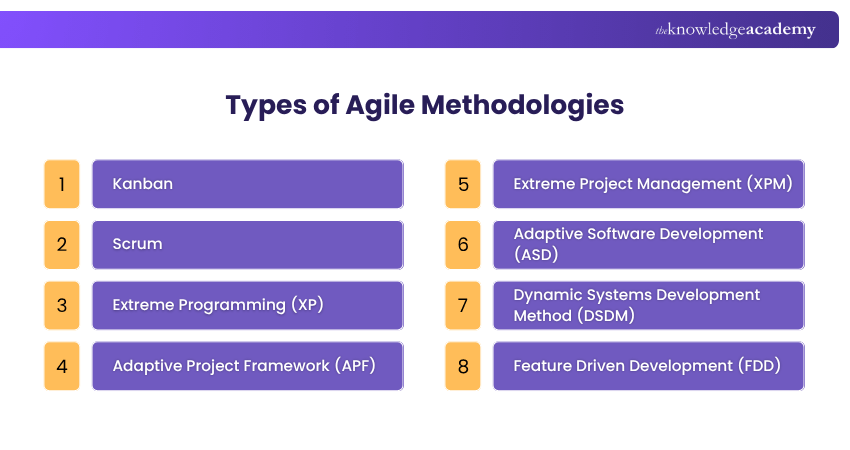
Kanban
Kanban is a visual workflow management method that focuses on continuous delivery without making the team overwhelmed. Work items are represented on a board maybe physical or digital.
It helps teams visualise tasks, identify bottlenecks, and limit work in progress. It’s highly flexible and ideal for teams aiming for incremental improvement and streamlined operations.
Scrum
Scrum is the most widely used Agile framework. It operates in fixed-length iterations called sprints. It includes defined roles such as Product Owner, Scrum Master, and Development Team.
Key Scrum ceremonies include sprint planning, daily standups, sprint review, and retrospectives. It’s excellent for delivering products in increments with frequent customer feedback.
Extreme Programming (XP)
XP focuses on improving software quality and responsiveness to changing requirements. It includes practices such as Pair Programming, Test-Driven Development (TDD), continuous integration, and small releases.
XP is highly disciplined and suitable for technical teams that require fast, reliable software delivery.
Adaptive Project Framework (APF)
APF is designed for projects where requirements are unclear or expected to evolve. It promotes repetitive planning and allows teams to adapt quickly as the project unfolds.
Stakeholder involvement and feedback are key elements. APF is particularly useful in complex or unpredictable environments.
Extreme Project Management (XPM)
XPM is best suited for high-speed and high-change projects. It embraces constant change and uncertainty, allowing teams to modify project plans continuously.
It’s a more radical form of Agile and is often used in creative industries, R&D, or innovation-driven fields.
Adaptive Software Development (ASD)
ASD focuses on collaboration, learning, and flexibility in fast-paced environments. It includes three phases which are Speculate, Collaborate, and Learn.
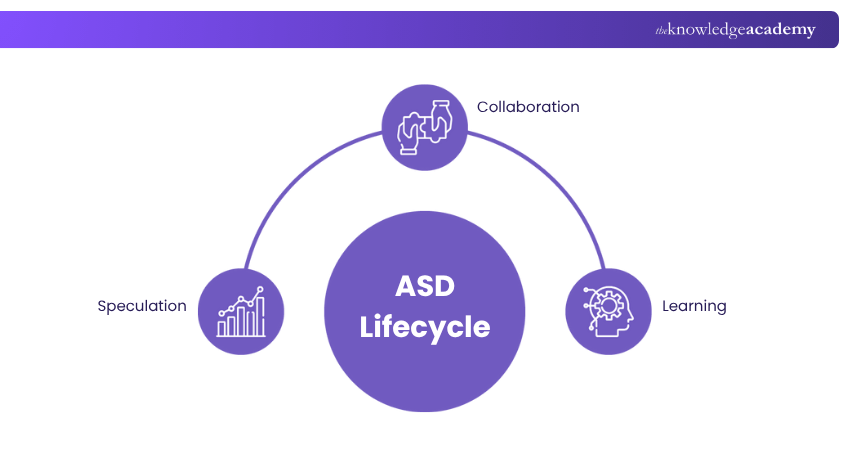
This model supports continuous adaptation and is ideal for complex software projects where change is constant.
Advance your agile career and lead with strategy - Master Lean Portfolio Management SAFe Course now!
Dynamic Systems Development Method (DSDM)
DSDM is one of the oldest Agile frameworks and emphasises strict time and budget control. It uses a repetitive lifecycle and requires active user involvement.
DSDM is well-suited for organisations needing detailed governance and documentation while remaining Agile.
Feature Driven Development (FDD)
FDD is a model-driven, short process focused on building and designing features. It involves five key activities which helps the team to grow. They are developing an overall model, building a feature list, planning by feature, designing by feature, and building by feature.
FDD is ideal for larger teams looking for a structured yet Agile approach.
How to Implement Agile Methodology into Projects?
To implement Agile, start by adopting an Agile mindset focused on flexibility and collaboration. Choose a suitable framework like Scrum or Kanban, form cross-functional teams and plan in short sprints. These prioritise user stories, hold daily standups, review progress regularly, and adapt based on feedback.
Who Should Lead an Agile Transformation?
An Agile transformation should be led by a committed leadership team. It often includes an Agile Coach or Scrum Master, with strong support from senior management. Leaders must promote the Agile mindset, guide cultural change and empower teams. They ensure alignment between strategy, processes, and continuous improvement.
Conclusion
Learning What is Agile Methodology being a powerful approach reshapes how teams plan, build, and deliver value. By focusing on collaboration, adaptability, and continuous improvement, Agile enables organisations to respond quickly to change. IT helps to stay aligned with customer needs. The core principles remain the same as, deliver fast, stay flexible, and always keep learning.
Don’t wait and train with experts - Start Learning Agile Training the easy way!
Frequently Asked Questions
How are Agile Teams Structured?

Agile teams are cross-functional and self-organising. It typically includes developers, testers, a Product Owner, and a Scrum Master or Agile Coach. Each member collaborates closely, shares responsibility, and focuses on delivering value. Roles are flexible, encouraging autonomy, open communication, and continuous improvement.
What is Meant by Sprint in Agile?
A sprint is a time-boxed period of 1-4 weeks during which a scrum team works to complete a set amount of work. Sprints are the core of Scrum, a popular Agile framework. They allow teams to deliver working software frequently, adapt to changing requirements, and collaborate effectively.
What are the Other Resources and Offers Provided by The Knowledge Academy?
The Knowledge Academy takes global learning to new heights, offering over 3,000 online courses across 490+ locations in 190+ countries. This expansive reach ensures accessibility and convenience for learners worldwide.
Alongside our diverse Online Course Catalogue, encompassing 19 major categories, we go the extra mile by providing a plethora of free educational Online Resources like Blogs, eBooks, Interview Questions and Videos. Tailoring learning experiences further, professionals can unlock greater value through a wide range of special discounts, seasonal deals, and Exclusive Offers.
What is The Knowledge Pass, and How Does it Work?
The Knowledge Academy’s Knowledge Pass, a prepaid voucher, adds another layer of flexibility, allowing course bookings over a 12-month period. Join us on a journey where education knows no bounds.
What are the Related Courses and Blogs Provided by The Knowledge Academy?
The Knowledge Academy offers various Agile Training, including Agile Project Management Foundation, Agile Project Management Practitioner and Agile Project Management Foundation & Practitioner. These courses cater to different skill levels, providing comprehensive insights into Project Integration Management.
Our Project Management Blogs cover a range of topics related to Agile, offering valuable resources, best practices, and industry insights. Whether you are a beginner or looking to advance your Project Management skills, The Knowledge Academy's diverse courses and informative blogs have you covered.

David Evans


Certified Project Trainer and Agile Delivery Expert
David Evans brings over a decade of hands-on experience in project delivery, Agile transformation, and team leadership. With a background in technology and business consulting, David has led cross-functional teams through Agile and Waterfall projects in both public and private sectors. He combines technical knowledge with practical insights to help readers navigate the challenges of modern project environments.

Upcoming Project Management Resources Batches & Dates
Date
 AgilePM® Foundation & Practitioner (AgilePM® v3)
AgilePM® Foundation & Practitioner (AgilePM® v3)
Mon 23rd Mar 2026
AgilePM® Foundation & Practitioner (AgilePM® v3)
Mon 30th Mar 2026
AgilePM® Foundation & Practitioner (AgilePM® v3)
Sat 4th Apr 2026, Sun 5th Apr 2026
AgilePM® Foundation & Practitioner (AgilePM® v3)
Tue 7th Apr 2026
AgilePM® Foundation & Practitioner (AgilePM® v3)
Mon 13th Apr 2026
AgilePM® Foundation & Practitioner (AgilePM® v3)
Mon 20th Apr 2026
AgilePM® Foundation & Practitioner (AgilePM® v3)
Mon 27th Apr 2026
AgilePM® Foundation & Practitioner (AgilePM® v3)
Tue 5th May 2026
AgilePM® Foundation & Practitioner (AgilePM® v3)
Mon 11th May 2026
AgilePM® Foundation & Practitioner (AgilePM® v3)
Mon 18th May 2026
AgilePM® Foundation & Practitioner (AgilePM® v3)
Tue 26th May 2026
AgilePM® Foundation & Practitioner (AgilePM® v3)
Mon 1st Jun 2026
AgilePM® Foundation & Practitioner (AgilePM® v3)
Mon 8th Jun 2026
AgilePM® Foundation & Practitioner (AgilePM® v3)
Sat 13th Jun 2026, Sun 14th Jun 2026
AgilePM® Foundation & Practitioner (AgilePM® v3)
Mon 15th Jun 2026
AgilePM® Foundation & Practitioner (AgilePM® v3)
Mon 22nd Jun 2026
AgilePM® Foundation & Practitioner (AgilePM® v3)
Mon 29th Jun 2026
AgilePM® Foundation & Practitioner (AgilePM® v3)
Mon 6th Jul 2026
AgilePM® Foundation & Practitioner (AgilePM® v3)
Mon 13th Jul 2026
AgilePM® Foundation & Practitioner (AgilePM® v3)
Mon 20th Jul 2026
AgilePM® Foundation & Practitioner (AgilePM® v3)
Mon 27th Jul 2026
AgilePM® Foundation & Practitioner (AgilePM® v3)
Mon 3rd Aug 2026
AgilePM® Foundation & Practitioner (AgilePM® v3)
Mon 10th Aug 2026
AgilePM® Foundation & Practitioner (AgilePM® v3)
Mon 17th Aug 2026
AgilePM® Foundation & Practitioner (AgilePM® v3)
Sat 22nd Aug 2026, Sun 23rd Aug 2026
AgilePM® Foundation & Practitioner (AgilePM® v3)
Mon 24th Aug 2026
AgilePM® Foundation & Practitioner (AgilePM® v3)
Tue 1st Sep 2026
AgilePM® Foundation & Practitioner (AgilePM® v3)
Mon 7th Sep 2026
AgilePM® Foundation & Practitioner (AgilePM® v3)
Mon 14th Sep 2026
AgilePM® Foundation & Practitioner (AgilePM® v3)
Mon 21st Sep 2026
AgilePM® Foundation & Practitioner (AgilePM® v3)
Mon 28th Sep 2026
AgilePM® Foundation & Practitioner (AgilePM® v3)
Mon 5th Oct 2026
AgilePM® Foundation & Practitioner (AgilePM® v3)
Sat 10th Oct 2026, Sun 11th Oct 2026
AgilePM® Foundation & Practitioner (AgilePM® v3)
Mon 12th Oct 2026
AgilePM® Foundation & Practitioner (AgilePM® v3)
Mon 19th Oct 2026
AgilePM® Foundation & Practitioner (AgilePM® v3)
Mon 26th Oct 2026
AgilePM® Foundation & Practitioner (AgilePM® v3)
Mon 2nd Nov 2026
AgilePM® Foundation & Practitioner (AgilePM® v3)
Mon 9th Nov 2026
AgilePM® Foundation & Practitioner (AgilePM® v3)
Mon 16th Nov 2026
AgilePM® Foundation & Practitioner (AgilePM® v3)
Mon 23rd Nov 2026
AgilePM® Foundation & Practitioner (AgilePM® v3)
Mon 30th Nov 2026
AgilePM® Foundation & Practitioner (AgilePM® v3)
Mon 7th Dec 2026
AgilePM® Foundation & Practitioner (AgilePM® v3)
Sat 12th Dec 2026, Sun 13th Dec 2026
AgilePM® Foundation & Practitioner (AgilePM® v3)
Mon 14th Dec 2026
AgilePM® Foundation & Practitioner (AgilePM® v3)
Mon 21st Dec 2026

 If you wish to make any changes to your course, please


