


 Top Rated Course

We may not have the course you’re looking for. If you enquire or give us a call on +27 800 780004 and speak to our training experts, we may still be able to help with your training requirements.
What Are Bonds? Types, Features and Benefits
The Knowledge Academy 03 April 2026Bonds are loans where investors lend money to governments or companies for a set time, receiving interest payments and repayment of principal at maturity. They are considered relatively safer than stocks, offering stability, predictable returns, and diversification in an investment portfolio.

Training Outcomes Within Your Budget!
We ensure quality, budget-alignment, and timely delivery by our expert instructors.
Table of Contents
Investing doesn’t always have to be risky, confusing, or stressful. With Bonds, you can grow your wealth steadily without constantly checking the market. You lend, you earn interest, and you get your money back; it’s that straightforward. Bonds are perfect if you value security, balance, and predictable returns in your portfolio.
To give you a clearer picture, this blog will explore What are Bonds, how they work, the different types, ways to earn, and the risks involved. We’ll also cover buying and selling tips and compare Bonds vs stocks to help you make smarter Investment choices.
Table of Contents
1) What are Bonds?
2) How do Bonds Work?
3) Types of Bonds
4) How Can You Earn Money by Investing in Bonds?
5) The Process of Buying and Selling Bonds
6) Why Buy Bonds?
7) Risks of Bonds
8) What are Bonds vs Stocks?
9) Are Bonds a Good Investment?
10) Conclusion
What are Bonds?
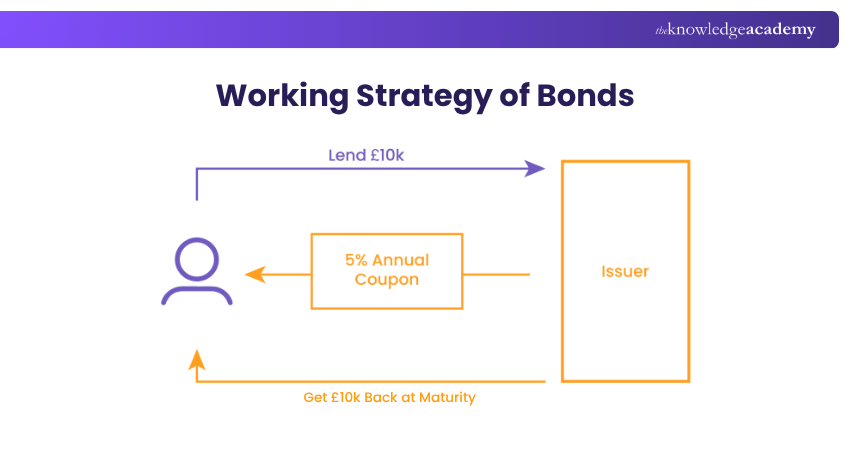
A Bond is a loan where the bondholder lends money to a company or government. In this scenario, the borrower pays regular interest until a specific date and then repays the original loan amount (the principal or face value). The interest payments, known as coupons, are a percentage of the principal and are paid at set intervals.
Bonds can be traded like stocks, but mostly Over-the-counter (OTC) through brokers. Bond prices fluctuate with market demand and interest rates, rising when rates drop and falling when rates increase.
How do Bonds Work?
Bonds are like loans. You lend money to a company or government, and they promise to pay you interest and return your money, called the principal, at maturity. Companies use Bonds to grow their business, and governments use them for projects like roads or schools. Bonds are fixed-income investments because they give steady and predictable returns.
Here are two common types of Bonds:
Zero-coupon Bonds
These Bonds don’t pay you interest regularly. Alternatively, you buy them at a lower price and get the full amount at the end.
Example: You buy a Bond for £900, and, at maturity, you get £1,000. Your profit is £100.
Index-linked Gilts
These Bonds protect you from inflation. The interest you earn changes based on inflation rates, so your money keeps its value.
Example: If inflation goes up by 3%, your interest payment also increases by 3%, helping you keep up with rising prices.
Types of Bonds
Bonds come in different types depending on who issues them; governments, companies, municipalities, or agencies. Here are the four main types explained simply:
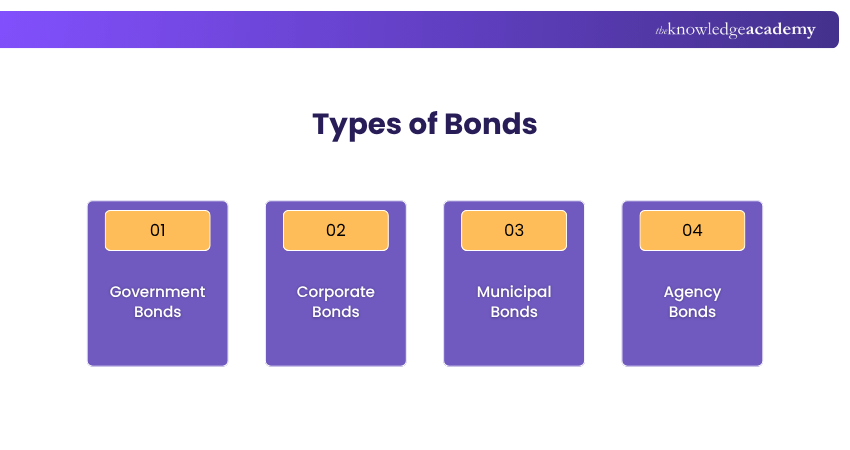
1) Government Bonds
a) In the UK, government Bonds are called gilts, and in the US, they’re known as Treasuries.
b) These are considered low-risk investments when issued by financially stable governments.
c) In the US, Treasury bills (T-bills) mature in 1 year or less, Treasury notes (T-notes) in two to ten years, and Treasury Bonds (T-Bonds) in 30 years.
d) Some Bonds, like UK Index-linked Gilts and US TIPS, adjust interest payments based on inflation to protect your money’s value.
2) Corporate Bonds
a) These are issued by companies to raise finance for growth, expansion, or new projects.
b) They usually offer higher interest than government Bonds but also carry more risk.
c) If the company fails, bondholders are repaid before shareholders.
d) Agencies like Moody’s, S&P, and Fitch provide credit ratings to show how safe or risky these Bonds are.
3) Municipal Bonds
a) Local governments issue municipal Bonds, also called “munis”, to fund public projects like schools, hospitals, and roads.
b) In the UK, these are issued by the UK Municipal Bonds Agency.
c) In the US, many municipal Bonds come with tax benefits, making them attractive low-risk investments.
4) Agency Bonds
a) These are mostly issued in the US by government-sponsored enterprises (GSEs) or federal agencies.
b) GSE Bonds, like those from Freddie Mac and Fannie Mae, are not fully backed by the government.
c) Federal agency Bonds are guaranteed by the government, making them safer.
d) These Bonds mainly support sectors like housing and agriculture.
Boost your investment skills – register for our Investment and Portfolio Management Course now!
How Can You Earn Money by Investing in Bonds?
Investing in Bonds can offer two primary ways to earn money: through regular interest payments and potential Capital Market gains
Interest Payout
a) When you invest in a Bond, you're basically lending money to an issuer, such as the UK government or a corporation.
b) In return, the issuer agrees to pay you regular interest, known as "coupons."
c) For example, if you purchase a Bond with a market price of £1,000 and an annual coupon rate of 5%, you'll receive £50 in interest each year until the Bond matures.
d) These payments deliver a steady income stream for investors.
Capital Gain
a) Beyond the regular interest payments, Bonds can also offer profits through capital gains.
b) If you happen to buy a Bond at a price lower than its face value (known as buying at a discount) and hold it until maturity, you'll receive the full face value, realising a profit.
c) For instance, purchasing a Bond for £900 and receiving £1,000 at maturity results in a £100 gain.
d) Additionally, if market interest rates decline after your purchase, the market value of your Bond may increase, allowing you to sell it at a higher price before maturity.
e) This difference between your purchase and selling prices constitutes a capital gain.
The Process of Buying and Selling Bonds
The process of buying and selling Bonds involves creating an account and placing the order. Let’s explore these steps in detail:
Account Creation
A) Choose a Platform: Decide where you'd like to purchase Bonds. Options include:
a) Government portals
b) Brokerage firms
B) Gather Necessary Information: You'll typically need:
a) A valid identification number (e.g., Social Security Number)
b) Bank account details for funding purchases
c) A valid email address
C) Complete the Application: Follow the platform's instructions to fill out and submit your application. This may involve agreeing to terms and verifying your identity.
Place Order
A) Log in to Your Account: Access your account on the chosen platform.
B) Select the Bond Type: Choose the specific Bond you wish to purchase, such as:
a) Treasury Bonds
b) Corporate Bonds
c) Municipal Bonds
C) Specify Purchase Details:
a) Amount: Enter the investment amount.
b) Order Type: Decide between a market order (buy at the existing price) or a limit order (set a maximum purchase price).
D) Review and Confirm: Double-check all details for accuracy, then submit your order.
E) Monitor Your Investment: Keep track of your Bond's performance and any interest payments through your account dashboard.
Obtain practical insights through real-world case studies and hands-on simulations. Join our Investment Banking Training now!
Why Buy Bonds?
Bonds are a safe and simple way to grow your money while earning stable returns. Here’s an easy explanation of the key points:
Interest
When you get a Bond, the issuer gives you interest at a fixed rate, called the coupon. This gives you a stable income, usually every six months or once a year.
Stock
Unlike stocks, which make you a part-owner of a company, Bonds make you a lender. Bonds are usually less risky than stocks but often give lower returns.
Portfolio
Adding Bonds to your investment portfolio helps balance risk. When stock prices go up and down, Bonds can give steady returns, keeping your overall investments stable.
Secondary Market
You don’t have to keep a Bond until maturity. You can sell it early in the secondary market, a place where investors buy and sell Bonds that are already issued.
Holding Bonds vs Trading Bonds
a) Holding Bonds means keeping them until maturity to get fixed interest and your full amount back.
b) Trading Bonds means selling them early to make a profit if their market price goes up.
Bond Terms to Know
The face value is the money you lend and get back at the end. The coupon rate is the fixed interest you earn. The maturity date is when your money is repaid, and the yield is your total return from the Bond.
Choosing Bonds
Check who issues the Bond; government Bonds are usually safer than company Bonds. Look at the risk level using credit ratings. Finally, pick Bonds based on your goal, whether you want steady income, low risk, or higher returns.
Risks of Bonds
Investing in Bonds can offer steady income and capital preservation, but it's essential to understand the associated risks. Below is an overview of key Bond investment risks:
Credit Risk
This Credit Risk involves the Bond issuer failing to make timely interest or principal payments, leading to default. Corporate Bonds, typically those with lower credit ratings, are more susceptible to this risk. Investors should assess the issuer's creditworthiness before investing.
Interest Rate Risk
The Bond price has an inverse relationship with the interest rate. Existing Bond prices typically fall when interest rates rise, as new Bonds may offer higher yields. Such risk is more pronounced for Bonds with longer maturities.
Inflation Risk
Inflation can diminish the purchasing power of a Bond's future interest payments and principal. The real return becomes negative if inflation rates exceed the Bond's yield.
Liquidity Risk
This refers to the challenge of selling a Bond quickly without affecting its price. Some Bonds may not have an active secondary market, making it difficult to sell them at a desirable price when needed.
Call Risk
Certain Bonds come with a call feature, allowing issuers to redeem them before maturity, often when interest rates decline. This can result in investors receiving their principal earlier than expected and potentially reinvesting at lower rates.
Learn fundamental and advanced trading strategies for successful investing. Join our Stock Trading Course now!
What are Bonds vs Stocks?
Bonds are like loans. You lend money to a company or the government. In return, you get regular interest and your full money back at the end. Bonds are usually safer and give a steady income, but the profits are smaller than those of stocks.
Stocks are different. Shares are issued by companies, priced daily, and traded on the stock market. When you buy shares, you own a small part of the company and can earn from dividends or increases in share price. However, stocks are riskier because their prices can fluctuate quickly.
Are Bonds a Good Investment?
Bonds are well worth considering when building your investment portfolio. They provide a steady income through interest and return your money at maturity. Safer than stocks, bonds help balance your portfolio, lower risk, and keep your savings secure.
Conclusion
Bonds offer an excellent way to balance risk and reward, giving you a stable path to financial growth. By learning What are Bonds and how they work, you can explore opportunities for steady income and long-term security. Start learning about bonds today and make smarter investment choices to grow and protect your wealth with confidence.
Become familiar with all crucial aspects of investing and trading with our Investment and Trading Training – Join now!
Frequently Asked Questions
Do Bonds Give Guaranteed Returns?

Bonds aren’t guaranteed to give you a set return, but they’re generally seen as safer than stocks. While bondholders usually get their money back at maturity, the actual return can vary based on interest rates, the issuer’s reliability, and inflation.
How Many Bonds can one Person Buy?
In the UK, an individual can purchase and hold up to £50,000 worth of Premium Bonds through the National Savings and Investments (NS&I) agency. Each Bond costs £1 and the minimum purchase amount is £25.
What are the Other Resources and Offers Provided by The Knowledge Academy?
The Knowledge Academy takes global learning to new heights, offering over 3,000 online courses across 490+ locations in 190+ countries. This expansive reach ensures accessibility and convenience for learners worldwide.
Alongside our diverse Online Course Catalogue, encompassing 19 major categories, we go the extra mile by providing a plethora of free educational Online Resources like Blogs, eBooks, Interview Questions and Videos. Tailoring learning experiences further, professionals can unlock greater value through a wide range of special discounts, seasonal deals, and Exclusive Offers.
What is The Knowledge Pass, and How Does it Work?
The Knowledge Academy’s Knowledge Pass, a prepaid voucher, adds another layer of flexibility, allowing course bookings over a 12-month period. Join us on a journey where education knows no bounds.
What are the Related Courses and Blogs Provided by The Knowledge Academy?
The Knowledge Academy offers various Investment and Trading Training, including Investment Management Course, Investment Banking Training Course, and Investment and Portfolio Management Course. These courses cater to different skill levels, providing comprehensive insights into Dogecoin vs Bitcoin.
Our Advanced Technology Blogs cover a range of topics related to Bonds, offering valuable resources, best practices, and industry insights. Whether you are a beginner or looking to advance your Financial skills, The Knowledge Academy's diverse courses and informative blogs have got you covered.

The Knowledge Academy


Global Training Provider
The Knowledge Academy is a world-leading provider of professional training courses, offering globally recognised qualifications across a wide range of subjects. With expert trainers, up-to-date course material, and flexible learning options, we aim to empower professionals and organisations to achieve their goals through continuous learning.

Upcoming Business Skills Resources Batches & Dates
Date
 Investment and Portfolio Management Course
Investment and Portfolio Management Course
Fri 7th Aug 2026
Investment and Portfolio Management Course
Fri 30th Oct 2026

 If you wish to make any changes to your course, please


