


 Top Rated Course

We may not have the course you’re looking for. If you enquire or give us a call on +27 800 780004 and speak to our training experts, we may still be able to help with your training requirements.
4 Types of Consumer Behaviour: Explained in Detail
James Smith 25 February 2026Ever wondered why people buy what they buy? Different Types of Consumer Behaviour reveal the psychology behind shopping decision - from impulse buys to brand loyalty. Each purchase tells a story about needs, desires, and habits. Understanding them helps businesses craft strategies. In this blog, we decode key consumer patterns and what drives them.

Training Outcomes Within Your Budget!
We ensure quality, budget-alignment, and timely delivery by our expert instructors.
Table of Contents

Have you ever grabbed a coffee without thinking twice, but then spent hours choosing a new phone? That’s Consumer Behaviour in action! Every purchase—whether it’s a daily habit, a well-researched investment, or a spur-of-the-moment splurge—follows a pattern. And guess what? By analysing the Types of Consumer Behaviour, businesses can tailor their marketing efforts, ensuring they meet customer needs effectively.
Some shoppers are loyal to their favourite brands, while others explore every option before deciding. Then there are those who buy on impulse—because who can resist a great deal? Understanding Consumer Behaviour helps brands connect with their audience in the right way. In this blog, we’ll break down the four main Types of Consumer Behaviour and what they mean for both shoppers and businesses.
Table of Contents
1) What are the Different Types of Consumer Behaviour?
2) Importance of Understanding Different Types of Consumer Behaviour
3) Tools for Brand Marketers
4) What are the Three Elements of Consumer Behaviour?
5) What are the Five Ways to Influence Consumer Behaviour?
6) Conclusion
What are the Different Types of Consumer Behaviour?
Knowing how consumers make choices is crucial for businesses in the ever-changing world of buyer decision-making. Here, we'll explore different Types of Consumer Behaviour, explaining the things and Factors Influencing Consumer Behaviour on how people decide what to buy.

1) Complex Buying Behaviour
Complex buying behaviour arises, especially when consumers are purchasing costly items. In these less frequent transactions, consumers are highly engaged in the decision-making process, often conducting thorough research before committing to a purchase.
When consumers are buying an expensive or unfamiliar product, their behaviour changes significantly. When the risk associated with the purchase is high, consumers seek advice from friends, family, and experts before reaching a decision. For instance, buying a car for the first time is a major decision involving considerable economic risk. Consumers contemplate factors like the car's appearance, how friends and family will react, and the potential impact on their social status, reflecting the core values of World Consumer Rights Day, which advocates for consumer protection and informed decision-making. Understanding these aspects aligns with the Consumer Protection Act Guide, which ensures that consumers have the right to fair trade practices and accurate information.
In the context of complex buying behaviour, the consumer undergoes a learning process. They form beliefs about the product, develop attitudes, and then make a considered purchase choice. Eager to learn about marketing and its benefits, refer to our blog on "What is Marketing"
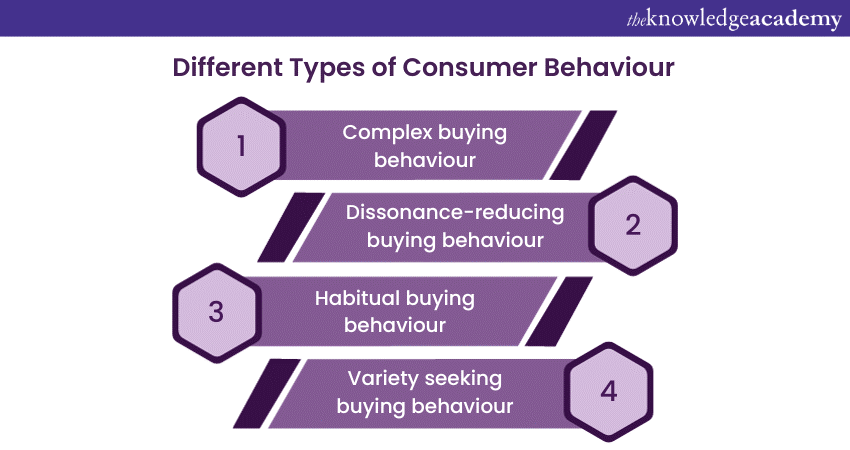
2) Dissonance-reducing Buying Behaviour
In situations where consumers engage in dissonance-reducing buying behaviour, their level of involvement is quite high. This could be because of high prices and less frequent purchases. Additionally, there are limited options available, and the differences between brands are not very significant. In this scenario, consumers tend to opt for products that are readily accessible.
Consumers, in such cases, might find themselves making decisions with fewer choices, leading to limited decision-making. They end up buying certain products without extensive research, influenced by factors like product availability, time constraints, or budget limitations.
For instance, if a consumer is in need of a new collapsible table for camping, they might quickly choose from the few available brands. Their main considerations are the table's functionality, features, and their budget.
Enhance your marketing prowess with our Marketing Research Course and elevate your strategic skills for business success!
3) Habitual Buying Behaviour
Habitual Buying Behaviour occurs when a shopper is not very involved in deciding what to buy. In this situation, they notice only a few important differences between brands.
When people purchase items they use every day, they don't think too much. They might choose their favourite brand or the one they regularly use or go for what's in the store or the cheapest option. For instance, when someone buys an energy drink, they often pick the flavour they like without doing a lot of research. Many products fall into this category, such as chocolates, cakes, juices, and more.
Consumers in this scenario don't stick to a particular brand; there's no loyalty. They don't spend time researching or needing information about these purchases. Habitual buying behaviour is influenced by radio, television, and print media. Additionally, consumers make choices based on how familiar they are with a brand.
Therefore, marketers should use repetitive ads to make the brand well-known. To encourage consumers to try the product, marketing strategies like price drops and sales promotions should be employed. To attract consumers, marketers should use visual symbols and images in their advertising. Visual ads are easy for consumers to remember and associate with a brand.
Elevate your marketing expertise with our Introduction to Marketing Training – Sign up today and propel your career forward!
4) Variety Seeking Buying Behaviour
In the variety-seeking Consumer Behaviour, consumers aren't highly involved in their choices, and there are noticeable differences between brands. People tend to switch between brands frequently, and because the cost of changing products is low, they might try new things just out of curiosity or to break the routine. Consumers in this category buy various products not because they're unhappy with what they have but mainly because they want to experience different things.
For instance, a consumer might pick a cookie brand with little thought, and the next time, they might choose a different brand for a change in taste. Brand switching happens frequently and without a specific plan. To tackle this Type of Consumer Behaviour, brands need different strategies. The market leader, for instance, will influence habitual buying behaviour by controlling the shelf space and displaying numerous related but different product versions.
Marketers ensure there are enough products available, engage in regular advertising, and offer lower prices, discounts, deals, coupons, and free samples to attract these consumers.
Importance of Understanding Different Types of Consumer Behaviour
Understanding how different consumers think, feel, and act can significantly shape a company's marketing strategies and overall performance. It provides crucial insights into the motivations driving purchasing decisions, enabling businesses to tailor their operations effectively.

By analyzing Trends in Consumer Behaviour, organisations can spot emerging patterns and shifts in market dynamics, allowing them to adapt quickly and maintain a competitive edge. This knowledge fosters innovation, enhances customer satisfaction, and builds brand loyalty, ultimately driving growth in an ever-evolving business landscape.
Here are several reasons why organisations invest in understanding Consumer Behaviour and prioritise this area:
1) Enhanced Marketing Strategies
Businesses can create targeted, personalised messages and promotions that capture attention and drive sales, significantly increasing conversion rates. By understanding what resonates with different consumer segments, companies can craft campaigns that speak directly to their audience's needs and desires, making their marketing efforts more effective and impactful.
2) Innovative Product Development
Insights into Consumer Behaviour help companies listen to feedback, observe purchasing patterns, and innovate to improve their products. This continuous feedback loop allows businesses to stay relevant and meet the evolving demands of their customers, leading to the development of products that truly address consumer needs and preferences.
3) Strengthened Customer Loyalty
Understanding Consumer Behaviour enables the creation of personalised experiences and addresses pain points, which are key to building strong customer relationships. By anticipating and meeting customer expectations, companies can foster loyalty and encourage repeat business, turning satisfied customers into brand advocates.
4) Competitive Positioning
Companies can anticipate market shifts and understand customer perspectives, positioning themselves effectively against competitors to capture a larger market share. This proactive approach allows businesses to stay ahead of the competition by offering unique value propositions that resonate with their target audience.
5) Data-Driven Decision Making
Investing in Consumer Behaviour analysis provides data-driven insights that inform strategic decisions. This knowledge helps businesses allocate resources efficiently, optimise pricing strategies, and manage inventory effectively. By making informed decisions based on real consumer data, companies can enhance their operational efficiency and overall performance.
Tools for Brand Marketers
In today's competitive market, having the right tools can make all the difference. Here are some must-haves for brand marketers:
1) Surveys and Feedback
Direct feedback from consumers is like gold dust. Surveys are a fantastic way to tap into what your audience truly wants and needs, helping you tweak your strategies to better meet their expectations.
2) Social Media Analytics
Dive into the treasure trove of data available on social platforms. These tools can reveal a wealth of information about Consumer Behaviour, preferences, and emerging trends, allowing you to stay ahead of the curve.
3) Behavioural Segmentation
By categorising consumers based on their purchasing habits, you can craft more personalised and effective marketing strategies. It's all about delivering the right message to the right people at the right time.
4) Case Studies
There's a lot to learn from the success stories of other brands. Case studies provide a roadmap for leveraging Consumer Behaviour, offering valuable insights that can guide your own marketing efforts.
What are the Three Elements of Consumer behaviour?
The three key elements of Consumer Behaviour are:
1) Affect (Emotions & Feelings): Consumers' emotions influence their buying decisions.
2) Cognition (Thoughts & Perceptions): How consumers process information and make choices.
3) Behaviour (Actions & Decisions): The actual purchase decisions and post-purchase actions.
What are the Five Ways to Influence Consumer Behaviour?
The five ways to influence Consumer Behaviour are:
1) Personalised Marketing: Tailoring messages to customer preferences.
2) Social Proof & Reviews: Leveraging testimonials and influencer endorsements.
3) Scarcity & Urgency: Creating FOMO with limited time offers.
4) Emotional Appeal: Connecting with customers through storytelling.
5) Ease of Purchase: Simplifying checkout and offering multiple payment options.
Conclusion
Consumer purchasing choices are influenced by Consumer Behaviour, and there are significant variations in behaviour when buying a car compared to purchasing snacks. Marketers must exercise careful observation when promoting products to different Types of Consumer Behaviour. We hope that this blog helps you understand the different Types of Consumer Behaviour.
Supercharge your marketing skills with our comprehensive Marketing Courses – Join now for a strategic leap in your marketing career!
Frequently Asked Questions
How Does Consumer Behaviour Influence Marketing Strategies?

Consumer Behaviour shapes marketing by revealing preferences, buying patterns, and motivations. Businesses tailor messages, pricing, and promotions to align with customer needs, enhancing engagement and sales. Understanding behaviour helps brands refine targeting, improve customer experience, and stay competitive.
What Factors Affect Consumer Behaviour?
Consumer Behaviour is influenced by psychological (perception, motivation), personal (age, lifestyle), social (family, culture), and economic (income, purchasing power) factors. External elements like trends and digital influence also shape decisions. Marketers analyse these to craft relevant campaigns and drive conversions.
What are the Other Resources and Offers Provided by The Knowledge Academy?
The Knowledge Academy takes global learning to new heights, offering over 3,000 online courses across 490+ locations in 190+ countries. This expansive reach ensures accessibility and convenience for learners worldwide.
Alongside our diverse Online Course Catalogue, encompassing 19 major categories, we go the extra mile by providing a plethora of free educational Online Resources like Blogs, eBooks, Interview Questions and Videos. Tailoring learning experiences further, professionals can unlock greater value through a wide range of special discounts, seasonal deals, and Exclusive Offers.
What is The Knowledge Pass, and How Does it Work?
The Knowledge Academy’s Knowledge Pass, a prepaid voucher, adds another layer of flexibility, allowing course bookings over a 12-month period. Join us on a journey where education knows no bounds.
What are the Related Courses and Blogs Provided by The Knowledge Academy?
The Knowledge Academy offers various Digital Marketing Courses, including Digital Marketing Course, Social Media Marketing Course, and Social Media Marketing Course. These courses cater to different skill levels, providing comprehensive insights into Online Branding.
Our Digital Marketing Blogs cover a range of topics related to Social Networking, offering valuable resources, best practices, and industry insights. Whether you are a beginner or looking to advance your Digital Marketing skills, The Knowledge Academy's diverse courses and informative blogs have got you covered.

James Smith


Digital Marketing Manager and Trainer
James Smith is a digital marketing professional with over a decade of experience in SEO, content strategy, paid media and analytics. He has supported both SMEs and global brands in transforming their digital presence. James’s writing and training are rooted in results-driven tactics and the latest marketing trends.
View Detail
Upcoming Digital Marketing Resources Batches & Dates
Date
 Consumer Behaviour Course
Consumer Behaviour Course
Thu 18th Jun 2026
Consumer Behaviour Course
Thu 17th Sep 2026
Consumer Behaviour Course
Thu 17th Dec 2026

 If you wish to make any changes to your course, please


