


 Top Rated Course

We may not have the course you’re looking for. If you enquire or give us a call on +44 1344 203 999 and speak to our training experts, we may still be able to help with your training requirements.
Boss vs Leader: Key Differences, Traits, and Impact at Work
Benjamin Walker 25 February 2026Boss vs Leader reflects authority versus influence and control versus trust, shaping team culture, motivation, collaboration, and overall performance. While bosses rely on authority and control, leaders focus on trust and guidance. Understanding the difference between them explains how management style influences workplace success.

Training Outcomes Within Your Budget!
We ensure quality, budget-alignment, and timely delivery by our expert instructors.
Table of Contents
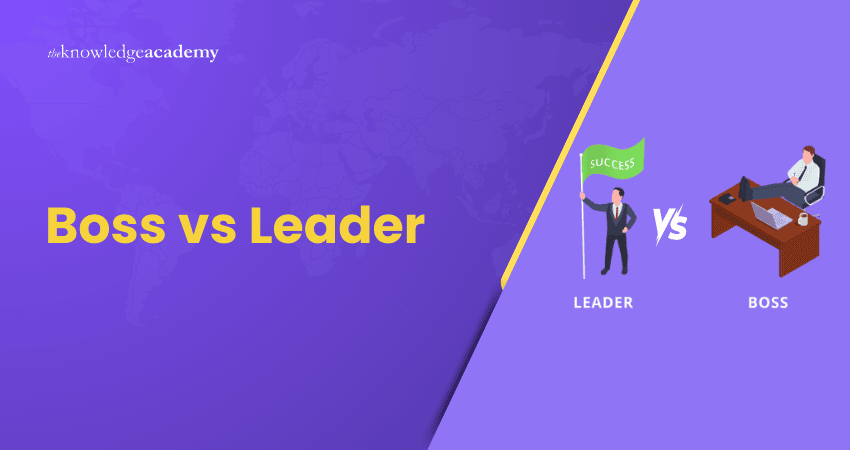
Have you ever worked for someone who simply gave orders, and someone else who truly inspired you to do your best? That is where the difference between a Boss vs Leader becomes clear. One focuses on authority and control, while the other builds trust, guidance, and motivation to help teams grow and succeed.
Understanding both their differences is essential because it influences how people feel, perform, and collaborate at work. The way someone manages a team can affect morale, productivity, and long-term growth. In this blog, you will learn about the differences between Boss vs Leader and what they are. Keep reading to learn more!
Table of Contents
1) Who is a Boss?
2) Who is a Leader?
3) Boss vs Leader: Key Differences
4) Can a Boss Become a Leader?
5) Can an Organisation Succeed With Only Bosses and No Leaders?
6) Conclusion
What is a Boss?
A Boss is essentially a supervisor who is responsible for managing employees in the workplace. Typically, there's no specific title for their role on an organisational chart. They can be defined as an individual who sets rules, assigns tasks, and oversees employees' activities.
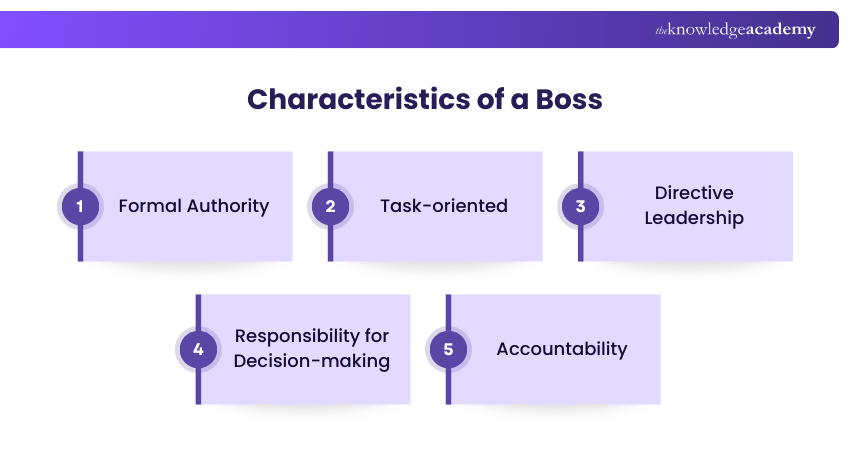
A boss motivates employees to boost productivity and company profitability, monitors compliance with company policies, and enforces disciplinary actions when needed. Additionally, they work independently from the workforce, focusing on results and demanding high performance and quality work.

Who is a Leader?
A Leader is someone who motivates and influences others to achieve goals through their actions (or even inactions). They might be a supervisor or manager, but what sets them apart are the Leadership Qualities that inspire. their team to reach their objectives. Just like "boss," "leader" isn't usually an official title in organisations.
Instead, it represents those in leadership roles who oversee other employees. The quality of a great leader is that they ensure that company goals are efficiently met without sacrificing their team's time, health, comfort, or rights.
Boss vs Leader: Key Differences
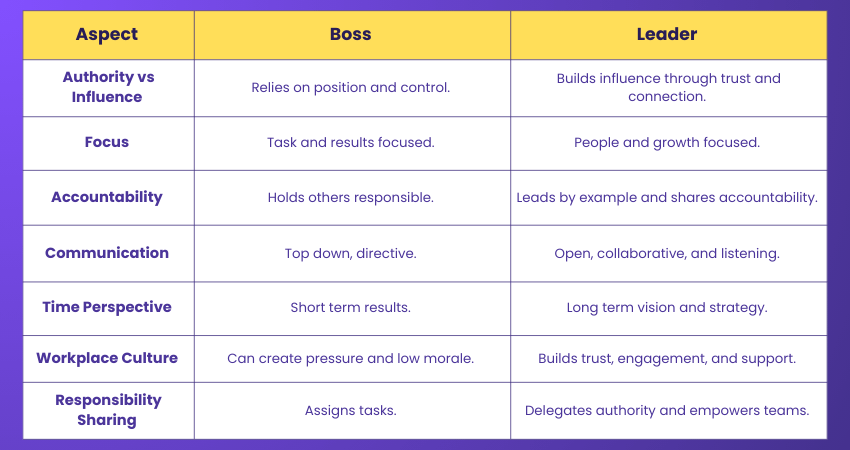
Now that we have covered the fundamental characteristics of each role, let's dive into the differences between a boss and a leader. Here they are:
1) Authority vs Influence
Bosses often depend on their formal title and the authority that comes with their position to maintain control, expecting obedience within the organisation's hierarchy. This approach often creates compliance driven by position instead of commitment built on the foundations of respect and trust.
In contrast, leaders draw their influence from a deep understanding of their team, built through empathy and genuine connections. They inspire loyalty not through their title but by leading with purpose and conviction. Leaders mentor, encourage, and set an example of integrity and dedication, influencing others through their actions and commitment.
2) Focus on Tasks vs Focus on People
A boss focuses primarily on tasks, deadlines, and outcomes. They often prioritise the assignment's completion over the well-being of their team members. In such environments, employees might feel like mere teeth in a machine gear, valued only for their productivity. This task-centred approach can overlook employee morale, which may affect motivation, engagement, and team satisfaction over time.
In contrast, a leader has a core focus on people. They understand that a satisfied workforce is crucial for achieving organisational goals. Leaders invest ample time and effort in understanding the strengths, weaknesses, aspirations, and concerns of their team members. By valuing employees as individuals, they create a supportive atmosphere where people feel appreciated and understood.
3) Blame vs Accountability
Bosses often act as managers, making sure everyone stays on task and meets their monthly targets. While these responsibilities are part of leadership, they don’t capture the essence of what it means to be a true leader. Leadership and management differ significantly, especially with regard to accountability.
Bosses focus on holding others accountable, whereas leaders hold themselves accountable and encourage the team’s self-accountability. True leaders teach their team how to manage themselves, further building confidence and each employee’s support through this approach.
Learn how to guide teams towards lasting success with the Leadership and Management Course now!
4) Communication Styles
The differences between a boss and a leader are quite stark when it comes to communication. Leaders foster open communication, sharing encouragement and advice while also listening and answering questions. They recognise each team member’s value to brings and ensure everyone's voice is heard.
In contrast, bosses often operate with a top-down approach. They tell others what to do without listening. This shuts out new ideas and discourages open dialogue. Many people see bosses as a dead end, communicating only the bare minimum with them. Leaders, on the other hand, create an environment where open communication thrives, leading to a team that is both engaged and innovative.
5) Long-term Vision vs Short-term Goals
A boss often focuses on immediate, short-term objectives, directing their attention towards quick results, meeting deadlines, and fulfilling quotas. While this approach might bring temporary success, it rarely leads to sustainable growth or innovation. It can create a short-sighted organisational culture where decisions are made for immediate gains without considering long-term consequences.
In contrast, a leader operates with a visionary perspective, looking beyond immediate goals. Leaders have a clear, inspiring vision for the organisation's future and can articulate this vision to motivate their team towards shared, long-term objectives. They emphasise strategic planning and sustainable growth, encouraging creativity and innovation. This cultivates an environment where employees are motivated to think beyond short-term gains.
6) Impact on Workplace Culture and Employee Satisfaction
A boss may create an environment where employees feel stressed, undervalued, and hesitant to voice their opinions. This stifling atmosphere can lead to high turnover rates, diminished morale, and a lack of enthusiasm for work. Such a culture doesn't foster loyalty or a sense of belonging, making it difficult for employees to find fulfilment in their roles.
In contrast, a leader is compassionate and empowering, transforming the workplace into an ecosystem of collaboration and mutual respect. Employees feel valued, appreciated, and encouraged to share their ideas. Leaders inspire, mentor, and provide constructive feedback, fostering an environment of trust and mutual support.
7) A Boss Assigns Tasks While a Leader Delegates Authority
Some bosses just assign tasks and responsibilities, but a true leader delegates authority. Understanding the significance of effective delegation is crucial for enhancing your skills as a manager or supervisor. This difference shapes how responsibility is shared, turning simple task completion into meaningful ownership and accountability.
By giving employees authority, you show that you trust their ability to handle tasks competently. This not only boosts their confidence but also motivates them to work hard towards completing the project efficiently. Also, it encourages initiative, helping employees grow their skills and contribute more confidently.
Lead with integrity, build trust, and make responsible decisions with Ethical Leadership Training now!
Can a Boss Become a Leader?
Yes, a boss can evolve into a leader. While a boss is defined by a formal role focused on authority, tasks, and operations, leadership is built on mindset, behaviour, and influence. Leadership is not tied to a job title. It develops through self-awareness, emotional intelligence, and the ability to guide and support others toward a shared vision.
Making this transition means moving beyond command and control. A boss becomes a leader by listening more, showing empathy, mentoring team members, and empowering people to take ownership of their work. Also, building trust, encouraging growth, and leading by example can develop the qualities that inspire commitment rather than simple compliance
Can an Organisation Succeed With Only Bosses and No Leaders?
An organisation can function for a while with only bosses, but long-term success is unlikely without true leadership. Bosses manage processes, enforce rules, and ensure tasks are completed, but their focus on compliance and control limits creativity and initiative. Without leaders to create vision and psychological safety, employees may feel disconnected, and turnover may gradually increase.
Leaders inspire commitment, adaptability, and innovation by giving people purpose and direction. They help organisations respond to change, solve complex problems, and stay competitive in evolving markets. Without this guidance, an organisation can become rigid and struggle to grow. Sustainable success requires leadership that motivates, empowers, and drives continuous progress.
Conclusion
Understanding the difference between Boss vs Leader reveals how management styles shape trust, motivation, collaboration, and long-term growth. While bosses may ensure tasks are completed, leaders inspire people to grow, contribute, and achieve shared goals purposefully. Recognising these differences helps organisations build stronger and engaged teams while leading employees effectively.
Build confident leaders who inspire, guide, and drive real impact with Leadership Courses – Join now!
Frequently Asked Questions
How Does a Leader Build Trust Compared to a Boss?

A boss builds trust through position and consistent task management, relying on authority to gain compliance. A leader earns trust through character, competence, and genuine connection. Practicing transparency, empathy, and integrity helps leaders build trust daily through actions that inspire commitment and shared purpose.
Which Approach Drives Innovation: Boss or Leader?
Leaders are the main drivers of innovation because they create psychological safety, encourage new ideas, and support thoughtful risk-taking. A boss often focuses on control, short-term results, and strict processes, which can limit creativity.
What are the Other Resources and Offers Provided by The Knowledge Academy?
The Knowledge Academy takes global learning to new heights, offering over 3,000+ online courses across 490+ locations in 190+ countries. This expansive reach ensures accessibility and convenience for learners worldwide.
Alongside our diverse Online Course Catalogue, encompassing 17 major categories, we go the extra mile by providing a plethora of free educational Online Resources like Blogs, eBooks, Interview Questions and Videos. Tailoring learning experiences further, professionals can unlock greater value through a wide range of special discounts, seasonal deals, and Exclusive Offers.
What is The Knowledge Pass, and How Does it Work?
The Knowledge Academy’s Knowledge Pass, a prepaid voucher, adds another layer of flexibility, allowing course bookings over a 12-month period. Join us on a journey where education knows no bounds.
What are the Related Courses and Blogs Provided by The Knowledge Academy?
The Knowledge Academy offers various Leadership Courses, including Leadership Skills Training, Ethical Leadership Training, and Leadership and Management Course. These courses cater to different skill levels, providing comprehensive insights into the Types of Directors in a Company.
Our Business Skills Blogs cover a range of topics related to Leadership , offering valuable resources, best practices, and industry insights. Whether you are a beginner or looking to advance your Leadership skills, The Knowledge Academy's diverse courses and informative blogs have got you covered.

Benjamin Walker


Leadership Development Coach and Management Consultant
Benjamin Walker is a leadership coach and business consultant with over 18 years of experience in guiding organisations through strategic growth and transformation. He specialises in developing leadership capabilities at all levels, from emerging managers to executive teams. Benjamin’s work focuses on practical leadership, team dynamics, and performance management.
View Detail
Upcoming Business Skills Resources Batches & Dates
Date
 Introduction to Business Analytics Training
Introduction to Business Analytics Training
Fri 20th Mar 2026
Introduction to Business Analytics Training
Fri 8th May 2026
Introduction to Business Analytics Training
Fri 14th Aug 2026
Introduction to Business Analytics Training
Fri 13th Nov 2026

 If you wish to make any changes to your course, please


