


 Top Rated Course


We may not have the course you’re looking for. If you enquire or give us a call on 44 1344 203 999 and speak to our training experts, we may still be able to help with your training requirements.
PCI DSS Requirements: Standards and Compliance Guide
Hailey Davis 24 April 2026The PCI DSS Requirements are 12 security controls to protect cardholder data, covering network security, access control, encryption and Policy Management. This helps reduce fraud, safeguard sensitive information, and maintain trust while ensuring compliance. Meeting these requirements ultimately strengthens Cyber Security resilience.

Training Outcomes Within Your Budget!
We ensure quality, budget-alignment, and timely delivery by our expert instructors.
Table of Contents
Be it in the past or in the present, handling money is always a critical task. Now that everyone has evolved with online transactions, it makes it even more difficult to manage and store the transaction details. Never worry, the world has heard you!
The advent of PCI DSS has been a boon and a game changer to many people and organisations over time. This practice helps you to store the customer and payment details safely and securely from any kind of data breaches or cyberattacks. With this blog, explore the PCI DSS Requirements to get it done for you!
Table of Contents
1) What is PCI Compliance?
2) Top 12 PCI DSS Requirements Checklist
3) Leveraging Technology to Meet PCI DSS Compliance Requirements
4) PCI Compliance Fines
5) What Happens If You Don't Comply with PCI DSS?
6) Is PCI Compliance Required by Law?
7) Conclusion
What is PCI Compliance?
Payment Card Industry (PCI) compliance refers to an organisation’s adherence to the PCI Data Security Standard (PCI DSS), a global framework designed to protect cardholder data during processing, storage, and transmission. Being PCI compliant means a business has implemented all required security controls, follows proper data-protection practices, and regularly validates its security posture.
Achieving compliance helps prevent payment fraud, reduces the likelihood of data breaches, and ensures customer’s sensitive information remains safe. It also demonstrates that the organisation takes its security responsibilities seriously and meets the industry expectations.

Top 12 PCI DSS Requirements Checklist
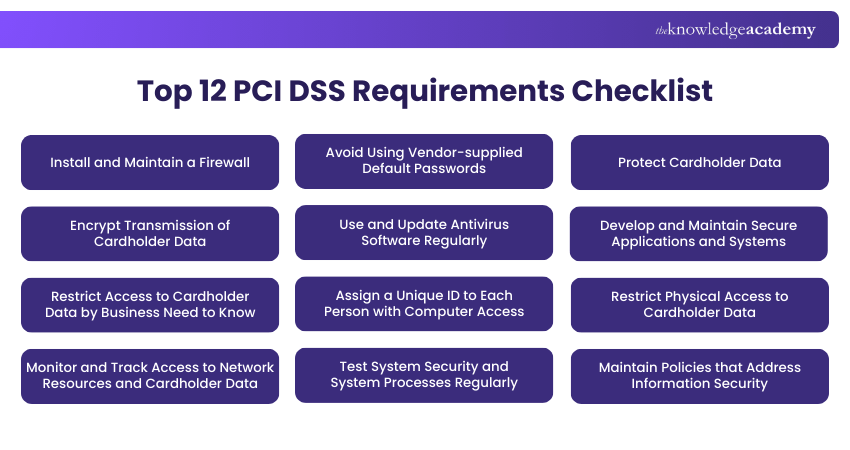
There are 12 key requirements or rules in PCI DSS. Together, they help protect card data and reduce the risk of data breaches. These requirements cover a broad range of security measures, including installing firewalls, encrypting cardholder data, implementing access controls, developing comprehensive Information Security policies, and more.
Fulfilling these helps to achieve compliance with 12 PCI DSS Requirements, which have many benefits. Let’s break them down one by one:
1) Install and Maintain a Firewall
The first PCI DSS Requirement ensures that the service providers and merchants have a secure network that prevents unauthorised access to cardholder data. A firewall works like a protective wall between your business and the internet. It blocks unwanted traffic and keeps hackers from getting into your systems.
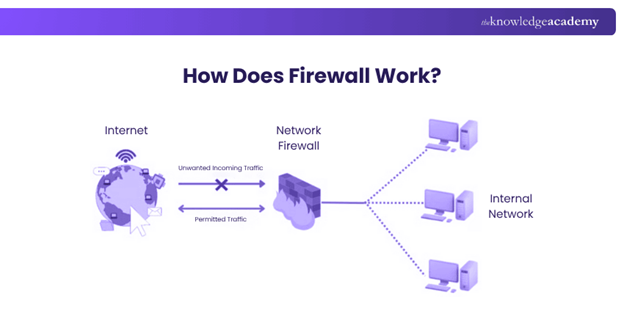
To stay safe, you need to set up firewalls correctly and check them often to make sure they are working well. Without a firewall, it is much easier for someone to break into your network and steal cardholder data.
2) Avoid Using Vendor-supplied Default Passwords
New devices and software often come with simple, default usernames and passwords. Such default passwords and settings are widely known to cybercriminals and easily exploitable. Many attacks succeed simply because devices, systems, or applications are left in their out-of-the-box state. Changing these defaults immediately reduces risk and ensures that organisations do not unintentionally expose themselves to simple but damaging security breaches.
To avoid this, creating strong, unique passwords for all systems is essential for maintaining secure access for PCI DSS Requirements. Organisations should also implement password policies that enforce complexity, rotation, and secure storage.
Understand the roles and responsibilities of security and control with registering for our Security Governance and Compliance Training now!
3) Protect Cardholder Data
This ensures that cardholder data should not be stored unless necessary for business PCI DSS purposes. If you need to keep any card data for business reasons, you must protect it properly. This means using encryption so that the information can’t be read if it is stolen. For example, you can show only the first or last four digits of the Primary Account Number (PAN).
You should also only store what is truly necessary and for as short a time as possible. For example, security codes (like the 3-digit CVV) should never be saved. Review your stored data regularly and delete anything you no longer need to keep the risk as low as possible.
4) Encrypt Transmission of Cardholder Data
Secure the transmission of cardholder data over open and public networks. While a firewall can prevent cyber criminals from accessing your internal networks, it is a bit difficult to ensure that cardholder data is not exposed while it is transmitted over open public networks. When card data is being sent across the internet or any public network, it needs to be encrypted.
Encryption turns the data into unreadable code that only trusted systems can understand. This keeps it safe from hackers who might try to intercept information. Using secure connections, such as websites with HTTPS or emails with encryption, is preferable.
5) Use and Update Antivirus Software Regularly
Using anti-virus software could be one of the inevitable PCI DSS Requirements. Anti-virus software protects your systems from threats like viruses, malware, or spyware. These tools scan your computers and devices to find anything harmful and remove it. PCI DSS needs all systems that are commonly affected by viruses to have anti-virus software installed and regularly updated.
Make sure your software runs scans often and is always up to date with the latest security definitions. Ignoring updates can leave your systems exposed to new types of attacks. PCI compliance requires organisations to use robust, updated antivirus software.
6) Develop and Maintain Secure Applications and Systems
All software and hardware need regular updates to stay secure. Therefore, secure development practices play a crucial role in preventing vulnerabilities from entering applications. Developers need to follow recognised coding standards, perform code reviews, and fix security issues before software is released. This reduces the chances of attackers exploiting flaws within payment systems.
Similarly, ongoing maintenance is equally important, as new vulnerabilities appear frequently. Regular patching, updates, and vulnerability assessments help ensure systems remain secure over time, complying with PCI DSS Requirements.
7) Restrict Access to Cardholder Data by Business Need to Know
Not everyone in your business needs to see or access the cardholder information. You should be extra careful to authorise only employees who need it to do their jobs. This is called the “least privilege” rule. By limiting access, you lower the chances of data being misused or stolen.
It is also a good idea to regularly check who has access to such data and remove permissions from anyone who no longer needs it or has left the company. To effectively imply this, you can create user authentication.
8) Assign a Unique ID to Each Person with Computer Access
This PCI DSS Requirement suggests that each employee who uses your network or the system should have their own username and password. This helps track who does what works and makes it easier to spot any unusual behaviour. As per PCI DSS, no one should ever share their login details.
You can also add extra steps like two-factor authentication or biometrics for added security. With unique IDs, if anything goes wrong, you will be able to quickly identify which user account was involved.
9) Restrict Physical Access to Cardholder Data
Card data should not only be protected digitally, but also physically. This PCI DSS Requirements ensure that all hard copies of cardholder data, such as printed documents, backup drives, or portable storage devices, are stored in secure locations accessible only to authorised individuals.
Controlled areas such as locked rooms, secure cabinets, or restricted zones prevent unauthorised access, theft, or tampering. Maintaining a detailed access log is crucial, as it records who entered the secure space, when they did so, and why, helping organisations maintain accountability.
10) Monitor and Track Access to Network Resources and Cardholder Data
PCI compliant organisations need to be able to track and monitor network access. You should keep logs that show who accessed your systems, when, and what they did. These records help you catch suspicious activity and investigate problems. PCI DSS requires that you store these logs securely and review them frequently.
Good logging also helps with audits or if something goes wrong, like a data breach. Having these records can show when your systems were attacked and how it happened, and that helps to prevent it in the future.
11) Test System Security and System Processes Regularly
Regular security testing helps identify vulnerabilities before attackers exploit them. Activities like penetration testing, vulnerability scanning, and patch verification ensure that controls remain effective. The testing stage in the 12 PCI DSS Requirements exposes weaknesses that may arise from system changes, new software, or evolving threats.
Documenting those test results and acting quickly on findings is important to ongoing security practices. These proactive steps help maintain strong defences and uphold compliance.
12) Maintain Policies that Address Information Security
Every business would have a written security policy that explains how it protects cardholder data. It sets expectations for employees' behaviour, defines responsibilities, and ensures everyone understands their role in maintaining security. Clear policies help standardise practices across the organisation.
Training employees on security procedures ensures consistent application and reduces the chances of human error. Strong governance ultimately strengthens the organisation’s security posture and supports long-term PCI DSS Requirements compliance.
Learn how to maintain consumer advocacy and compliance with our Consumer Protection Training – Join immediately!
Leveraging Technology to Meet PCI DSS Compliance Requirements
Organisations that process (or store) payment card data must ensure compliance with PCI DSS. Technology acts as a catalyst in this process through security, process optimisation, and risk management.
a) Encrypting cardholder data while in storage and transfer will ensure that confidential information is always safe. Strong encryption algorithms and complex critical management systems are the key elements for thwarting data breach risks.
b) Tokenisation also adds one more dimension of security by using unique identifiers to replace sensitive data. In this case, the stolen data has no purpose without the original mapping keys. Organisations may minimise the risk by limiting access to the original data.
c) Access control and monitoring limits of data are provided to only authorised users. Multi-factor Authentication (MFA) and role-based access controls are ways to prevent inside threats. Monitoring tools like IDS can spot discrepancies and make the security team aware.
d) Network separation networks the payment systems from the less secure parts of the network. This causes compliance audits to be conducted on a smaller scale and targets their lateral movement.
e) Automated scanning and patching solutions detect and resolve vulnerabilities before hackers can exploit them. Systems are frequently updated to ensure compliance with PCI DSS Requirements.
PCI Compliance Fines
PCI compliance fines are financial penalties imposed on businesses that fail to meet PCI DSS Requirements, especially if a data breach occurs. These fines typically come from banks or payment processors and can range from £4,000 to £80,000 per month, depending on the severity and duration of non-compliance.
Aside from direct fines, businesses may face higher transaction fees, legal costs, and the risk of losing their ability to accept card payments. The total cost of non-compliance can be devastating, especially for small to mid-sized companies.
What Happens If You Don't Comply with PCI DSS?
Ignoring PCI DSS compliance requirements is dangerous and costly. Here is what can happen if your business doesn’t comply:
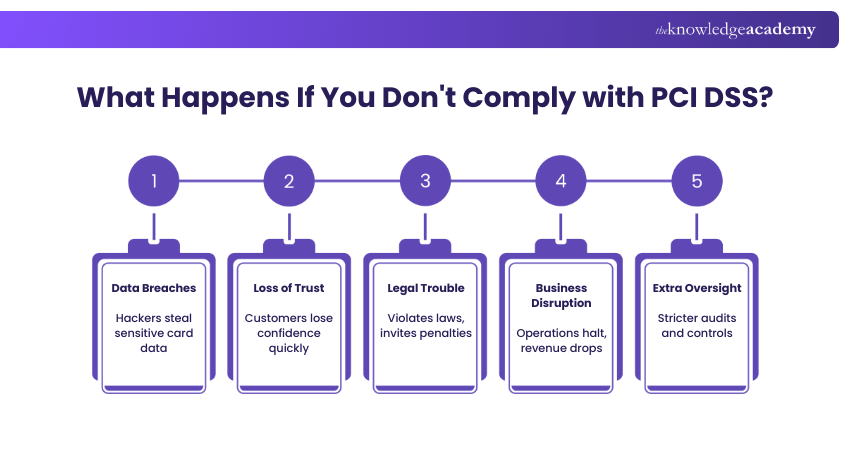
1) Data Breaches: Without strong defences, hackers can easily access cardholder data. A breach can expose thousands of customer details.
2) Loss of Trust: Customers may stop buying from you if they learn their card information was stolen from your system.
3) Legal Trouble: A breach might also violate privacy laws like the GDPR, leading to more fines and legal action.
4) Business Disruption: After a breach, systems often need to be shut down, tested, and rebuilt. This can hurt sales and take weeks to fix.
5) Extra Oversight: If you are caught breaking the rules, you may be forced to go through regular audits and stricter controls.
Is PCI Compliance Required by Law?
PCI compliance isn’t a government-enforced law, but it is a compulsory requirement set by major card networks. Any organisation handling cardholder data must follow PCI DSS as part of its agreement with payment processors. Non-compliance can result in hefty fines, higher processing fees, or even losing the ability to accept card payments.
Conclusion
Compliance with the 12 PCI DSS Requirements is essential for safeguarding payment card data and building customer trust. The importance of PCI DSS becomes clear as businesses implement these standards to mitigate data breach risks, enhance security, and establish reliability in the digital marketplace. Take charge of your compliance journey today and secure a competitive edge!
Equip your knowledge of payment card security with our PCI DSS Foundation Course – Sign up anytime!
Frequently Asked Questions
What is the Difference Between PCI and PCI DSS?

PCI stands for Payment Card Industry, referring to the broader industry handling card payments. On the other hand, PCI DSS is a specific set of security rules created by the PCI to protect cardholder data during transactions.
How to Check If a Company is PCI DSS Compliant?
You can check and verify with the PCI DSS Certificate from a Qualified Security Assessor (QSA) / Attestation of Compliance (AOC) documents. Check the security policies and procedures implemented in the company or use the results of the third-party security audit/reports.
What are the Other Resources and Offers Provided by The Knowledge Academy?
The Knowledge Academy takes global learning to new heights, offering over 3,000+ online courses across 490+ locations in 190+ countries. This expansive reach ensures accessibility and convenience for learners worldwide.
Alongside our diverse Online Course Catalogue, encompassing 17 major categories, we go the extra mile by providing a plethora of free educational Online Resources like Blogs, eBooks, Interview Questions and Videos. Tailoring learning experiences further, professionals can unlock greater value through a wide range of special discounts, seasonal deals, and Exclusive Offers.
What is Knowledge Pass, and How Does it Work?
The Knowledge Academy’s Knowledge Pass, a prepaid voucher, adds another layer of flexibility, allowing course bookings over a 12-month period. Join us on a journey where education knows no bounds.
What are Related Courses and Blogs Provided by The Knowledge Academy?
The Knowledge Academy offers various Compliance Training, including PCI DSS Foundation Course, PCI DSS Implementer Course, and Security Governance and Compliance Training. These courses cater to different skill levels, providing comprehensive insights into the Benefits of PCI DSS Compliance.
Our ISO & Compliance blogs cover a range of topics related to PCI DSS Requirements, offering valuable resources, best practices, and industry insights. Whether you are a beginner or looking to advance your Compliance skills, The Knowledge Academy's diverse courses and informative blogs have got you covered.

Hailey Davis


Compliance Officer
Hailey Davis is an ISO compliance expert with over 10 years of experience in audit, quality management systems (QMS), and regulatory compliance. She has worked with various industries, including manufacturing, healthcare, and technology, ensuring organisations achieve and maintain ISO certifications. Hailey’s content provides practical, actionable insights on navigating compliance challenges and improving business processes.
View Detail

 If you wish to make any changes to your course, please


