


 Top Rated Course

We may not have the course you’re looking for. If you enquire or give us a call on +44 1344 203999 and speak to our training experts, we may still be able to help with your training requirements.
What is Digital Media and Why is it Important?
The Knowledge Academy 27 March 2026Digital Media includes text, audio, video, and graphics shared through technology such as the internet, websites, apps, Social Media, and streaming platforms. It enables fast communication, global reach, and real-time interaction. Businesses and individuals use it to inform, promote, learn, and engage audiences online.

Training Outcomes Within Your Budget!
We ensure quality, budget-alignment, and timely delivery by our expert instructors.
Table of Contents
From watching online videos and browsing social platforms to reading news and learning new skills. As technology continues to evolve, Digital Media is woven into everyday life. As a result, it shapes how people communicate, share ideas, and make decisions in a fast-moving, connected world.
This blog explains what Digital Media is and why it matters today. It also covers the three core types and five main formats, showing how they are used for communication, learning, and business growth. Let's get started!
Table of Contents
1) What is Digital Media?
2) Why is Digital Media Important?
3) Three Core Types of Digital Media
4) Five Types of Digital Media Formats and How They're Used
5) Why Do Businesses Use Digital Media?
6) Major Digital Media Companies
7) How to Craft Effective Digital Media Arts?
8) Conclusion
What is Digital Media?
Digital Media refers to any content such as text, audio, video, and graphics that is created, shared, and accessed using electronic devices and digital technology. It is delivered through the internet, websites, apps, Social Media, and streaming platforms, often replacing or supporting traditional media formats.
It is defined by machine-readable data, interactivity, and on-demand access. Digital Media allows real-time sharing, global distribution, and active user engagement across multiple devices.
Key Characteristics of Digital Media:
1) Digital Format: Content is stored and transmitted as binary data
2) Device-dependent: Accessed through computers, smartphones, tablets, and smart TVs
3) Networked: Distributed online for a wide and global reach
4) Interactive: Enables feedback, sharing, and real-time communication

Why is Digital Media Important?
Digital Media is important because it enables instant communication, global reach, and real-time interaction. As a result, it influences how people learn, work, and connect, as explained below.
Relevant Key Points:
1) Global Reach: Enables instant communication and information sharing across borders.
2) Real-time Interaction: Allows immediate feedback and engagement through digital platforms.
3) Cost-effective Communication: Reduces marketing and distribution costs compared to traditional media.
4) Accessibility: Provides on-demand access to information, learning, and services anytime, anywhere.
5) Personalisation: Helps tailor content and messages to specific audiences.
6) Business Growth: Supports marketing, customer engagement, and competitiveness in digital markets.
Three Core Types of Digital Media
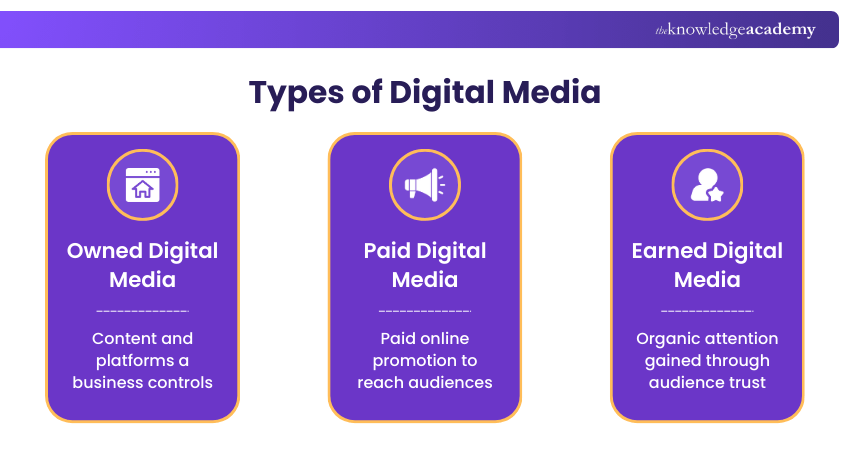
Digital Media can be grouped into three main types based on who controls the content and how it reaches people. Using all three together helps businesses communicate better and grow online. Here are the three types:
1) Owned Digital Media
Owned Digital Media includes online platforms and content that a business fully controls. This can be a website, blog, email updates, or official Social Media pages. It allows organisations to share information directly with their audience and keep their messaging consistent.
The main purpose of owning Digital Media is to inform, support, and build long-term relationships with customers by providing useful and relevant content. It also gives businesses full control over their message and brand voice.
2) Paid Digital Media
Paid Digital Media refers to online content that a business pays to promote. This includes online advertisements on search engines, Social Media platforms, or other websites. Paid media helps messages reach more people quickly.
The purpose of paid Digital Media is to increase visibility, attract visitors, and support marketing efforts in a short time. It helps reach specific audiences quickly and drive immediate, measurable results.
3) Earned Digital Media
Earned Digital Media is attention gained naturally when people talk about, share or recommend a brand online. This can include customer reviews, Social Media shares or mentions in online articles.
The purpose of earned Digital Media is to build trust and credibility, as people are more likely to believe recommendations from others than paid messages. It also boosts awareness through genuine audience engagement.
Gain strategies to monetise content and optimise channel growth for business success. Join our YouTube Marketing Course now!
Five Types of Digital Media Formats and How They're Used
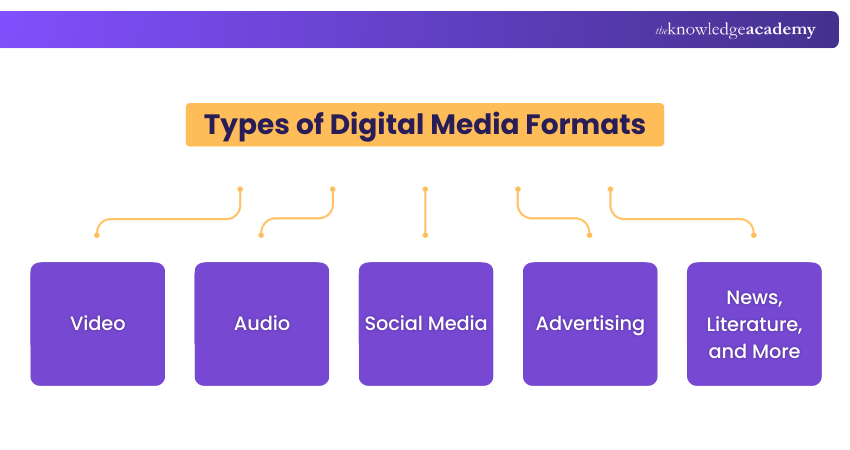
Digital Media appears in many forms, each serving different purposes and user needs. These formats have largely evolved from traditional media and are now delivered through digital devices and online platforms. Here are the five types:
1) Video
Video is one of the most widely used Digital Media formats. It includes streaming services, online videos, tutorials, and virtual simulations. Platforms like video-sharing and streaming services allow people to watch content on demand, making video popular for entertainment, learning, and professional training.
2) Audio
Audio Digital Media includes podcasts, digital radio, music streaming, and audiobooks. This format allows users to listen while travelling, working, or relaxing with ease. Audio content is commonly used for entertainment, news, and education due to its convenience and accessibility.
3) Social Media
Social Media platforms enable people to communicate and share content through text, images, and videos. Users can interact by commenting, liking, and sharing posts, making Social Media a key tool for communication, networking, and staying informed about current events and trends.
4) Advertising
Digital advertising delivers promotional messages across websites, apps, and online platforms. Modern digital ads focus on being relevant and less disruptive, often blending naturally with content. This format helps businesses reach audiences without overwhelming them or harming user experience.
5) News, Literature, and More
Written Digital Media includes online news, articles, eBooks, blogs, and reference websites. Many people now read news and literature online, supported by digital libraries, learning platforms, and e-readers. This format continues to play an important role in education, research, and information sharing.
Gain an in-depth understanding of Social Media, email marketing, SEO, and more with our Digital Marketing Course – Join now!
Why Do Businesses Use Digital Media?
Businesses use Digital Media to communicate efficiently, reach wider audiences, and support modern operations. Its key uses are explained below.
1) For Advertising and Promotion
Digital Media allows businesses to promote their products and services using online media such as websites, Social Media, and digital advertising. It helps organisations reach targeted audiences, increase brand visibility, and measure campaign performance in real time.
2) To Minimise Paper Usage and Promote Sustainability
By using digital platforms instead of printed materials, businesses can reduce paper consumption and environmental impact. Digital Media supports sustainability by enabling online communication, digital documents, and paperless processes.
3) To Support Core Product or Service Functions
Many businesses rely on Digital Media to deliver and support their products or services. Websites, mobile apps, and online platforms improve customer experience, provide information, and enable smooth service delivery.
Major Digital Media Companies
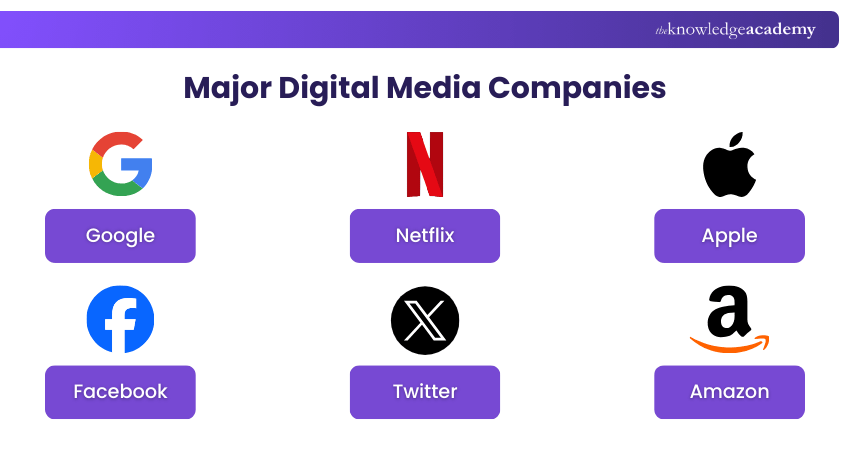
Several global companies play a major role in shaping the Digital Media landscape. Below are some of the most well recognised companies:
1) Google
Google began as a search engine and grew into a global Digital Media company. It supports search, advertising, video, and online tools, helping users discover, share, and access digital content worldwide.
2) Netflix
Netflix started as a DVD rental service and became a global streaming platform. It offers on-demand films, series, and original content, changing how audiences watch entertainment anytime, anywhere.
3) Apple
Apple evolved from a computer company into a leading Digital Media brand. Its devices and platforms support music, video, apps, and digital content, allowing users to access media through a connected ecosystem.
4) Facebook and Twitter
Facebook and Twitter are the major Social Media platforms that enable communication, content sharing, and news updates. They influence how information spreads online and help people engage with digital content globally.
5) Amazon
Amazon is a major Digital Media company alongside its online retail services. It offers streaming, digital books, cloud services, and advertising, supporting entertainment, business operations, and digital content delivery worldwide.
Obtain a comprehensive knowledge of how to create powerful Facebook ads. Join our Facebook Ads Course now!
How to Craft Effective Digital Media Arts?
Creating effective Digital Media requires a balance of creativity, strategy, and technical skills. The following areas help achieve this balance.
1) Brand Definition
Brand definition involves clearly identifying your goals, values, and message. It ensures consistency in tone, visuals, and style across Digital Media, helping audiences recognise your content and build trust over time.
2) Audience Understanding
Audience understanding means knowing who your content is for and what they need. This helps you choose the right platforms, formats, and messaging, making Digital Media more relevant, engaging, and effective.
3) Quality Balance
Quality balance focuses on combining strong visuals, clear content, and smooth performance. Effective Digital Media should be appealing, easy to understand, and work well across devices without sacrificing usability.
Conclusion
Digital Media now shapes how we communicate, learn, and grow in a fast-moving world. Knowing its types, formats, and real-world uses empowers individuals and organisations to stay relevant. When used strategically, it helps build stronger connections, improve visibility, and unlock new opportunities in today’s connected digital landscape.
Know more about the latest tools and trends in the rapidly evolving digital landscape. Join our Digital Marketing Courses now!
Frequently Asked Questions
What is Non-digital Media?

Non-digital Media refers to traditional media formats that are not electronically created or distributed. Examples include printed newspapers, books, posters, radio broadcasts, and physical advertising materials.
Who Controls the Digital Media in the UK?
In the UK, Digital Media is regulated by multiple bodies depending on the platform and content type. Organisations such as the Office of Communications (Ofcom) oversee broadcasting and online standards, while UK laws govern data protection and online safety.
What are the Other Resources and Offers Provided by The Knowledge Academy?
The Knowledge Academy takes global learning to new heights, offering over 3,000+ online courses across 490+ locations in 190+ countries. This expansive reach ensures accessibility and convenience for learners worldwide.
Alongside our diverse Online Course Catalogue, encompassing 19 major categories, we go the extra mile by providing a plethora of free educational Online Resources like Blogs, eBooks, Interview Questions and Videos. Tailoring learning experiences further, professionals can unlock greater value through a wide range of special discounts, seasonal deals, and Exclusive Offers.
What is The Knowledge Pass, and How Does it Work?
The Knowledge Academy’s Knowledge Pass, a prepaid voucher, adds another layer of flexibility, allowing course bookings over a 12-month period. Join us on a journey where education knows no bounds.
What are the Related Courses and Blogs Provided by The Knowledge Academy?
The Knowledge Academy offers various Digital Marketing Courses, including the Social Media Marketing Course, Instagram Marketing Course, and the Facebook Ads Course. These courses cater to different skill levels, providing comprehensive insights into What is Social Media.
Our Digital Marketing Blogs cover a range of topics related to Digital Media, offering valuable resources, best practices, and industry insights. Whether you are a beginner or looking to advance your Digital Marketing skills, The Knowledge Academy's diverse courses and informative blogs have got you covered.

The Knowledge Academy


Global Training Provider
The Knowledge Academy is a world-leading provider of professional training courses, offering globally recognised qualifications across a wide range of subjects. With expert trainers, up-to-date course material, and flexible learning options, we aim to empower professionals and organisations to achieve their goals through continuous learning.

Upcoming Business Skills Resources Batches & Dates
Date
 Social Media Marketing Course
Social Media Marketing Course
Fri 14th Aug 2026
Social Media Marketing Course
Fri 18th Sep 2026

 If you wish to make any changes to your course, please


