


 Top Rated Course

We may not have the course you’re looking for. If you enquire or give us a call on 800969236 and speak to our training experts, we may still be able to help with your training requirements.
AI in HR: Benefits of AI in Recruitment and Talent Management
Scarlett Adams 23 May 2026AI in HR uses Artificial Intelligence to automate tasks, improve hiring, enhance employee experience, and enable data-driven decision-making in human resources. It is reshaping HR by making recruitment and talent management agile and responsive, helping organisations reduce bias, optimise workforce planning, and support long-term growth.

Training Outcomes Within Your Budget!
We ensure quality, budget-alignment, and timely delivery by our expert instructors.
Table of Contents
Finding the right talent and keeping employees engaged has never been easy. HR teams juggle multiple tasks like screening CVs, scheduling interviews, and managing employee needs, all while making important decisions quickly. This is where AI in HR is stepping in to simplify complex processes, reduce manual effort, and help teams focus on what truly matters.
As organisations compete for top talent and adapt to changing workforce expectations, speed and accuracy are essential. AI is helping businesses stay ahead by making recruitment efficient and supporting smarter talent management strategies. In this blog, you will learn about What is AI in HR, its types, benefits, tools, and more. Let’s begin!
Table of Contents
1) What is AI in Human Resources (HR)?
2) Types of AI Used in HR
3) How HR Departments Use AI?
4) AI Tools and Technologies in Human Resources
5) Benefits of AI in HR
6) Best Practices to Make HR Department AI-ready
7) Conclusion
What is AI in Human Resources (HR)?
AI in HR refers to the use of technologies like Machine Learning (ML), predictive analytics, and Natural Language Processing (NLP). These technologies automate and improve HR tasks that need human judgment. They support activities like recruitment, payroll, and employee queries, helping organisations make better decisions in hiring, training, retention, and workforce planning.
AI in HR operates at different levels within an organisation. At the individual level, it helps HR professionals save time and improve work quality. At the team level, it enhances collaboration and streamlines workflows. At the organisational level, it supports strategic decision-making. However, it introduces higher complexity and requires careful management of risks.

Types of AI Used in HR
AI in HR includes various technologies, each designed to perform specific tasks and improve HR functions. These AI types enable organisations to streamline processes, enhance decision-making, and deliver more personalised employee experiences. Let’s explore the different types below:
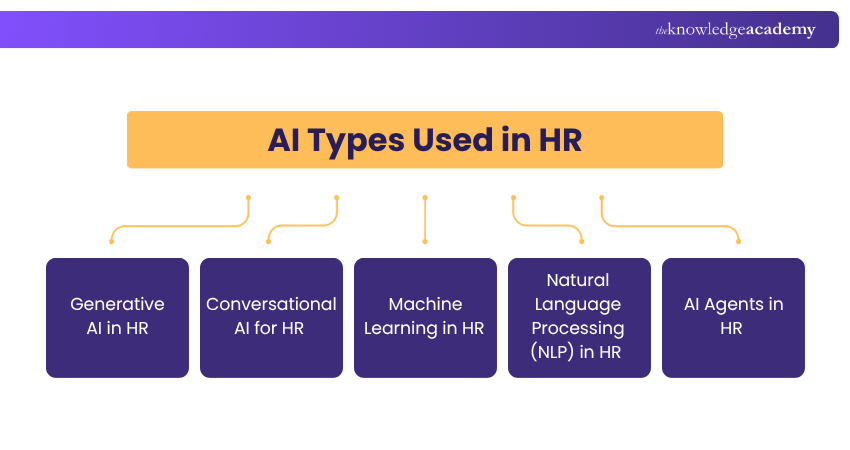
1) Generative AI in HR
Generative AI creates new content using large datasets. In HR, it helps write job descriptions, create training materials, and personalise candidate communication. It can also support workforce planning by analysing complex datasets and generating actionable insights for strategic decision-making.
2) Conversational AI for HR
Conversational AI includes chatbots and virtual assistants powered by NLP. These tools provide instant support to employees and candidates. They can answer HR-related queries, guide benefits processes, and improve engagement with 24/7 availability. This ensures faster response times and enhances the overall employee experience.
3) Machine Learning in HR
Machine learning allows systems to learn from data and improve over time. In HR, it is used to match candidates to roles, predict employee turnover, and suggest fair salaries. Also, it is helpful for identifying patterns, such as trends in employee behaviour or team performance.
4) Natural Language Processing (NLP) in HR
Natural Language Processing (NLP) helps AI understand and analyse human language. In HR, it is used to evaluate employee feedback, surveys, and performance reviews. This allows organisations to detect sentiment, identify workplace issues early, and improve communication strategies effectively.
5) AI Agents in HR
AI agents are advanced systems capable of performing tasks with minimal human intervention. In HR, they can manage onboarding workflows, recommend career paths, and schedule training sessions. They also support decision-making by continuously monitoring performance data and suggesting proactive actions.
How HR Departments Use AI?
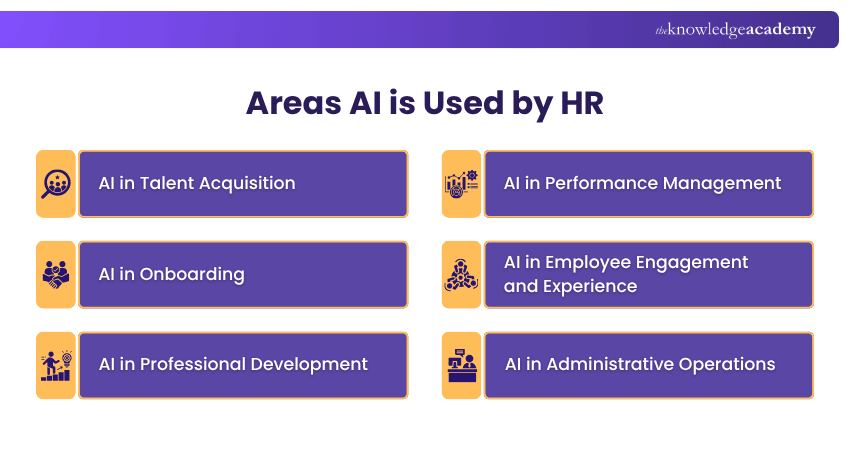
HR departments use AI across the entire employee lifecycle to improve efficiency, accuracy, and employee experience. By automating routine tasks and providing data-driven insights, AI enables HR teams to focus more on strategic initiatives. Below are some key areas where AI is commonly applied:
1) AI in Talent Acquisition
AI helps recruiters find and evaluate candidates efficiently. It scans job platforms and networks like LinkedIn to identify suitable profiles. Also, AI tools screen CVs, match skills with job roles, and reduce bias. Automated systems handle interview scheduling, transcription, and summaries, saving time and improving hiring decisions.
2) AI in Onboarding
AI enhances onboarding by delivering personalised experiences for new hires. Virtual assistants guide employees through policies and procedures. It also automates tasks such as document processing, account setup, and compliance checks, ensuring a smooth and consistent onboarding experience.
3) AI in Professional Development
AI supports employee growth through personalised learning and development plans. It recommends training based on skills, goals, and performance. It recommends relevant training programmes, identifies future leaders, and supports succession planning, helping organisations build a strong internal talent pipeline.
4) AI in Performance Management
AI enables continuous performance tracking and feedback. It analyses employee data to identify trends and areas for improvement. This helps organisations move from traditional reviews and adopt a more dynamic and data-driven performance management.
5) AI in Employee Engagement and Experience
AI enhances employee experience by providing personalised communication and support. It can monitor engagement levels and identify potential issues early. Self-service tools powered by AI allow employees to access HR support instantly, improving satisfaction and reducing delays.
6) AI in Administrative Operations
AI automates routine HR tasks, such as data entry, report generation, and query handling. It also supports compliance monitoring and workforce analytics. This reduces administrative burden and allows HR teams to focus on strategic activities and employee well-being.
Drive growth using AI marketing tools and intelligent automation with the AI Automation Course For Marketing – Join now!
AI Tools and Technologies in Human Resources
AI tools and technologies help the HR team improve efficiency, enhance decision-making, and deliver better employee experiences. They support key HR functions such as recruitment, performance management, and workforce planning. Let's look at it below:
1) ChatGPT for HR
ChatGPT is a conversational AI tool that uses Natural Language Processing (NLP) to interact with users. It is widely used in HR to improve communication and handle routine queries. This reduces response time and improves overall HR support efficiency.
What it Does: A conversational AI tool that interacts in a human-like manner.
How it Helps in HR: Handles employee queries, supports onboarding, and assists candidates.
2) Eightfold.ai for Talent Intelligence
Eightfold.ai is a talent intelligence platform that uses AI to understand skills and career paths. It supports hiring and internal talent development. This helps organisations build a stronger and future-ready workforce.
What it Does: An AI-driven talent management platform.
How it Helps in HR: Matches candidates to roles and identifies skill gaps.
3) ADP DataCloud for HR Analytics
ADP DataCloud is an AI-powered platform for managing workforce and payroll data. It helps organisations track trends and improve accuracy. This ensures smoother HR operations and better compliance.
What it Does: A platform for HR analytics and payroll management.
How it Helps in HR: Supports payroll insights and workforce analysis.
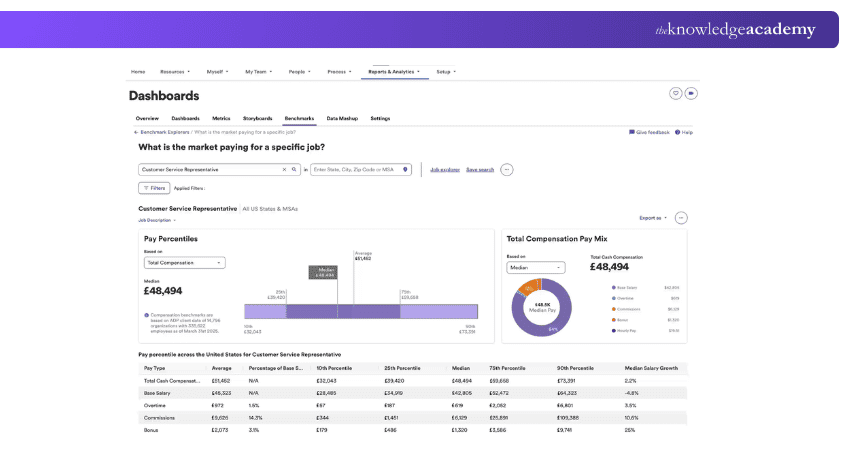
4) UKG Pro
UKG Pro, formerly known as UltiPro, is a Human Capital Management (HCM) platform. It combines HR, payroll, talent management, workforce analytics, and employee engagement tools into one integrated system to help organisations manage their workforce efficiently.
What it Does: Manages payroll, hiring, onboarding, and workforce analytics.
How it Helps in HR: Improves HR efficiency and supports better workforce management.
5) HiredScore for Recruiting Automation
HiredScore is an AI-based recruitment tool that improves candidate screening. It helps recruiters identify top candidates faster. This enables quicker and more effective hiring decisions.
What it Does: Uses AI to screen and prioritise applications.
How it Helps in HR: Ranks candidates and improves hiring efficiency.
6) HireVue for Video Interviewing
HireVue is an AI-powered platform focused on video interviews and candidate assessments. It helps organisations evaluate candidates quickly and consistently. This ensures a faster and more structured hiring process.
What it Does: A video interviewing and assessment platform powered by AI.
How it Helps in HR: Analyses interviews to assess skills and behaviour.
7) Pymetrics for Talent Matching
Pymetrics uses AI and behavioural assessments to evaluate candidates. It focuses on matching people to roles based on their traits. This leads to more accurate and fair hiring outcomes.
What it Does: Uses AI and neuroscience-based tests to assess candidates.
How it Helps in HR: Improves hiring accuracy and reduces bias.
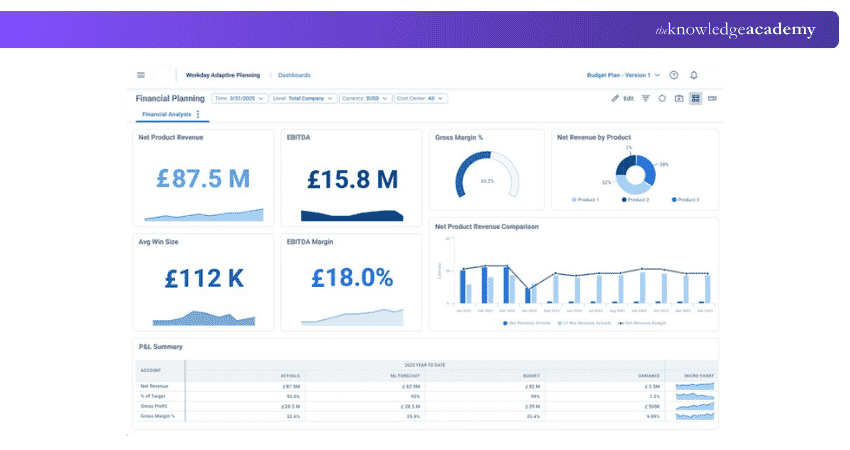
8) Workday for HR Management
Workday is a comprehensive HR system with built-in AI capabilities. It helps manage employees, data, and HR processes in a centralised place. This improves efficiency and provides a unified view of HR activities.
What it Does: A complete HR management system with AI features.
How it Helps in HR: Supports recruitment, performance management, and development.
9) Visier for Workforce Analytics
Visier is a workforce analytics platform that provides insights into employee performance and trends. It helps HR teams make informed decisions. This allows organisations to plan and address workforce challenges proactively.
What it Does: Provides analytics and insights into workforce data.
How it Helps in HR: Predicts turnover and supports workforce planning.
Streamline operations and optimise workflows with the AI Automation Course For Operations today!
Benefits of AI in HR
AI in HR offers several benefits that help organisations improve efficiency, reduce costs, and make better decisions. By automating routine tasks and providing data-driven insights, AI enables HR teams to operate more strategically and effectively. Below are some of the key benefits:
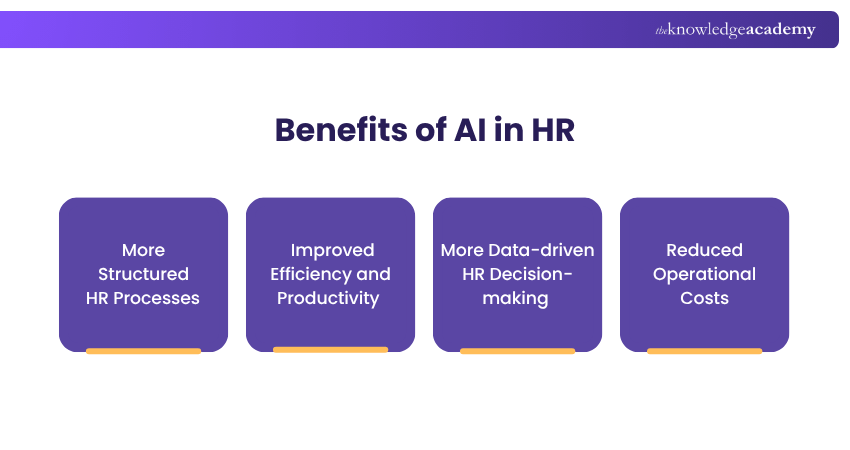
1) More Structured HR Processes
AI helps streamline and standardise HR processes, particularly in onboarding and training. It supports automated document handling, real-time employee assistance, and personalised learning experiences. This creates a more consistent, efficient, and user-friendly experience for employees across the organisation.
2) Improved Efficiency and Productivity
AI reduces the time spent on repetitive tasks, such as CV screening, scheduling, and documentation. This allows HR teams to focus on high-value activities like talent development and strategy. Also, it helps managers provide more accurate feedback using performance data, improving overall productivity.
3) More Data-driven HR Decision-making
AI enables HR teams to make informed decisions using real-time data and insights. It helps identify skill gaps, predict employee turnover, and improve talent management strategies. This is helpful in ensuring better planning and sustaining long-term organisational success.
4) Reduced Operational Costs
By automating routine tasks and improving workforce planning, AI significantly reduces operational costs. It minimises unnecessary expenses such as overtime and inefficient resource allocation. At the same time, it improves overall efficiency, helping organisations achieve more with fewer resources.
Unlock creativity with powerful AI tools by joining the Generative AI Course now!
Best Practices to Make HR Department AI-ready
To successfully adopt AI in HR, organisations need the right strategy, systems, and mindset. A structured approach ensures smoother implementation and maximises the value of AI initiatives. Let’s explore some best practices:
1) Establishing Data Readiness for AI
High-quality data is essential for successful AI implementation. HR teams should review existing data to identify gaps, inconsistencies, and potential biases. Cleaning and standardising data ensures accuracy and reliability.
Strong data governance practices must also be established, including clear policies for data collection, storage, and usage while ensuring compliance with privacy regulations.
2) Upskilling HR Teams for AI Adoption
It is crucial for HR professionals to develop the skills required to work effectively with AI technologies. This includes understanding basic AI concepts and learning how to use AI tools in daily tasks.
Data literacy is equally important, as teams must interpret AI-generated insights accurately. Training in change management and ethical AI use further supports successful adoption.
3) Running Pilot Projects Before Scaling AI
Organisations should begin AI adoption with small, well-defined pilot projects. These projects allow teams to test AI tools in a controlled environment and measure their effectiveness before going deeper into them.
Insights from pilot projects can be used to refine strategies and improve implementation. Once successful, organisations can gradually scale AI initiatives across the HR function for broader impact.
4) Defining an AI Vision and Goals
Organisations should begin by clearly defining how AI will support their HR and business objectives. This includes identifying priority areas like recruitment or retention, where AI can deliver the most value.
Setting specific and measurable goals is important, such as reducing time-to-hire or improving employee satisfaction. A clear vision acts as a guiding framework, ensuring AI initiatives remain aligned with business outcomes.
5) Managing Change and Organisational Culture
Successful AI adoption requires a shift in organisational mindset. HR leaders should communicate clearly regarding how AI will support employees and improve processes.
Encouraging a culture of learning, experimentation, and openness helps teams adapt more easily to AI-driven changes. Leadership support plays a key role in building trust and driving adoption.
6) Improving HR Technology Infrastructure
Organisations need a strong and secure technology infrastructure to support AI tools. This involves assessing current HR systems to ensure they can handle AI integration.
Security is equally important, as HR data is highly sensitive. Proper encryption, access controls, and system integrations help ensure smooth data flow and protect information while supporting scalable AI adoption.
Conclusion
AI in HR is transforming how organisations attract, manage, and develop talent. From improving recruitment to enhancing employee experience and decision-making, it helps HR teams focus on strategic growth. As businesses continue to evolve, adopting AI can provide a strong advantage in building a future-ready and resilient workforce.
Learn AI automation and transform work processes with the AI Automation Training now!
Frequently Asked Questions
Is HR Being Replaced by AI?

AI is not replacing HR but transforming how it works. It automates routine tasks like onboarding and queries, improving efficiency and speed. However, human skills like empathy, decision-making, and culture-building remain essential, making HR more strategic.
How Long Does it Take to Implement AI Tools in HR?
Implementing AI tools in HR varies based on complexity and organisational readiness. Basic solutions can deliver value within a few weeks or months, while more advanced integrations may take several months for full deployment.
What are the Other Resources and Offers Provided by The Knowledge Academy?
The Knowledge Academy takes global learning to new heights, offering over 3,000+ online courses across 490+ locations in 190+ countries. This expansive reach ensures accessibility and convenience for learners worldwide.
Alongside our diverse Online Course Catalogue, encompassing 17 major categories, we go the extra mile by providing a plethora of free educational Online Resources like Blogs, eBooks, Interview Questions and Videos. Tailoring learning experiences further, professionals can unlock greater value through a wide range of special discounts, seasonal deals, and Exclusive Offers.
What is The Knowledge Pass, and How Does it Work?
The Knowledge Academy’s Knowledge Pass, a prepaid voucher, adds another layer of flexibility, allowing course bookings over a 12-month period. Join us on a journey where education knows no bounds.
What are the Related Courses and Blogs Provided by The Knowledge Academy?
The Knowledge Academy offers various AI Automation Training, including the AI Automation Course For HR, AI Automation Course For Marketing, and AI Automation Course For Operations. These courses cater to different skill levels, providing comprehensive insights into Agentic AI.
Our Data, Analytics & AI Blogs cover a range of topics related to AI in HR, offering valuable resources, best practices, and industry insights. Whether you are a beginner or looking to advance your Artificial Intelligence (AI) skills, The Knowledge Academy's diverse courses and informative blogs have got you covered.
Upcoming Data, Analytics & AI Resources Batches & Dates
Date
 AI Automation Course for HR
AI Automation Course for HR
Fri 31st Jul 2026
AI Automation Course for HR
Fri 30th Oct 2026

 If you wish to make any changes to your course, please


