


 Top Rated Course

We may not have the course you’re looking for. If you enquire or give us a call on +65 6929 8747 and speak to our training experts, we may still be able to help with your training requirements.
Skills Required for Cross-Functional Team Leadership
Benjamin Walker 20 February 2026Cross-Functional Team Leadership is a vital skill for any Leader who wants to achieve organisational success in a complex and dynamic world. In this blog, we will explain what a Cross-Functional Team is, why it is important, and what skills you need to lead as one effectively.

Training Outcomes Within Your Budget!
We ensure quality, budget-alignment, and timely delivery by our expert instructors.
Table of Contents

A Cross-functional Team is a group of people from different departments, functions, or disciplines who work together toward a common project goal. However, leading a cross-functional team can be challenging.
It requires skills beyond technical or functional expertise. Effective Cross-functional Team Leadership involves managing the complexity, ambiguity, and uncertainty. This comes from working with individuals from diverse backgrounds, cultures, and styles.
In this blog, we will discuss ten essential cross-functional team leadership skills you must develop. Let’s explore these skills in more detail and see how they can help you achieve your desired outcomes.
Table of Contents
1) What is Cross-functional Team Leadership?
2) 10 Cross-functional Team Leadership Skills
a) Effective Communication
b) Streamlined Decision-making
c) Project Management Expertise
d) Interpersonal Skills
e) Building Trust
f) Conflict Resolution
g) Strategic Goal Setting
h) Problem-solving Proficiency
i) Skillful Delegation
j) Fostering Team-building Excellence
3) Pros and Cons of Cross-Functional Teams
4) Conclusion
What is Cross-Functional Team Leadership?
Cross-functional team leadership is when someone leads a group made up of people from different departments or areas of expertise. Instead of everyone having the same job, each team member brings unique skills and perspectives. The leader helps everyone work together smoothly and communicates clearly with the team.
They make sure that all voices are heard and that the team stays focused on their goals. By combining different strengths, the team can solve problems better and come up with creative ideas. This type of leadership helps the team achieve great results by leveraging everyone's talents.

10 Cross-functional Team Leadership Skills
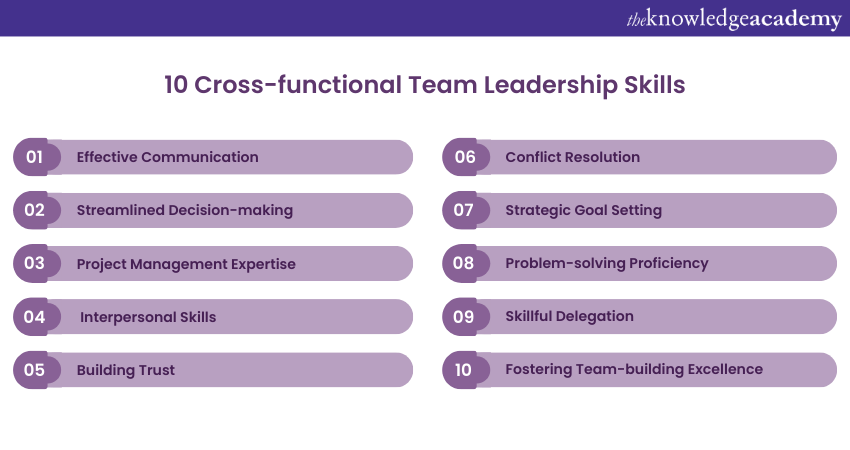
Cross-functional Team Leadership means guiding a group of people with different but complementary skills. When you lead a diverse team well, you build a strong base that helps the team keep succeeding. Here are 10 key leadership traits to help you manage a cross-functional team successfully:
1) Effective Communication
Clear, consistent, and transparent communication is paramount in Cross-Functional Teams to bridge gaps and foster understanding among members. Leaders must articulate ideas clearly, use multiple communication channels, encourage open dialogue, and actively listen to team members' perspectives to ensure alignment and collaboration.
2) Streamlined Decision-making
Leaders in Team Leadership vs Solo Leadership must guide teams through complex decision-making processes, ensuring clarity on problem scope and criteria while involving team members in generating and evaluating solutions. Effective decision-making requires a data-driven approach, consensus-building, and swift action to navigate challenges and capitalize on opportunities.
3) Project Management Expertise
Strong project management skills are crucial for defining objectives, organising resources, executing tasks, and evaluating outcomes within the dynamic environment of Cross-Functional Teams. Leaders must develop comprehensive project plans, allocate resources efficiently, track progress meticulously, and adapt strategies to meet evolving project requirements.
4) Interpersonal Skills
A good leader listens and understands what their team members need. Being empathetic makes the leader more approachable and creates a comfortable work environment for everyone. You can do this by having one-on-one meetings with each team member and letting them talk about whatever they want.
5) Building Trust
Trust is the foundation of successful teamwork. Leaders must cultivate an environment of trust by being reliable, respectful, supportive, appreciative, and fair. Through consistent actions, transparency, and integrity, Leaders can inspire confidence, foster mutual respect, and strengthen team cohesion, enhancing collaboration and performance.
Transform your Leadership approach and drive success with our Agile Leadership Training. Join today!
6) Conflict Resolution
When your team includes people from different departments, conflicts can happen. Everyone might have different goals and loyalties. It’s important to be ready to handle these conflicts well. Many experts recommend giving your team conflict-resolution training before they start working together. If that’s not possible, make sure to address any conflicts right away.
Ignoring them will only make things worse. Set up working agreements with your team members ahead of time and encourage open communication. This way, you can work through any disagreements in a positive and constructive manner.
7) Strategic Goal Setting
Setting clear and achievable goals, monitoring progress, and adjusting objectives as needed are crucial for aligning team efforts and celebrating achievements. Leaders must articulate a compelling vision, break down goals into actionable steps, empower team members to take ownership of tasks, and provide guidance and support to ensure success.
8) Problem-solving proficiency
Leaders must guide teams through effective problem-solving processes, from defining and analysing issues to implementing solutions and learning from outcomes. Leaders can encourage innovative approaches, overcome obstacles, and drive meaningful results in complex situations by fostering a culture of creativity, resilience, and continuous improvement.
9) Skillful Delegation
Delegating tasks effectively involves identifying, assigning, communicating, monitoring, and supporting team members to ensure successful task completion and growth. Leaders must understand team members' strengths, provide clear instructions and expectations, offer necessary resources and guidance, and provide feedback and recognition to foster accountability and development.
10) Fostering Team-building Excellence
Creating a positive team culture, promoting collaboration, diversity, and inclusion, and nurturing high performance and cohesion are essential for team success. Leaders must lead by example, inspire trust and motivation, facilitate team bonding activities, and recognise and celebrate achievements to foster a sense of belonging and pride.
Start your journey towards effective Leadership with our Successful People Management and Team Leadership Course. Sign up now!
Pros and Cons of Cross-functional Teams
Is it worth building a cross-functional team? Think about the pros and cons to decide for yourself.
The Pros
a) Better Performance: Cross-functional teams use everyone's combined talents and skills. This helps the team reach goals more efficiently.
b) Shared Purpose: Team members work together for a common goal. Having the same "why" makes everyone more engaged, encourages collaboration, and helps the business grow.
c) Learning Opportunities: In a cross-functional team, you work with people who have different interests, skills, and backgrounds. It’s a great chance to network, learn new skills, and understand different roles in the company.
The Cons
a) Getting Everyone on Board is Hard: Even though having a shared purpose is great, getting everyone to agree can be tough. Leaders need to spend time creating a clear vision and finding the best ways to communicate it to everyone.
b) Disorganisation: If the team is large, projects and tasks can become messy. Leaders should set clear roles for each project and choose someone to lead. This leader should make sure everyone is meeting their milestones.
A cross-functional team can be your company’s greatest asset if managed properly. By following these key points, you can build and lead a strong team of effective and committed professionals, setting your team up for great success.
Enhance your Leadership skills and become a more effective Leader with our specialised Leadership Skills Course. Register Now!
Conclusion
In conclusion, effective Cross-Functional Team Leadership demands a multifaceted skill set encompassing communication, decision-making, project management, interpersonal dynamics, trust-building, and many more. When evaluating roles in leadership, understanding the Team Leader Salary can offer insight into the rewards of mastering these skills and driving success.
Unlock your Leadership potential and elevate your career with our comprehensive Leadership Courses!
Frequently Asked Questions
What are the Key Challenges of Leading Cross-functional Teams?

Leading Cross-Functional Teams can present challenges such as communication barriers, conflicting priorities, differing work styles, and alignment issues. Addressing these challenges requires effective leadership skills, clear communication strategies, and the fostering of a collaborative team culture.
How can I Develop the Necessary Skills for Cross-functional Team Leadership?
To develop cross-functional team leadership skills, mix training, hands-on experience, mentorship, and self-awareness. Join leadership programs, get feedback from peers and mentors, practice clear communication, and keep improving your people and problem-solving skills. This will help you lead diverse teams successfully.
What are the Other Resources and Offers Provided by The Knowledge Academy?
The Knowledge Academy takes global learning to new heights, offering over 3,000+ online courses across 490+ locations in 190+ countries. This expansive reach ensures accessibility and convenience for learners worldwide.
Alongside our diverse Online Course Catalogue, encompassing 19 major categories, we go the extra mile by providing a plethora of free educational Online Resources like Blogs, eBooks, Interview Questions and Videos. Tailoring learning experiences further, professionals can unlock greater value through a wide range of special discounts, seasonal deals, and Exclusive Offers.
What is The Knowledge Pass, and How Does it Work?
The Knowledge Academy’s Knowledge Pass, a prepaid voucher, adds another layer of flexibility, allowing course bookings over a 12-month period. Join us on a journey where education knows no bounds.
What are the Related Courses and Blogs Provided by The Knowledge Academy?
The Knowledge Academy offers various Leadership Courses, including Leadership Skills and Agile Leadership Training. These courses cater to different skill levels, providing comprehensive insights into Creative Leadership.
Our Business Skills blogs cover a range of topics related to Leadership skills and upskilling, offering valuable resources, best practices, and industry insights. Whether you are a beginner or looking to advance your Leadership skills, The Knowledge Academy's diverse courses and informative blogs have you covered.

Benjamin Walker


Leadership Development Coach and Management Consultant
Benjamin Walker is a leadership coach and business consultant with over 18 years of experience in guiding organisations through strategic growth and transformation. He specialises in developing leadership capabilities at all levels, from emerging managers to executive teams. Benjamin’s work focuses on practical leadership, team dynamics, and performance management.
View Detail
Upcoming Business Skills Resources Batches & Dates
Date
 Leadership Skills Training
Leadership Skills Training
Fri 3rd Jul 2026
Leadership Skills Training
Fri 4th Sep 2026

 If you wish to make any changes to your course, please


