


 Top Rated Course

We may not have the course you’re looking for. If you enquire or give us a call on +0800 780004 and speak to our training experts, we may still be able to help with your training requirements.
How to Deal with Passive-Aggressive People: Tips And Tricks
The Knowledge Academy 11 February 2026Discover How to Deal with Passive-Aggressive People by recognising subtle signs and employing clear communication strategies. This blog reveals how to turn workplace tension into teamwork and frustration into collaboration, crafting a dynamic and positive culture. Dive in to discover actionable for your work environment!

Training Outcomes Within Your Budget!
We ensure quality, budget-alignment, and timely delivery by our expert instructors.
Table of Contents
Related Courses

Have you ever found yourself scratching your head, wondering why someone’s indirect actions seem to sabotage your work, yet they insist they're just "helping"? If so, you're not alone. Dealing with Passive-Aggressive behaviour in the workplace can be one of the most challenging and frustrating experiences, leaving you feeling both confused and exasperated. Understanding how to handle Passive-Aggressive people can help you overcome these challenges and improve your work environment.
In this blog, we’ll explore practical tips and strategies for handling Passive-Aggressive behaviour effectively. From recognising subtle signs to clear communication, learn How to Deal with Passive-Aggressive People and turn tension into teamwork. Ready to take control and foster a more positive workplace? Let’s dive in and discover the best ways to manage Passive-Aggressive individuals with confidence.
Table of Contents
1) What is Passive-Aggressive Behaviour?
2) Traits of a Passive-Aggressive Person
3) Impact of Passive-aggression in the Workplace
4) Tips to Deal with Passive-Aggressive People
5) Conclusion
What is Passive-Aggressive Behaviour?
Passive-Aggressive behaviour involves indirect resistance to others' demands, using subtle actions instead of direct confrontation. This can include procrastination, sulking, stubbornness, and deliberate inefficiency. It typically stems from unspoken anger or frustration, leaving the recipient confused and irritated. An important factor here is the advantage and disadvantage of communication skills. Effective communication can help avoid misunderstandings, while poor communication can lead to confusion and frustration.
Consider a workplace scenario where a manager asks an employee to complete a report by the end of the day. The employee agrees but then works slowly, takes unnecessary breaks, and submits an incomplete, error-ridden report.
When asked about it, they respond, "I thought it was fine," or "I didn't understand the urgency." This indirect resistance and lack of clear communication showcase Passive-Aggressive behaviour, causing frustration and an unfinished task
Traits of a Passive-Aggressive Person
Passive-Aggressive individuals exhibit a range of behaviours that can be perplexing and exasperating. Here are some common traits:

1) Utilising Sarcastic Remarks
Sarcasm is a hallmark of Passive-Aggressive behaviour. It serves as a mask for true feelings, allowing the individual to express hostility in a veiled manner. These remarks can often be hurtful, leaving the recipient feeling confused about the true intent behind the words.
2) Denial of Reality
Passive-Aggressive people often deny their true feelings or the reality of a situation. They might refuse to acknowledge their anger or dissatisfaction, even when it is apparent to others. This denial can make it difficult to address issues directly.
3) Employing the Silent Treatment in Times of Displeasure
Withholding communication is a common tactic used by Passive-Aggressive individuals. By giving the silent treatment, they express their displeasure without directly confronting the issue, leaving the other person in a state of uncertainty.
4) Blame-shifting Tendencies
Blame-shifting is another frequent behaviour. Instead of taking responsibility for their actions, Passive-Aggressive people deflect blame onto others. This tactic not only absolves them of accountability but also creates conflict and confusion.
5) Deliberate Task Sabotage Through Errors
Intentional mistakes or sabotage in task performance can be a way for Passive-Aggressive individuals to express their resistance or frustration. These errors are often subtle but deliberate, aimed at causing inconvenience or demonstrating dissatisfaction.
6) Suppressed Anger Expression
Rather than expressing anger openly, Passive-Aggressive individuals bottle up their emotions. This suppressed anger can manifest in indirect ways, such as through sarcastic comments or passive resistance.
7) Indirect Criticism
Instead of giving straightforward feedback, Passive-Aggressive people often resort to indirect criticism. Their comments might be ambiguous or masked as jokes, making it hard to address the criticism constructively.
8) Weak Boundaries
Passive-Aggressive individuals often have weak personal boundaries. They might struggle to say no directly, leading to resentment and indirect expressions of their discomfort or frustration.
Master the art of navigating tough talks and enhance your skills with our Managing Difficult Conversations Training – join now!
Impact of Passive-aggression in the Workplace
The following are the key impacts of Passive-aggression in the workplace:
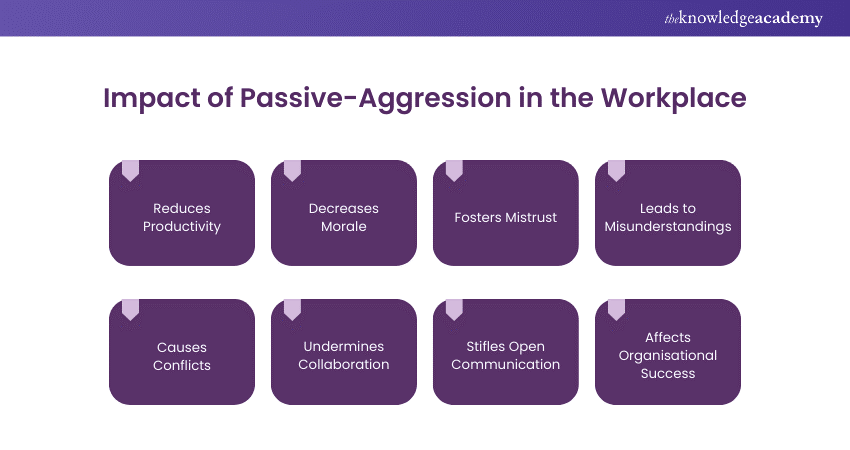
1) Reduces Productivity: Passive-aggression can lead to delays and inefficiencies, impacting overall productivity.
2) Decreases Morale: It creates a negative work environment, lowering employee morale and job satisfaction.
3) Fosters Mistrust: The indirect nature of Passive-aggression breeds mistrust among team members.
4) Leads to Misunderstandings: Subtle and indirect communication can result in frequent misunderstandings and confusion.
5) Causes Conflicts: It often leads to conflicts and tensions that disrupt team dynamics.
6) Undermines Collaboration: Passive-Aggressive behaviour can hinder effective teamwork and collaboration.
7) Stifles Open Communication: It creates barriers to honest and transparent communication.
8) Affects Organisational Success: The cumulative effects of Passive-aggression can impact the efficiency and success of the organisation.
Strengthen your business connections with our Building Business Relationships Course - discover proven techniques for building and nurturing effective relationships!
Tips to Deal with Passive-Aggressive People
Dealing with Passive-Aggressive people requires a strategic and empathetic approach. Here are some effective tips:

1) Promptly Addressing Issues
Addressing issues as soon as they arise prevents them from escalating into bigger problems. Delaying confrontation can lead to increased Passive-Aggressive behaviour, as the unresolved issue festers and grows. A timely response helps in managing the situation before it becomes entrenched, reducing frustration and misunderstanding.
By addressing issues promptly, you show that you are proactive and committed to resolving conflicts. This approach leads to a quicker and more effective resolution, helping to prevent further complications and maintain a positive and productive work environment.
2) Employing Humour Where Appropriate
Humour can be a valuable tool for defusing tension and addressing Passive-Aggressive behaviour in a non-threatening manner. When used appropriately, it can help lighten the mood and foster a more relaxed atmosphere, making it easier to address challenging topics.
However, it's crucial that the humour is not sarcastic, belittling, or hurtful, as this could exacerbate the issue. Instead, aim for humour that is inclusive and supportive, helping to break down barriers and foster open communication. This approach can make confrontations less intimidating and encourage more constructive dialogue.
3) Remaining Present and Expressing Your Feelings Clearly
Being fully present and expressing your feelings clearly helps reduce misunderstandings and facilitates Effective Communication. When you articulate your thoughts and emotions directly, it encourages open dialogue and demonstrates that you are engaged and committed to resolving issues.
This approach helps prevent Passive-Aggressive behaviour by addressing concerns openly and honestly, reducing the chances of misinterpretation or resentment building up. Clear communication ensures everyone understands the issues and collaborates effectively, fostering a transparent and cooperative work environment.
4) Collaborative Problem-solving Approach
Involving the Passive-Aggressive individual in problem-solving can be highly effective in addressing their behaviour. A collaborative approach helps them feel valued and respected, reducing defensiveness and fostering a sense of ownership over the resolution process.
By working together to find solutions, you create a more inclusive environment that encourages positive interactions and constructive outcomes. This method addresses immediate issues, fosters teamwork and understanding, and leads to more effective and sustainable solutions, enhancing overall team dynamics.
5) Acknowledging and Accepting Their Behaviour
Recognising and acknowledging Passive-Aggressive behaviour is essential for addressing it effectively. By accepting that the behaviour is occurring without condoning it, you demonstrate that you are aware of the issues and are willing to confront them. Recognising this can encourage the individual to reflect on their behaviour and understand its impact on others.
It shows that you are not ignoring the problem but are open to addressing it in a constructive manner. This approach can encourage self-awareness and potentially lead to behaviour changes, improving overall interactions and team dynamics.
Discover tips on How to Manage Negative People and improve team dynamics!
6) Disengaging Respectfully
When interactions become too challenging or unproductive, it may be necessary to disengage respectfully. This means stepping away from the situation to prevent further escalation while maintaining respect and dignity for both parties. Disengaging helps avoid heated arguments and allows time for emotions to cool down.
It also provides an opportunity for reflection and reassessment of the situation. Handling disengagement professionally maintains a positive atmosphere, prevents conflict, and fosters a constructive environment for re-engagement.
7) Recognising and Naming the Behaviour
Identifying and naming Passive-Aggressive behaviour is crucial for addressing it directly. By specifying the problematic actions, you bring the issue into clear focus without escalating tension. This method involves pointing out specific behaviours and explaining their impact, which helps in making the person aware of their actions.
Recognising and naming the behaviour avoids vague criticisms and facilitates a more direct and effective conversation. It encourages accountability and can lead to more straightforward discussions about resolving the underlying issues and improving interactions.
8) Maintaining Calmness in Interactions
Remaining calm during interactions helps in managing Passive-Aggressive behaviour more effectively. By staying composed, you prevent the escalation of emotions and create a more rational and constructive dialogue. Calmness sets a positive tone for the conversation, making it easier to address issues without increasing tension or conflict.
This approach also models appropriate behaviour, encouraging others to follow suit. Staying calm allows you to concentrate on problem-solving and finding solutions rather than being sidetracked by emotional reactions or conflicts.
9) Identifying Root Causes
Understanding the underlying causes of Passive-Aggressive behaviour provides valuable insights into addressing it. Such behaviour may stem from unmet needs, fear of confrontation, or past experiences.
By identifying these root causes, you can address the fundamental issues rather than just the symptoms of the behaviour. This approach helps in developing targeted strategies for resolution, fostering a more empathetic and effective response. It promotes long-term solutions by addressing underlying reasons, leading to sustainable improvements in interactions and team dynamics.
10) Facilitating Open Communication Channels
Promoting open communication channels is essential for addressing Passive-Aggressive behaviour. Encouraging honesty and transparency allows for direct discussion of issues, reducing the likelihood of Passive-Aggressive tendencies. Open communication helps in identifying and resolving problems before they escalate, fostering a more supportive and collaborative environment.
By fostering open dialogue, you give everyone the chance to voice their concerns and collaborate on solutions. This method builds trust, strengthens team dynamics, and promotes a healthier, more productive work environment.
Master Conflict Resolution! Learn How to Deal With Difficult People Effectively.
11) Directly Addressing Problematic Behaviours
Addressing problematic behaviours directly but non-confrontationally is key. Use "I" statements to describe how the behaviour affects you, focusing on the impact rather than placing blame, to facilitate a more constructive discussion.
Directly addressing the behaviour encourages accountability. This promotes a clearer understanding of the issues, leading to more effective solutions and improved interactions.
12) Being Candid in Communication
Clear and candid communication helps in addressing Passive-Aggressive behaviour by leaving little room for misinterpretation. Being straightforward about your thoughts and feelings sets clear expectations and reduces ambiguity. This approach fosters open dialogue and helps in directly addressing issues, leading to more effective problem-solving.
Candid communication minimises Passive-Aggressive behaviour. It ensures all parties understand each other’s perspectives. This clarity helps in working towards mutually acceptable solutions.
13) Cultivating a Safe and Respectful Environment
Creating a safe and respectful environment is extremely crucial for reducing Passive-Aggressive behaviour. When employees feel respected and secure, they are more likely to engage in open and honest communication.
A positive environment encourages constructive dialogue and collaboration, reducing the tendency for Passive-aggression. Fostering respect and safety builds trust and cooperation, reducing Passive-Aggressive behaviour and enhancing workplace culture.
14) Avoiding Personal Offense
It’s important not to take Passive-Aggressive behaviour personally. Recognise that such behaviour often reflects the individual’s own challenges and coping mechanisms, rather than being a direct attack on you.
By maintaining this perspective, you can respond more objectively and avoid escalating the situation. This approach helps manage reactions, resolve behaviour, and avoid personal feelings, leading to more effective conflict resolution.
15) Demonstrating Empathy
Showing empathy towards individuals exhibiting Passive-Aggressive behaviour can help address the underlying issues contributing to their actions. Understanding their perspective and acknowledging their feelings can facilitate a more supportive and constructive dialogue.
Empathy helps in identifying the root causes of the behaviour and finding mutually beneficial solutions. By demonstrating empathy, you build a rapport that can lead to improved interactions and a more collaborative resolution process.
16) Mindful Use of Language
Choosing your words carefully when addressing Passive-Aggressive behaviour is essential to avoid triggering defensive reactions. Mindful language promotes constructive dialogue and reduces the potential for conflict.
By using thoughtful and considerate language, you encourage a more positive and respectful interaction, helping to address issues without escalating tensions. This approach supports effective communication and fosters a more cooperative environment for resolving Passive-Aggressive behaviour.
Transform your career with our Personal Development Courses - learn essential skills and unlock new opportunities for success!
Conclusion
We hope this blog has helped you unlock the secrets of How to Deal with Passive-Aggressive people. By using these strategies, you can transform workplace tension into a powerhouse of teamwork and positivity, turning hurdles into stepping stones. With these newfound insights, you’ll foster an environment where creativity and cooperation thrive. Embrace these tips to elevate your workplace to new heights!
Transform your approach to difficult conversations - sign up today to Dealing With Difficult People Course and build confidence in managing challenging people!
Frequently Asked Questions
How to Set Boundaries with a Passive-Aggressive Person?

Set clear, respectful boundaries with Passive-Aggressive people by addressing specific behaviours directly and communicating your expectations clearly. Consistently enforce limits using "I" statements to express your needs and avoid escalating conflicts.
Why is Passive-aggression Toxic?
Passive-aggression is toxic because it undermines direct communication, creates confusion, and fosters resentment. This indirect hostility damages trust and collaboration, leading to a toxic, unproductive environment.
What are the Other Resources and Offers Provided by The Knowledge Academy?
The Knowledge Academy takes global learning to new heights, offering over 3,000+ online courses across 490+ locations in 190+ countries. This expansive reach ensures accessibility and convenience for learners worldwide.
Alongside our diverse Online Course Catalogue, encompassing 19 major categories, we go the extra mile by providing a plethora of free educational Online Resources like Blogs, eBooks, Interview Questions and Videos. Tailoring learning experiences further, professionals can unlock greater value through a wide range of special discounts, seasonal deals, and Exclusive Offers.
What is The Knowledge Pass, and How Does it Work?
The Knowledge Academy’s Knowledge Pass, a prepaid voucher, adds another layer of flexibility, allowing course bookings over a 12-month period. Join us on a journey where education knows no bounds.
What are the Related Courses and Blogs Provided by The Knowledge Academy?
The Knowledge Academy offers various Personal Development Courses, including Dealing With Difficult People, Building Business Relationships and Managing Difficult Conversations Training. These courses cater to different skill levels, providing comprehensive insights into Dealing With Difficult People.
Our Business Skills Blogs cover a range of topics related to Dealing with difficult people, offering valuable resources, best practices, and industry insights. Whether you are a beginner or looking to advance your Business skills, The Knowledge Academy's diverse courses and informative blogs have got you covered.

The Knowledge Academy


Global Training Provider
The Knowledge Academy is a world-leading provider of professional training courses, offering globally recognised qualifications across a wide range of subjects. With expert trainers, up-to-date course material, and flexible learning options, we aim to empower professionals and organisations to achieve their goals through continuous learning.

Upcoming Business Skills Resources Batches & Dates
Date
 Dealing with Difficult People
Dealing with Difficult People
Fri 21st Aug 2026
Dealing with Difficult People
Fri 23rd Oct 2026

 If you wish to make any changes to your course, please


